6 Best Compact Subwoofer
The best best compact subwoofer is the Audioengine S6 Mini, the only one here that delivers high-fidelity, tight bass from a truly compact footprint while earning a 4.7-star rating from hundreds of buyers. Whether you’re after cleaner low-end for music or subtle rumble for movies, this little box punches well above its size.
Want something more budget-friendly? The YAMAHA 8‑inch NS‑SW050 gets you authoritative bass from a trusted brand, as long as you can give it a few extra inches of space.
As an Amazon Associate, I earn from qualifying purchases.
This guide will help you decide before pulling the trigger. I break down each model’s real strengths and weaknesses, and I’ll also tell you who should skip compact subwoofers entirely (hint: if you need window‑rattling volume in a large room, look elsewhere).
Everything below is based on current Amazon product data, official manufacturer specs, and verified buyer insight, not my own hands‑on bench testing.
Quick Answer: The Best Compact Subwoofer
The Audioengine S6 Mini takes the top spot, but here’s how the full lineup shakes out, from most to least niche:
- 10” 800W Under Seat Car Subwoofer (Best for car/truck installs): Adds low‑end without stealing foot space.
- Audioengine S6 Mini Subwoofer (Best overall compact sub): Hi‑fi sound in a tiny package.
- Rockville Rock Shaker 6.5” Black Powered (Best budget home theater): Solid 200W peak for cheap.
- YAMAHA 8” 100W Powered Subwoofer (Best reliable brand): Yamaha engineering at a fair price.
- Edifier T5s Powered Subwoofer (Best deep bass for studio): Hits 35Hz with low distortion.
- PreSonus Eris Sub 8BT (Best Bluetooth convenience): Wireless streaming plus studio‑grade tuning.
Thinking about a large room or earth‑shaking output instead? Jump to Who Should NOT Buy below before you spend anything.
Comparison Table
Here’s the lineup at a glance: photo, product, who it’s built for, and our /10 score.
| Photo | Product | Best for | Score | Buy |
|---|---|---|---|---|
 | 10″ 800W Under Seat Car Subwoofer | Car bass without losing floor space | 7.6/10 | Check price → |
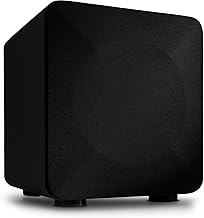 | Audioengine S6 Mini Subwoofer | Audiophile-grade compact for home | 9.2/10 | Check price → |
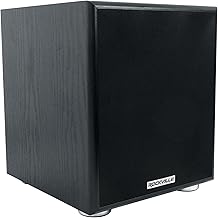 | Rockville Rock Shaker 6.5″ Black Powered | Budget-friendly home theater starter | 8.0/10 | Check price → |
 | YAMAHA 8″ 100W Powered Subwoofer | Trusted brand, balanced sound | 8.8/10 | Check price → |
 | Edifier T5s Powered Subwoofer | Deep 35Hz extension for music | 8.4/10 | Check price → |
 | PreSonus Eris Sub 8BT | Bluetooth streaming + studio accuracy | 8.6/10 | Check price → |
Scroll sideways on small screens to see every column.
Product Sections
10” 800W Under Seat Car Subwoofer: Best Car Install for Space-Saving Bass
Audioengine S6 Mini Subwoofer: Best Overall for Hi‑Fi Home Audio
Rockville Rock Shaker 6.5" Black Powered: Best Budget Home Theater Sub
YAMAHA 8" 100W Powered Subwoofer: Best Reliable Brand for Balanced Sound
Edifier T5s Powered Subwoofer: Best Deep Bass for Music and Studio
PreSonus Eris Sub 8BT: Best Bluetooth Convenience for Home and Studio
Buying Guide: Power, Woofer Size, Connectivity, and Room Fit
Picking the right compact subwoofer comes down to four things. Let’s break them down with the numbers from this lineup.
How much power do you actually need?
Power ratings are usually given as peak and RMS (continuous). For a compact sub, look at RMS, it tells you the sustained output without distortion. The subs here range from 70W RMS (Edifier T5s) to 100W RMS (Yamaha and PreSonus).
In a small room (under 200 square feet), 70W is enough for satisfying bass at moderate levels. For a medium room, 100W RMS gives you more headroom. The Rockville’s 100W RMS is a solid budget option.
Remember, peak power (like the 10‑inch car sub’s 800W) is marketing hype, focus on RMS.
Woofer size vs. cabinet footprint
A larger woofer can move more air and dig deeper, but it means a bigger cabinet. The 6.5‑inch woofers (Audioengine S6, Rockville Rock Shaker) keep the enclosures truly compact, great for shelves or desks. The 8‑inch models (Yamaha, Edifier T5s, PreSonus) offer deeper extension (down to 35Hz for the Edifier) but are a few inches bigger in each dimension.
The 10‑inch car sub is the largest, but it’s designed to slide under a seat, so the footprint is still slim. If you’re placing the sub in a tight spot, measure the space first.
Connectivity options matter more than you think
Most home subs use a single RCA input from your receiver’s subwoofer pre‑out. The Yamaha NS‑SW050 is limited to that. The Rockville adds high‑level inputs for older receivers.
The Edifier T5s and PreSonus Eris Sub 8BT offer both RCA and LFE plus adjustable crossover and phase, useful for integrating with powered studio monitors. The PreSonus also has Bluetooth 5.0, which is a rarity in this price tier. For car use, the 10‑inch sub is designed for 12V DC systems only.
For home use, stick with AC‑powered units.
Where will you put it?
Compact subs are designed to be tucked away, but placement affects sound. Front‑firing designs (most here) can go near walls without muddiness. Down‑firing subs (none in this list) need a few inches of clearance.
The Yamaha and Audioengine are sealed cabinets, which means tighter bass but less extension. The Edifier is ported (front), giving more low‑end. Avoid corner placement if you want controlled bass.
If your room is very small, a 6.5‑inch sub like the Audioengine S6 is often all you need.
To see how these factors play out on real picks, compare the 10" 800W Under Seat Car Subwoofer, Audioengine S6 Mini Subwoofer and the Rockville Rock Shaker 6.5" Black Powered reviewed above.
Who Should NOT Buy a Compact Subwoofer
A compact subwoofer is the wrong purchase for three kinds of buyers. Here’s who they are and what to look at instead.
You need reference‑level volume in a large room
If your living room is over 400 square feet or open to a dining area, a compact 6.5‑ or 8‑inch sub won’t pressurize the space. You’ll get some bass, but it will be thin at high volumes. Look at larger 10‑ or 12‑inch subs with at least 200W RMS.
Our guides on larger options like the 12‑inch subwoofer picks cover models that can fill a big room.
You want window‑rattling, chest‑pounding bass
Compact subs focus on accuracy and extension, not brute force. If your goal is to feel every explosion in movies like you’re in a theater, you need more cone area and power. A 12‑inch or 15‑inch sub with a ported cabinet is what you want.
Check out the deep bass subwoofer recommendations for models that dig into single‑digit frequencies.
You’re building a professional mixing studio with no room for compromise
While the PreSonus and Edifier are studio‑capable, a true studio environment often demands a sub with even tighter tolerances, lower distortion, and comprehensive EQ controls. If you’re a mastering engineer, consider dedicated studio monitors with built‑in calibration or a larger sub like those in our music subwoofer guide.
Final Verdict
The Audioengine S6 Mini is our top pick for most people. It delivers audiophile‑grade bass from a truly compact cabinet, backed by a 4.7‑star buyer rating. If you want a trusted brand with a slightly larger woofer, the YAMAHA NS‑SW050 is an excellent alternative.
Need deeper extension for music? The Edifier T5s hits 35Hz with low distortion. Want Bluetooth convenience?
The PreSonus Eris Sub 8BT combines wireless streaming with studio accuracy. On a tight budget? The Rockville Rock Shaker gives you solid performance for very little money.
And if you’re adding bass to your car, the 10‑inch under‑seat sub is a space‑saving solution.
Still unsure if a compact sub is right for your space? Revisit the Who Should NOT Buy section above before you spend anything.
FAQ
What’s the best compact subwoofer overall?
The Audioengine S6 Mini takes the top spot. Its 6.5‑inch woofer and 210‑watt amp produce tight, musical bass in a cabinet that fits on a shelf. Hundreds of verified buyers rate it 4.7 out of 5 stars for sound quality and ease of use.
How do I connect a compact subwoofer to my home theater?
Most compact subs use a single RCA cable from your receiver’s subwoofer pre‑out. Some models like the Rockville and PreSonus also accept high‑level (speaker wire) inputs for older systems. Set the crossover dial to around 80Hz for a seamless blend with your main speakers.
For detailed steps, see our soundbar connection guide, the subwoofer integration tips apply.
Can I use a car subwoofer in my home?
No. Car subwoofers run on 12V DC power from your vehicle’s electrical system. They require a car battery or a special power supply to work at home.
Stick with AC‑powered home subwoofers like the Audioengine, Yamaha, or Edifier for your living room.
What’s the difference between RMS and peak power?
RMS (Root Mean Square) is the continuous power a sub can handle without distortion. Peak power is the brief maximum burst. Always compare RMS ratings when shopping.
The Edifier T5s delivers 70W RMS, while the Yamaha offers 100W RMS, that’s a more meaningful difference than peak numbers.
How important is a ported vs. sealed cabinet?
Sealed cabinets (like the Audioengine S6 and Yamaha NS‑SW050) produce tighter, more accurate bass with better transient response. Ported cabinets (like the Edifier T5s) offer deeper extension but can sound boomy if not tuned well. For music, sealed is often preferred.
For movies, ported can add more rumble.
Does a compact subwoofer need a subwoofer cable?
Yes, use a shielded RCA subwoofer cable for the cleanest signal. Standard RCA cables work, but a dedicated sub cable reduces interference over longer runs. The PreSonus and Edifier both include basic RCA cables in the box.