Best Power Bank For Travel: Top Picks For Every Trip
The best power bank for travel balances safe capacity, fast charging, easy packing, and airline-friendly design.
A dead phone can turn a smooth trip into a stressful hunt for an outlet. I have seen travelers lose access to boarding passes, maps, ride apps, and hotel details at the worst time. A good travel power bank works like a small safety net in your bag. It should charge your phone fast, fit your daily routine, and offer enough power without becoming a heavy brick. I compared capacity, charging speed, port design, size, and travel value to help you choose with confidence.
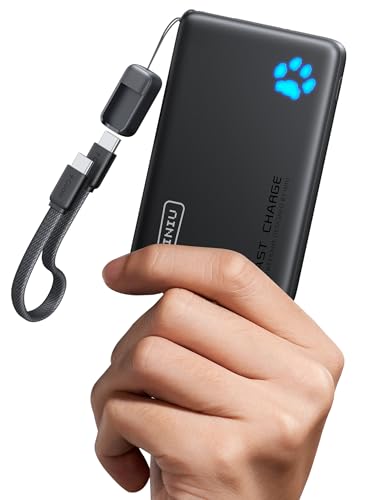
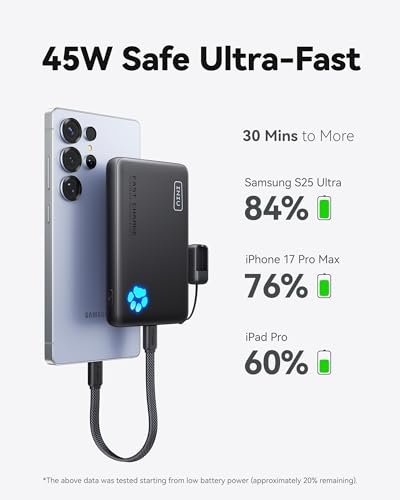
INIU 45W Fast Charging Portable…
40% Smaller & Lighter Portable Charger: Powered by the industry’s first TinyCell high-density battery technology, this ultra-compact 10,000mAh portable charger power bank is 40% smaller and 36% lighter than conventional…
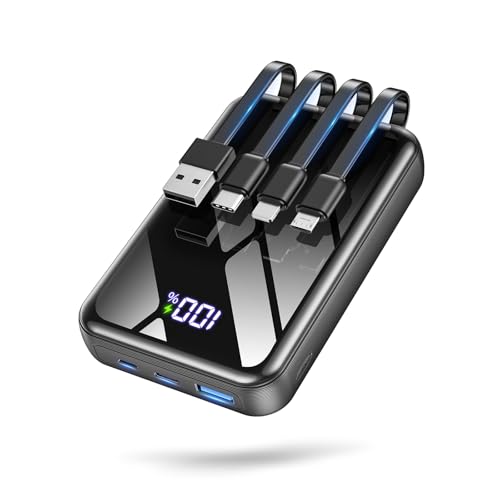
YBYP 50000mAh Portable Charger, 50%…
Massive 50000mAh & Ultra-Compact Size: Upgrade to a 50000mAh power bank featuring industry-first high-density battery technology—30% smaller and 15% lighter than traditional high-capacity models.Charges iPhone 17 up to 9.1 times,…
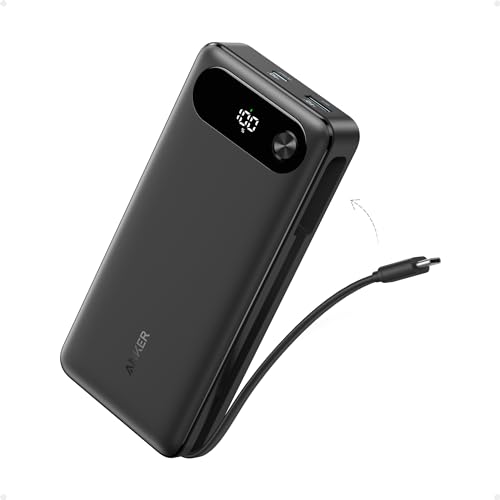
Anker Power Bank, 20,000mAh Travel…
87W Power to Share: Distribute 87W across three devices, with a single device receiving up to 65W, to rapidly charge iPhones, Samsung phones. Quickly charge a 14″ MacBook Pro to…
INIU 45W 10,000mAh Travel Power Bank

The INIU 45W 10,000mAh Travel Power Bank is a strong pick for travelers who want a small charger with useful power. Its 45W output gives it more headroom than many basic pocket banks. That extra speed can help compatible phones recover power during a short coffee stop. The 10,000mAh size also keeps the unit easier to carry than a large multi-day battery.
I like this capacity for short trips, workdays, and airport travel. It can fit in a jacket pocket, purse, or small tech pouch without taking over the space. The USB-C design suits many current phones, tablets, earbuds, and other travel gear. As always, actual charging speed depends on your device, cable, battery level, and the power profile it supports.
Pros:
- Compact 10,000mAh capacity for daily travel
- Up to 45W output for faster charging on compatible devices
- Easy size for pockets, purses, and small carry-on bags
- Useful for phones, tablets, earbuds, and other USB devices
- Good balance between power and portability
- More practical than a very large battery for short trips
Cons:
- 10,000mAh may not cover several heavy phone charges
- Fast output depends on device and cable support
- May not be the right choice for charging most laptops
My Recommendation
This INIU model is best for light packers, commuters, and travelers who need a reliable phone boost rather than a week of backup power. I would choose it for a weekend trip, a long flight day, or a business meeting where size matters. It is also a sensible choice for people who dislike bulky chargers but still want faster output than a basic 10W bank. For many users, it offers some of the best power bank for travel value in a compact form. Check the current listing for included accessories, dimensions, and supported charging details before ordering.
YBYP 50,000mAh Charger With Built-In Cables

The YBYP 50,000mAh Portable Charger targets travelers who need a lot of reserve power. Its standout feature is the very high listed capacity, paired with four built-in cables. That design can reduce cable clutter when several people share one charger. It may suit road trips, camping, festivals, and long periods away from wall outlets.
A built-in cable setup can save time because you do not need to search through your bag for the right lead. It is especially handy when one traveler uses a USB-C phone and another uses a different connector. Still, a battery this large is heavier than a pocket power bank. More importantly, travelers must check airline rules, since a 50,000mAh pack may exceed common carry-on battery limits depending on its watt-hour rating.
Pros:
- Very high listed capacity for extended off-grid use
- Four built-in cables reduce the need to pack separate leads
- Useful for families or groups sharing one charger
- Good fit for road trips, camping, and outdoor events
- Convenient design for mixed-device charging needs
- Can reduce the chance of forgetting a charging cable
Cons:
- Large capacity usually means more weight and bulk
- May not meet airline rules for standard passenger carry-on travel
- Built-in cables cannot always be replaced if one becomes damaged
- Recharge time may be long if the input speed is limited
My Recommendation
I recommend the YBYP for road travelers, campers, event staff, and families who need lots of stored energy. I would not make it my first choice for air travel without checking the watt-hour rating and airline approval rules. Most airlines commonly allow spare lithium-ion batteries up to 100Wh in carry-on bags, while larger units may need special approval or may not be accepted. This model can be the best power bank for travel away from airports, but its large capacity requires careful planning. Confirm current airline and product details before packing it.
Anker 20,000mAh Power Bank With USB-C Cable

The Anker 20,000mAh Travel Essential is a well-rounded choice for travelers who want more reserve power than a small pocket bank. Its built-in USB-C cable makes daily use simple and helps keep one important cable from getting lost. The 20,000mAh rating is useful for long travel days, work trips, and shared charging. Anker also has a strong reputation for making practical charging accessories.
This power bank is a good middle ground. It offers more endurance than a 10,000mAh model without reaching the extreme size of a 50,000mAh pack. I would pack it for a full day of maps, photos, messages, and streaming when wall outlets may be scarce. Before flying, check its watt-hour rating on the label and keep it in your carry-on, never in checked luggage.
Pros:
- 20,000mAh capacity supports long days away from outlets
- Built-in USB-C cable improves convenience
- Good middle ground between size and battery reserve
- Suitable for phones, earbuds, tablets, and small USB devices
- Useful for work travel and multi-day trips
- Recognized brand with a broad charging accessory range
Cons:
- Heavier than a 10,000mAh pocket charger
- Built-in cable may not suit every device connector
- May be slower with devices that require higher power
My Recommendation
The Anker 20,000mAh model is best for travelers who want one dependable battery for a full day or more. It suits frequent flyers, students, remote workers, and anyone who uses navigation and video often. I see it as one of the safest all-around choices in this review because it avoids both extremes: it is not too small, and it is not needlessly huge. For shoppers seeking the best power bank for travel with a useful capacity and simple cable access, this is a strong option. Availability and included features can change, so review the current Amazon listing before purchase.
OHOVIV 50,000mAh PD 22.5W Power Bank

The OHOVIV 50,000mAh PD 22.5W Battery Pack is built for maximum reserve rather than minimum weight. Its listed capacity can appeal to travelers who spend days away from outlets. The 22.5W power delivery rating should provide useful charging speed for many phones and small devices that support compatible profiles. It may also work well as a shared battery for a group.
Large power banks can feel like a relief on a camping trip, but they require more care during air travel. A nominal 50,000mAh capacity often translates to roughly 185 watt-hours when calculated at a typical 3.7V cell voltage. That is well above the common 100Wh carry-on limit. I would treat this as an outdoor or vehicle-trip charger unless the airline clearly approves it.
Pros:
- Very large listed capacity for extended use
- 22.5W PD output supports faster charging on compatible devices
- Useful for groups sharing power during a trip
- Good fit for camping, emergency kits, and road travel
- Can recharge phones many times before needing a wall outlet
- Helpful when access to electricity is uncertain
Cons:
- Bulky and heavy compared with normal travel chargers
- Likely unsuitable for many airline trips due to watt-hour limits
- High capacity can mean a longer recharge time
- 22.5W may not meet the needs of many laptops
My Recommendation
I recommend the OHOVIV for campers, emergency preparedness, van travelers, and road-trip groups. It makes less sense for a traveler who wants a light airport bag or a charger for a short flight. The high capacity is valuable only when you can carry it legally and comfortably. If you need the best power bank for travel by car or outdoors, this model has a clear use case. If your trip includes commercial air travel, verify the watt-hour label and airline policy first.
Anker 25,000mAh Laptop Power Bank

The Anker 25,000mAh Laptop Power Bank is the most capable option here for users with demanding devices. Its listed 165W total output places it in a different class from basic phone chargers. It is designed for people who carry a laptop, tablet, phone, camera, or other gear and want to charge more than one device. The 25,000mAh capacity also gives a useful reserve for long workdays.
This is the model I would study first for business travel and mobile work. High total output does not mean every single port delivers 165W at once, so port limits and device needs matter. Laptop charging also depends on the laptop’s USB-C power input and the cable’s rating. The larger body and higher cost may be easy to accept if losing computer power would disrupt your trip.
Pros:
- 25,000mAh capacity for long work and travel days
- 165W total output supports several demanding devices
- Better suited to compatible USB-C laptops than basic power banks
- Useful for phones, tablets, cameras, and accessories
- Strong fit for business trips and mobile work
- Can reduce the need to pack several separate battery packs
Cons:
- Larger and heavier than a standard phone power bank
- Higher purchase price than basic travel models
- Actual output varies by port, cable, and connected devices
- May be unnecessary for travelers who only charge a phone
My Recommendation
This Anker power bank is best for laptop users, photographers, creators, and business travelers. I would choose it when a phone-only charger cannot keep up with the gear in my bag. It offers the strongest performance profile in this group, but it is not the smallest or cheapest option. For anyone who needs the best power bank for travel and laptop support, the added size can be worth it. Check the current watt-hour rating and airline guidance before flying, since high-capacity laptop banks still count as spare lithium batteries.
Anker 10,000mAh PowerIQ USB-C Power Bank

The Anker 10,000mAh PowerIQ USB-C Battery Pack is made for simple, everyday backup power. Its smaller capacity keeps the design easy to carry, while the USB-C connection matches many current phones and accessories. This is the type of charger I would keep in a day bag and stop thinking about. It gives a phone a helpful lift without making the bag feel loaded.
For a short flight, city tour, or daily commute, 10,000mAh can be enough. It may not provide several full charges on a large phone, since energy is lost during voltage conversion and normal charging. Still, it offers a practical safety net for navigation, calls, tickets, and messages. PowerIQ-style charging management can help match power to connected devices, but the final speed depends on the device and cable.
Pros:
- Small and easy to carry every day
- 10,000mAh capacity suits short trips and daily backup
- USB-C connection works with many modern devices
- Useful for phones, earbuds, watches, and small accessories
- Less costly and bulky than high-capacity models
- Simple choice for commuters and light packers
Cons:
- Less reserve power than 20,000mAh and 25,000mAh models
- May not fully recharge larger phones several times
- Not designed as a main laptop power source
My Recommendation
I recommend this Anker model for commuters, tourists, students, and travelers who value low weight above long reserve power. It is also a good match for people who want a spare battery for emergencies but do not carry many devices. The simple design makes it a strong everyday contender for the best power bank for travel. Choose a larger model if you travel for several days without reliable outlets. This compact Anker option is widely useful, but confirm the current listing for port and cable details.
How I Choose the Best Power Bank for Travel
Choosing a travel power bank is not just a matter of picking the biggest number on the box. A large capacity can look impressive, yet it may add weight and create airline problems. I look at the full travel picture: how much energy the bank stores, how fast it can send that energy, how easy it is to carry, and how safely it fits into a trip.
Capacity and Real-World Battery Life
Power bank capacity is usually listed in milliamp-hours, or mAh. A 10,000mAh bank does not transfer all 10,000mAh directly into a phone. The bank stores energy at an internal cell voltage, then changes it to the voltage your device uses. That process creates some loss.
In real use, a 10,000mAh power bank may provide roughly one to two phone charges, depending on the phone battery, charging speed, heat, cable, and battery condition. A 20,000mAh model can often cover a long weekend more comfortably. A 25,000mAh model may suit a laptop and several smaller devices, but the watt-hour figure matters more for airline travel.
Charging Speed and USB-C Power Delivery
Wattage tells you how quickly a charger can deliver power. A 10W or 12W bank may charge a phone, but it will feel slow when the battery is low and your boarding group is called. Output such as 22.5W, 45W, or higher can reduce wait time on compatible devices.
USB-C Power Delivery, often called USB-C PD, is important for newer phones, tablets, handheld game systems, and laptops. Yet the number on the charger is only part of the story. The phone must accept that power level, and the cable must also support it. A high-watt power bank cannot force a device to charge faster than the device allows.
Size, Weight, and Packability
Travel gear must earn its place in your bag. A charger that stays at the bottom of a suitcase is less useful than a smaller one you keep beside your passport. I prefer a compact 10,000mAh model for city travel and a 20,000mAh model for long days or shared use.
A 50,000mAh bank can help on a road trip, but it may feel like carrying a small tool rather than an accessory. Weight matters even more when you walk through airports, use public transit, or carry a backpack all day. Think about your real route, not just the number printed on the package.
Ports and Built-In Cables
Built-in cables are handy because they reduce clutter. They can also make a charger easier to share when a group uses different devices. The trade-off is clear: if a built-in cable fails, you may need an extra cable or a replacement power bank.
A removable cable gives you more flexibility. It also lets you choose a longer lead for hotel rooms or a short lead for flights. Before buying, check whether the bank includes USB-C, USB-A, Lightning-compatible, or other connectors. Do not assume that a built-in cable supports the fastest advertised output.
Airline Safety Rules
Spare lithium-ion batteries and power banks generally belong in carry-on baggage, not checked luggage. Many airlines follow a common limit of 100 watt-hours without special approval. Batteries from 101Wh to 160Wh may require airline approval, and rules can vary by carrier and country.
You can estimate watt-hours with this formula:
Watt-hours = mAh × volts ÷ 1,000
Using a typical 3.7V cell voltage, a 20,000mAh battery equals about 74Wh. A 25,000mAh battery equals about 92.5Wh. A 50,000mAh battery equals about 185Wh, which may exceed normal passenger limits. Always read the label and check your airline’s current rules before departure.
Safety Features That Matter
I look for basic protection against overcharging, overheating, short circuits, and excessive current. These systems help protect the battery and the connected device. A clear display or battery indicator also helps because it shows when the power bank needs a recharge.
Do not use a damaged, swollen, cracked, or hot battery pack. Keep it away from extreme heat, water, and loose metal items such as coins. If the power bank becomes unusually hot during normal use, unplug it and stop using it. Good charging habits matter as much as brand name.
Which Capacity Is Best for Your Trip?
A 5,000mAh power bank works for a quick emergency boost, but it may not offer enough reserve for a full day. I usually see 10,000mAh as the best size for light travel. It can support a phone, earbuds, and a few small devices while staying easy to carry.
A 20,000mAh charger is better for long travel days, frequent navigation, or two people sharing power. It also gives more comfort when you cannot reach an outlet until the next morning. The extra weight is reasonable for many travelers.
A 25,000mAh unit can work well for a compatible laptop and several devices. It may still fit within common airline watt-hour limits, but you must confirm the printed rating. A 50,000mAh model is better for outdoor use and road travel than routine air travel.
Best Power Bank for Travel by User Type
Best for Light Packers
Choose a compact 10,000mAh model such as the INIU or Anker option. These banks fit small bags and give quick access to backup power. They are ideal when you use outlets at hotels, airports, cafes, or offices.
Best for Long Travel Days
A 20,000mAh model gives more freedom. The Anker 20,000mAh Travel Essential offers a useful balance of reserve power and packability. It is a smart choice for long sightseeing days, train travel, and work trips.
Best for Laptop Users
The Anker 25,000mAh Laptop Power Bank is the clear fit. Its high total output is made for more demanding devices. Check your laptop’s USB-C charging needs before buying, since not every laptop supports charging from every USB-C bank.
Best for Camping and Road Trips
The YBYP and OHOVIV 50,000mAh models focus on endurance. They can help when outlets are rare or several people need power. Their size makes them less attractive for flights, so use them mainly for vehicle travel and outdoor settings.
Travel Charging Tips From Experience
Charge the power bank fully before leaving home. It sounds simple, but a half-full battery can turn a backup plan into a short delay. I also charge my phone before the battery drops too low, since navigation and cellular work can become less stable when a phone reaches critical power.
Pack the power bank where you can reach it. A top pocket is better than the bottom of a crowded suitcase. Keep a short, tested USB-C cable beside it, even if the bank has a built-in lead. That small backup can save the day if the attached cable does not match your device.
Turn on low-power mode when you need the phone to last. Lower screen brightness, pause background refresh, and download maps before leaving Wi-Fi. A power bank adds energy, but smart phone settings stretch that energy further.
Avoid leaving the battery in a hot car. High heat can damage lithium-ion cells and reduce battery life. Do not charge the power bank under blankets or inside a tightly packed bag where heat cannot escape. Use a reputable wall charger and inspect cables for cuts or bent connectors.
Best For Comparison
| Best for | Why |
|---|---|
| Light daily travel | 10,000mAh models stay compact and provide practical phone backup. |
| Long trips and shared charging | 20,000mAh models offer more reserve without the bulk of extreme-capacity banks. |
| Laptops and mobile work | The 25,000mAh Anker model offers much higher total output for compatible devices. |
FAQs Of Best Power Bank for Travel
What is the best power bank size for air travel?
For many travelers, 10,000mAh to 20,000mAh offers a useful balance. Always check the watt-hour rating, because airlines use watt-hours rather than mAh alone. Keep power banks in your carry-on bag.
Can I bring a 50,000mAh power bank on a plane?
A 50,000mAh bank may exceed common airline limits. At a typical 3.7V cell voltage, it can equal about 185Wh. Check the battery label and contact your airline before packing it.
Can a power bank charge a laptop?
Yes, but the power bank must support the laptop’s charging method and required wattage. Look for USB-C Power Delivery and enough output. The Anker 25,000mAh model is the most suitable option in this review for compatible laptops.
How many times will a 20,000mAh power bank charge a phone?
The result depends on the phone battery and charging loss. In many cases, it can provide around two to four partial or full phone charges. Heavy use, heat, and fast charging can reduce the total.
Should I buy a power bank with a built-in cable?
A built-in cable saves space and reduces the chance of forgetting one. It is useful for simple travel and shared use. A removable cable offers more flexibility and is easier to replace if damaged.
Final Verdict: Which Should You Buy?
The Anker 20,000mAh Travel Essential is my best overall pick. It offers useful reserve power, a built-in USB-C cable, and a practical size for most trips.
For light bags, choose 10,000mAh. For laptops, choose the 25,000mAh Anker. The best power bank for travel is the one that matches your devices, route, and airline rules.