Best Drone With Camera Under $500: Top Picks For 2026
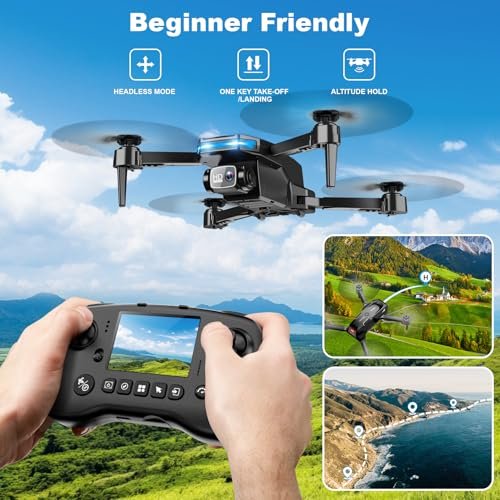
The DJI Mini 4K is the best drone with a camera under $500 for clear video, steady flight, and easy control.
You want smooth views of a trip, a fun weekend flight, or a simple way to learn aerial video. Yet many low-cost drones promise “4K” while giving shaky clips, weak controls, or short battery life. I focused on camera quality, flight help, battery options, safety features, and ease of use. These six picks cover beginners, kids, casual pilots, and serious creators. Before flying, check current FAA rules, local limits, and remote ID needs for your flight area.

Drone with Camera, Screen on…
The PK01 drone’s remote comes with a super handy built-in screen—no phone needed—so you can watch live HD footage and check flight stats right in your hands. (An SD card…

Drone with Camera for Adults,…
【2K Ultra HD Camera】Loiley drone features a high-quality 2K HD camera with a 90° remote adjustable angle, allowing you to capture breathtaking photos and ultra-clear videos from the sky. Whether…

DJI Mini 4K, Drone with…
No Registration Needed – Under 249 g, this drone with camera for adults 4K does not require FAA registration or Remote ID for recreational use. Visit the FAA’s official website…
How I Chose the Best Drone with Camera Under $500
A low price does not always mean low value. It does mean you must choose carefully. I looked at the parts that matter most during real flights: camera stability, control range, battery time, return-to-home features, wind handling, and setup.
A drone camera can list a high pixel count and still make poor video. A stable mount often matters more than a large number on the box. The DJI Mini 4K stands out because its 3-axis gimbal can keep footage smooth while the aircraft moves. Budget toy drones can still be fun, but many use electronic stabilization or a fixed camera. That difference becomes clear when the drone turns, climbs, or faces a light breeze.
I also considered learning speed. A new pilot needs one-key takeoff, altitude hold, headless mode, and a simple emergency stop. These tools act like training wheels. They do not replace safe practice, but they help reduce small mistakes.
Battery claims also need context. A listed flight time is usually measured in calm conditions with a fresh battery. Wind, cold weather, fast flight, and camera use can reduce actual time. I prefer packages with two batteries because they offer more useful air time without forcing a long wait between flights.
For outdoor use, I would also check the drone’s weight. In the United States, recreational pilots must follow FAA rules. Drones that weigh 250 grams or more may require registration, while lighter aircraft can still have operating rules. A light drone is not automatically free from every requirement. Always confirm the current FAA guidance before your first flight.
Drone With Camera and Screen Remote
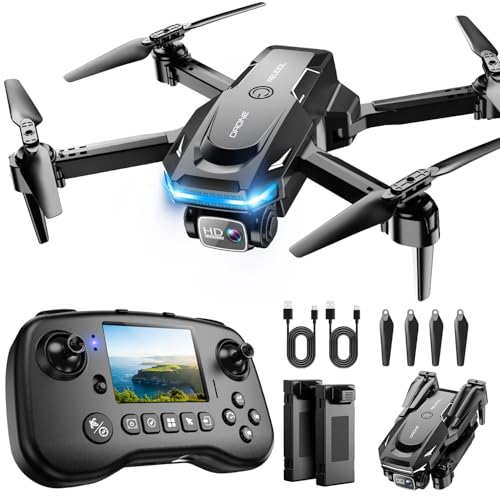
This quadcopter offers a useful feature that many low-cost drones miss: a screen built into the remote controller. I like this setup for pilots who do not want to depend on a phone during every flight. The screen can make the first setup feel faster, since you can view the live feed from the controller itself. It also gives the drone a more traditional feel than a toy controlled only through an app.
The camera is aimed at casual FPV use rather than professional filmmaking. You can use it for short clips, backyard views, and basic practice shots. The controller design may also help younger users understand direction and framing. As with most drones in this class, expect the best results in calm weather and bright light.
Pros:
- Built-in screen reduces the need for a phone
- Simple FPV viewing for new pilots
- Useful design for backyard and indoor practice
- Traditional remote gives direct control
- Good choice for casual aerial photos and video
Cons:
- Camera quality may not match a stabilized DJI camera
- Small drones can struggle in strong wind
- Screen size may feel limited for detailed framing
My Recommendation
I recommend this model for beginners who want a ready-to-use FPV experience without pairing a phone. It also suits families who want a simple shared drone for short flights. If your main goal is cinematic video, I would spend more time comparing it with the DJI Mini 4K. For easy viewing and casual fun, though, this is a practical value pick in the best drone with a camera under $500 category.
2K HD FPV Drone With Two Batteries

This 2K FPV drone targets new pilots who want more help while learning. Its altitude hold feature can keep the aircraft at a steadier height when you release the throttle. One-key takeoff and landing also make the first few flights less stressful. The adjustable speed modes let you begin slowly and add more response as your skills grow.
The two-battery package is a strong point for family use. One battery can charge while the other flies, depending on your charging setup. Headless mode may help a child or first-time pilot understand basic movement without worrying about which way the nose points. The 2K camera should work well for simple social clips, but I would avoid expecting gimbal-level smoothness.
Pros:
- Altitude hold helps beginners maintain a steady height
- Two batteries extend practice time
- Speed adjustment supports gradual learning
- One-key takeoff and landing simplify control
- Headless mode can reduce orientation mistakes
Cons:
- Fixed camera may show more shake during turns
- Lightweight body is not ideal for windy locations
- FPV range can vary with walls and wireless traffic
My Recommendation
This is a good fit for adults, teens, and beginners who want useful flight aids at a modest price. I especially like it for learning in an open yard or quiet park. It is less suited to anyone who needs polished travel footage. As a starter best drone with a camera under $500, it offers a friendly balance of control help, camera features, and extra battery value.
DJI Mini 4K Drone With 4K Camera

The DJI Mini 4K is the strongest all-around camera drone in this group. Its 4K UHD camera pairs with 3-axis gimbal stabilization, so the lens stays much steadier than a camera fixed directly to a small drone frame. That matters when you move forward, turn, or rise into a light breeze. The result is cleaner footage that needs less editing before you share it.
Its under-249-gram design can make travel easier, although pilots still need to follow all applicable rules. DJI also lists up to 31 minutes of flight time with the included battery, plus automatic return functions and wind resistance support. The long video transmission range is useful in open spaces, but you should never fly beyond legal and safe visual control. This model feels more like a real camera tool than a basic flying toy.
Pros:
- 3-axis gimbal produces smoother video
- 4K recording gives footage more detail
- Under-249-gram design is convenient for travel
- Long listed flight time reduces battery swaps
- Automatic return features add an important safety layer
- Strong ecosystem and clear control app
Cons:
- Usually costs more than basic toy drones
- Single-battery package limits back-to-back flights
- It still needs careful setup and responsible flying
My Recommendation
I recommend the DJI Mini 4K for travelers, creators, real estate learners, and anyone who cares about usable video. It is the best drone with a camera under $500 for most buyers because the gimbal, 4K camera, flight time, and mature controls work together. It may not include every advanced obstacle feature found on higher-priced DJI models, but its overall value remains excellent when available within budget.
1080P Foldable Mini Drone for Beginners

This foldable mini drone is designed around fun and simple control. Its 1080P camera can capture basic video and photos during indoor or outdoor play. One-key start, altitude hold, and a compact body make it less intimidating for a first flight. The foldable frame also takes less room in a drawer, backpack, or travel case.
Two batteries help make practice more enjoyable because the pilot can stay active while the first cell charges. The 3D flip mode adds a playful touch for older children and teens. I would use this drone in a room with enough space or outside on a calm day. Its small size helps with portability, but it also means wind can push it off course.
Pros:
- Foldable body stores easily
- 1080P camera supports basic photos and clips
- Two batteries provide more play time
- Altitude hold supports early practice
- One-key start makes takeoff less confusing
- 3D flips add entertainment value
Cons:
- 1080P footage is not ideal for serious creators
- Small frame has limited wind resistance
- Indoor flight still needs clear space and care
My Recommendation
This model is best for kids, teens, and adults who want affordable indoor or backyard fun. It makes a sensible first step before buying a larger camera drone. I would not choose it for landscape work or long outdoor flights. For a family seeking a low-risk best drone with a camera under $500, its foldable design and simple controls make good sense.
2K Foldable FPV Drone With Brushless Motors
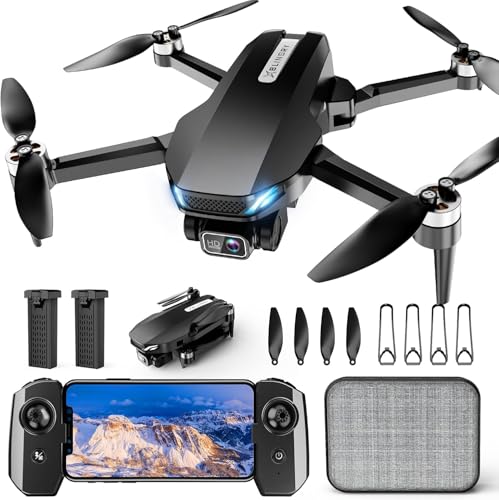
This 2K foldable drone adds brushless motors to a beginner-friendly design. Brushless motors often run more smoothly and can last longer than basic brushed motors, though performance still depends on the battery, weight, and weather. The listed 36-minute flight time comes from two batteries, not one continuous flight. That gives you a useful break from constant charging during a practice session.
The one-key takeoff and landing controls keep the learning curve gentle. Gesture selfie control can help capture quick photos without reaching for the remote, while the carrying case makes transport easier. The 2K camera is suitable for casual views and simple clips. Like most small drones without a mechanical gimbal, it will show some movement when the aircraft changes direction.
Pros:
- Brushless motors offer smooth and responsive power
- Two batteries support up to a listed 36 minutes total
- Foldable design travels well
- Carrying case protects the drone between flights
- Gesture selfie mode adds hands-free convenience
- One-key controls help first-time pilots
Cons:
- Actual battery time may fall below the listed figure
- 2K camera lacks the smoothness of a 3-axis gimbal
- Small aircraft still needs calm weather
My Recommendation
I would pick this drone for a beginner who wants a more durable-feeling motor system and a travel-friendly kit. The case and two batteries add real value for outdoor practice. It is not a professional camera platform, but it can serve as a strong bridge between a toy drone and a larger GPS camera model. It deserves a place on a best drone with a camera under $500 shortlist for casual pilots.
DJI Mini 4K Fly More Camera Combo

This DJI Mini 4K combo keeps the strong camera platform of the standard model and adds a second battery. The 4K camera and 3-axis gimbal are the main reasons to consider it. Smooth footage gives you more freedom to pan across a view, follow a walking subject, or capture a slow rise without harsh shake. The compact drone also fits well into a travel kit.
With two batteries, DJI lists up to 62 minutes of total flight time. The real total will vary, but the package still offers far more flexibility than a one-battery kit. QuickShots can create repeatable camera moves for users who are still learning manual control. I see this as the better buy when the combo price stays below your $500 limit and you plan to fly often.
Pros:
- Two batteries allow longer shooting sessions
- 4K camera captures detailed video
- 3-axis gimbal keeps footage smooth
- QuickShots help beginners create polished clips
- Compact under-249-gram aircraft travels easily
- Automatic return functions add peace of mind
Cons:
- Combo price can change with sales and stock
- Extra batteries add charging time and weight to a bag
- Advanced obstacle avoidance is not its main feature
My Recommendation
This is my top choice for frequent flyers, travel vloggers, and families who want a complete camera kit. The extra battery matters because a good location can disappear before a single battery finishes charging. If it remains under budget, this combo is arguably the best drone with a camera under $500 for total shooting value. Check the current package contents before ordering, since bundles can change.
Best Features at a Glance
| Best for | Why |
|---|---|
| Best overall video | DJI Mini 4K offers 4K capture and 3-axis gimbal stabilization. |
| Best beginner value | The 2K FPV drone includes two batteries, speed control, and altitude hold. |
| Best flight time | The DJI Mini 4K combo includes two batteries for up to a listed 62 minutes total. |
What to Look for Before Buying
Camera quality and stabilization
Do not judge a drone camera by resolution alone. A 4K label tells you the maximum video size, not how smooth or clean the clip will look. A gimbal can make a major difference. It physically keeps the camera level while the drone moves, much like a steady hand holding a camera on a moving boat.
A fixed 1080P or 2K camera can still produce fun footage. It may work well for a child’s first flight or a quick social post. However, it often shows more shake and softer detail. For travel memories, I prefer the DJI Mini 4K because its camera system gives the footage a more finished look.
Flight time and batteries
Look at the number of batteries included, not only the advertised minutes. A drone that flies for 15 minutes per battery with two cells can be more useful than a drone that lists a longer maximum but includes only one cell.
Weather, speed, camera use, and battery age affect flight time. Cold weather can reduce battery performance. I suggest landing before the battery reaches its emergency level. A few spare minutes can help you return safely instead of racing home at low power.
Altitude hold and GPS features
Altitude hold uses sensors to help the drone maintain height. It is helpful for new pilots because it lets them focus on forward, backward, and side movement. Headless mode can also help, but I treat it as a learning aid rather than a replacement for understanding orientation.
GPS features can support position holding and return-to-home functions. These features are more common on advanced camera drones. Even then, return-to-home is not magic. Trees, buildings, low battery, compass problems, or a poor starting point can affect the result. Set the return height correctly and keep the aircraft within a safe visual range.
Remote control and live video
A strong remote can make a cheaper drone feel much better. Look for clear sticks, simple buttons, and a stable phone holder if the controller uses a phone. A built-in screen can be convenient because it removes one extra setup step.
Live video range depends on the environment. Walls, trees, power lines, and nearby wireless devices can weaken the signal. Do not treat a long advertised range as permission to fly out of sight. Safe control matters more than a number on a product page.
Size, weight, and wind
Small drones are easy to pack and often less costly to repair. They are also more affected by wind. A light drone may drift during a calm-looking day when higher air currents are present. I prefer open areas with little wind for mini drones.
The DJI Mini 4K’s under-249-gram weight is a major travel benefit. Still, the weight threshold does not remove the need to follow FAA rules. Check registration, remote identification, airspace, and recreational flight requirements before use.
Safety and legal use
Never fly near airports, emergency scenes, crowds, or restricted areas. Keep the aircraft away from people and property. Avoid private spaces where a camera could create a privacy concern. A drone may be small, but its camera can still affect other people.
I also recommend a short preflight check. Inspect the propellers, secure the battery, confirm the correct flight mode, check the weather, and verify the home point. Start low and slow. A careful first minute often prevents a costly mistake later.
Which Drone Is Best for Different Users?
For travel and video creators
Choose either DJI Mini 4K package. The standard version suits buyers who want the lowest entry cost. The two-battery combo is better for long days, road trips, and repeated shooting. The gimbal is the key feature because it keeps clips smooth and reduces editing work.
For new pilots
The 2K FPV model gives beginners several useful controls. Altitude hold, speed adjustment, headless mode, and one-key landing can make practice less frustrating. The foldable 1080P model is another good option if the main goal is play rather than serious video.
For kids and families
A small foldable drone with two batteries can be a fun shared gift. Adults should supervise younger pilots and choose a clear flight area. I would start indoors only if the room has enough open space and the drone is designed for gentle indoor use. Outdoor flight should wait for calm weather.
For buyers who want a screen remote
The first quadcopter in this list is the natural choice. Its controller screen can simplify FPV viewing. This design is helpful for users who dislike app setup or do not want to risk a phone during a flight.
For the longest practical sessions
The DJI Mini 4K combo wins because it includes two batteries. The listed total time is up to 62 minutes, though actual use will vary. Extra batteries do not only increase time; they also let you plan a second shot after reviewing the first flight.
Common Mistakes New Drone Owners Make
Many new pilots launch too high too soon. Start at a low height in a clear area. Learn how the drone turns before trying fast movement or flips.
Another mistake is trusting the camera preview too much. Live video can lag or lose quality even when the drone still responds. Keep your eyes on the aircraft and use the screen as a framing tool.
Some buyers also ignore propeller damage. A tiny crack can cause vibration or unstable flight. Replace damaged props before flying again. Keep spare parts in the case if the package supports them.
Finally, do not assume a return-to-home button solves every problem. You still need to know the home point, return height, battery status, and nearby obstacles. Good safety habits protect both the drone and the people around you.
FAQs Of Best Drone with Camera Under $500
What is the best drone with a camera under $500?
The DJI Mini 4K is the best overall choice for most users. It combines a 4K camera, 3-axis gimbal, long flight time, and compact weight. The DJI Mini 4K combo is better if you want two batteries.
Is a drone under $500 good for beginners?
Yes. Many models include altitude hold, one-key takeoff, speed modes, and automatic landing. I suggest learning in a clear, open area and starting with slow speed.
Does every 4K drone record smooth video?
No. Resolution and smoothness are different. A drone with a 3-axis gimbal, such as the DJI Mini 4K, usually produces steadier footage than a low-cost drone with a fixed camera.
How long can these drones fly?
Flight time varies by model and conditions. The DJI Mini 4K lists up to 31 minutes with one battery, while the combo lists up to 62 minutes with two. Wind, speed, temperature, and battery age can reduce actual time.
Do I need to register a drone under $500?
Price does not decide registration. Weight, use, and current FAA rules matter. Check the FAA requirements before flying, even if the drone is small or intended as a toy.
Final Verdict: Which Should You Buy?
The DJI Mini 4K is the best drone with a camera under $500 for most buyers. Choose the combo if you want longer sessions, or select a 2K beginner model for lower-cost practice.
These picks cover video, travel, family fun, and learning. Check the current price, bundle, rules, and stock before you buy.

Similar Posts