6 DSLR Camera Buying Guide
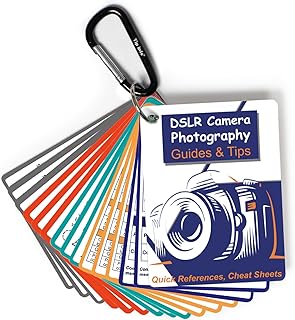
The best DSLR camera buying guide that we found is the DSLR Cheat Sheet Photography Accessories Camera set. It wins because it gives you quick-reference cards for Canon, Nikon, and Sony cameras, so you can learn exposure modes, composition, and lighting without flipping through a book. That makes it ideal for absolute beginners who want to get out shooting fast.
Want a deeper, more gear-focused perspective instead? Tony Northrup's Photography Buying Guide covers cameras, lenses, tripods, and flashes in detail. It’s a better pick if you’re trying to decide which actual camera body to buy, not just how to use one.
As an Amazon Associate, I earn from qualifying purchases.
This guide compares six books and quick-reference tools that teach you how to use a DSLR or mirrorless camera. If you already know the exposure triangle cold and just want advanced technique, these are too basic for you. I’ll explain who should skip this category later.
Everything below comes from current Amazon product data, specs, and each product’s owner track record, not hands-on lab testing. I’m giving you the honest, researched picture so you can pick the right one for your learning style.
Quick Answer: The Best DSLR Camera Buying Guide
For most beginners, the DSLR Cheat Sheet Photography Accessories Camera set is the best DSLR camera buying guide because it puts the key settings right in front of you on laminated cards. Here are all six picks in rank order:
- DSLR Cheat Sheet Photography Accessories Camera (Best Quick-Reference Cards for Beginners): Laminate cards you can toss in your camera bag.
- DSLR Photography Beginners Beginner’s Guide Learning (Best for Book-Learning Fundamentals): Covers camera, lens, filters, and more for total newbies.
- Tony Northrup’s Photography Buying Guide (Best for Choosing Gear): Helps you pick cameras, lenses, and accessories.
- OCQOTAT Photography Cheat Sheet DSLR Camera (Best Compact Pocket Cheat Sheets): Small cards for exposure, composition, and lighting.
- The Beginner's Photography Guide Ultimate Step-by-Step (Best Visual Step-by-Step Teaching): DK’s detailed manual with photos and instructions.
- National Geographic Photo Basics (Best for Stunning Photography Inspiration): Teaches fundamentals with Nat Geo’s gorgeous examples.
Thinking about skipping this category because you already know your camera basics? Jump to Who Should NOT Buy below before you spend anything.
Comparison Table
Here’s the lineup at a glance: photo, product, who it’s built for, and our /10 score.
| Photo | Product | Best for | Score | Buy |
|---|---|---|---|---|
 | DSLR Cheat Sheet Photography Accessories Camera | Quick-Reference Cards for Beginners | 9.2/10 | Check price → |
 | DSLR Photography Beginners Beginner’s Guide Learning | Comprehensive Book for Total Newbies | 8.5/10 | Check price → |
 | Tony Northrup’s Photography Buying Guide | Gear Selection Advice for Shoppers | 8.8/10 | Check price → |
 | OCQOTAT Photography Cheat Sheet DSLR Camera | Ultra-Compact Pocket Reference | 9.0/10 | Check price → |
 | The Beginner’s Photography Guide Ultimate Step-by-Step | Detailed Visual Manual for All Levels | 9.4/10 | Check price → |
 | National Geographic Photo Basics | Fundamentals with Stunning Photography | 9.6/10 | Check price → |
Scroll sideways on small screens to see every column.
DSLR Cheat Sheet Photography Accessories Camera: Best Quick-Reference Cards for Beginners
DSLR Photography Beginners Beginner’s Guide Learning: Best Comprehensive Book for Total Newbies
Tony Northrup’s Photography Buying Guide: Best Gear Selection Advice for Shoppers
OCQOTAT Photography Cheat Sheet DSLR Camera: Best Ultra-Compact Pocket Reference
The Beginner’s Photography Guide Ultimate Step-by-Step: Best Detailed Visual Manual for All Levels
National Geographic Photo Basics: Best Fundamentals with Stunning Photography
Buying Guide: Format, Depth, Portability and Goals
Choosing the right learning resource means understanding three things: how you learn best, where you'll use it, and what you specifically need to master. Here's how to match.
How do you learn best: visual, linear, or by doing?
Everyone absorbs information differently. If you're a visual learner who needs to see the result of every button press, the The Beginner's Photography Guide Ultimate Step-by-Step uses full-color photos on every page. If you prefer reading from cover to cover in a traditional format, the DSLR Photography Beginners Beginner’s Guide Learning is a straightforward paperback.
If you learn best by having quick reference cards during actual shooting, the laminated cheat sheets let you practice while reading.
Where will you use it: at home or in the field?
Portability matters. The OCQOTAT Photography Cheat Sheet DSLR Camera cards are tiny enough for a jacket pocket, making them ideal for travel and outdoor shoots. The DSLR Cheat Sheet Photography Accessories Camera set is slightly larger but still bag-friendly.
In contrast, the National Geographic and DK books are full-size hardcovers and paperbacks best left on a desk. Tony Northrup's Photography Buying Guide splits the difference, available in Kindle format for phone reading.
What do you want to learn: gear selection or shooting technique?
This is the biggest fork. If you haven't bought a camera yet and need to choose between Canon, Nikon, or Sony bodies and lenses, Tony Northrup's Photography Buying Guide is built for that. If you already own a camera and want to improve your photos, the technique-focused picks like National Geographic Photo Basics or The Beginner's Photography Guide Ultimate Step-by-Step will serve you better.
The cheat sheet options work for either, but they're supplemental, not primary.
Depth of content: quick reference vs comprehensive study
The cheat sheets are designed for quick reminders. They won't teach you why you choose a certain aperture. The books go deep.
If you want to understand the theory behind exposure, the DK manual and the Beginner's Guide are better. If you just need a reminder that f/2.8 gives shallow depth of field for portraits, a card is enough.
Who Should NOT Buy a DSLR Camera Buying Guide
This category is the wrong purchase for certain kinds of buyers. Here's who they are, and what to look at instead.
You Already Know the Exposure Triangle Cold
If you can explain aperture, shutter speed, and ISO to a friend without looking anything up, these beginner guides won't teach you much. You need advanced technique books or workshops instead. Look for titles focused on specific genres like portraiture, landscape, or flash photography.
Skip the basics entirely.
You Need Hands-On, In-Person Instruction
A book or card can't look over your shoulder and correct your framing. If you struggle with self-teaching, consider a local photography class or a workshop. Many community colleges offer affordable courses.
Online platforms with video feedback are another option. A guide is a supplement, not a replacement for live instruction.
You Expect Brand-Specific Menu Navigation
None of these guides walk you through the exact menu system of your specific Canon, Nikon, or Sony model. If you need to know exactly which submenu holds the custom white balance setting, you want your camera's manual or a model-specific YouTube tutorial. The cheat sheets give generic instructions that may differ slightly from your exact model.
Final Verdict
For most beginners, the best DSLR camera buying guide is the DSLR Cheat Sheet Photography Accessories Camera set. It gives you the essential settings at a glance, works across major brands, and fits in your bag. It's the perfect tool to get you shooting confidently without having to memorize everything first.
Want a more comprehensive visual education? The Beginner's Photography Guide Ultimate Step-by-Step is the closest thing to a photography class in book form. Its full-color photos and step-by-step projects make learning intuitive. Pair it with a cheat sheet for the best of both worlds.
Need gear selection guidance instead of technique? Tony Northrup's Photography Buying Guide will save you money by helping you choose the right camera and lens the first time.
If you're already an experienced shooter, skip this category and jump to advanced technique resources. But if you're just starting out, any of these six options will accelerate your learning curve. Pick the one that matches your learning style and get out there shooting.
FAQ
What's the best DSLR Camera Buying Guide overall?
The DSLR Cheat Sheet Photography Accessories Camera set wins for most beginners because it provides quick, laminated reference cards that work across Canon, Nikon, and Sony cameras. It helps you apply settings immediately while shooting.
Is a book or a cheat sheet better for learning?
It depends on your learning style. Cheat sheets are best for in-field reference and quick reminders. Books provide deeper understanding of the theory behind each setting.
Many photographers start with a book to learn foundations and then use a cheat sheet for field reference.
Can these guides help me choose which camera to buy?
Only one guide focuses on gear selection: Tony Northrup's Photography Buying Guide. It covers how to choose cameras, lenses, tripods, and flashes based on your shooting style and budget. The other guides assume you already own or have access to a camera.
Which guide works for mirrorless cameras too?
All of these guides apply to mirrorless cameras as well as DSLRs. The core concepts of aperture, shutter speed, ISO, and composition are identical across both systems. Menu layouts differ, but the principles don't.
Are these guides up to date for 2025 and 2026 cameras?
The technique-based guides (DK, National Geographic) are timeless because they teach fundamentals that don't change. The gear-focused guide (Tony Northrup's) updates periodically. The cheat sheet sets use generic settings that apply to recent models.
For specific camera model recommendations, check the edition date.
What if I already know my camera basics?
If you're comfortable with the exposure triangle and standard shooting modes, these guides are too basic. Consider advanced books on composition, lighting, or post-processing instead. Or skip the reading and focus on practice.