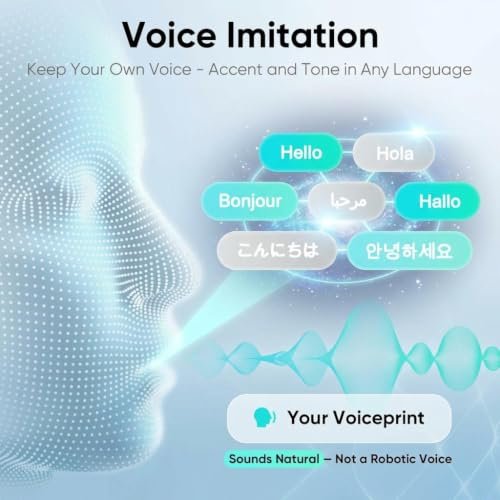
Best AI Translator Device: Top Picks For Easy Travel
The best AI translator device delivers fast, clear speech translation for travel, study, work, and daily conversations.
Picture arriving at a busy airport where every sign looks strange and no one speaks your language. A phone app may help, but weak service, small buttons, and background noise can slow you down. A dedicated AI translator device feels more like a pocket guide. It listens, translates, and speaks back with less fuss. I reviewed the key features, language support, offline tools, photo translation, and travel value of these six popular models. This guide can help you choose the right Best AI Translator Device for your trip, class, business meeting, or language practice.
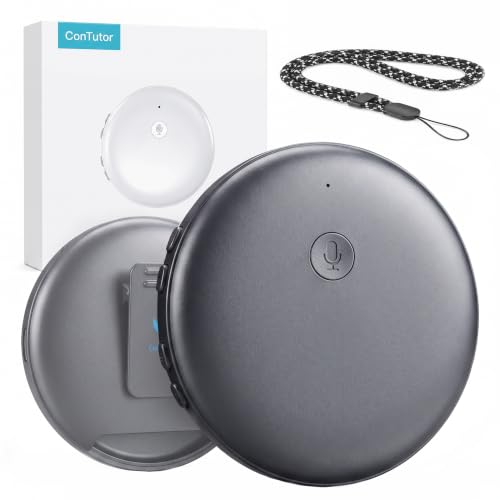
AI Translator Language Translator Device…
1.Real-Time 165-Language Translation Instant two-waytranslation between Mexican Spanish & English with 0.5s lowlatency, perfect for restaurant, retail, hotel and dailycommunication.Breaks language barriers at work and lifeseamlessly. 2.Al Language Tutor &…
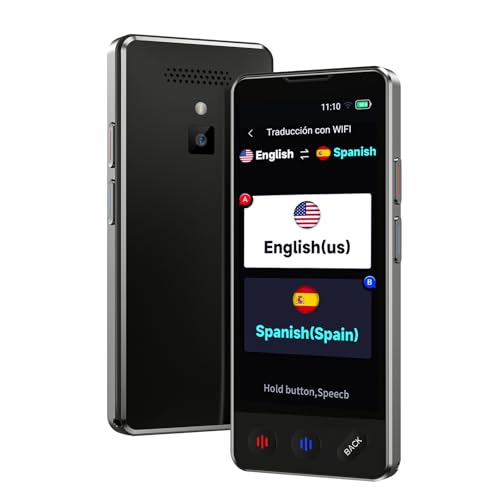
AI Language Translator Device, 2026…
【AI Translator Supporting 150 Languages】Vormor instant translator adopts the latest technology, ultra-fast and accurate translation, the response time is only 0.5 seconds, 98% real-time translation accuracy, and supports ChatpGPT, unit…
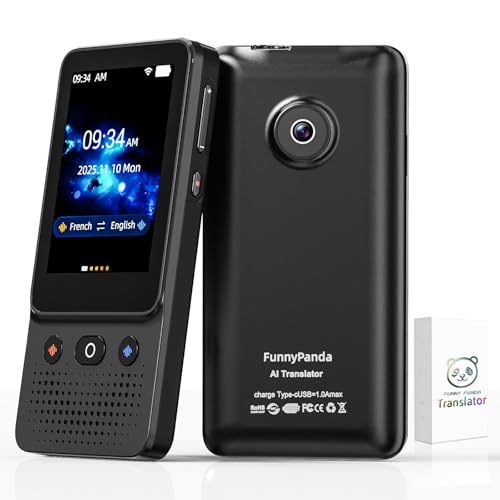
Language Translator Device, Voice Ai…
【Ai Language Translator Device for All Languages Supporting 138 Languages】Our spanish translator device T21 adopts the latest technology (traductor de voz instantaneo 2026), ultra-fast and accurate translation, 98% real-time translation…
AI Translator for Spanish and English Practice

This compact translator focuses on Spanish and English practice while also listing support for up to 165 languages. That wide range makes it useful for trips beyond a single country. The simple design should appeal to users who want a handheld tool instead of a full phone app. I see it as a friendly pocket companion for short talks, basic questions, and guided practice.
The strongest appeal is its mix of travel help and language learning. A student can use it to hear phrases, repeat words, and build confidence before a trip. A traveler can use it to ask about food, transport, directions, or hotel needs. As with any electronic translator, results can change with accents, noise, internet access, and the exact language pair, so I would still keep a backup translation app.
Pros:
- Supports a broad list of languages
- Useful focus on Spanish and English practice
- Small design fits in a travel bag or pocket
- Helpful for basic travel conversations
- Can support language confidence through repeated practice
- More focused than switching between several phone apps
Cons:
- May need a strong connection for some translation functions
- Small hardware may not suit users who prefer a large screen
- Accuracy can vary with slang, noise, and fast speech
VORMOR AI Translator with Offline Support

The VORMOR model stands out for users who want a translator that does not depend on Wi-Fi for every task. Its listing highlights two-way translation for 150 languages, plus offline, photo, and recording tools. It also mentions ChatGPT support, which may help with broader language questions and natural wording. This gives the device a more complete feel than a basic phrase tool.
I would look closely at the offline language packs before a trip. Offline support is valuable on a plane, in a rural area, or when roaming costs feel too high. Photo translation can also help with menus, signs, labels, and simple forms. The main trade-off is that offline translation may support fewer language pairs or fewer features than online mode, a common limit across dedicated translator devices.
Pros:
- Designed to work without Wi-Fi for selected functions
- Two-way translation supports natural back-and-forth talks
- Photo translation helps with signs and menus
- Recording support may help users review talks later
- Large language claim suits multi-country travel
- ChatGPT support may help explain phrases and context
Cons:
- Offline features may vary by language pair
- Online tools still need a connection
- Extra features may take time to learn
T21 AI Translator with Wi-Fi and Offline Modes
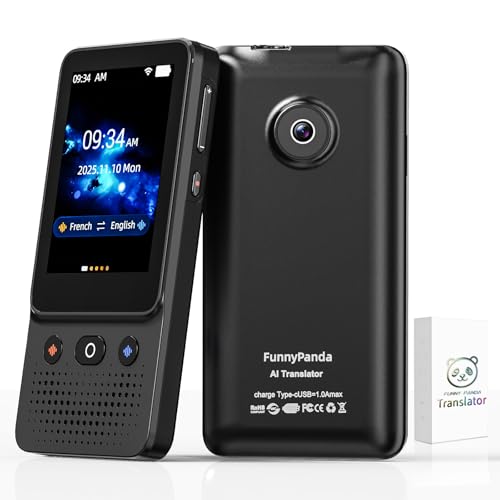
The T21 is built for people who want several ways to translate. Its advertised features include two-way voice translation for 138 languages, Wi-Fi access, offline use, recording, and photo translation. That mix gives it a practical role in both travel and study. Instead of relying on one mode, I can choose the tool that fits the moment.
Voice translation should help during face-to-face talks, while photo translation can handle written text. Recording may prove useful for students, tour notes, interviews, or later review. The device also appears suited to business travel because it combines conversation and reference tools in one unit. I would test the microphone and language settings at home before using it in an important meeting.
Pros:
- Offers both Wi-Fi and offline translation modes
- Supports two-way voice conversations
- Photo translation helps read printed language
- Recording adds value for study and review
- Useful blend of travel and learning functions
- Broad language support can help on multi-stop trips
Cons:
- Offline coverage may not match online coverage
- 138-language support does not mean equal quality in every language
- Users may need practice to switch between modes quickly
Enence PRO Real-Time Voice Translator

The Enence PRO takes a more focused approach. Its key feature is real-time voice translation, which may suit people who want a simple conversation tool. It avoids the long feature list found on some newer AI models. That can be a benefit for travelers who value quick setup and a clear purpose.
I would consider this model for basic talks, guided tours, shopping, and hotel needs. A focused voice translator may feel less distracting than a device filled with menus. Still, buyers should confirm supported languages, connection needs, and any required app or service before purchase. Real-time translation can make a talk smoother, but it cannot always catch jokes, regional slang, or unclear speech.
Pros:
- Focused design for real-time voice translation
- Simple concept may be easy for new users
- Useful for short travel conversations
- Can reduce the need to type on a phone
- Compact format should travel well
- Good choice for users who do not need many extra tools
Cons:
- May offer fewer tools than models with photo and recording modes
- Connection needs should be checked before travel
- Voice results may suffer in loud places
AI Translator with ChatGPT and Offline Mode

This model aims to cover many travel needs in one handheld unit. The listing highlights more than 150 languages, ChatGPT support, offline use, recording, photo translation, and voice translation. That range makes it one of the more feature-rich options in this group. It may appeal to travelers who want one device for spoken and written language help.
ChatGPT-style support can be useful when a direct translation needs more context. For example, a user may ask for a polite version of a sentence or a simple explanation of a phrase. Offline tools can help when the network disappears, while recording can support later review. I would treat AI output as helpful guidance, not as a legal, medical, or safety-grade translation.
Pros:
- Supports more than 150 languages according to the listing
- Combines voice, photo, recording, and offline tools
- ChatGPT support may improve phrase explanations
- Useful for both travel and self-study
- Offline mode can reduce dependence on public Wi-Fi
- One device can replace several small travel aids
Cons:
- Feature-rich menus may feel complex at first
- Some language functions may require internet access
- AI answers can still miss local meaning or cultural nuance
5.5-Inch AI Translator for Travel and Business

The 5.5-inch AI translator is the largest-screen option in this review. A bigger display can make menus, translated text, and photos easier to read. The listing describes 150-language support with online, offline, group, and phone translation. Those features give this model a strong fit for work trips, classrooms, and longer conversations.
A large screen adds comfort when I need to show translated text to another person. Group or phone translation may also help in meetings, calls, or shared travel plans, though buyers should confirm how each mode works. The larger body may feel less pocket-friendly than a small translator. If screen comfort matters more than minimum size, this is one of the most interesting choices for 2026 travel.
Pros:
- 5.5-inch screen offers easier text viewing
- Supports online and offline translation modes
- Group translation may help teams and families
- Phone translation adds flexibility for work
- Useful for travel, study, and business talks
- Large display may help users with limited vision
Cons:
- Larger size may take more room in a pocket
- Some advanced modes may require setup or internet access
- Battery life can vary with screen use and voice features
My Recommendation
After comparing these options, I would choose based on the way you plan to talk. The Spanish and English practice model is a natural fit for students and travelers who want simple daily practice. The VORMOR and ChatGPT models suit users who want offline tools plus photo and recording features. The T21 offers a balanced middle ground, while Enence PRO is better for people who want a focused voice translator without a long list of extras.
The 5.5-inch model is the most appealing choice for users who read a lot of text or share a screen in business and group settings. For many buyers, though, the Best AI Translator Device is the VORMOR-style model with offline, photo, recording, and two-way tools. It covers the widest range of real travel problems. I recommend checking the supported offline language pairs, return terms, battery details, and required connection before ordering.
| Best for | Why |
|---|---|
| International travel | Offline, photo, and two-way voice tools can help when Wi-Fi is weak. |
| Spanish and English practice | The dedicated practice focus makes daily phrase review simple. |
| Business or group use | A large screen and group tools make shared translation easier to read. |
How I Evaluated These AI Translator Devices
I do not judge a translator by its language count alone. A device may list 150 languages, but each language can have different online, offline, voice, and photo support. I look at the full user path: setup, microphone response, screen clarity, speech output, mode changes, and travel readiness. A high number looks good on a box, but useful results matter more in a real conversation.
I also consider what happens when conditions are poor. Airports can be loud. Trains can lose service. A hotel may have weak Wi-Fi. An offline mode can act like a spare tire, but it only helps if the needed language pack works without a connection. This is why I suggest testing the device before leaving home.
Privacy also deserves attention. Voice and photo tools may send data to remote servers when they use online AI services. Buyers should read the product privacy terms and avoid sharing sensitive details. I would never use a consumer translator as the only tool for medical consent, legal papers, immigration forms, or emergency instructions.
Why Use a Dedicated AI Translator Device?
A phone can translate many phrases, so a dedicated device must offer more than a copy of an app. The best models use large buttons, clear screens, quick voice controls, and simple two-way talk modes. That design can help when both people need to see the result. It also keeps translation separate from calls, alerts, social media, and low battery warnings.
Dedicated hardware can feel calmer in a stressful place. You press a button, speak, and pass the device across the table. That small action can break the ice when words feel like a locked door. A traveler may also feel more comfortable handing over a translator than handing over a personal phone.
These devices are not magic. They can misunderstand a low voice, a heavy accent, or a sentence with several meanings. A short sentence works best. I recommend speaking one idea at a time and checking the result when the topic matters.
Key Features to Check Before Buying
Online and Offline Translation
Online translation often gives access to more language pairs and newer AI tools. It may also handle longer phrases with better context. Offline translation works without Wi-Fi or mobile data, which makes it valuable on flights and in remote places. However, offline packs may support fewer languages and simpler features.
Do not assume that “no Wi-Fi needed” means every function works offline. Ask which languages support offline voice, photo, and text translation. Also check whether the device needs a first-time download while connected. I would install and test those packs before a trip.
Two-Way Conversation Mode
Two-way mode lets two people speak in turn. The device identifies or uses a selected language, translates each phrase, and plays or shows the result. This is much easier than typing every line into a phone. It works well for directions, meals, check-in, shopping, and simple introductions.
Look for clear speaker output and a screen that both people can see. A slow or quiet speaker can make a good translator frustrating. In a busy place, move closer and speak toward the microphone. Short pauses also give the software time to process speech.
Photo Translation
Photo translation can read signs, menus, labels, and printed notices. It is one of the most useful travel tools because written language often appears before a person is available to help. A sharp camera and steady hand improve the result. Good lighting also matters.
Photo translation may struggle with curved surfaces, glare, tiny print, handwritten notes, and unusual fonts. Use it as a guide, then confirm important details. A restaurant menu is low risk. A medication label or legal form deserves careful human review.
Microphone and Speaker Quality
Speech recognition starts with the microphone. A weak microphone can turn a clear sentence into a poor translation. Background music, traffic, wind, and several speakers can cause errors. I prefer a device that lets me repeat a phrase quickly.
The speaker matters just as much. Both people need to hear the translated voice without leaning close. Headphone support can help in quiet private settings, but public conversations usually need a strong built-in speaker. If possible, test voice volume before your return window ends.
Screen Size and Controls
A small device is easy to carry. A larger screen is easier to read and share. The right balance depends on your hands, eyes, and travel style. A 5.5-inch unit may suit business users, while a compact device may fit a light day pack better.
Simple controls matter more than fancy graphics. I look for clear language buttons, a readable history screen, and a fast way to switch sides in a conversation. If the interface makes me stop and search, it may slow down a real talk.
Battery and Charging
Voice translation, screen brightness, cameras, and online data can use power. Battery claims often depend on light use, so real travel time may be shorter. Charge the unit before leaving and carry a small power bank. A common charging port can make life easier.
Also check whether the charger suits your destination. A plug adapter may be needed overseas. I like to save key hotel details, addresses, and emergency phrases in another place too. No electronic device should be your only backup.
Language Coverage
Language count is useful, but it is not the whole story. Mandarin, Spanish, French, German, Japanese, Korean, Arabic, and many other major languages may receive strong online support. Less common languages can have fewer voice or offline options. Dialects and regional terms can also change the quality of a result.
Check the exact language pair rather than the headline number. A device may translate speech in one language but only translate text in another. Buyers should also check whether the product supports automatic language detection. Manual selection can be more reliable in a noisy setting.
AI Translation Accuracy in Daily Use
Modern AI translation can handle common phrases with impressive speed. It works best when the speaker uses plain words and a normal pace. “Where is the train station?” is easier than a long sentence full of slang. Clear speech gives the device a clean path to the right answer.
Context still creates problems. The word “bank” can mean a financial place or the side of a river. Humor, sayings, and polite forms may not transfer perfectly. When a phrase sounds odd, say it again in simpler words and compare the result.
I also advise users to confirm names, numbers, dates, and directions. A single wrong digit can cause a real problem. Type or show the information when possible. The Best AI Translator Device should support good communication, not replace common sense.
Dedicated Translator vs. Phone App
Phone apps have one major advantage: most people already own a phone. They can offer many languages, camera tools, text input, and voice translation at no extra hardware cost. They may also receive frequent software updates. For a short trip, an app may be enough.
A dedicated translator device has a different strength. It keeps the conversation tool ready and reduces the number of taps. Many models offer a two-way layout made for passing between two people. A translator can also preserve phone battery for maps, tickets, photos, and calls.
I would pick a phone app for occasional needs and a dedicated device for frequent travel. People who visit several countries each year may get more value from separate hardware. Students and families may also enjoy the simpler, less distracting format.
Tips for Getting Better Translation Results
- Speak slowly, but use a natural voice.
- Say one short idea at a time.
- Avoid slang, jokes, and local sayings when possible.
- Move away from loud music and traffic.
- Keep the microphone near the person speaking.
- Use the same language setting on both sides of a talk.
- Repeat names, prices, and dates for confirmation.
- Use photo mode in good light and hold the device steady.
- Download offline packs before leaving home.
- Update the device while connected to trusted Wi-Fi.
- Carry a backup app, phrase card, or written address.
These habits may sound small, but they make a large difference. Translation software needs clean input, much like a camera needs light. When I slow down and remove extra words, the device usually gives a more useful result. Patience helps both sides feel heard.
Who Should Buy an AI Translator?
Frequent travelers are the clearest match. A translator can help at airports, hotels, restaurants, train stations, shops, and local tours. It can also reduce the stress of asking for help in a new place. The device does not need to speak for you; it simply gives you a bridge.
Language students can use one for practice. Hearing a phrase and repeating it can build comfort over time. Recording tools may help learners review new words. Still, a teacher or native speaker remains important for tone and culture.
Small business owners may also benefit. A quick translator can help with basic greetings, product questions, and simple meetings. For contracts, technical plans, safety steps, or sensitive data, hire a qualified human translator. AI is a useful assistant, not a certified interpreter.
Families with mixed languages may find the two-way mode helpful at home. A child can practice with a parent or grandparent. A host can welcome a guest with less fear of making a mistake. The best device is the one that people will actually use.
Who May Not Need One?
If you only need a few phrases, a phone app may save money and space. A dedicated device also adds another item to charge and protect. Some users may prefer a phrasebook or downloaded app for a short weekend trip. The value grows when you use the device often.
Buyers who need perfect accuracy should not depend on consumer AI alone. Legal, medical, financial, and safety information needs expert review. A translator can help start the conversation, but it should not make a high-risk decision for you.
How to Prepare Your Translator Before a Trip
Set up the device at home. Connect it to trusted Wi-Fi, charge the battery, choose your main languages, and download any offline packs. Try a quiet conversation and then test it in a room with background sound. This simple check can reveal problems before you reach the airport.
Save common phrases in a note or favorites list if the device allows it. Useful examples include “I need help,” “Where is the restroom?” and “I have a food allergy.” Add your hotel name, address, and contact number. A printed card is still wise.
Pack the charging cable and a small power bank. Keep the device in an easy-to-reach pocket, not at the bottom of a full suitcase. If you cross time zones, check the clock and any scheduled translation features. A few minutes of planning can save a great deal of stress later.
Privacy and Safety Considerations
Online AI tools may process voice recordings or images on remote servers. Read the privacy policy before using the device for personal conversations. Avoid scanning passports, bank details, private contracts, or medical records unless you understand how the data is handled. Delete stored recordings and images when you no longer need them.
Use a secure network when possible. Public Wi-Fi can expose devices to common security risks. Keep the software updated, but install updates from the official product system only. If a device asks for unusual access, pause and review the request.
For emergencies, use the translator as one aid among several. Show a written address, contact local emergency services, and ask a person nearby for help. A battery can die, a server can fail, and a translation can be wrong. Good preparation adds a safety net.
What to Expect From AI Features in 2026
In 2026, AI translator devices are moving beyond simple word swaps. Many models now combine speech, text, images, recording, and conversational help. Some also use AI assistants to explain tone or offer a more natural sentence. These features can make a device feel more like a pocket tutor.
That progress does not remove the need for care. AI can sound confident even when it misses the meaning. It may not know a local name, brand, joke, or cultural detail. I look for a device that makes it easy to repeat, edit, compare, and confirm a result.
The strongest trend is flexibility. Online mode can provide broad support, while offline mode protects the user when service fails. Photo and group tools add value beyond voice translation. Buyers should select the feature set that matches their daily use instead of paying for features they will never open.
FAQs Of Best AI Translator Device
What is the Best AI Translator Device for travel?
The best choice depends on your languages and travel conditions. A model with two-way voice, offline packs, photo translation, and a clear screen offers the most flexibility. Among these options, the VORMOR-style device is a strong all-around choice for many travelers.
Do AI translator devices work without Wi-Fi?
Some do, but offline support varies by language and mode. You may need Wi-Fi to download language packs or use advanced AI tools. Check the exact offline language list before buying and test it before your trip.
Are translator devices more accurate than phone apps?
Not always. Accuracy depends on the software, language pair, microphone, connection, and speaker. Dedicated devices can be easier to use in conversation, while phone apps may offer broader tools and updates.
Can a translator device translate photos?
Several models in this review advertise photo translation. This feature can read menus, signs, and labels. Good light, clear print, and a steady camera help improve results.
Can I use AI translation for legal or medical documents?
You should not rely on it as the only translation for high-risk information. Use a certified human translator for legal, medical, immigration, or safety documents. AI can offer a rough guide, but a serious error may have serious results.
Final Verdict: Which Should You Buy?
For most travelers, the VORMOR AI translator is the strongest all-around pick because it combines two-way voice, offline, photo, recording, and broad language support. The 5.5-inch model is better for large text and group use.
The Best AI Translator Device should match your language, trip, and need for offline use. Test language packs before departure, keep a backup, and use AI as a helpful bridge to clearer human contact.