5 Best AI Lawn Mowing Robots: Top Picks For A Smarter Yard
The best AI lawn mowing robots combine smart navigation, quiet cutting, and simple app control for an easier lawn.
A large yard can turn a calm weekend into hours of pushing, trimming, and emptying a mower. Even a small lawn needs steady care during fast spring growth. The best AI lawn mowing robots help by cutting little and often, avoiding many common objects, and returning to charge on their own. I reviewed the leading options below with focus on navigation, cutting range, setup, noise, safety, and real daily value. That makes it easier to choose a robot that fits your yard instead of choosing one based on a flashy feature list.
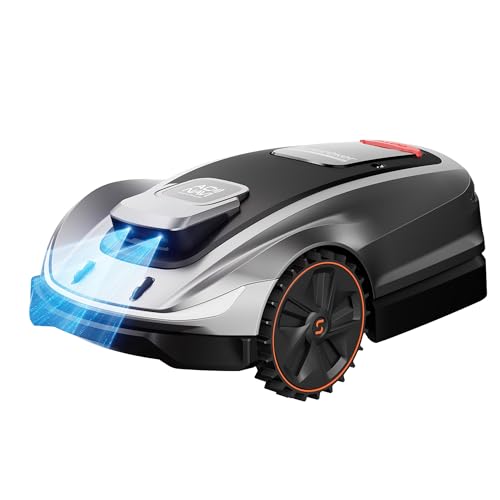
Sunseeker X5 AWD Robot Lawn…
AWD for Everyday 0.5-Acre Yards: Built for homeowners with up to 21,780 sq. ft., longer runs, slopes, uneven grass, roots, thicker turf, and changing backyard terrain. RTK + Vision Navigation:…

Sunseeker S4 Robot Lawn Mower,…
For Complex 0.25-Acre Yards: Built for up to 10,890 sq. ft. with dense trees, shade, eaves, narrow passages, multiple zones, uneven ground, and weak-signal areas. 360° 3D LiDAR + Vision…

LEBOSBO V3 Robotic Lawn Mower…
【AI Vision Obstacle Sensing】Equipped with intelligent AI vision technology, the LEBOSBO V3 robotic lawn mower can detect obstacles and navigate lawn areas more accurately for safer and smoother mowing. 【Custom…
Sunseeker X5 AWD Robot Mower

The Sunseeker X5 AWD is built for homeowners who want a wire-free robot mower for a larger lawn. Its listed features include RTK positioning, Vision AI, all-wheel drive, and coverage up to 0.5 acre. That combination gives it a stronger feature set than many small entry-level mowers. The AWD design should also help it keep traction on mild slopes and uneven ground.
RTK navigation can offer precise positioning when the mower has a clear view of the sky and a properly placed signal setup. Vision AI adds another layer by helping the mower recognize objects in its path. I like this mix because satellite guidance alone may not see every toy, hose, or garden item. Still, buyers should plan the setup with care, keep the charging area clear, and check the current instructions before the first run.
Pros:
- Designed for lawns up to 0.5 acre
- All-wheel drive can improve traction
- RTK navigation supports precise wire-free mowing
- Vision AI helps identify common lawn obstacles
- No perimeter wire installation in the usual setup
- A strong fit for larger suburban lawns
- Frequent light cuts can support a neat lawn finish
Cons:
- RTK performance may change near tall buildings, trees, or dense cover
- Initial setup can take more planning than a basic wired mower
- The larger feature set may cost more than small-lawn models
Sunseeker S4 Wire-Free Robot Mower
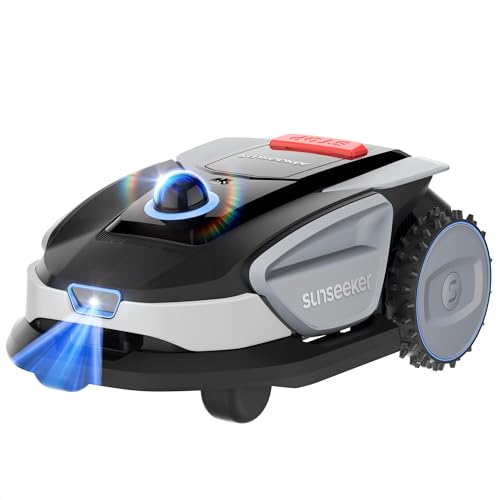
The Sunseeker S4 targets medium-size lawns up to 0.25 acre. It uses 3D LiDAR and Vision AI rather than relying only on a boundary wire. That makes it appealing to homeowners who want a cleaner installation and smart obstacle awareness. The smaller coverage rating also makes the S4 easier to match with a typical city or suburban yard.
3D LiDAR can help the mower judge objects and space around it, while Vision AI may help it respond to items that appear in the grass. These systems are useful, but they do not replace basic lawn preparation. I would still remove cords, pet toys, branches, and loose tools before each scheduled mowing period. For many owners, the S4 offers a good middle ground between a simple robot and a premium large-yard machine.
Pros:
- Suitable for lawns up to 0.25 acre
- 3D LiDAR adds depth sensing for navigation
- Vision AI supports obstacle detection
- Wire-free design can reduce installation work
- Good size for many suburban yards
- Frequent automatic mowing can save time
- Smart navigation may help around changing yard objects
Cons:
- Not intended for lawns larger than its rated area
- Advanced sensors may need clean lenses for best results
- Complex yards may still need no-go zones or manual trimming
LEBOSBO V3 AI Vision Mower

The LEBOSBO V3 is aimed at smaller lawns up to 1,600 square feet. It combines AI vision obstacle avoidance with app control, adjustable cutting height, and no-go zones. Those features matter when a yard has flower beds, play areas, or a small patio that needs protection. Its low-noise design may also suit neighborhoods where loud mowing would disturb family members or nearby homes.
This model makes the most sense for an owner who wants basic automation without managing a large property. Adjustable cutting height helps you adapt to the season, though I recommend raising the deck during periods of heat or drought. The app should make schedules and restricted areas easier to manage. As with any compact robot mower, the V3 will work best on a clear lawn with a fairly simple layout.
Pros:
- Designed for lawns up to 1,600 square feet
- AI vision helps with obstacle avoidance
- App control supports scheduling and adjustments
- Adjustable cutting height adds seasonal flexibility
- No-go zones can protect beds and other areas
- Low-noise operation is useful near homes
- Compact coverage fits many small yards
Cons:
- Limited to smaller lawns
- May need extra attention around tight corners and narrow paths
- Vision sensors can perform less reliably when dirty or blocked
YARDCARE V100 Vision Robot Mower

The YARDCARE V100 is another small-lawn option with a listed coverage area of up to 1,600 square feet. It uses HD vision navigation, smart obstacle detection, collision sensors, and adjustable cutting height. This setup focuses on the core jobs most owners want: mow on a schedule, avoid obvious objects, and keep the grass at a chosen height. Its low-noise operation is a welcome touch for compact yards close to living spaces.
I see the V100 as a practical choice for a first robot mower. It does not need to be matched with a half-acre property to show value. A small robot can remove the most repetitive part of lawn care while you handle edging and detail work. Keep the yard free of loose objects, inspect the cutting area often, and use a sensible mowing schedule rather than forcing the mower through wet, tall grass.
Pros:
- Fits small lawns up to 1,600 square feet
- HD vision supports navigation
- Smart obstacle detection adds convenience
- Collision sensors provide another safety layer
- Adjustable cutting height suits different grass needs
- Low-noise operation works well near homes
- A simple option for first-time robot mower buyers
Cons:
- Small coverage limits its use on larger properties
- It may not replace a trimmer along edges and borders
- Wet grass and clutter can reduce mowing efficiency
WORX WR320 Wire-Free Robot Mower

The WORX WR320 is listed for lawns up to one-half acre and uses a no-perimeter-wire approach. That makes it worth a close look for owners who want broad coverage without burying or pinning a boundary cable. WORX has a long history in outdoor power equipment, which may appeal to buyers who prefer a familiar lawn-care brand. The main attraction here is simple: more lawn capacity with less boundary-wire work.
Wire-free mowing can make installation faster, but the quality of navigation still depends on the yard. Trees, walls, slopes, garden borders, and poor signal conditions can affect how a robot maps its space. I would measure the usable grass area, not the total lot size, before ordering. For a half-acre lawn with clear zones and regular maintenance, the WR320 could be a useful time saver.
Pros:
- Rated for lawns up to one-half acre
- No perimeter wire can simplify installation
- Useful coverage for medium and larger suburban yards
- Comes from an established outdoor power brand
- Automatic mowing can reduce weekly yard work
- Wire-free setup may make future landscape changes easier
- A practical choice for owners who want broad coverage
Cons:
- Navigation can depend on yard layout and signal conditions
- It may need careful setup around beds, driveways, and slopes
- Edge trimming may still be needed after robotic mowing
My Recommendation
After comparing these models, I would start with the lawn rather than the brand name. The Sunseeker X5 AWD is the strongest choice for a property near the 0.5-acre range, especially when traction and precise wire-free navigation matter. The Sunseeker S4 is better for a medium yard where 3D LiDAR and Vision AI add useful navigation help without the larger coverage target. For a small lawn, the LEBOSBO V3 and YARDCARE V100 offer the most sensible feature mix.
The WORX WR320 stands out for buyers who want half-acre coverage and a no-wire design from a known outdoor tool company. In my view, the best AI lawn mowing robots are not simply the ones with the longest feature list. They are the ones that match the grass area, yard shape, slopes, trees, pets, and amount of setup you can manage. Always confirm the latest coverage, warranty, app support, installation parts, and return terms on the product page before buying.
| Best for | Why |
|---|---|
| Large or uneven lawns | The Sunseeker X5 AWD combines 0.5-acre coverage with all-wheel drive, RTK, and Vision AI. |
| Medium wire-free yards | The Sunseeker S4 offers 0.25-acre coverage with 3D LiDAR and Vision AI navigation. |
| Small lawns and first-time buyers | The LEBOSBO V3 and YARDCARE V100 cover up to 1,600 square feet and include helpful smart controls. |
How I Compare the Best AI Lawn Mowing Robots
A robot mower can look impressive in a product photo and still be a poor fit for your yard. I use a simple set of checks when comparing these machines. First, I look at the rated mowing area and compare it with the usable grass space. Then I consider navigation, obstacle sensing, cutting control, slope handling, noise, app features, safety, and maintenance.
Coverage is the first filter. A mower rated for 1,600 square feet should not be expected to manage a large open property. A model rated for 0.5 acre may be wasteful for a tiny city lawn. I also leave some margin below the maximum rating because grass growth, rain delays, narrow passages, and charging time can reduce real-world output.
Navigation is the next major point. Traditional robotic mowers often use a perimeter wire to define the work area. Newer wire-free models use tools such as GPS, RTK, cameras, LiDAR, or a mix of sensors. Each method has strengths. RTK can offer high positioning accuracy, cameras can identify visual objects, and LiDAR can measure distance and shape.
No single sensor makes a mower all-knowing. A camera may struggle in poor light or with a low object that blends into grass. LiDAR can lose value when lenses are dirty. Satellite signals may weaken near tall walls, thick tree cover, or dense buildings. That is why I give more weight to a complete system than to one bold feature on a box.
What AI Means in a Robot Lawn Mower
“AI” can mean several things in this product category. In many models, it refers to computer vision that helps the mower identify objects or make navigation choices. It may also describe software that creates a map, adjusts a route, or learns how to cover a lawn. Buyers should read the actual feature list rather than assume that every AI mower has the same skill.
Vision AI may help a mower see a garden hose, toy, pet bowl, or other item. It can reduce the need for perfect lawn clearing, but I would never leave risky objects in the grass on purpose. A robot mower still has moving blades. Good habits protect the machine, children, pets, and the lawn itself.
Some systems use AI to plan routes more efficiently. Instead of crossing the same strip again and again, the mower may choose a better path across its mapped area. This can save battery time and reduce missed patches. The result depends on the software, the shape of the lawn, and the strength of the mower’s signal or sensors.
AI does not mean the mower can solve every yard problem. It may not handle steep drops, deep holes, thick mud, tall weeds, or large changes in ground level. It also cannot edge against every wall or flower bed. I still view a robot mower as a lawn-care helper, not a complete replacement for every outdoor tool.
Wire-Free Navigation Versus Perimeter Wire
A wire-free robot mower can save a great deal of installation time. You may avoid measuring the border, securing cable pins, and repairing breaks caused by digging or weather. Wire-free systems can also make it easier to change a garden bed later. That flexibility is one of the best reasons to consider the latest AI lawn mower models.
The trade-off is that wire-free systems need a reliable way to understand the yard. Depending on the model, that may involve cameras, LiDAR, GPS, RTK, or special positioning equipment. The charging station must sit in a suitable place. A poor station location can affect signal quality and make docking less reliable.
Perimeter wire still has value. It creates a clear physical boundary and can work well in yards with limited satellite visibility. It may also provide a predictable setup for unusual spaces. The drawback is the extra installation work and the chance of a cable break later.
Before you choose, sketch your property. Mark the grass, trees, sheds, pools, beds, slopes, paths, and narrow links between lawn sections. If the grass is split into separate areas, check whether the mower supports them. This small step can prevent a costly mismatch.
Cutting Performance and Lawn Health
Robot mowers usually work best by cutting a small amount of grass on a regular schedule. This differs from letting the lawn grow tall and cutting a large amount once a week. Small clippings can fall back into the turf and return some nutrients, as long as the grass is not wet, overloaded, or diseased.
I recommend using a higher cutting height during hot weather. Cutting too low can stress the grass and expose soil. The correct height depends on the grass type, season, shade, and local climate. Adjustable cutting height gives you more control, but you still need to set it with care.
Do not ask a compact robot to clear weeds or heavy overgrowth like a brush mower. A robot mower maintains a lawn. It does not rebuild a neglected yard in one afternoon. If the grass has grown far too tall, mow it down with a standard mower first and then begin the robot schedule.
Wet grass deserves special attention. Moist clippings can stick under the deck and block the blades. Wet slopes can also reduce traction. Some users schedule mowing during dry daylight hours, while others rely on the mower’s rain settings. Check the manual and avoid changing those settings without understanding how the machine responds.
Safety Features That Matter
Safety should come before cutting speed. Look for a lift sensor, tilt sensor, stop button, collision response, and a clear blade shutoff process. These features do not make a mower risk-free, but they add important layers of protection. I would also keep children and pets away while the mower is active.
Check the lawn before each scheduled run. Remove toys, balls, cables, branches, and pet waste. A vision system may detect some objects, but no sensor catches everything in every condition. Small socks, wire, and thin garden ties can still cause trouble.
Use no-go zones around ponds, pools, soft ground, play areas, and delicate beds. A no-go zone is only as good as the map or boundary that defines it. Walk the area after setup and watch the first few mowing sessions. Early observation can reveal a route that needs correction.
Follow the maker’s advice before cleaning or turning the mower over. Power it down, remove the charging connection when instructed, and use suitable gloves when handling blades. Replace dull or damaged blades with approved parts. A clean, sharp cutting system usually works more efficiently and leaves a better finish.
App Control and Smart Scheduling
A useful app should make everyday control easier, not turn a simple task into a chore. Common controls include schedules, mowing zones, cutting height, map changes, status alerts, and remote start or stop. I value clear menus and reliable notifications more than a long list of advanced buttons.
Scheduling matters because a robot mower works best with routine. You may want shorter runs during fast growth and fewer runs during a dry spell. Some lawns need different schedules for shaded and sunny sections. A mower that allows zone planning can help balance those needs.
Before buying, check whether the app needs Wi-Fi, Bluetooth, cellular service, or a special positioning signal. A mower may work well near the house but lose remote access at the far end of a large lot. Also check whether key features require a subscription. Terms can change, so confirm the current details on the listing or manufacturer page.
Software updates can improve navigation and fix bugs. They can also change menus or settings. I suggest updating the mower when convenient, then watching its next few runs. Save your map or take screenshots if the app allows it.
Battery Life, Charging, and Work Time
Battery size alone does not tell you how much lawn a mower can cut. Cutting height, grass density, slope, temperature, route efficiency, and sensor use all affect work time. A mower may return to its station several times during a full mowing cycle. That is normal if it resumes the job correctly.
The charging station needs a level area with enough open space for approach and departure. Avoid placing it in a puddle zone or beneath a location that blocks the mower’s communication. Keep grass from growing over the station contacts. A few minutes of station care can prevent many docking problems.
If your lawn has separate zones, check how the mower moves between them. Some robots need a connected path. Others may support manual transport or special zone settings. A disconnected back yard can be a major issue if the mower cannot reach it by itself.
Cold weather storage also matters. Many owners bring the mower and battery indoors before hard freezes. Follow the manual for storage charge, cleaning, and station care. In spring, inspect the blades, contacts, wheels, and sensors before starting the first schedule.
Noise and Neighbor Comfort
Robot mowers are often quieter than gas push mowers because they use small electric cutting systems and run at a steady pace. Quiet operation lets some owners mow early or while they work from home. Still, “quiet” does not mean silent. Wheel noise, blade noise, and alerts can be noticeable on a small lot.
Think about your neighbors and your own sleep schedule. Avoid running the mower near bedrooms at night if the sound may bother anyone. A daytime schedule is often the safest choice, especially when children or pets use the yard.
Low noise is one reason the LEBOSBO V3 and YARDCARE V100 may appeal to small-lawn owners. Their compact coverage targets fit areas where houses sit close together. Larger models can also be quiet, but their motors and movement may be more noticeable on hard paths.
Slopes, Bumps, and Lawn Edges
Flat lawns are the easiest match for a robot mower. Mild slopes can be manageable when the mower has good traction and the surface stays dry. All-wheel drive, as listed on the Sunseeker X5 AWD, can help in conditions where a two-wheel design may slip. Even so, buyers should follow the exact slope rating in the current manual.
Roots, holes, loose soil, and thick thatch can slow a mower or cause it to get stuck. Fill deep holes before setup. Remove loose stones and inspect areas where water washes soil away. A robot cannot judge every ground hazard from a quick sensor reading.
Edges remain a common weak point. Most robot mowers can cut close to a boundary, but they may leave a narrow strip beside a wall, fence, curb, or bed. I keep a string trimmer for these final lines. The robot handles the broad field, while the trimmer gives the lawn a finished frame.
Raised borders need special care. A low robot may bump against them, fail to climb them, or stop short. Map or wire the edge based on the maker’s instructions. Watch the first few runs before trusting a new boundary.
Maintenance Tips for Better Results
Routine care is simple, but it should not be skipped. Clean grass from the deck and wheels at the interval listed by the maker. Wipe cameras and LiDAR windows with a soft, suitable cloth. Dirty sensors can make a smart mower seem much less smart.
Inspect blades often. Dull blades tear grass instead of making a clean cut. Torn tips can look brown and may invite disease during stressful weather. Replace blades as a set when the instructions call for it, and use the correct screws or fasteners.
Check the charging contacts for dirt or corrosion. Make sure the station remains stable and level. If the mower fails to dock, do not assume the battery is bad. A blocked approach, dirty contact, shifted station, or map change can cause the same symptom.
Keep firmware and app software current when updates come from an official source. If a new update changes behavior, test the mower in a small area first. Good maintenance is like brushing your teeth: quick, routine, and much easier than fixing a larger problem later.
How to Choose the Right Coverage Size
Measure the grass, not the whole property. A half-acre lot may contain a house, driveway, deck, beds, and trees, leaving far less mowing area. The usable lawn may also include narrow passages that reduce the robot’s practical efficiency. Write down the grass sections before comparing models.
For a lawn near 1,600 square feet, the LEBOSBO V3 or YARDCARE V100 may be enough. Their listed size makes them less likely to be overmatched by a small yard. They may also be easier to store, move, and manage than a large property mower.
A 0.25-acre lawn points toward the Sunseeker S4. Its 3D LiDAR and Vision AI make it attractive for owners who want advanced navigation in a medium footprint. A yard near 0.5 acre may justify the Sunseeker X5 AWD or WORX WR320, provided the property layout suits the navigation system.
Do not buy only for the maximum number. A mower that spends too much time charging, turning, or finding its way through a complex landscape may not finish as quickly as expected. Leave room for real conditions and seasonal growth.
Common Setup Mistakes to Avoid
The first mistake is placing the charging station wherever it looks neat. The station needs a clear, stable approach. Read the placement rules before securing it. A shaded, level area may be better than a tight corner under a low bench.
The second mistake is skipping the map review. Walk through every boundary on the app or in the setup process. Mark beds, ponds, toys zones, steep sections, and areas that need hand mowing. A few extra minutes can save a stuck mower and a damaged flower bed.
The third mistake is starting with a full schedule on day one. Run a short test while you can watch. Look for missed strips, tight turns, wheel slips, and trouble at the station. Adjust the map and schedule after you understand the mower’s path.
The fourth mistake is assuming AI replaces lawn cleanup. Remove loose items before each run. Keep branches trimmed away from the work area. Make sure pets cannot leave toys or waste in the cutting path. Smart detection is helpful, but good preparation remains the best defense.
Are AI Robot Mowers Safe for Pets?
Many robot mowers include sensors and blade-stop systems designed to reduce risk. That does not make them suitable for unsupervised use around every pet. A curious dog may chase the mower, block its station, or carry an object into its path.
I recommend setting a schedule when pets stay indoors or in a separate area. Check the grass before each run. Small pets may be hard for a camera to detect in tall grass or low light. Follow the safety rules in the product manual and local guidance.
Pet waste is another concern. A robot can spread it across the lawn and under its deck. Clear the yard first. This step protects the mower and makes the cutting job far more pleasant.
What Robot Mowers Cannot Do
A robot mower does not usually edge as cleanly as a person with a trimmer. It may leave grass beside fences, walls, posts, and raised borders. It also cannot prune shrubs, remove leaves, clear sticks, or repair thin turf.
It may struggle with deep wet grass and severe slopes. It cannot safely cross every gravel path or soft patch. It may need help when a storm moves furniture or branches into the yard. Owners still need to inspect the lawn and the mower.
These limits do not erase the value of automation. Think of the robot as a steady helper that handles repeated cuts. It removes the dull, weekly task while you focus on edging, seasonal cleanup, feeding, watering, and other lawn jobs.
FAQs Of Best AI Lawn Mowing Robots
Do AI robot lawn mowers need perimeter wire?
Some models need perimeter wire, but the products reviewed here use or advertise wire-free navigation features. They may rely on vision, LiDAR, RTK, GPS, or a combination of sensors. Confirm the exact installation method for your chosen model before purchase.
Can a robot mower cut wet grass?
Some robots can operate in light moisture, but wet grass may reduce traction and cause clippings to stick under the deck. I prefer mowing during dry periods unless the manual clearly supports wet operation. Rain and slope safety settings can vary by model.
Will a robot mower cut the edge of my lawn?
It may cut close to some edges, but most robot mowers leave a narrow strip near walls, fences, and raised borders. Plan to use a string trimmer from time to time. The robot usually handles the open lawn better than the fine border work.
Which AI lawn mower is best for a small yard?
The LEBOSBO V3 and YARDCARE V100 are the best matches in this group for lawns up to 1,600 square feet. Both list smart obstacle features, adjustable cutting height, and low-noise operation. Choose between them based on current price, app support, warranty, and user feedback.
Are wire-free robot mowers hard to set up?
They can be easier than installing perimeter wire, but setup still needs care. Choose a good charging station location, map the lawn, mark no-go areas, and watch the first runs. Tall trees, walls, and complex lawn sections may require extra adjustment.
Final Verdict: Which Should You Buy?
The Sunseeker X5 AWD is my top pick for larger lawns because it combines 0.5-acre coverage, RTK, Vision AI, and all-wheel drive. For small yards, the LEBOSBO V3 and YARDCARE V100 offer better-sized solutions.
The best AI lawn mowing robots save time when their coverage and navigation match your property. Measure first, prepare the lawn, and confirm current Amazon details before ordering.