4 Best AI Camera Drones: Top Picks For Stunning Shots
The best AI camera drones blend smart flight control, sharp video, safe tracking, and simple controls for confident aerial shots.
You may want smooth travel clips, family videos, roof photos, or fun outdoor shots, yet flying a drone can feel hard at first. Wind, trees, weak GPS, and shaky footage can quickly turn a great idea into a stressful outing. The Best AI Camera Drones help by adding tools such as subject tracking, obstacle sensing, return-to-home, and stabilized cameras. I reviewed four strong options for different buyers, from new pilots to serious creators, so you can choose a model that fits your skill level, budget, and flight goals.

DCX Volo X EZ AI…
SMART TECH THAT FLIES FOR YOU: Our camera drone AI-assisted features like Follow Me and Obstacle Avoidance for beginners make it easy to capture smooth aerial shots; this 4k drone…

Potensic Atom 2 Fly More…
【𝐁𝐮𝐢𝐥𝐭-𝐢𝐧 𝟓.𝟓” 𝐅𝐇𝐃 𝐓𝐨𝐮𝐜𝐡𝐬𝐜𝐫𝐞𝐞𝐧】The PTD 1 RC’s integrated 𝟓.𝟓-𝐢𝐧𝐜𝐡 𝟏𝟗𝟐𝟎×𝟏𝟎𝟖𝟎 𝐅𝐇𝐃 touchscreen delivers 𝟕𝟎𝟎 𝐧𝐢𝐭𝐬 of brightness. Enjoy total awareness and control—just power on the PTD 1 and take off….

PLEGBLE Drones with Camera for…
【Drone with Screen on Controller】Instant FPV with 5.0” Display – No Phone Needed: Experience truly immersive flying with this drone featuring a built-in 5.0” HD screen for real-time FPV transmission—no…
DCX Volo X EZ AI Drone

The DCX Volo X EZ is built for adults who want a camera drone without a steep learning curve. Its 4K camera gives you a useful level of detail for travel clips, property views, and social media video. The AI-assisted flight control can make basic movement feel less demanding, especially when you are still learning how a drone reacts to wind and turns. I also like that the design focuses on practical flight help instead of adding features that beginners may never use.
Its 360-degree obstacle avoidance is a major part of the appeal. Sensors can help reduce the chance of flying into a tree, wall, or other object, although no sensor system can replace a careful pilot. The drone is also listed as FAA approved, and U.S. support may give new owners more confidence when setup questions appear. For a first camera drone, the Volo X EZ feels like a friendly bridge between a toy drone and a more advanced camera platform.
Pros:
- AI-assisted controls help new pilots learn with less stress
- 4K camera supports detailed daylight video
- 360-degree obstacle avoidance adds a useful safety layer
- Designed for adult beginners rather than only experienced flyers
- U.S. support can make setup and troubleshooting easier
- Good fit for casual travel, outdoor, and property footage
Cons:
- Obstacle sensors do not remove the need for direct pilot control
- Video quality may not satisfy professional filmmakers
- Wind and weather can still affect flight stability
Potensic Atom 2 Fly More Combo
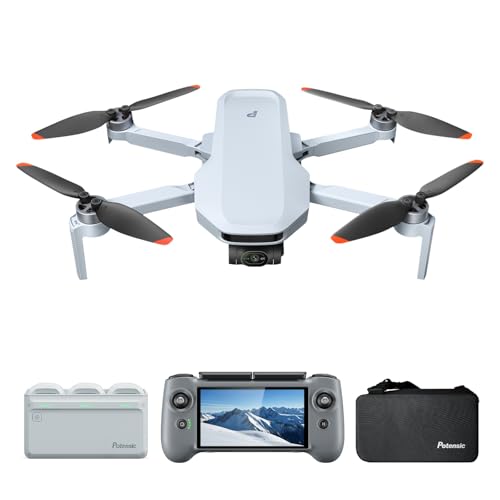
The Potensic Atom 2 Fly More Combo is the strongest all-around choice in this group for buyers who care about image quality and flight time. It records 4K video, captures 8K photos, and uses a 3-axis gimbal to keep footage smooth. That gimbal matters in real use because small shakes from motor movement or turns can ruin an otherwise great clip. The camera system gives travelers and creators more room to crop, edit, and share their work.
This package also includes up to 96 minutes of listed flight time across its batteries, which is far more useful than relying on one short flight. Its 10KM transmission claim provides long-range communication in suitable conditions, but pilots must still follow local rules and keep the drone within required visual range. AI Track can follow a moving subject, while vertical shooting helps create phone-friendly content. The under-249-gram design may simplify some registration duties in the United States, but FAA rules still depend on how and where you fly.
Pros:
- 3-axis gimbal helps produce smooth, steady video
- 4K video works well for travel and outdoor content
- 8K photo mode gives extra detail for crops and prints
- Fly More Combo offers a long total flight session
- AI Track can follow people and other moving subjects
- Vertical shooting suits short-form social media video
- AI Night Shot can help in low-light scenes when conditions allow
- Under-249-gram design supports easier carrying and storage
Cons:
- Advanced camera tools take time to learn well
- Long-range transmission does not cancel legal flight limits
- Night footage may still show noise and reduced detail
- The combo costs more than a basic beginner drone
PLEGBLE 4K GPS Drone with Screen Controller

The PLEGBLE 4K GPS drone takes a simple approach that many new users will appreciate. Its built-in controller screen means you do not have to depend on your phone during every flight. That can make outdoor use easier, especially when sunlight makes a phone display hard to read or when you want to keep your personal phone free. The 4K camera gives casual users enough resolution for family memories, vacation clips, and basic property views.
GPS support adds useful flight functions, such as positioning assistance and return-to-home behavior. These tools can help the drone stay easier to manage, but GPS performance can vary near buildings, trees, and other signal obstacles. I see this model as a practical option for someone who values simple operation more than advanced cinematic controls. It may also suit families who want a shared drone that does not require every user to install and learn a complex app.
Pros:
- Built-in controller screen reduces reliance on a smartphone
- 4K camera supports clear daytime footage
- GPS features can make outdoor flights easier to manage
- Simple layout suits first-time drone owners
- Useful for family trips, basic real estate views, and recreation
- Dedicated screen can improve visibility in bright outdoor light
Cons:
- Camera stabilization may be less advanced than a 3-axis gimbal
- GPS can lose strength near tall objects or structures
- Advanced creators may want better tracking and camera controls
Potensic ATOM 2 4K Camera Drone

The Potensic ATOM 2 offers many of the same high-value tools as the larger Fly More listing, including 4K video, 8K photos, AI tracking, and a 3-axis gimbal. It is a strong match for a buyer who wants a compact drone with serious camera features. The under-249-gram body is easy to pack in a small bag, which makes it a natural pick for hikes, road trips, and weekend travel. Its folding design also helps protect the drone when you move between locations.
QuickShots can help users create polished movement patterns without manually controlling every camera move. Vertical shooting supports content made for phones, while AI Night Shot offers another option for evening scenes. The listed 96-minute Fly More flight package gives you time to repeat a shot or explore several locations. Compared with simple drones, this ATOM 2 model asks for a bit more learning, but it rewards that effort with more creative control.
Pros:
- Sharp 4K video works well for many online and personal projects
- 8K photos allow flexible cropping after the flight
- 3-axis gimbal keeps footage smooth during movement
- AI Track supports hands-free subject-following shots
- QuickShots help beginners create repeatable camera moves
- Vertical shooting fits short videos on mobile platforms
- Compact under-249-gram body travels easily
- Fly More package provides up to 96 minutes of listed flight time
Cons:
- Extra camera features may feel complex to a new pilot
- Small drones remain sensitive to strong wind
- Actual flight time changes with wind, speed, and temperature
- Users must check current FAA rules before flying
My Recommendation
After comparing these four options, I would choose the Potensic Atom 2 Fly More Combo for most people who want the Best AI Camera Drones. It combines a 3-axis gimbal, 4K video, 8K photos, AI Track, vertical shooting, and a generous multi-battery package. Those tools give a new owner room to grow instead of forcing an early upgrade. It is especially strong for travel creators, outdoor photographers, and families who want smooth clips with useful creative modes.
The standard Potensic ATOM 2 is also a great fit when you want nearly the same camera-focused experience in a compact package. Choose the DCX Volo X EZ if easy controls and obstacle sensing matter more than advanced editing. Pick the PLEGBLE if you want a controller with its own screen and a simple GPS flight experience. In my view, the best value depends on how you plan to fly, not only on the highest camera number printed on the box.
| Best for | Why |
|---|---|
| Travel creators | Potensic Atom 2 Fly More Combo offers a gimbal, 4K video, 8K photos, AI Track, and long total flight time. |
| First-time adult pilots | DCX Volo X EZ pairs AI-assisted flight control with 360-degree obstacle avoidance and U.S. support. |
| Simple family flying | PLEGBLE offers GPS flight support and a built-in controller screen for easy outdoor use. |
How I Evaluate the Best AI Camera Drones
A drone can claim 4K video and still produce poor footage if its camera shakes, hunts for focus, or struggles in changing light. I look at the whole flight system, not one headline feature. That means checking the camera, gimbal, controls, GPS behavior, smart modes, battery plan, and weight. I also consider how much effort a new owner must spend before getting a clean and safe shot.
AI features deserve careful attention. In a drone, “AI” may refer to subject tracking, automated flight paths, recognition of a person or object, or software that helps avoid obstacles. These tools can help, but they are not magic. A pilot still needs to watch the aircraft, check the scene, and stop the flight when the system cannot read the environment well.
I also consider the difference between listed and real-world performance. A manufacturer may list a maximum transmission distance or flight time under controlled conditions. Wind, cold air, fast movement, heavy camera use, and battery age can reduce those numbers. I treat advertised figures as useful comparison points, not promises for every backyard or hiking trail.
Why AI Features Matter in a Camera Drone
Traditional drone control can feel like learning to steer a small helicopter while also framing a photo. AI tools reduce some of that workload. A tracking mode can keep a person near the center of a shot. A QuickShot mode can repeat a smooth path with less manual input. Obstacle sensing can warn you before a mistake becomes a crash.
The best AI camera drones use these tools to support the pilot rather than replace the pilot. Tracking may fail when a subject blends into the background, passes behind a tree, or moves through a crowd. Sensors can also miss thin branches, wires, glass, or dark objects. I always treat smart flight as a second pair of eyes, not as permission to look away.
AI can also help with image work. Night modes may combine frames to improve exposure. Automatic settings can balance bright skies with darker ground. These features are useful when the light changes fast, such as during sunset. Still, a large sensor, a quality lens, and a stable gimbal remain important because software cannot recover every lost detail.
Camera Quality: More Than a 4K Label
4K tells you the video size, but it does not tell you the full image quality. Lens clarity, sensor size, color processing, compression, stabilization, and light all affect the final clip. A stable 4K image often looks better than a shaky video with a larger number on the package. This is why a 3-axis gimbal can matter more than a simple resolution upgrade.
For daylight travel clips, all four drones can serve casual users in different ways. The Potensic Atom 2 models stand out for buyers who want a stronger camera system and more control. The DCX Volo X EZ focuses on easy flight and a 4K camera. The PLEGBLE targets simple use and includes a controller screen, which can be handy when you do not want to use a phone.
Photo resolution also needs context. An 8K photo can give you more room to crop, but the final result still depends on focus, light, lens quality, and movement. If the drone shifts during the exposure, extra pixels will not fix the blur. I recommend using high photo settings when the scene is well lit and the aircraft is stable.
Flight Time and Battery Planning
Battery life changes how enjoyable a drone feels. A short flight can end just as the sun reaches the perfect angle. A Fly More package helps because you can land, replace the battery, and continue. The Potensic Atom 2 combo is appealing here because its listed total flight time can support a longer outing than a single-battery kit.
Remember that total flight time is not the same as safe usable time. You need power for takeoff, movement, return, and landing. Wind can make the drone work harder, and cold weather can reduce battery performance. I prefer to land before the battery reaches its final warning rather than push for every last second.
Before a trip, I charge every battery, inspect the battery contacts, and confirm that the controller and drone use compatible firmware. I also pack spare propellers, a charging cable, and a small case. These simple steps prevent a minor issue from ending a planned flight. A good battery routine protects both your footage and your investment.
Weight, Registration, and Safe Use
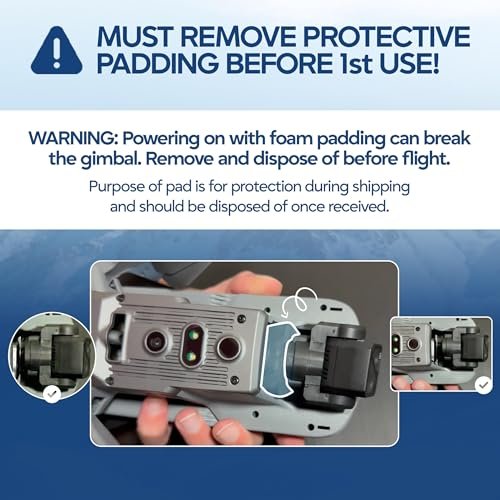
Weight matters in the United States. Drones under 250 grams may have different registration requirements for some recreational flights, but the rule depends on the operation and the drone’s use. A sub-249-gram drone is not automatically free from every FAA requirement. If you fly for work, follow a recognized safety program, or operate in a regulated area, additional rules may apply.
All pilots should check current FAA guidance before flying. Recreational pilots generally need to follow safety rules, respect airspace limits, and complete the required knowledge test when applicable. You must also avoid restricted areas, protect people and property, and keep the drone under control. Local parks, neighborhoods, and private locations may add their own limits.
Return-to-home is helpful, but it needs setup. Set the correct home point, confirm the return height, and make sure the drone has a strong GPS signal before moving far away. A return path that is safe in an open field may not be safe near a tower or tall trees. I always check the route before I trust an automated return.
Obstacle Avoidance and GPS Performance
Obstacle avoidance can reduce pilot stress, especially for beginners. The DCX Volo X EZ highlights 360-degree sensing, which may help detect objects around more sides of the aircraft. That feature sounds reassuring, but sensor coverage and detection quality can vary by direction, light, speed, and object shape. Thin branches and power lines remain a special danger for many drones.
GPS helps a drone hold position and support features such as return-to-home. It can also make a beginner feel less rushed because the aircraft may stay more stable when the pilot releases the controls. Yet GPS is not perfect. Buildings, trees, interference, and poor satellite visibility can affect the signal.
I recommend testing any new drone in a large, open area. Start low, check how it responds to the controls, and practice landing. Learn how to stop an automated mode before using it near people or obstacles. A few calm practice flights can prevent a costly mistake later.
AI Tracking and Automated Flight Modes
AI Track is one of the most useful features for solo creators. You can set the drone to follow a person, vehicle, or moving subject while you focus on the activity. This works well for cycling, walking, running, and scenic travel shots. The result can look far more polished than a fixed camera angle.
Tracking works best when the subject stands out from the background. Use clear clothing, good light, and an open path when possible. Avoid crowded streets, narrow trails, and areas with branches overhead. Even if the drone tracks well, you remain responsible for its path and for anyone nearby.
QuickShots can also help users who do not know how to plan a camera move. The drone handles a set pattern, such as a pull-away or orbit, and creates a repeatable result. These modes are useful for short clips, but they need space. I would not start an automated move until I had checked the entire flight area.
Which Drone Is Best for Beginners?
For a first-time adult pilot, the DCX Volo X EZ is the easiest product to understand from this list. Its AI-assisted control system and obstacle avoidance focus on confidence. It may help you spend more time learning composition and less time worrying about every small stick movement. The Volo X EZ is a sensible choice for casual use, family trips, and basic aerial photos.
The PLEGBLE is also beginner-friendly, but for a different reason. Its controller screen keeps the main flight view on the remote. Some buyers will prefer this simple setup because it avoids phone notifications, calls, and app switching. If your priority is basic GPS flight with a built-in display, the PLEGBLE deserves attention.
I would select a Potensic model when the buyer already has a clear interest in photography or video. The extra camera tools take more practice, but they offer greater creative range. These drones can grow with your skills, much like a basic camera that still gives you manual settings when you are ready.
Which Drone Is Best for Travel?
Travelers should look for low weight, a folding body, strong battery planning, and a camera that can handle bright skies and changing scenes. The Potensic Atom 2 models fit this need well. Their compact design is easy to carry, and the gimbal can help preserve smooth footage on the move.
The Fly More Combo has the clearest advantage for long trips because extra batteries reduce downtime. You can visit a viewpoint, film the coast, then capture a second location without waiting for a recharge. If your trips are short and you want to keep the kit smaller, the standard ATOM 2 may be enough.
Do not pack a drone without checking the rules at your destination. National parks, airports, city centers, beaches, and private sites may restrict drone use. Battery transport rules can also apply to spare lithium batteries. A quick check before departure is far easier than losing a flight opportunity after you arrive.
Tips for Better Drone Photos and Video
Start with the light. Early morning and late afternoon often create softer shadows and warmer color. Midday light can work, but it may produce harsh contrast. If the sky is very bright, point the camera slightly down and protect highlights instead of trying to expose every part of the scene equally.
Move slowly. Fast sticks can make footage look nervous, even when the gimbal is working well. Try a gentle rise, a slow side move, or a steady push forward. Smooth motion gives viewers time to understand the scene and makes editing much easier.
Keep the horizon level and avoid filling every frame with movement. A quiet shot of a road, shoreline, or field can create a strong pause in a travel video. Use tracking only when it adds meaning. AI features work best when they support the story rather than become the story.
Check the lens before each flight. A tiny fingerprint can soften highlights and make bright areas glow. Use a clean microfiber cloth, and avoid touching the lens with a shirt or paper towel. Also inspect the propellers for cracks because even a small defect can cause vibration.
How to Choose the Right AI Camera Drone
First, decide what you want to film. A beginner who wants family clips does not need the same system as a creator who plans to edit 8K photos. If you want a simple start, look at control help, GPS, and obstacle sensing. If you want a creative tool, focus on the gimbal, image modes, tracking, and battery options.
Next, consider the complete kit. A lower-priced drone may become less appealing if it requires extra batteries, a memory card, a case, or a separate charger. A Fly More package can cost more at checkout but save money if you would buy those items later. Compare what arrives in the box, not just the drone body.
Finally, think about support. Beginners often need help with app setup, firmware, batteries, and flight settings. U.S. support can be useful when a question cannot wait. Read the manual before the first flight, and keep the product page and support details saved in case you need them.
Common Mistakes New Drone Owners Make
The first mistake is flying too far too soon. New pilots often trust the connection range and forget that wind can make the return trip harder. Start close and practice returning manually. You will learn more in ten minutes of controlled practice than in one risky long flight.
The second mistake is ignoring the background. A drone may track a person well in an open field but lose that person near trees or similar colors. Plan the path before starting the mode. Keep a thumb near the stop control and remain ready to take over.
The third mistake is flying without checking the airspace. A clear sky does not mean the area is open for drones. Check FAA tools and local restrictions before each new location. Avoid emergency scenes, airports, crowds, and private areas where you do not have permission.
The fourth mistake is chasing cinematic footage in bad weather. Rain can damage electronics, and strong wind can drain a battery quickly. Small camera drones are capable, but they are still light aircraft. If the conditions feel unsafe for you, they are likely unsafe for the drone too.
Care and Storage Tips
Store the drone in a dry place away from heat. Remove the battery when the aircraft is not in use for a long period. Do not store lithium batteries fully empty or in a hot car. Follow the battery instructions supplied with your model.
Inspect the propellers often. Replace damaged blades in matched sets when the manual recommends it. A bent propeller can create vibration, reduce efficiency, and make video less stable. Keep spare blades in the case so a small accident does not end your whole trip.
Update firmware only when the batteries are charged and the connection is stable. Read the update notes if available, then test the drone in an open place after the update. This simple habit can reveal a changed setting before you fly near a valuable subject or tight space.
FAQs Of Best AI Camera Drones
What makes a drone an AI camera drone?
An AI camera drone uses software or sensors to assist with tasks such as subject tracking, automated flight paths, obstacle awareness, or image processing. The exact tools vary by model. AI helps the pilot, but it does not replace careful control or safe flight habits.
Are under-249-gram drones exempt from all FAA rules?
No. Weight can affect registration rules, but the correct requirements depend on how and where you fly. Pilots should check current FAA guidance, airspace limits, and local rules before every flight.
Is 4K video enough for travel videos?
Yes, 4K is enough for many travel and social media projects. A stable gimbal, good light, clean lens, and smooth movement often matter more than a higher resolution number. The Potensic Atom 2 models add 8K photo capture for buyers who want more cropping room.
Can obstacle avoidance prevent every crash?
No. Sensors may miss thin wires, branches, glass, dark objects, or items outside their coverage. Always watch the drone, plan a clear route, and be ready to stop automated flight.
Should I buy a Fly More Combo?
A Fly More Combo is useful if you plan long outings or several flights in one day. Extra batteries reduce waiting time and can provide better value than buying accessories one at a time. For short casual flights, a basic kit may be enough.
Final Verdict: Which Should You Buy?
For most buyers, the Potensic Atom 2 Fly More Combo is the best AI camera drone here. It offers smooth 4K video, 8K photos, AI tracking, and long total flight time.
Choose the DCX for easy learning, or the PLEGBLE for a built-in screen. These Best AI Camera Drones offer useful choices for safer, smarter aerial photography.

Similar Posts