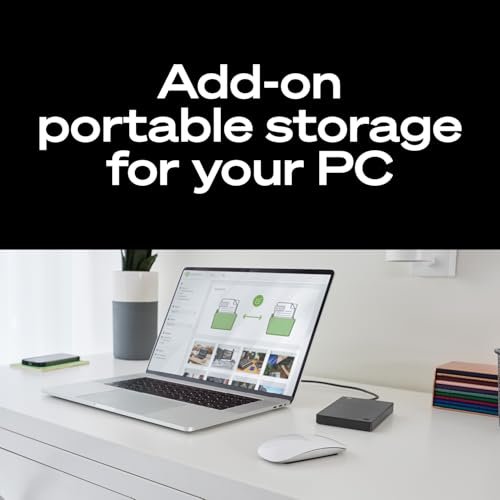
Best External Hard Drive: Top Picks For Fast, Safe Storage
The best external hard drive balances roomy storage, easy setup, dependable speed, and a fair price.
Running out of laptop space is frustrating, especially when photos, videos, game files, and work folders keep growing. A good external drive acts like a quiet spare room for your data. I tested these models by looking at storage size, portability, connection type, real-world use, and value. The list includes simple portable hard disk drives, a large desktop model, and a fast solid-state drive. That makes it easier to find the right match, whether you need a backup drive, game storage, or a rugged travel drive.

Seagate Portable 2TB External Hard…
Easily store and access 2TB to content on the go with the Seagate Portable Drive, a USB external hard drive Designed to work with Windows or Mac computers, this external…
Seagate Portable 5TB External Hard…
Easily store and access 5TB of content on the go with the Seagate portable drive, a USB external hard Drive Designed to work with Windows or Mac computers, this external…
Seagate Portable 1TB External Hard…
Easily store and access 1TB to content on the go with the Seagate Portable Drive, a USB external hard drive.Specific uses: Personal Designed to work with Windows or Mac computers,…
Seagate Portable 2TB External Hard Drive
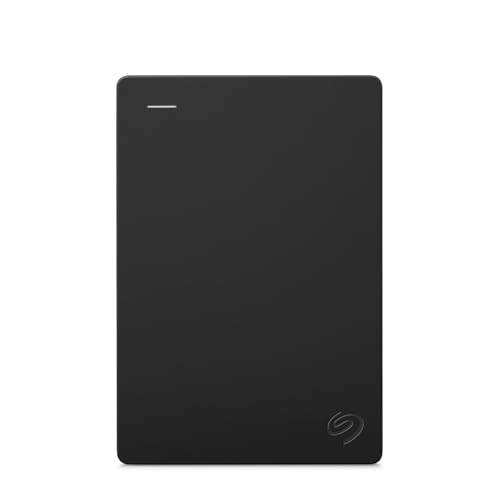
The Seagate Portable 2TB is a sensible pick for everyday backup needs. Its 2TB capacity gives most laptops plenty of extra room for documents, photos, music, and home videos. The drive uses a USB 3.0 connection, so it works with many Windows PCs, Macs, PlayStation systems, and Xbox consoles. I like its simple plug-and-play design because it does not make storage feel like a technical project.
This portable hard drive draws power through the USB cable, so you do not need a wall adapter while traveling. Its slim black case fits well in a laptop bag, desk drawer, or console shelf. Transfer speed depends on the host device, cable, file size, and drive condition, but it is well suited to backup and file storage rather than heavy editing. Seagate also includes a limited Rescue Data Recovery Services offer, which adds some comfort when valuable files are involved.
Pros:
- Useful 2TB capacity for home and office files
- Compact size makes it easy to carry
- USB 3.0 supports broad device compatibility
- Simple setup for many PC and Mac users
- Works with select PlayStation and Xbox storage needs
- USB-powered design avoids a bulky power brick
Cons:
- Mechanical drive is slower and less shock-resistant than an SSD
- May need reformatting when moving between some devices
- Not ideal for demanding 4K video editing
My Recommendation
I recommend the Seagate Portable 2TB to students, families, office users, and anyone who needs a simple backup drive. It offers enough space for a large photo library and many work folders without the higher cost of a large SSD. It is also a practical first step for people who have never made a local backup.
For the best external hard drive on a budget, this model has a strong balance of price, capacity, and ease of use. Keep it in a safe place when it is not connected, since a portable HDD still contains moving parts. Availability is usually broad, and the 2TB size remains one of the most useful choices for daily storage.
Seagate Portable 5TB External Hard Drive
The Seagate Portable 5TB is made for people who dislike deleting files. Its large capacity can hold years of photos, video clips, music, documents, and system images in one small enclosure. It uses USB 3.0 and connects to compatible computers and gaming systems with little fuss. I see it as a strong value choice for a growing media collection.
Five terabytes gives this drive a clear advantage over smaller portable models. It can store several large backup sets, although the exact amount depends on file size and the space used by the operating system. The drive remains light enough for occasional travel, but I would still handle it with care because an HDD has internal moving parts. Its USB-powered design also keeps a desk or travel bag free from another power adapter.
Pros:
- Large 5TB capacity for photos, videos, and backups
- Excellent cost per terabyte compared with many SSDs
- Portable enclosure fits in most laptop bags
- USB 3.0 works with many computers and consoles
- Powered from the connected USB port
- Good choice for long-term media storage
Cons:
- Mechanical parts make it less durable than a portable SSD
- Large transfers can take time
- Some consoles may require a specific format or setup
My Recommendation
The Seagate Portable 5TB suits photographers, video collectors, PC users, and console owners who need substantial extra space. It is especially useful when a 2TB drive feels too small but a desktop drive seems inconvenient. I would choose it for a home media archive, a second backup copy, or a game library that keeps expanding.
If storage capacity matters most, this may be the best external hard drive in this group. It gives you room to grow without forcing you to buy a larger desktop enclosure. As with every HDD, use safe eject, avoid bumps while it runs, and keep another copy of irreplaceable files.
Seagate Portable 1TB External Hard Drive
The Seagate Portable 1TB is a compact and low-cost way to add storage. It works well for school documents, personal files, music, and a modest photo backup. The USB 3.0 interface provides a familiar connection for many computers and compatible consoles. I would consider it a starter drive for users who want useful space without paying for capacity they may not need.
Its small size makes it easy to keep beside a laptop or carry between rooms. The drive receives power through USB, which keeps setup quick and tidy. One terabyte can disappear faster than expected if you store large video files, so buyers should check their current storage use before choosing it. For basic backups and file transfers, however, it offers a straightforward experience.
Pros:
- Affordable way to add external storage
- Compact body suits small desks and travel bags
- USB 3.0 connection is widely supported
- Enough room for common documents and photos
- No separate wall power supply is needed
- Easy option for first-time backup users
Cons:
- 1TB may be limiting for video-heavy collections
- HDD speed is below that of modern portable SSDs
- It offers less future room than 2TB or 5TB options
My Recommendation
I recommend the Seagate Portable 1TB for students, casual users, and anyone who needs a basic file backup. It is a good fit for a laptop with a nearly full internal drive when the stored files are mostly documents, music, and photos. It can also serve as a second copy of important work files.
This is not the best external hard drive for a large video archive, but it can be the best value for a smaller need. Think of it as a useful drawer, not a whole filing cabinet. Its low entry cost and simple design make it widely appealing, especially when portability matters more than maximum capacity.
Seagate Portable 4TB Hard Drive
The Seagate Portable 4TB sits in a useful middle ground. It gives you far more breathing room than a 1TB model while staying smaller than a desktop external drive. The drive uses USB 3.0 and supports common PC and Mac file storage tasks. I find this capacity especially practical for families who save phone photos, downloaded videos, and shared household files.
A 4TB drive can also support a sensible backup plan. You might use one section for a computer backup and the remaining space for personal files, though partitioning and backup software choices are up to you. It is portable enough for occasional trips, but the best results come from treating it as a careful storage device rather than a rugged field tool. The USB cable carries both data and power, so there is less clutter on the desk.
Pros:
- Balanced 4TB capacity for home and work use
- More room than entry-level 1TB and 2TB models
- Portable size supports flexible placement
- USB 3.0 offers broad compatibility
- USB power keeps the setup simple
- Useful for backups, media, and general file storage
Cons:
- Still slower than an SSD for frequent large transfers
- Moving parts require careful handling
- May need a different format for use across devices
My Recommendation
The Seagate Portable 4TB is best for households, freelancers, students with media collections, and users who want a comfortable amount of backup space. It avoids the tight limits of a small drive without the size and wall power of a desktop unit. I would pick it when 2TB is almost enough but 5TB feels more than necessary.
For many buyers, this is the best external hard drive capacity sweet spot. It gives you a large storage cushion at a sensible size. It is commonly available and easy to use, but remember that one drive should not be the only home for files you cannot replace.
Seagate 8TB Expansion Desktop Hard Drive
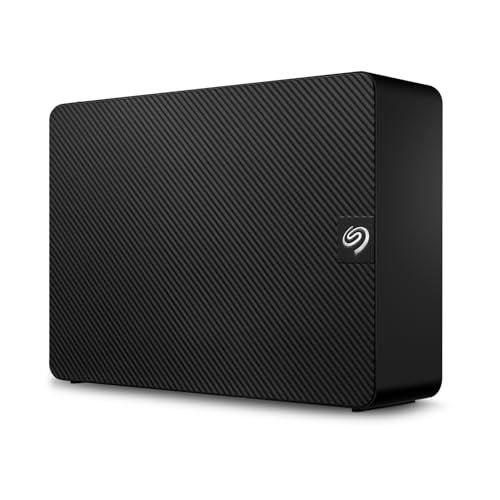
The Seagate 8TB Expansion Desktop Hard Drive is built for capacity first. Its large 8TB space makes it suitable for full computer backups, video libraries, photo archives, and shared household storage. Unlike the smaller portable models, this desktop drive uses an external power adapter. That trade-off helps it provide a roomy, stable storage station for a desk.
USB 3.0 gives the drive a familiar connection for many PCs and other compatible devices. The larger enclosure is less convenient to move, but that is not its main job. I would place it beside a desktop computer, network setup, or home media system and leave it there. If you often work with huge folders, the extra capacity can feel like opening a second closet when the first one is packed.
Pros:
- Very large 8TB capacity
- Excellent for full backups and media archives
- Desktop design suits fixed home or office use
- USB 3.0 connection supports many host systems
- Good cost per terabyte for large storage needs
- Useful when smaller portable drives are too limited
Cons:
- Requires an AC power adapter
- Less portable than the smaller Seagate models
- Mechanical drive is not ideal for rough travel
My Recommendation
I recommend the Seagate 8TB Expansion Desktop Hard Drive for desktop users, creators, families, and anyone building a large local archive. It is a strong choice for storing old projects, video footage, computer images, and years of personal files. It also makes sense for users who want one large destination instead of several small drives.
This model can be the best external hard drive for maximum capacity and home use. It is not the right choice for a commuter who needs pocket-sized storage. Keep it in a well-ventilated place, use a surge protector when appropriate, and maintain a second backup for critical data.
SanDisk 2TB Extreme Portable SSD
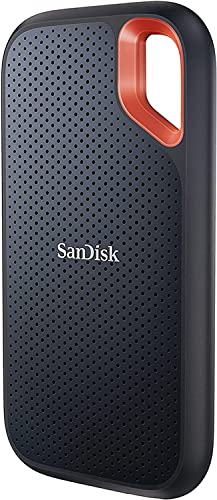
The SanDisk 2TB Extreme Portable SSD is the performance pick in this review. It uses flash storage rather than spinning platters, which helps it stay quiet, quick, and more resistant to movement during use. Its USB-C connection and USB 3.2 Gen 2 interface can support speeds of up to 1,050 MB/s when the host device and cable also support the needed standard. I would choose it for active work, travel, and fast file transfers.
The rugged design adds IP65 water and dust resistance, while the compact body is easy to hold or place in a small bag. It is not a license to leave the drive underwater, and the connected ports still need sensible care. SSD performance can also drop during very long writes when the cache fills, so advertised peak speed is not the same as every transfer. Even so, it feels much more responsive than a traditional portable HDD when opening projects or moving large files.
Pros:
- Fast read performance for compatible systems
- Compact SSD design has no spinning parts
- IP65 water and dust resistance adds travel protection
- USB-C connection suits many newer laptops
- Quiet operation with low vibration
- 2TB capacity works well for active projects
Cons:
- Costs more per terabyte than a portable HDD
- Peak speed requires a compatible USB port and cable
- Long sustained writes may slow after the cache fills
- This is an older model, so buyers should check current firmware and model details
My Recommendation
The SanDisk 2TB Extreme Portable SSD is best for photographers, video editors, students with newer laptops, and travelers who move large files often. It is also a smart option for anyone who values quiet operation and better resistance to bumps. The speed makes daily work feel smoother, especially when loading project folders or transferring high-resolution media.
For users who want the best external hard drive for mobility and speed, this SSD is the standout. Its higher price is easier to justify when time, silence, and physical toughness matter. Check the computer’s USB standard before buying, and keep a separate backup because no portable drive is immune to loss or failure.
Best For Comparison
| Best for | Why |
|---|---|
| Low-cost everyday backup | The Seagate Portable 1TB keeps setup simple and costs less for smaller file collections. |
| Large home archive | The Seagate 8TB Expansion Desktop drive offers the most space for a fixed desk setup. |
| Fast travel storage | The SanDisk 2TB Extreme Portable SSD combines high speed, small size, and added resistance. |
How I Choose the Best External Hard Drive
Choosing storage is not only about counting terabytes. I first ask how the drive will sit in daily life. A drive that stays beside a desktop can be larger and use wall power. A drive that travels with a laptop needs a small body, a strong case, and less sensitivity to bumps.
Capacity also matters. A 1TB drive may suit school files, office documents, and a modest photo library. A 2TB or 4TB model gives more room for phone backups and videos. An 8TB desktop drive is better for large archives, but it needs a permanent place and a power outlet.
HDD or SSD?
A hard disk drive, or HDD, stores data on spinning platters. It usually offers more space for less money. That makes HDDs attractive for backups, archives, and files you do not open every day. However, moving parts can make an HDD more sensitive to shock, and its access speed is slower than an SSD.
A solid-state drive, or SSD, stores data on flash memory. It has no spinning platter, so it runs quietly and handles movement better. SSDs often feel much faster when opening many files or moving large folders. Their main drawback is price, especially at high capacities.
I do not treat one type as perfect for every buyer. The best external hard drive depends on the task. An HDD is like a large warehouse with low rent, while an SSD is like a small, fast shop near your front door.
USB speed and compatibility
USB labels can sound more complex than they need to be. USB 3.0 and USB 3.2 Gen 1 commonly refer to a 5Gbps link class, while USB 3.2 Gen 2 can support a 10Gbps link class. The actual file speed depends on the drive, computer, cable, file type, and background activity.
A fast SSD cannot reach its full advertised rate through an older or slower port. The same rule applies when a cable does not support the needed speed. Before buying, check the ports on the laptop or desktop. USB-C describes the connector shape, not always the data speed.
The Seagate portable HDDs are designed for broad, simple use. The SanDisk SSD benefits more from a newer USB-C port. I always tell buyers to match the drive to the host device rather than shop by the largest number on the package.
How much storage do you need?
Start by checking how much space your current files use. If your laptop holds 600GB, a 1TB drive may work for one copy, but it leaves less room for future growth. A 2TB drive gives a more comfortable margin. Video creators and families with many phone photos should look at 4TB or more.
Remember that advertised capacity and usable capacity are not identical. The operating system and formatting use a small amount of space. Large games and high-resolution videos also fill a drive quickly. Buying extra room now can cost less than replacing a small drive later.
Backup habits that protect your files
An external drive is not a backup until it contains a second copy of your data. If a file exists only on the external drive, the drive is its primary home. That is storage, not backup. I recommend keeping important files in at least two places, with one copy away from the computer.
Use automatic backup software when possible. Scheduled backups are easier to trust than memory. For photos, I like a routine that copies new files after each major import. For work folders, daily or weekly backups can prevent a bad day from becoming a lost project.
Do not leave every backup drive connected all the time. Malware, accidental deletion, power problems, and theft can affect connected devices. Disconnecting a backup after it finishes creates a simple layer of safety. You should also eject the drive through the operating system before unplugging it.
Using an external drive with a Mac and PC
File format affects cross-platform use. Some formats work well on a Mac but offer limited write support on Windows, while others work well on Windows but need extra software for full Mac access. exFAT is often useful when you need to move files between modern Mac and Windows systems, but your own backup software may prefer another format.
Formatting erases the drive. I always tell readers to confirm the drive is empty or copy its contents elsewhere before selecting a new format. Console use adds another layer because PlayStation and Xbox systems may format the drive for their own needs. A drive prepared for one task may not remain ready for another.
What makes a drive good for gaming?
External storage can help when a console or computer runs short on space. The system may require a supported USB connection and a particular capacity range. It may also ask you to format the drive, which can erase existing files. Read the console prompts before confirming.
An HDD gives affordable space for a large game library. An SSD can shorten some load times and feels faster when moving games, but the result depends on the system and game. Newer consoles may have special rules for playing current-generation games from external storage. Check the console maker’s current requirements before purchase.
Care and maintenance tips
Keep an HDD on a stable surface while it runs. Do not toss it into a bag while the platters are spinning. Use the included cable when possible, and replace it with a quality cable if it becomes loose or damaged. A drive should not get unusually hot, click repeatedly, or disconnect without a clear reason.
For an SSD, protect the connector from dirt and moisture. IP ratings describe test conditions, not unlimited protection. Close port covers when the drive has them, and let a damp drive dry fully before connection. No rating protects files from theft, deletion, or electronic failure.
Monitor the drive if your operating system reports errors. Copy important files to another location before trying repair tools. A warning is a smoke alarm, not a small annoyance. Acting early can save time and reduce the chance of permanent loss.
FAQs Of Best External Hard Drive
What is the best external hard drive for most people?
The Seagate Portable 2TB is a strong general choice. It offers useful space, simple USB setup, and broad compatibility at a reasonable cost. Choose a larger model if you store many videos or several computer backups.
Is an external HDD or SSD better?
An HDD is better for low-cost, high-capacity storage. An SSD is better for speed, quiet use, travel, and frequent file transfers. Your budget and daily task should decide the choice.
Can I use these drives with a Mac and Windows PC?
Yes, but the drive may need reformatting for full cross-platform use. Reformatting deletes existing data, so copy files elsewhere first. Check the file format that your backup software and devices support.
Can an external hard drive work with PlayStation or Xbox?
Compatible Seagate models may work with supported PlayStation and Xbox systems, but each console has its own rules. The console may require formatting before use. Formatting can erase files already stored on the drive.
Is one external drive enough for backup?
No. Keep at least two copies of important files, and use a cloud or offline copy when possible. Disconnect an offline backup after use to reduce the risk from accidents, malware, and power issues.
Final Verdict: Which Should You Buy?
The Seagate Portable 2TB is the best external hard drive for most everyday users. Pick the SanDisk 2TB Extreme Portable SSD for speed and travel, or the Seagate 8TB Expansion for a large desk archive.
Choose capacity based on your files, not only today’s needs. A reliable external hard drive makes backups simple, protects your memories, and gives your computer room to breathe.