5 Best Power Banks (2027): Top Picks For Fast, Reliable Charging
The best power bank balances fast charging, safe design, useful capacity, and easy travel in one compact pack.
Your phone always seems to lose power at the worst time. It may happen during a long flight, a road trip, a workday, or a busy day at a theme park. A good power bank acts like a spare fuel tank for your devices. I compared capacity, charging speed, ports, size, travel use, and daily comfort to help you find the right match. The models below cover small phone chargers, high-output laptop banks, large emergency packs, and wireless options.
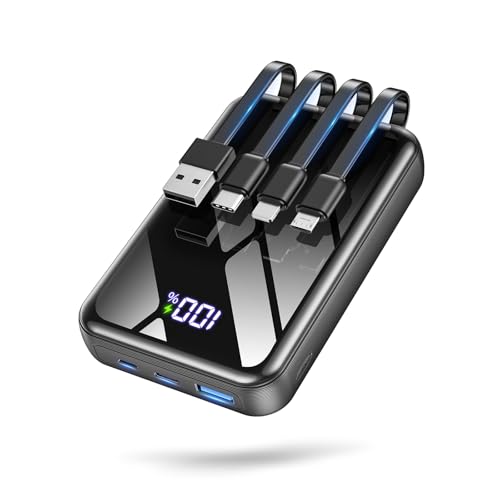
YBYP 50000mAh Portable Charger, 50%…
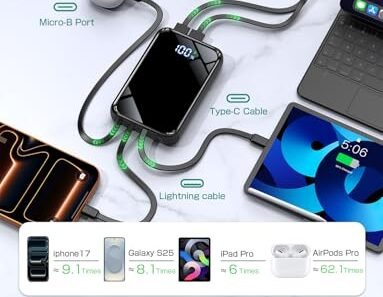
Massive 50000mAh & Ultra-Compact Size: Upgrade to a 50000mAh power bank featuring industry-first high-density battery technology—30% smaller and 15% lighter than traditional high-capacity models.Charges iPhone 17 up to 9.1 times,…
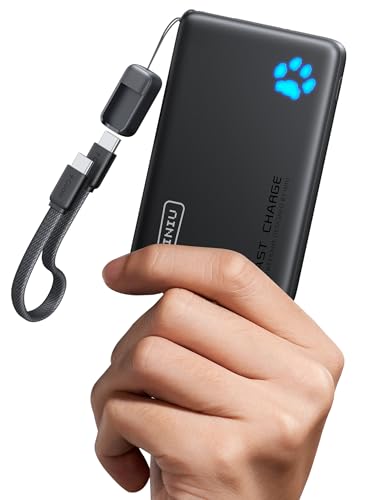
INIU 45W Fast Charging Portable…
40% Smaller & Lighter Portable Charger: Powered by the industry’s first TinyCell high-density battery technology, this ultra-compact 10,000mAh portable charger power bank is 40% smaller and 36% lighter than conventional…
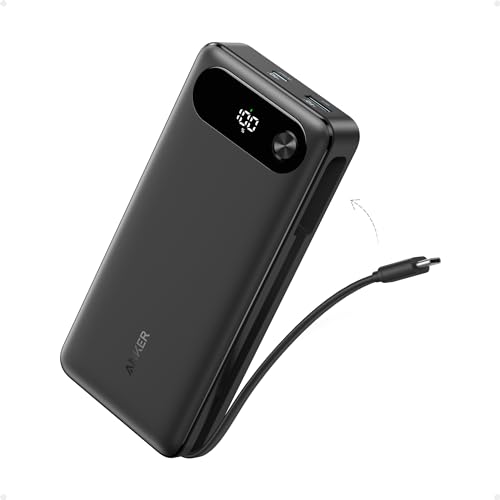
Anker Power Bank, 20,000mAh Travel…
87W Power to Share: Distribute 87W across three devices, with a single device receiving up to 65W, to rapidly charge iPhones, Samsung phones. Quickly charge a 14″ MacBook Pro to…
YBYP 50000mAh Portable Charger

The YBYP 50000mAh Portable Charger is built for users who want a large reserve of power in one pack. Its main appeal is the claimed 50,000mAh capacity and built-in four-cable design. That setup can reduce the need to carry separate charging cords for common devices. It is a practical choice for group trips, camping, festivals, and emergency backup.
A large battery like this can recharge phones many times, though real output is always lower than the printed cell capacity because of voltage conversion and heat loss. The built-in cables also make quick charging more convenient when your bag is already full. Its size and weight will likely feel greater than those of a small daily charger. I would choose it for endurance first, not for the lightest pocket carry.
Pros:
- Very large stated capacity for extended trips
- Four built-in cables reduce cord clutter
- Useful for charging several types of devices
- Good fit for camping and emergency use
- Can support group charging during travel
- Convenient all-in-one design
Cons:
- Larger and heavier than compact phone banks
- Large capacity may face airline and travel limits
- Charging speed may vary by built-in cable and device
This model makes sense when access to a wall outlet may stay out of reach for a long time. A commuter who only needs one phone top-up may find it excessive. A family on a road trip may value the extra reserve much more. The four-cable layout is also helpful when different people carry different phones.
Before buying, check the exact cable types and output details on the current product page. Capacity alone does not tell you how fast a device will charge. I also suggest checking the bank’s dimensions and weight if you plan to fly. For home emergency storage or outdoor use, its high capacity is the main reason to consider it.
INIU 45W 10000mAh Portable Charger

The INIU 45W Fast Charging Portable Charger targets people who want a smaller power bank with more speed than a basic phone charger. Its 10,000mAh capacity is a common sweet spot for daily carry. The stated 45W output can also make it useful for compatible tablets, handheld game systems, and some small USB-C devices. It should fit more easily in a purse, work bag, or jacket pocket than a high-capacity pack.
Its biggest strength is balance. You get a useful amount of backup power without carrying a large brick. A 10,000mAh bank will not refill every laptop, but it can provide a strong phone backup for travel or long workdays. Actual charging speed depends on the phone, cable, port, and the bank’s power-sharing behavior.
Pros:
- Compact capacity for daily use
- 45W output suits many fast-charge devices
- Easy to carry in a small bag
- Useful for phones, tablets, and gaming devices
- Good balance of speed and portability
- Practical choice for commuters and travelers
Cons:
- One full charge may not suit heavy multi-day use
- Not the best choice for demanding laptops
- Fast charging requires a compatible device and cable
I see this as one of the most flexible choices in the group. It can cover a normal workday without taking over your bag. The 45W rating gives it more range than many small banks, especially for USB-C phones and tablets. It is also easier to keep near you while walking because its compact shape should create less drag.
For the best results, pair it with a certified USB-C cable that matches the device’s needs. A power bank cannot force a phone to accept more power than its charging system allows. If you want a light charger for regular use, this model deserves close attention. It is a strong candidate for the best power bank for commuters who value speed and size.
Anker 20000mAh Power Bank with Cable

The Anker 20,000mAh Travel Essential offers more reserve than a small daily bank while keeping the design focused on travel. Its built-in USB-C cable is the feature I notice first. You can grab the charger and connect a compatible device without searching for a loose cord. The 20,000mAh rating gives phone users more breathing room on long days.
This capacity is often a good middle ground for people who dislike frequent recharging. It can support several phone top-ups, although the exact number changes with phone size, battery age, conversion loss, and charging habits. The built-in cable saves space, but users with older or unusual connectors may still need an extra cable. Its travel focus makes it a sensible choice for flights, hotels, conferences, and road travel.
Pros:
- Large capacity for extended phone use
- Built-in USB-C cable improves convenience
- Good middle ground between size and endurance
- Well suited to travel and work bags
- Reduces the chance of forgetting a charging cord
- Useful for phones, earbuds, tablets, and other USB devices
Cons:
- Heavier than a 10,000mAh model
- Built-in USB-C cable may not suit every device
- May be more capacity than casual users need
I would point this model toward travelers who want dependable backup without stepping up to a laptop-class bank. The built-in cable is especially handy at airports, where loose accessories can vanish into a crowded bag. It also works well as a desk backup for a phone that stays active all day. The extra capacity can reduce the need to recharge the power bank each night.
Do not confuse a 20,000mAh rating with 20,000mAh of usable energy at your phone’s battery voltage. That difference is normal for lithium battery products. Still, the capacity should provide a useful cushion for most phone owners. If convenience, travel range, and a known accessory brand matter to you, this is a well-rounded best power bank option.
Anker 25000mAh 165W Laptop Power Bank

The Anker Laptop Power Bank is the high-output choice in this comparison. It combines a 25,000mAh capacity with a claimed 165W total output. That power level can make a major difference for USB-C laptops, tablets, phones, and other demanding gear. It is designed for users who need more than a phone top-up during travel or remote work.
High output does not mean every port delivers 165W at the same time. Total output can change when several devices share the bank, so check the port layout and current specifications before purchase. Laptop support also depends on the computer’s charging protocol and power demand. Even with those limits, this type of power bank gives a laptop user much more freedom than a small phone-only model.
Pros:
- High claimed total output for demanding devices
- 25,000mAh capacity supports longer work sessions
- Useful for compatible USB-C laptops and tablets
- Can charge several devices in one travel setup
- Strong fit for remote workers and creators
- Reduces reliance on airport and café outlets
Cons:
- Heavier and less pocket-friendly than phone banks
- Premium laptop-focused design may cost more
- Shared output can change when multiple ports are active
This is the model I would study first if a laptop is part of your daily carry. A laptop battery can drain quickly during video work, photo edits, coding, or long calls. A high-output bank may keep the system running when a wall outlet is not nearby. It can also serve as a central charging hub for a phone and tablet.
Check your laptop’s USB-C charging requirement before ordering. Some computers need more power than others, and some models charge slowly or not at all from a portable bank. Also check airline rules because power banks are generally carried in cabin baggage, not checked luggage, and watt-hour limits apply. For mobile work, this may be the best power bank in the list because it puts useful laptop power in a travel-ready format.
ZZI 60000mAh 22.5W Power Bank
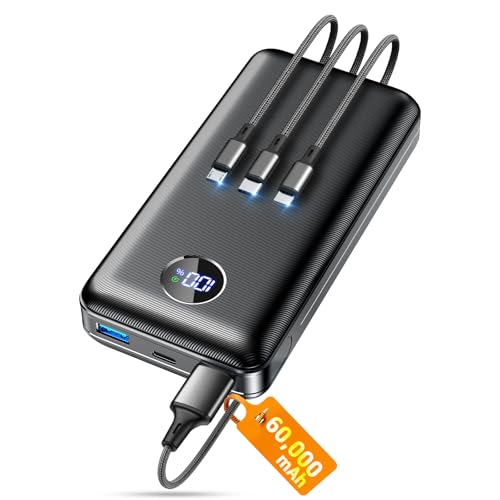
The ZZI Portable Charger focuses on capacity rather than a small footprint. Its stated 60,000mAh rating is aimed at people who want a long-lasting reserve for multiple phones and USB devices. The 22.5W PD fast-charge rating should provide useful speed for compatible phones and accessories. This kind of pack can be helpful during camping trips, power outages, worksite days, and extended travel.
The trade-off is clear: more stored energy usually means more size and weight. A pack this large is not the one I would place in a small pocket for a quick trip to the store. It is better viewed as a portable power station for USB devices. Before flying, calculate the watt-hour rating shown on the product label and compare it with the airline’s current rules.
Pros:
- Very high stated capacity for long-term backup
- 22.5W output supports many fast-charge phones
- Useful for groups and multi-device charging
- Good fit for camping and outage preparation
- Can reduce the need for frequent recharging
- Helpful when wall power is unavailable for days
Cons:
- Large size may be hard to carry every day
- Air travel restrictions may limit its use
- 22.5W output is not ideal for most laptops
This model suits practical situations where endurance matters more than elegance. A field worker, camper, or emergency kit owner may prefer its large reserve. It can also help a family share power without fighting over one small battery pack. For everyday commuting, though, the extra bulk may become a burden.
I recommend checking the product’s current dimensions, weight, port list, and recharge time before purchase. A large battery can take much longer to refill than a compact one. Use the included safety guidance and keep the pack away from extreme heat, water, and damaged cables. If you need the most capacity for USB devices, the ZZI is a strong best power bank candidate, but it is not the most travel-friendly.
Anker MagGo 10000mAh Qi2 Power Bank

The Anker MagGo Power Bank takes a different path from the wired models. It uses a 10,000mAh battery and Qi2-certified wireless charging with a stated 15W output. Magnetic alignment can make charging feel simple because the phone can remain attached while you move around. It is a natural fit for compatible iPhones and other devices that support the required magnetic wireless setup.
Wireless charging brings comfort, but it can also create more heat and may work more slowly than a wired connection. A phone case, camera bump, or poor alignment can affect the result. The magnetic feature also depends on the phone and case supporting a secure connection. I would choose this model for convenience and clean cable-free use rather than maximum charging efficiency.
Pros:
- Qi2-certified wireless charging design
- Stated 15W wireless output for compatible devices
- Magnetic alignment helps keep the charger in place
- Compact 10,000mAh size suits daily carry
- Reduces the need to carry a charging cable
- Useful for travel, cafés, and quick top-ups
Cons:
- Wireless charging may waste more energy than wired charging
- Magnetic fit depends on the phone and case
- 10,000mAh capacity gives less reserve than larger banks
This is the best match for someone who dislikes cable clutter. It can sit on the back of a compatible phone while you read, walk, or wait at an airport. The magnetic connection also helps avoid the small annoyance of a cable slipping out. For a short daily trip, the compact size may matter more than having several days of reserve.
Use a case made for magnetic charging if you want the strongest hold. Keep the phone and charging surface clean, and expect charging speed to change with heat and alignment. If you need fast emergency power, connect by cable when the product supports it and when your device allows it. For wireless convenience, this Anker model is a refined best power bank choice.
How I Compare the Best Power Bank Options
Capacity is the first number most shoppers see, but it is not the whole story. A power bank stores energy inside cells, then changes that energy into the voltage your device needs. That process creates normal loss. A 10,000mAh model will not deliver a perfect 10,000mAh at the phone’s battery level.
Output power matters just as much. A 22.5W bank may suit a phone, while a laptop may need a much higher USB-C Power Delivery rating. A 165W total rating can also split across ports. I always check single-port output, shared output, input speed, cable type, and supported charging standards.
Size and weight affect whether you will carry the charger. The best power bank is not always the largest one. A huge pack that stays at home cannot help when your phone dies on the road. For a daily bag, 10,000mAh or 20,000mAh often feels more practical. For camping or outage use, 50,000mAh or 60,000mAh may offer a better safety net.
Safety deserves equal attention. Look for protection against overcharge, over-current, short circuit, and high temperature. Buy from a seller with clear product details and a real return path. Stop using any battery that swells, smells odd, becomes unusually hot, or shows physical damage.
Power Bank Capacity Explained
A 10,000mAh power bank is usually a good daily size. It can provide a useful phone refill and still remain easy to pack. A 20,000mAh bank gives more room for long travel, tablets, or more than one person. Larger models can support several devices, but they add bulk and may face stricter travel rules.
Battery size also affects recharge time. A large bank may need a high-watt charger and a suitable cable to refill quickly. If the input rating is low, the pack may need many hours. I suggest checking both the power bank input and the wall charger before assuming fast recharge.
Do not buy based only on a large number printed on the box. Compare usable features, output, safety design, weight, and warranty support. A balanced model often feels better than a giant pack that is hard to store. Your normal use should guide the choice.
Wired Charging or Wireless Charging?
Wired charging usually gives better efficiency and more stable speed. It also works with a wider range of phones, tablets, and accessories. The downside is that you must carry the right cable. A built-in cable can solve that issue, but it may not support every connector.
Wireless charging feels more natural for short top-ups. A Qi2-certified model can improve alignment and reduce some of the guesswork found with older wireless pads. Still, wireless charging may create more heat and use more stored energy. I prefer wired charging when I need the fastest result.
Choose wireless if comfort matters most and your phone supports the system. Choose wired if you need speed, broad device support, or the most usable energy. Some users may benefit from carrying a short cable even with a wireless power bank. That small backup can save a frustrating day.
Power Banks for Air Travel
Power banks contain lithium batteries, so airlines treat them differently from ordinary luggage. In general, spare lithium batteries and power banks belong in carry-on baggage, not checked baggage. Many airlines allow batteries up to a certain watt-hour limit, but rules can vary by airline, route, and local authority.
To estimate watt-hours, multiply the amp-hour rating by the battery voltage. Since product labels may use different figures, check the label and current airline guidance before your trip. A very large 50,000mAh or 60,000mAh pack may exceed common passenger limits. Never assume that a listing’s capacity alone proves it is flight-ready.
Keep the terminals protected and prevent the charger from turning on inside your bag. Do not pack a swollen or damaged battery. If an airline asks you to remove the power bank, make it easy to access. These simple steps reduce both safety risk and travel stress.
How to Use a Power Bank Safely
Use the cable and charger that match the device and power bank. Avoid cheap, damaged, or loose cables. Keep the battery on a hard surface while it charges, rather than under a pillow or blanket. Heat is the enemy of battery life and safety.
Do not leave a power bank in a hot car. Avoid water unless the product clearly has a suitable water-resistance rating. Store it with some charge instead of leaving it empty for months. Check the maker’s instructions for long-term storage and care.
If the case cracks, swells, leaks, or becomes hot without reason, stop using it. Do not place a damaged lithium battery in household trash. Follow local battery recycling guidance. A good power bank should make life easier, not create a risk.
My Recommendation
I recommend the INIU 45W 10000mAh model for most daily phone users. It offers a useful mix of compact size, quick output, and simple travel use. The Anker 20,000mAh model is a better pick for long trips, while the Anker 165W model fits laptop users. Choose the ZZI or YBYP for extended off-grid power, and select the MagGo when wireless convenience comes first.
| Best for | Why |
|---|---|
| Daily carry and commuting | The INIU 45W model offers a compact body with useful fast-charge output. |
| Laptop travel and remote work | The Anker 25,000mAh bank provides high claimed total output for compatible USB-C laptops. |
| Camping and emergency backup | The YBYP and ZZI models offer very large stated capacities for long periods without wall power. |
For most people searching for the best power bank, I would start with a 10,000mAh or 20,000mAh model. These sizes offer a strong balance of comfort and backup power. If your device list includes a laptop, move to a high-output model. Product availability, price, and specifications can change, so review the current Amazon listing before ordering.
FAQs Of Best Power Bank
What capacity power bank should I buy?
Choose 10,000mAh for daily phone use, 20,000mAh for longer trips, and 25,000mAh or more for laptop or multi-device charging. Larger packs provide more reserve but add weight and may face stricter travel limits.
Can a power bank charge a laptop?
Yes, but the laptop and power bank must support compatible USB-C charging standards. Check the laptop’s required wattage and the bank’s single-port output. A phone-focused 22.5W model may not supply enough power.
Is wireless charging better than wired charging?
Wireless charging is easier and reduces cable clutter. Wired charging usually delivers power more efficiently and works with more devices. Use wireless for comfort and wired charging when speed matters most.
Can I take a large power bank on a plane?
Power banks normally travel in carry-on baggage, not checked luggage. Airline limits depend on watt-hours and local rules. Check your airline’s latest policy before taking a 50,000mAh or 60,000mAh model to the airport.
How long does a power bank last?
Service life depends on heat, charge cycles, storage, and build quality. Keep it cool, avoid deep discharge when possible, and use safe cables. Replace it if the case swells, cracks, or becomes unusually hot.
Final Verdict: Which Should You Buy?
For most users, the INIU 45W 10000mAh model is the best power bank because it blends speed, size, and daily value. Choose Anker’s 165W model for laptops, MagGo for wireless use, or a large YBYP or ZZI pack for long off-grid trips.
The right best power bank should match your devices, travel plans, and carrying habits. Check current output, capacity, safety details, and airline rules before buying for reliable power in 2026.

Similar Posts