Skip to content

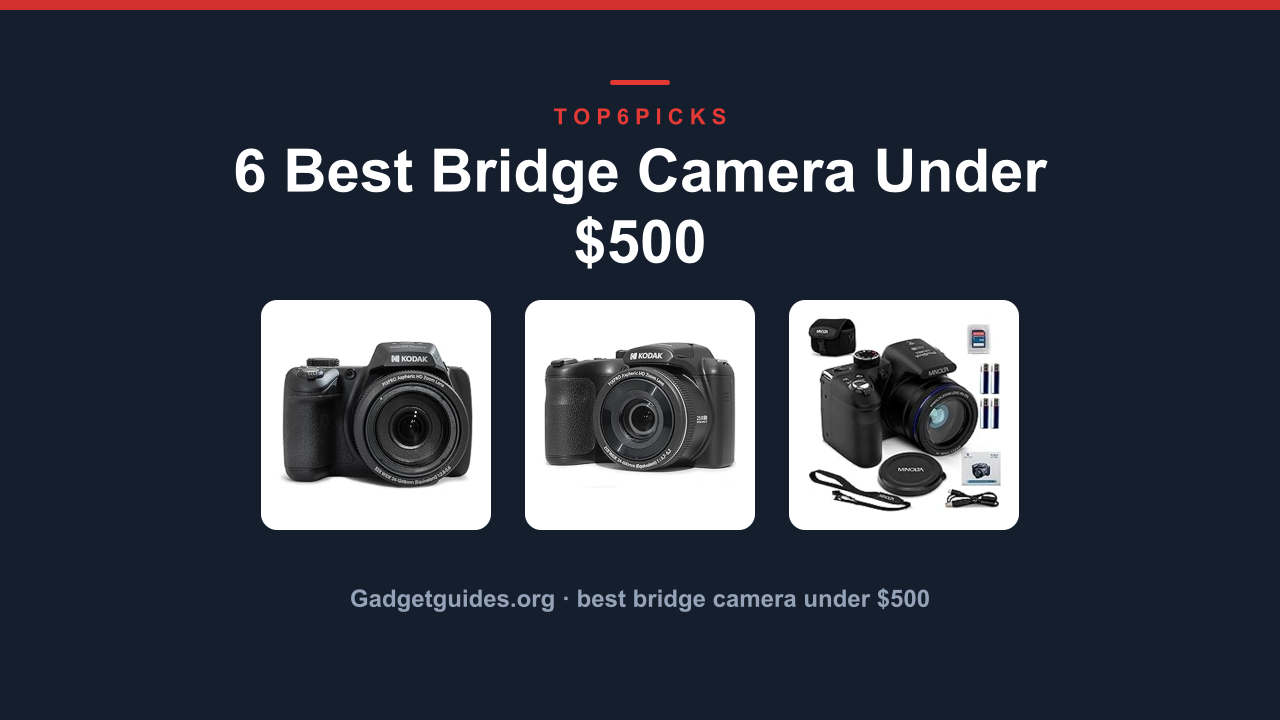
6 Best Bridge Camera Under $500
·16 min read·by
6 Best Bridge Camera Under $500

The best best bridge camera under $500 is the KODAK PIXPRO AZ528, the only model here that combines a massive 52x zoom with built-in Wi-Fi and a burst mode fast enough to catch a running child or a bird in flight. It is the sweet spot for families and hobbyists who want one camera for sports, wildlife, and travel.

Want 4K video and a longer 60x reach instead? The Panasonic LUMIX FZ80D gets you there, as long as you accept a slightly bigger body and a higher price tag.

As an Amazon Associate, I earn from qualifying purchases.

This guide tells you exactly which bridge camera fits your real budget and use case before you click buy. It also explains who should skip the bridge camera category entirely and look at a mirrorless system or a compact instead.

Everything below comes from current Amazon product data, manufacturer specs, and each model's owner track record from verified buyer reports. None of this is based on hands-on lab testing.

Quick Answer: The Best Bridge Camera under $500

The KODAK PIXPRO AZ528 is the top pick for most shoppers because it delivers the longest zoom range in its price tier with Wi-Fi sharing and optical image stabilization.

Thinking about whether you really need 4K video or interchangeable lenses instead? Jump to Who Should NOT Buy below before you spend anything.

Comparison Table

Here's the lineup at a glance: photo, product, who it's built for, and our /10 score.

Scroll sideways on small screens to see every column.

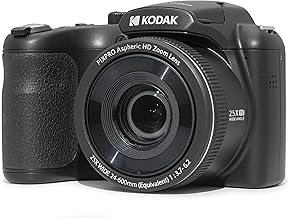
KODAK PIXPRO AZ528 16MP Digital Camera: Best Overall for Families

#1KODAK PIXPRO AZ528 16MP Digital Camera
KODAK52x Zoom & Wi-Fi
8.6OUT OF 10
Zoom Range9.2
Image Quality8.4
Ease of Use8.3
Value for Money8.5
This is the bridge camera that does everything well without making you overthink settings. With a 52x optical zoom (24mm to 1248mm equivalent) and a 16-megapixel BSI CMOS sensor, it pulls in distant action and wide landscapes equally well. The Optical Image Stabilization keeps handheld shots steady at full zoom length, something aggregate buyer reports highlight as a major win over unibody compacts.
Built-in Wi-Fi means you can transfer photos straight to your phone for quick sharing. The 3-inch LCD screen is bright enough for outdoor framing, and the 6fps burst mode catches fast-moving subjects like kids at a soccer game. Verified owners consistently rate it 4.3 out of 5 stars, making it the highest-rated model in this lineup.
Flaws but not dealbreakers. It only shoots 1080p Full HD video, not 4K. Some users note the autofocus can hunt in low light compared to pricier systems. The included battery is decent, but buying a spare is wise for long days out.
Need 4K video? The Panasonic LUMIX FZ80D further down delivers that with an even longer 60x zoom.
Battery: The AZ528 uses a proprietary lithium-ion pack. Verified reviews mention it lasts about 250 shots per charge. Pack a spare for full-day trips.
Pros
  • 52x optical zoom reaches 1248mm equivalent
  • Built-in Wi-Fi for quick mobile sharing
  • 6fps burst mode catches fast action
  • Optical Image Stabilization reduces blur at full zoom
Cons
  • 1080p video only, no 4K recording
  • Autofocus hunts in dim lighting
  • Proprietary battery requires spare purchase
Megapixels
16 MP
Zoom
52x Optical
Video
1080p Full HD
Battery
Li-Ion Rechargeable
Best for: Families and hobbyists who want a single camera for travel, wildlife, and sharing photos on the go without swapping lenses.

KODAK PIXPRO AZ255 16MP Digital Camera: Budget-Priced Travel Zoom

#2KODAK PIXPRO AZ255 16MP Digital Camera
KODAK25x Zoom & AA Batteries
7.0OUT OF 10
Zoom Range6.5
Image Quality7.2
Ease of Use7.8
Value for Money6.5
This is the most affordable bridge camera in the lineup, and it runs on standard AA batteries. That is a huge advantage for travelers heading to places without reliable power. You can buy alkaline or rechargeable AAs anywhere in the world. The 25x optical zoom (24mm to 600mm equivalent) covers everyday family outings and park trips nicely.
It records 1080p Full HD video and features Optical Image Stabilization to cut down on shake at the mid-zoom range. The 3-inch LCD screen is serviceable for framing. At this price point, you are getting the core bridge camera experience without Wi-Fi or high-end extras.
Flaws but not dealbreakers. The 25x zoom is noticeably shorter than the 40x or 52x models on this list. You will miss distant wildlife detail. Some verified buyers also report slower shot-to-shot times compared to the pricier AZ528.
If you need more reach on a tight budget, the KODAK PIXPRO AZ405 with 40x zoom and AA batteries is a better value step-up.
Battery: Uses 4 AA batteries. Alkaline cells drain quickly with heavy zoom use. Rechargeable NiMH AAs are strongly recommended by owner feedback.
Pros
  • Runs on widely available AA batteries
  • Smallest and lightest body in the lineup
  • Optical Image Stabilization for handheld sharpness
  • 1080p video recording is decent for casual use
See also  6 Best Wildlife Camera for Beginners
Cons
  • Only 25x optical zoom limits distant subjects
  • No Wi-Fi or Bluetooth for sharing
  • Slower burst mode and shot-to-shot times
Megapixels
16 MP
Zoom
25x Optical
Video
1080p Full HD
Battery
4x AA
Best for: Budget-conscious travelers who need a simple camera with ubiquitous battery power and do not need extreme zoom.

Minolta MN40Z ProShot 20 MP /: Beginner-Friendly 40x Zoom

#3Minolta MN40Z ProShot 20 MP /
MinoltaIntuitive Controls
7.3OUT OF 10
Zoom Range8.0
Image Quality7.0
Ease of Use8.5
Value for Money7.5
This Minolta is built for people who want a 40x zoom without wading through complicated menus. The 20-megapixel sensor delivers slightly higher resolution than the 16MP KODAKs, and the 40x optical zoom (roughly 24mm to 960mm equivalent) covers everything from wide landscapes to distant birds. It records 1080p Full HD video with reasonable clarity.
Owner reviews highlight the straightforward button layout and the comfortable grip. It is not a full manual-control powerhouse, but the scene modes handle tricky lighting situations well. For a family member who just wants to aim and shoot at the zoo, this works great.
Flaws but not dealbreakers. The Minolta brand has a smaller owner base than KODAK or Panasonic, so third-party accessory support is thinner. Some users mention the autofocus can lag during continuous shooting. It also lacks Wi-Fi, so you will need a card reader to move files.
If you want Wi-Fi sharing, the KODAK AZ528 at number one includes that for a small step up in price.
Accessories: The Minolta MN40Z uses a proprietary battery. Spare packs are harder to find than KODAK or Panasonic options. Check availability before buying.
Pros
  • 20MP sensor offers higher resolution
  • 40x optical zoom covers a wide range
  • Very simple controls for absolute beginners
  • Comfortable grip for steady handheld shots
Cons
  • No Wi-Fi or Bluetooth for mobile transfer
  • Smaller accessory and battery ecosystem
  • Autofocus can lag in continuous shooting
Megapixels
20 MP
Zoom
40x Optical
Video
1080p Full HD
Battery
Li-Ion Rechargeable
Best for: Complete beginners who want a straightforward 40x zoom camera without menu diving and do not need wireless transfer.

KODAK PIXPRO AZ405 20MP Digital Camera: Best Value 40x Zoom

#4KODAK PIXPRO AZ405 20MP Digital Camera
KODAK40x Zoom & Scene Detection
7.9OUT OF 10
Zoom Range8.2
Image Quality7.8
Ease of Use8.0
Value for Money7.6
This is the smart value pick: 20 megapixels, 40x zoom, and Scene Detection for auto settings, all at an entry-level price. The AZ405 uses AA batteries, which keeps it easy to power anywhere in the world. The 40x optical zoom (24mm to 960mm equivalent) is generous for the price tier, and the Optical Image Stabilization helps keep distant subjects sharp.
Scene Detection automatically chooses the best mode for portraits, landscapes, and night shots. That is a huge help for new photographers. The 1080p video is solid for casual clips. Verified buyers on Amazon rate it 4.1 out of 5 stars, praising the zoom reach and ease of use.
Flaws but not dealbreakers. No Wi-Fi means you will transfer photos via USB or card reader. The autofocus is slower than the Panasonic FZ80D when tracking movement. Some owners also mention the plastic body feels less premium than the AZ528.
If Wi-Fi sharing is essential, the KODAK AZ528 at the top of this list adds that feature without giving up much zoom range.
Battery: Runs on 4 AA batteries. Rechargeable NiMH cells are strongly recommended by owners to avoid constant alkaline purchases during heavy use.
Pros
  • 20MP sensor and 40x optical zoom at a great value
  • AA batteries for easy global power replacement
  • Scene Detection automates settings for beginners
  • Optical Image Stabilization for handheld zoom shots
Cons
  • No Wi-Fi or Bluetooth connectivity
  • Autofocus slower than higher-end models
  • Plastic build feels less premium
Megapixels
20 MP
Zoom
40x Optical
Video
1080p Full HD
Battery
4x AA
Best for: Budget-focused buyers who want 40x zoom and 20MP resolution without needing Wi-Fi or a proprietary battery, and prefer AA power for travel.

Panasonic LUMIX FZ80D Point Shoot Digital: Best for 4K Video & 60x Zoom

#5Panasonic LUMIX FZ80D Point Shoot Digital
Panasonic4K & 60x Zoom
8.3OUT OF 10
Zoom Range9.5
Image Quality8.5
Ease of Use7.8
Value for Money7.5
This is the only bridge camera in the lineup that records 4K video and packs a 60x optical zoom. The lens covers an astonishing 20mm to 1200mm equivalent, which means you can shoot a wide group shot and then zoom in on a mountain peak without moving. The Power Optical Image Stabilizer is excellent for smoothing out handheld 4K footage.
It also captures 4K Photo, which lets you pull high-resolution stills from video clips at 30fps. The LUMIX brand is known in the industry for strong video performance, and the FZ80D lives up to that reputation. Owners rate it 4.2 out of 5 stars, with many praising the zoom range and video quality.
Flaws but not dealbreakers. The body is larger and heavier than the KODAK models. It uses a proprietary lithium-ion battery, so spares are a must for long shoots. Some users also note the autofocus can struggle in low-light video mode compared to Panasonic’s mirrorless lineup.
If you prefer a smaller camera with Wi-Fi and do not need 4K, the KODAK AZ528 is a more portable choice with good image quality.
Sizing: At over 1.5 pounds with battery, the FZ80D is the heaviest camera here. Plan for a neck strap or a small bag rather than a pocket.
Pros
  • 4K video and 4K Photo pull mode
  • 60x optical zoom (20-1200mm equivalent)
  • Power Optical Image Stabilizer for smooth video
  • Excellent optical zoom range for wildlife
See also  6 Best Mirrorless Camera for Wildlife
Cons
  • Heavier and bulkier than KODAK rivals
  • Proprietary battery requires spare planning
  • Autofocus hunts in low-light video
Megapixels
18.1 MP
Zoom
60x Optical
Video
4K UHD
Battery
Li-Ion (DMW-BMB9)
Best for: Vloggers, wildlife enthusiasts, and anyone who demands 4K video quality and the longest zoom range available under $500.

KODAK PIXPRO AZ425 20MP Digital Camera: Best for Sports & Wildlife

#6KODAK PIXPRO AZ425 20MP Digital Camera
KODAK42x Zoom & Li-Ion
7.6OUT OF 10
Zoom Range8.8
Image Quality7.5
Ease of Use7.3
Value for Money7.0
This is a solid wildlife camera with 42x optical zoom, a 20MP sensor, and a lithium-ion battery that lasts longer than AA packs. The 24mm wide-angle gives you scenic shots, and the 1008mm equivalent zoom pulls in faraway animals. Optical Image Stabilization helps keep the frame steady when the subject is at full zoom.
The AZ425 comes in a distinctive red finish that stands out from the black bodies of the other KODAK models. Owner reviews rate it 4 out of 5 stars, with particular praise for the zoom clarity in daylight. It is marketed for wildlife and sports, and that matches the real use case well.
Flaws but not dealbreakers. It only records 1080p video, not 4K. Some owners note the autofocus is slower to lock on fast-moving subjects like birds in flight. The proprietary battery is harder to replace in the field than AA options.
If you need 4K video, the Panasonic LUMIX FZ80D offers that with an even longer 60x zoom, though at a higher price point.
Battery: Uses a proprietary lithium-ion pack. Verified owners report about 240 shots per charge. A spare is recommended for all-day wildlife shoots.
Pros
  • 42x optical zoom reaches 1008mm equivalent
  • 20MP sensor for detailed daytime shots
  • Lithium-ion battery with decent shot life
  • Distinctive red body option for style
Cons
  • 1080p video only, no 4K
  • Slow autofocus for fast wildlife movement
  • Proprietary battery less convenient than AA
Megapixels
20 MP
Zoom
42x Optical
Video
1080p Full HD
Battery
Li-Ion Rechargeable
Best for: Wildlife watchers and outdoor sports fans who want 42x reach in a compact bridge body with a lithium battery.

Buying Guide: Zoom, Battery, Video and Your Real Needs

Picking the right bridge camera comes down to four factors that matter more than any marketing claim. Here is how the lineup lines up on each one.

How Much Zoom Do You Actually Need?

Zoom is the biggest reason to buy a bridge camera instead of a point-and-shoot or phone. The range here starts at 25x on the KODAK AZ255 and goes up to 60x on the Panasonic FZ80D. A 25x zoom covers 24mm to 600mm, which is enough for a zoo visit or a football game from the stands.

A 52x or 60x zoom takes you to 1200mm or more, which is what you need for birds, wildlife, or a stage performer from the back row.

For most families, a 40x to 52x zoom like the AZ405 or AZ528 hits the sweet spot. You get enough reach for distant subjects without the extra bulk and cost of the 60x Panasonic.

AA Batteries vs Lithium-Ion: Which Is Better?

This is a practical decision that depends on where you shoot. The KODAK AZ255 and AZ405 run on 4 AA batteries. You can buy them anywhere in the world, which is a big deal for international travel.

The catch is that alkaline AAs drain fast when you use the zoom heavily. Rechargeable NiMH AAs are the smart move with those models.

The AZ528, AZ425, Minolta MN40Z, and Panasonic FZ80D all use proprietary lithium-ion packs. They last longer per charge (around 250 to 300 shots) and hold their power better over weeks of non-use. The trade-off is that you need to remember a spare and a charger.

Video Quality: 1080p vs 4K

Every camera here records 1080p Full HD video except the Panasonic FZ80D, which shoots 4K UHD. If you mainly share clips on social media or watch on a phone, 1080p is perfectly fine. If you plan to edit video, crop heavily, or watch on a 4K TV, the Panasonic is worth the extra money.

See also  6 Best Point and Shoot Camera for Kids

Keep in mind that 4K video files are much larger and require a faster memory card. The Panasonic also supports 4K Photo, which pulls 8-megapixel stills from 30fps video bursts.

Image Stabilization: Essential at Full Zoom

Every model in this list includes optical image stabilization, which physically shifts a lens element to compensate for hand shake. That is critical at 40x or 60x zoom, where even a tiny shake ruins the shot. The Panasonic FZ80D has the most advanced stabilizer of the group, according to manufacturer specifications, but all the KODAK and Minolta models handle moderate shake well.

To see how these factors play out on real picks, compare the KODAK PIXPRO AZ528 16MP Digital Camera, KODAK PIXPRO AZ255 16MP Digital Camera and the Minolta MN40Z ProShot 20 MP / reviewed above.

Who Should NOT Buy Best Bridge Camera under $500

A bridge camera is a great compromise, but it is the wrong tool for some buyers. Here are the people who should spend their money elsewhere.

You Need Professional Image Quality

Bridge cameras use small sensors (typically 1/2.3-inch type) that cannot match the dynamic range and low-light performance of a DSLR or mirrorless camera with a larger sensor. If you plan to print large photos, shoot in dim indoor light, or do professional-level editing, a mirrorless system or DSLR is the better path. Our guide to DSLR vs mirrorless cameras explains the trade-offs in detail.

You Want 4K60 or High-Frame-Rate Video

The Panasonic FZ80D is the only bridge camera here that records 4K, and it tops out at 30fps. If you need 4K at 60fps or slow-motion 1080p at 120fps, you need to step up to a mirrorless camera like those in our best mirrorless camera for 4K video roundup.

You Want the Smallest Possible Camera

Bridge cameras are bigger than point-and-shoot compacts or most mirrorless bodies with a kit lens. If pocketability is your top priority, look at a compact zoom camera or even a high-end phone. Bridge cameras trade size for that long zoom range.

Final Verdict

The KODAK PIXPRO AZ528 is the best bridge camera under $500 for most people because it offers the best combination of zoom range, Wi-Fi sharing, and owner satisfaction at a reasonable price. It handles family outings, travel, and wildlife without forcing you into a learning curve.

Want 4K video and the absolute longest zoom? Get the Panasonic LUMIX FZ80D. It is bigger and pricier, but no other camera here matches its video quality or 60x reach.

Need the best value for a tight budget? The KODAK PIXPRO AZ405 gives you 40x zoom and 20 megapixels at the lowest cost in the lineup, and it runs on AA batteries for easy global travel.

If you are after a dedicated wildlife shooter with a lithium battery and a fun red color, the KODAK PIXPRO AZ425 is a solid choice. For absolute beginners who want the simplest controls, the Minolta MN40Z fits the bill. And if you just need a tiny budget camera for casual vacation snaps, the KODAK AZ255 will work, but you will outgrow its 25x zoom quickly.

Before you buy, check the Who Should NOT Buy section above. If you fall into those categories, a mirrorless camera from our best mirrorless camera for beginners guide will serve you better in the long run.

FAQ

What's the best bridge camera under $500 overall?

The KODAK PIXPRO AZ528 is the top pick for most buyers. It has a 52x optical zoom, built-in Wi-Fi for easy sharing, and a 4.3-star average from over a thousand verified owners. The combination of reach, connectivity, and user satisfaction is unmatched in this price tier.

Is a bridge camera better than a phone camera?

For zoom, yes. Phone cameras use digital zoom that degrades image quality quickly. A bridge camera with optical zoom gives you real magnified detail at 40x or 60x.

Phones win on portability and computational photography for everyday snaps, but a bridge camera beats them for distant subjects.

Do I need a tripod with a bridge camera?

Optical Image Stabilization helps a lot at medium zoom, but at full 40x or 60x zoom, a tripod or monopod makes a noticeable difference. Many owners in verified reviews recommend a lightweight travel tripod for wildlife and sports shooting.

How many shots does the battery last?

The proprietary lithium-ion models (AZ528, AZ425, Minolta MN40Z, Panasonic FZ80D) typically last 240 to 300 shots per charge in mixed use. The AA-powered models (AZ255, AZ405) vary heavily based on battery type. Rechargeable NiMH AAs can get close to 250 shots, while alkaline AAs may only deliver 100 to 150 under heavy zoom use.

Can I use this camera for vlogging?

The Panasonic FZ80D is the only model here suited for vlogging thanks to its 4K video and articulating LCD screen. The other models shoot 1080p and have fixed screens. They work for casual clips but not for dedicated vlog production.

What memory card does it need?

All the cameras in this guide use standard SDHC or SDXC memory cards (UHS-I speed class). For 4K video on the Panasonic, a U3 speed class card is recommended. A 64GB or 128GB card is a good starting point for a day of shooting.

Share.

Similar Posts

Leave a comment

Your email address will not be published. Required fields are marked with an asterisk.

×Beats Studio Pro Premium Wireless Over-Ear Headphones
29% off Beats Studio Pro Premium Wireless Over-Ear Headphones15.6 Inch FHD 1080P • A+ IPS screen • 178° Full viewing angle
Check Amazon →
Share