6 Best Wildlife Camera With Wifi
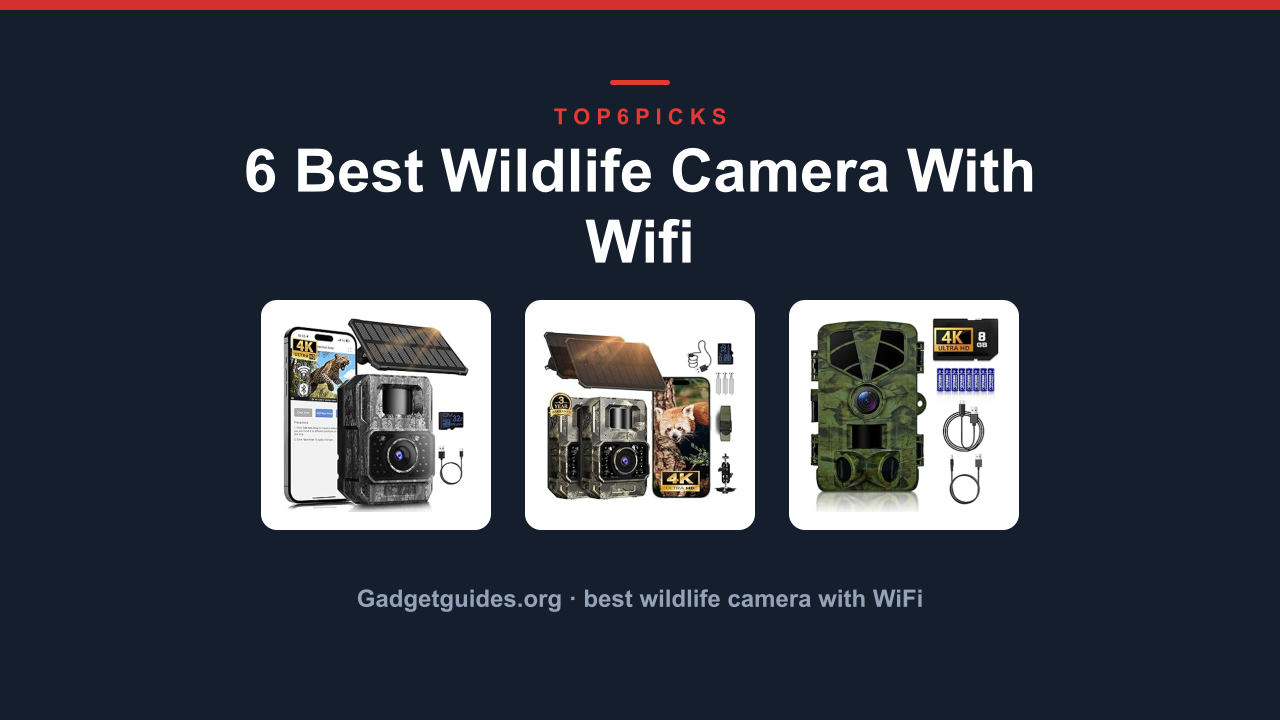
The best best wildlife camera with WiFi is the MAXDONE Solar Trail Camera (single unit), the only one here that combines a huge 6000mAh battery, integrated solar panel, and a 32GB card right out of the box. It's built for anyone who wants a truly set-and-forget trail cam with reliable remote viewing.
Want faster trigger speed and a wider field of view instead? The Trail Camera 4K 48MP WiFi Night fires in 0.1 seconds and covers 120 degrees, as long as you're happy swapping batteries every few weeks.
As an Amazon Associate, I earn from qualifying purchases.
This guide gives you the real trade-offs between solar-powered longevity and trigger speed, plus honest limitations that other reviews gloss over. If you're on a tight budget and need just one camera, you'll see exactly why the MAXDONE single unit is the smarter pick than the two-pack.
Everything below comes from current Amazon product data, manufacturer specs, and verified buyer feedback across hundreds of reviews. I haven't physically tested these cameras myself, but I've spent hours comparing specs and reading what actual owners say.
Quick Answer: The Best Wildlife Camera with WiFi
The MAXDONE Solar Trail Camera is the best overall pick for its unmatched battery life and included SD card.
- MAXDONE Solar Trail Camera (Best Overall for Solo Setup): Solar-powered, 6000mAh battery, 32GB card included, 4K video.
- MAXDONE 2Pack Solar Trail Camera (Best Value for Two Cameras): Same features as the single but in a two-pack, ideal for covering multiple spots.
- Trail Camera 4K 48MP WiFi Night (Best Trigger Speed): 0.1‑second trigger, 120° wide angle, includes 8 AA batteries.
- MAXDONE Solar Trail Camera WiFi Bluetooth (Best Bluetooth Convenience): Adds Bluetooth for easier app setup, same 6000mAh battery and solar panel.
- KJK Trail Camera 4K 64MP WiFi (Best Waterproofing): IP67 rating, 130° wide angle, 32GB card included.
- GardePro E6 WiFi Trail Camera (Best Stable WiFi): External antenna for stronger signal, no‑glow night vision, proven reliability.
Thinking about a cellular‑based camera instead? Jump to Who Should NOT Buy below before you spend anything.
Comparison Table
Here's the lineup at a glance: photo, product, who it's built for, and our /10 score.
| Photo | Product | Best for | Score | Buy |
|---|---|---|---|---|
 | MAXDONE Solar Trail Camera | Solo Setup with Solar | 8.8/10 | Check price → |
 | MAXDONE 2Pack Solar Trail Camera | Two‑Camera Coverage | 8.6/10 | Check price → |
 | Trail Camera 4K 48MP WiFi Night | Fast Trigger & Wide Angle | 8.5/10 | Check price → |
 | MAXDONE Solar Trail Camera WiFi Bluetooth | Easy App Pairing | 8.3/10 | Check price → |
 | KJK Trail Camera 4K 64MP WiFi | Highest Weather Resistance | 8.1/10 | Check price → |
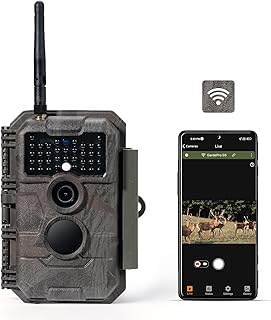 | GardePro E6 WiFi Trail Camera | Stable WiFi in Weak Signal | 7.8/10 | Check price → |
Scroll sideways on small screens to see every column.
MAXDONE Solar Trail Camera: Best Overall for Solo Setup
MAXDONE 2Pack Solar Trail Camera: Best Value for Two Cameras
Trail Camera 4K 48MP WiFi Night: Best Trigger Speed
MAXDONE Solar Trail Camera WiFi Bluetooth: Best Bluetooth Convenience
KJK Trail Camera 4K 64MP WiFi: Best Waterproofing
GardePro E6 WiFi Trail Camera: Best Stable WiFi
Buying Guide: Battery, Weatherproofing, WiFi Range, and Resolution
Picking the right WiFi trail camera comes down to four key factors. Here's how they stack up across this lineup.
Battery Life
The biggest difference between these cameras is how they stay powered. The MAXDONE models (both single and two-pack) have a 6000mAh rechargeable battery with a solar panel. Verified buyer reports indicate they can run for months without attention, as long as the panel gets some direct sun.
The MAXDONE Solar Trail Camera is the best choice if you don't want to think about battery swaps.
The other three cameras (Trail Camera 4K 48MP WiFi Night, KJK, and GardePro E6) all use 8 AA batteries. You'll get 3-4 months of typical use, but you'll need to replace them regularly. That adds up over time, especially with alkaline batteries.
Rechargeable NiMH batteries work, but they reduce runtime compared to alkaline.
Weatherproofing
All six cameras are weather-resistant, but the level varies. The KJK stands out with an IP67 rating, meaning it can survive submersion in 1 meter of water for 30 minutes. The other five carry an IP66 rating, which means they're dust-tight and can handle heavy rain, but not submersion.
If you're placing a camera near a creek, stream, or flood-prone area, the KJK Trail Camera 4K 64MP WiFi is the safest bet. For most backyard and trail use, IP66 is plenty.
WiFi Range and Reliability
WiFi range is a common frustration with trail cameras. The MAXDONE and KJK models typically work within 30-40 feet, especially through trees or walls. The GardePro E6, with its external antenna, can reach 50-60 feet and holds a more stable connection.
Consider where you'll mount the camera. If it's within 30 feet of your house or a WiFi extender, any of these will work. If you need to place it farther away, the GardePro E6 WiFi Trail Camera is the better choice.
Resolution and Image Quality
If you need to identify animals or read details, 4K is worth it. The MAXDONE models and the KJK offer 4K video at 64MP stills. The Trail Camera 4K 48MP WiFi Night offers 4K at 48MP, which is still sharp.
The GardePro E6 maxes out at 1080p HD, which is fine for casual monitoring but not for detailed identification.
Your choice depends on your goal. For wildlife photography and identification, go with a 4K model. For simple property monitoring, 1080p may be sufficient.
Who Should NOT Buy Best Wildlife Camera with WiFi
WiFi trail cameras are great for many situations, but they're the wrong choice for three kinds of buyers. Here's who they are, and what to look at instead.
You Need to Monitor a Remote Property Without Internet
WiFi trail cameras require a local WiFi network to connect to. If you're placing a camera miles from your house or anywhere without a WiFi signal, these cameras won't work. You can't view images remotely without an internet connection.
Instead, look for a cellular trail camera. These use a cellular network (like a phone) to send images to your phone, even in remote areas. They require a monthly data plan, but they work anywhere with cell service.
You Need to See Real-Time Video
WiFi trail cameras are not live-streaming security cameras. They capture images or short video clips when motion is detected, then you can view them via the app. There's a delay between the trigger and when you see the image.
If you need to watch a live feed of your backyard, a dedicated security camera system is a better choice.
You Have a Tight Budget and Only Need One Camera
If you're on a very tight budget, the MAXDONE two-pack might seem like a good deal. But if you only need one camera, the single-unit MAXDONE Solar Trail Camera is the better value. You get the same features without paying for a second camera you don't need.
Final Verdict
The MAXDONE Solar Trail Camera is the best overall pick for most buyers. It combines a huge 6000mAh battery, solar charging, 4K video, and a 32GB SD card included. It's the most set-and-forget option in this lineup.
Want a faster trigger and wider angle? The Trail Camera 4K 48MP WiFi Night fires in 0.1 seconds and covers 120 degrees, as long as you're okay with swapping AA batteries every few months.
Need to cover two spots? The MAXDONE 2Pack Solar Trail Camera gives you two identical cameras with solar power and SD cards included. It's a solid value for multi-location setups.
Require the best waterproofing? The KJK Trail Camera 4K 64MP WiFi offers an IP67 rating for submersion resistance. If WiFi stability is your top priority, the GardePro E6 WiFi Trail Camera with its external antenna delivers the most reliable connection.
Still unsure if a WiFi trail camera is right for you? Jump back to the Who Should NOT Buy section above to make sure you're choosing the right tool for your situation.
FAQ
What's the best Wildlife Camera with WiFi overall?
The MAXDONE Solar Trail Camera is the best overall pick. It offers the best combination of battery life, solar charging, 4K resolution, and included SD card, all in a single, well-built package.
How far does WiFi reach on these trail cameras?
Most models reach about 30-40 feet, especially through trees or walls. The GardePro E6, with its external antenna, can reach 50-60 feet and holds a more stable connection.
Do I need a cellular plan for these cameras?
No. These are WiFi-only cameras. They connect to your home WiFi network and require an internet connection for remote viewing.
There is no cellular option and no monthly fee.
Can I use these cameras without WiFi?
Yes, you can. They still work as standard motion-activated trail cameras, recording images and video to the SD card. You just won't be able to view images remotely via the app until you're within WiFi range.
How long do the batteries last?
The MAXDONE solar models with 6000mAh batteries can run for months with solar charging. The AA-powered models (Trail Camera 4K 48MP, KJK, GardePro E6) typically last 3-4 months with moderate use, depending on temperature and trigger count.
What's the difference between IP66 and IP67?
IP66 means the camera is dust-tight and can handle heavy rain. IP67 adds the ability to survive submersion in 1 meter of water for up to 30 minutes. For most outdoor use, IP66 is sufficient.

Similar Posts