Dslr Vs Mirrorless Camera
The world of digital photography has long been dominated by two distinct camera types: DSLRs and mirrorless cameras. For years, the DSLR reigned supreme, a trusted companion for professionals and enthusiasts alike. However, in recent times, mirrorless technology has surged forward, rapidly gaining market share and challenging the established order. This shift has left many photographers, from seasoned pros to budding hobbyists, pondering a critical question: which camera type is right for them?
Choosing between a DSLR and a mirrorless camera involves understanding their fundamental technological differences, their strengths and weaknesses, and how these attributes align with your specific photographic needs and shooting style. While both can produce stunning images, the underlying mechanisms and the resulting user experience diverge significantly.
This comprehensive guide will break down the DSLR vs. mirrorless debate, offering a clear, data-driven comparison to help you make an informed decision. We’ll explore the technology, performance, features, and practical considerations of each, ensuring you have the knowledge to select the camera that best empowers your photographic journey.
Key Takeaways
- Mirrorless cameras are generally more compact, lighter, and feature advanced autofocus systems with features like eye-tracking and subject recognition. They offer a real-time view of exposure and settings through their electronic viewfinders (EVFs).
- DSLR cameras utilize a mirror and prism system for optical viewfinders (OVFs), offering a direct, lag-free view of the scene. They often boast longer battery life and a wider selection of native lenses, particularly in older systems.
- Autofocus: Mirrorless systems excel in live view and video autofocus, often incorporating sophisticated AI-driven tracking. DSLRs’ phase-detection autofocus (PDAF) in live view can be slower, though their dedicated PDAF sensors for OVF shooting are very fast.
- Viewfinders: Mirrorless cameras use electronic viewfinders (EVFs) that display a digital rendition of the image, showing exposure and white balance changes in real-time. DSLRs use optical viewfinders (OVFs) that provide a direct, unadulterated view through the lens.
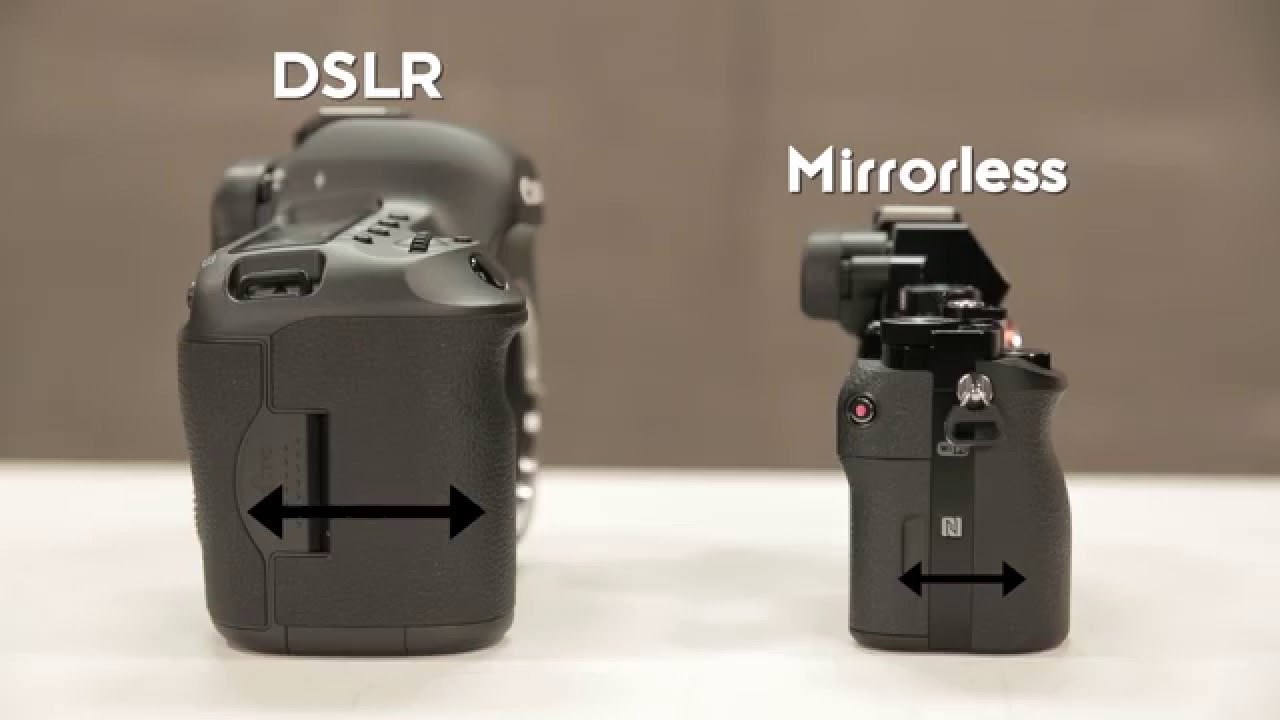
- Size and Weight: Mirrorless cameras are typically smaller and lighter due to the absence of a mirror box and pentaprism.
- Battery Life: DSLRs generally offer superior battery life because their optical viewfinders don’t consume power, unlike the EVFs in mirrorless cameras.
- Lens Selection: While mirrorless systems have rapidly expanded their lens lineups, DSLRs still often have a more extensive and diverse range of native lenses available, especially from third-party manufacturers.
- Video Capabilities: Mirrorless cameras generally lead in video features, offering higher resolutions, frame rates, and more advanced autofocus during recording.
Understanding The Core Technology: Mirror Vs. Mirrorless
The fundamental difference between DSLR and mirrorless cameras lies in how they direct light from the lens to the sensor and the viewfinder. This distinction impacts virtually every aspect of their design and performance.
How Dslrs Work: The Mirror Mechanism
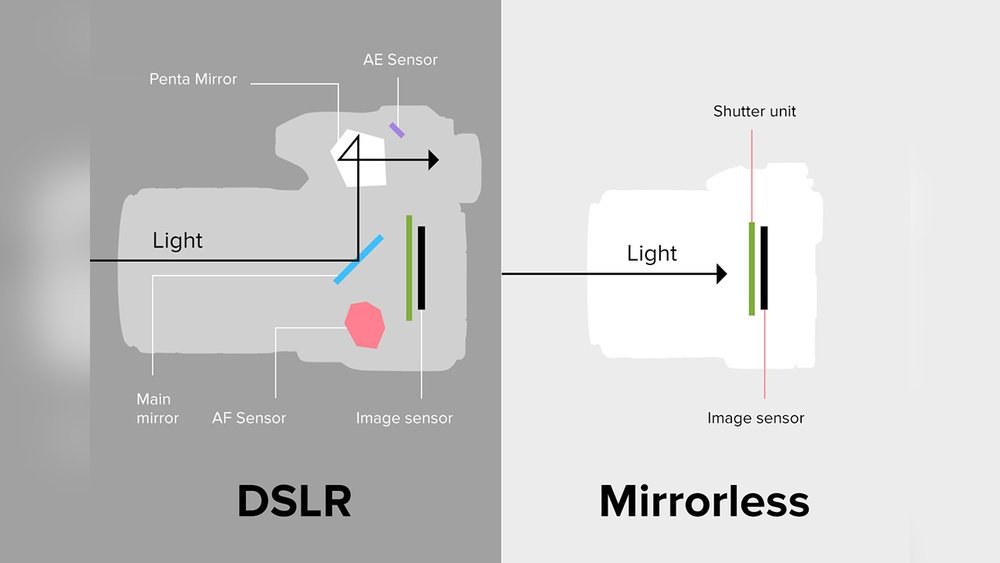
DSLR stands for Digital Single-Lens Reflex. The “reflex” part refers to the camera’s core mechanism: a mirror positioned behind the lens. This mirror reflects light upwards into a pentaprism (or pentamirror in some entry-level models), which then redirects it horizontally to the optical viewfinder (OVF). When you look through the OVF, you see a direct, real-time optical view of the scene exactly as the lens sees it.
When you press the shutter button, a rapid sequence of events occurs:
- The mirror flips up out of the light path.
- The shutter opens, allowing light to hit the image sensor.
- The image is captured by the sensor.
- The shutter closes.
- The mirror flips back down, restoring the view through the OVF.
This mechanical process, while effective, introduces certain limitations, such as the sound of the mirror flipping, a brief blackout in the viewfinder during exposure, and a larger body size to accommodate the mirror box and prism.
How Mirrorless Cameras Work: Eliminating The Mirror
As the name suggests, mirrorless cameras remove the mirror box and pentaprism entirely. Light passes directly through the lens and onto the image sensor at all times.
Instead of an optical viewfinder, mirrorless cameras use an electronic viewfinder (EVF). This is essentially a tiny, high-resolution screen inside the viewfinder eyepiece that displays a live feed from the image sensor. This means what you see in the EVF is a digital representation of the scene, and it can show you exactly how your exposure, white balance, and other settings will affect the final image *before* you take the shot. Many mirrorless cameras also rely solely on the rear LCD screen for composing shots, similar to how compact digital cameras or smartphones operate.
The absence of the mirror mechanism allows for:
- Smaller and lighter camera bodies.
- Potentially faster burst shooting as there’s no mirror to move.
- Continuous live view through the EVF or LCD, showing exposure and effects in real-time.
- Advanced autofocus systems that can utilize the entire sensor area for focusing.
Credit: www.youtube.com
Key Performance Differences: Speed, Autofocus, And Image Quality
The technological divergence between DSLRs and mirrorless cameras translates into distinct performance characteristics, particularly in areas critical to photographers: speed, autofocus capabilities, and the nuances of image quality.
Speed And Burst Shooting
Historically, DSLRs held an advantage in burst shooting (taking multiple photos in rapid succession). The dedicated phase-detection autofocus (PDAF) sensors in DSLRs, separate from the imaging sensor, allowed for very fast focusing and tracking of moving subjects during continuous shooting. The mirror flipping up was a mechanical limitation, but the focusing system was optimized for speed.
However, mirrorless technology has rapidly closed this gap and, in many cases, surpassed DSLRs. Without a mirror to move, mirrorless cameras can achieve incredibly high frames per second (FPS). High-end mirrorless models can shoot at 10, 20, or even 30 FPS, often with continuous autofocus and auto-exposure tracking.
- DSLR Advantage: Dedicated PDAF sensors can be very fast and effective, especially in good light.
- Mirrorless Advantage: Higher potential FPS, especially in silent shooting modes (electronic shutter), and often more sophisticated subject tracking algorithms that leverage the full sensor.
Autofocus Systems: A Tale Of Two Technologies
Autofocus is arguably one of the most significant areas where DSLRs and mirrorless cameras differ.
Dslr Autofocus
DSLRs typically employ two autofocus systems:
- Phase-Detection Autofocus (PDAF) Sensor: This is the primary AF system used when shooting through the optical viewfinder. It uses a separate sensor array to measure the phase difference of light coming from the lens, allowing for very quick and accurate focusing. This system is excellent for tracking moving subjects.
- Contrast-Detection Autofocus (CDAF) or Hybrid PDAF: When using the camera’s LCD screen for live view shooting, the DSLR reverts to using the main image sensor for autofocus. This can be slower and less decisive than the dedicated PDAF system, especially in older models. Newer DSLRs incorporate hybrid systems on the sensor to improve live view AF speed.
A common issue with DSLRs, particularly older ones, is autofocus micro-adjustment. Due to slight manufacturing tolerances, the dedicated PDAF sensor might focus slightly differently than the image sensor. This can lead to front- or back-focusing issues. DSLRs often have an AF Micro-adjustment feature in their menus to compensate for this.
Mirrorless Autofocus
Mirrorless cameras rely almost exclusively on autofocus systems that utilize the main image sensor. This offers several advantages:
- On-Sensor Phase Detection (Hybrid AF): Most modern mirrorless cameras integrate PDAF points directly onto the image sensor. These points work in conjunction with contrast detection for incredibly fast, accurate, and decisive autofocus.
- Wider AF Coverage: PDAF points can be spread across a much larger percentage of the sensor area (sometimes 100%), meaning subjects near the edge of the frame can be focused on quickly.
- Advanced Subject Tracking: The continuous feed from the sensor allows mirrorless cameras to implement sophisticated tracking algorithms, including real-time eye-AF (for humans and animals) and object recognition (e.g., cars, birds). This makes tracking unpredictable subjects much easier.
- Superior Live View and Video AF: Because the AF system is always on the image sensor, mirrorless cameras offer consistently fast and smooth autofocus during live view shooting and, crucially, during video recording.
Example: When shooting sports, a mirrorless camera with advanced AI-driven subject tracking can lock onto a player’s eye and maintain focus even as they move erratically, turn their head, or are partially obscured. A DSLR using its OVF might also track well, but its live view AF would likely struggle to keep up.
Image Quality: Sensor And Processing
When it comes to the fundamental image quality, the detail, dynamic range, color rendition, and low-light performance, the difference between DSLRs and mirrorless cameras of similar generation and price point is often minimal. Both use essentially the same types of image sensors (CMOS or, less commonly, CCD).
The key factors influencing image quality are:
- Sensor Size: Larger sensors (like full-frame) generally offer better low-light performance and shallower depth of field capabilities than smaller sensors (like APS-C or Micro Four Thirds). This applies equally to both DSLR and mirrorless formats.
- Image Processor: The camera’s internal processor plays a significant role in noise reduction, color science, and overall image rendering.
- Lens Quality: The quality of the lens attached to the camera is paramount. A sharp, high-quality lens will produce better images regardless of the camera body type.
Where mirrorless cameras can sometimes offer an edge is in in-camera image stabilization (IBIS). Many mirrorless bodies include 5-axis sensor-shift stabilization, which works with any lens attached, providing sharper handheld shots, especially in low light or at slower shutter speeds. While some DSLRs have lens-based stabilization (Optical SteadyShot, Vibration Reduction), IBIS is more universally effective.
Credit: photographylife.com
Viewfinders: Optical Vs. Electronic
The viewfinder is your primary window into the scene, and the difference between a DSLR’s optical viewfinder (OVF) and a mirrorless camera’s electronic viewfinder (EVF) is a significant point of consideration.
Dslr Optical Viewfinders (ovf)
An OVF provides a direct, unprocessed view of the world through the lens.
- Pros:
- Lag-free: What you see is exactly what the lens sees, with no delay. This is crucial for capturing fast-moving action where split-second timing is essential.
- Clear and Bright: Offers a natural, unprocessed view that many photographers prefer.
- No Power Consumption: Doesn’t drain the camera battery.
- True Dynamic Range: Shows the scene as it is, without digital interpretation.
- Cons:
- No Exposure Preview: You cannot see the effect of your exposure settings (aperture, shutter speed, ISO) in real-time. You have to take a shot to see the result.
- Limited Information Overlay: While some information (focus points, shooting mode) can be displayed, it’s not as comprehensive or customizable as an EVF.
- Blackout: The viewfinder goes black momentarily when the mirror flips up during an exposure.
- Coverage: Entry-level DSLRs may only offer 95% viewfinder coverage, meaning a small part of the actual frame might not be visible.
Mirrorless Electronic Viewfinders (evf)
An EVF is a small, high-resolution digital screen that displays a feed from the image sensor.
- Pros:
- Real-time Exposure Preview: You see exactly how your exposure, white balance, picture style, and other settings will affect the final image *before* you press the shutter. This significantly reduces “chimping” (reviewing photos immediately after taking them) and helps nail exposure.
- Information Rich: Can display a wealth of information, including histograms, focus peaking, zebras (for exposure warning), and grid lines, all customizable.
- “What You See Is What You Get”: Provides a WYSIWYG (What You See Is What You Get) experience.
- Magnification Assist: Can digitally zoom into the scene to aid manual focusing.
- No Blackout (in some modes): Some high-end models offer blackout-free shooting at high burst rates.
- Cons:
- Lag: While significantly improved, some EVFs can still exhibit slight lag, which might be noticeable to critical users or in very fast action.
- Power Consumption: EVFs draw power, contributing to shorter battery life compared to DSLRs.
- Dynamic Range Limitations: The EVF screen has its own dynamic range and may not perfectly represent the full dynamic range captured by the sensor, especially in very high contrast scenes.
- Resolution and Refresh Rate: Lower-end EVFs might appear less detailed or have a lower refresh rate, leading to a less immersive experience.
Pro Tip: For photographers who rely heavily on manual settings and want to see the immediate impact of their adjustments, the EVF’s real-time preview is a significant advantage. For those who prioritize a direct, unadulterated view and speed above all else, the OVF remains compelling.

Credit: www.youtube.com
Size, Weight, And Ergonomics
The physical design and handling of a camera are crucial aspects of the user experience, and this is where mirrorless cameras have made substantial inroads.
Dslr Ergonomics: Built For The Hand
DSLRs, particularly higher-end models, are often built with substantial grips and robust bodies.
- Pros:
- Comfortable Grip: Larger bodies often translate to deeper, more comfortable grips, especially when using larger lenses.
- Balanced Weight: The weight distribution can feel more balanced, particularly with heavier telephoto lenses.
- Physical Controls: Traditionally feature a wealth of dedicated physical buttons and dials for quick access to settings.
- Durability: Often perceived as more rugged and durable due to their larger, more substantial construction.
- Cons:
- Bulk and Weight: Generally larger and heavier than their mirrorless counterparts, making them less convenient for travel or extended handheld shooting.
- Mirror Box Intrusion: The mirror box mechanism inherently dictates a minimum body size.
Mirrorless Ergonomics: Compact And Evolving
Mirrorless cameras have benefited from the removal of the mirror box, allowing for significantly smaller and lighter designs.
- Pros:
- Compact and Lightweight: Easier to carry for long periods, travel with, or discreetly shoot. This is a major draw for many users.
- Modern Design: Often feature sleeker, more minimalist designs.
- Customizable Controls: While some may have fewer physical buttons, modern mirrorless cameras offer extensive customization of buttons and touchscreens.
- Cons:
- Grip Size: Smaller bodies can sometimes lead to shallower grips, which might be less comfortable for users with larger hands or when using heavy lenses. This is improving with newer models.
- Lens Balance: Smaller bodies can feel unbalanced with large, heavy lenses attached.
- Heat Dissipation: In some compact models, extended video recording can lead to heat buildup due to the proximity of components and the continuous sensor operation.
Example: A travel photographer might choose a mirrorless system for its ability to fit into a small bag and be carried all day without fatigue. A sports photographer using long telephoto lenses might still prefer the more substantial grip and balanced feel of a larger DSLR or a full-frame mirrorless body.
Battery Life: A Dslr Stronghold
Battery life is a significant practical consideration for any photographer, and historically, DSLRs have held a clear advantage in this area.
Dslr Battery Life
DSLRs typically offer superior battery life primarily because their optical viewfinders do not consume power. The camera’s power draw is mainly related to the sensor’s activity when taking a photo, the LCD screen (when used), and the autofocus system.
- Typical Ratings: Many DSLRs can achieve 800-1000 shots or more on a single charge when primarily using the OVF. Some professional models can exceed 1500 shots.
Mirrorless Battery Life
Mirrorless cameras, by contrast, consume more power due to the constant operation of the image sensor and the electronic viewfinder (EVF) or LCD screen.
- Typical Ratings: Mirrorless cameras generally offer lower battery life, often ranging from 250-500 shots per charge. High-end models with larger batteries and more power-efficient EVFs can push this number higher, sometimes reaching 600-800 shots.
Factors Affecting Battery Life:
- Usage: Frequent use of the EVF/LCD, live view, Wi-Fi, and video recording will drain the battery much faster on any camera.
- Temperature: Cold weather can significantly reduce battery performance.
- Battery Size: Larger batteries naturally offer more power.
Mitigation Strategies for Mirrorless Users:
- Carry Spare Batteries: This is the most straightforward solution.
- Use Power Saving Modes: Many cameras have settings to reduce power consumption.
- Turn Off Unused Features: Disable Wi-Fi, Bluetooth, and GPS when not needed.
- Minimize Live View Usage: Rely on the EVF when possible.
Data Point: According to CIPA (Camera & Imaging Products Association) standards, which are used to measure battery life, a typical entry-level mirrorless camera might be rated around 300-400 shots, while a comparable DSLR could easily achieve 700-900 shots using the OVF.
Lens Ecosystem: Breadth And Future
The lens system is the heart of any interchangeable-lens camera system. The availability, quality, and cost of lenses can heavily influence a photographer’s choice.
Dslr Lens Ecosystem: Established And Extensive
DSLRs, particularly Canon EF and Nikon F mounts, have been around for decades. This has resulted in a vast and mature lens ecosystem.
- Pros:
- Huge Selection: Thousands of lenses available, from budget-friendly options to exotic professional optics, from first-party manufacturers (Canon, Nikon, Pentax) and a wide array of third-party brands (Sigma, Tamron, Tokina, etc. ).
- Mature Technology: Lenses are well-understood, and many affordable, high-quality older lenses can be found on the used market.
- Cost-Effective Options: The abundance of lenses means there are many used and budget-friendly choices available.
- Cons:
- Mounts are Aging: Canon has transitioned its new development to its RF mount (mirrorless), and Nikon has done the same with its Z mount (mirrorless). While F-mount lenses will continue to be supported, future innovation is focused on mirrorless mounts.
- Size and Weight: Many DSLR lenses, especially full-frame ones, are designed for larger mirror boxes and can be bulkier than their mirrorless equivalents.
Mirrorless Lens Ecosystem: Rapid Growth And Future Focus
Mirrorless systems are the focus of current and future lens development by camera manufacturers.
- Pros:
- Cutting-Edge Optics: New mirrorless lenses are often designed with the latest optical formulas and technologies, taking advantage of the closer flange distance (the distance between the lens mount and the sensor). This can lead to smaller, lighter, and sometimes sharper lenses, especially at the edges of the frame.
- Mount Innovation: Newer mirrorless mounts (e.g., Canon RF, Nikon Z, Sony E, L-Mount) often feature larger diameters and shorter flange distances, allowing for more ambitious optical designs.
- Rapid Expansion: Manufacturers are quickly releasing new native lenses for their mirrorless systems.
- Cons:
- Newer and Fewer Options (Historically): While growing rapidly, the native mirrorless lens selection, especially for newer mounts, can still be less extensive than established DSLR mounts.
- Higher Cost: New mirrorless lenses, particularly premium ones, can be expensive.
- Adaptability: While adapters allow DSLR lenses to be used on mirrorless bodies, performance (especially autofocus speed and reliability) can vary, and the combined setup can negate some of the size benefits.
Comparison Table: Lens Mounts
| Mount | Camera Type | Manufacturer | Mount Diameter (approx.) | Flange Distance (approx.) | Native Lens Availability |
|---|---|---|---|---|---|
| Nikon F | DSLR | Nikon | 44 mm | 46.5 mm | Very High |
| Canon EF | DSLR | Canon | 54 mm | 44 mm | Very High |
| Sony E | Mirrorless | Sony | 55 mm | 18 mm | High (and growing) |
| Canon RF | Mirrorless | Canon | 54 mm | 20 mm | Growing rapidly |
| Nikon Z | Mirrorless | Nikon | 55 mm | 16 mm | Growing rapidly |
| L-Mount | Mirrorless | Leica, Panasonic, Sigma | 60 mm | 20 mm | Growing |
Note: Mount diameter and flange distance are key factors in lens design possibilities. Larger diameters and shorter flange distances generally allow for more advanced optical designs, potentially leading to smaller, lighter, and higher-performing lenses.
Video Capabilities: Mirrorless Dominance
For videographers, the choice between DSLR and mirrorless is increasingly straightforward, with mirrorless cameras now offering significantly more advanced and user-friendly video features.
Dslr Video Limitations
DSLRs were among the first to offer decent video recording, but their design presents inherent limitations.
- Autofocus in Video: When recording video, DSLRs must use their image sensor for autofocus (Live View AF). As mentioned earlier, this is often slower, less smooth, and less reliable than the dedicated PDAF systems used for stills. Continuous autofocus during video can be jerky and prone to “hunting” for focus.
- Limited Features: Many DSLRs offer basic video recording capabilities but lack advanced features like high frame rates (4K at 60fps or 120fps), advanced codecs, log profiles for color grading, or advanced audio inputs.
- Ergonomics for Video: Holding a DSLR for extended video shooting can be cumbersome, and the mirror mechanism is irrelevant.
Mirrorless Video Advantages
Mirrorless cameras, built from the ground up with sensor-based technology, are generally superior for video.
- Advanced Autofocus: The on-sensor PDAF systems in mirrorless cameras provide smooth, accurate, and intelligent autofocus during video recording. Features like real-time eye-AF and subject tracking are invaluable for solo videographers.
- Higher Resolutions and Frame Rates: Mirrorless cameras are at the forefront of video technology, offering 4K recording at various frame rates (including high frame rates for slow motion), and increasingly, 8K capabilities.
- Advanced Features: Many mirrorless models include professional video features such as:
- Log Profiles: (e.g., S-Log, C-Log, V-Log) for maximum flexibility in post-production color grading.
- 10-bit Recording: Captures more color information than standard 8-bit, allowing for smoother gradients and better grading.
- Internal ND Filters: Some higher-end models include built-in neutral density filters, simplifying shooting in bright conditions.
- Advanced Audio: Better built-in microphones and more robust external audio input options.
- Compact Form Factor: Their smaller size can make them easier to rig for video work (e.g., mounting on gimbals or drones).
Data Point: As of recent years, virtually all new camera releases focusing on advanced video features have been mirrorless models. Major manufacturers have largely ceased developing new DSLR bodies and are instead investing heavily in their mirrorless video capabilities.
Who Should Choose Which? Scenarios And Recommendations
The decision between DSLR and mirrorless ultimately depends on your individual needs, budget, and shooting style. Here’s a breakdown of scenarios:
Choose A Dslr If:
- You’re on a Tight Budget: You can often find excellent value on used DSLRs and their associated lenses, offering professional-level image quality at a lower cost.
- Battery Life is Paramount: If you frequently shoot in remote locations or go long periods without access to charging, a DSLR’s superior battery life is a significant advantage.
- You Prefer an Optical Viewfinder: You value the direct, lag-free, natural view of an OVF and don’t need real-time exposure previews.
- You Have an Existing DSLR Lens Investment: If you already own a significant collection of Canon EF or Nikon F mount lenses, sticking with a DSLR (or using a mirrorless camera with an adapter) might be more economical.
- You Primarily Shoot Stills and Value Simplicity: For straightforward still photography where advanced video features or cutting-edge AF tracking aren’t essential, a DSLR remains a capable tool.
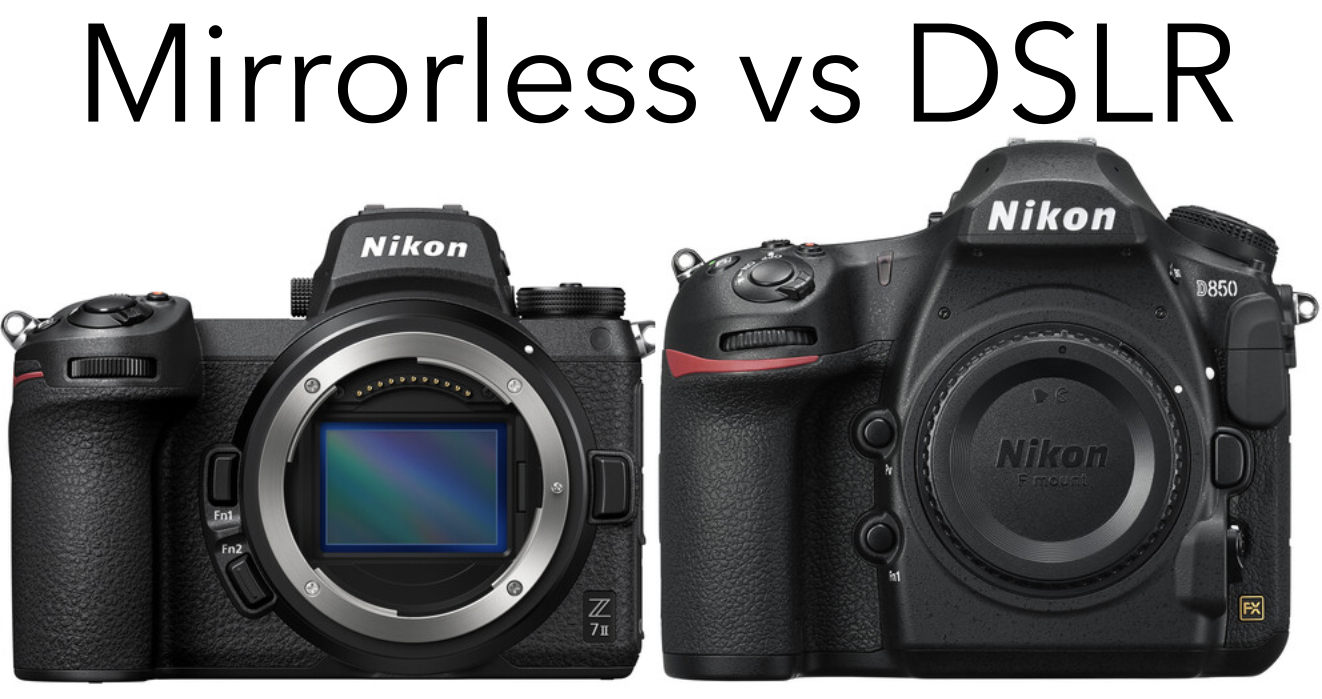
Example: A landscape photographer who hikes into remote areas and prioritizes battery life and a clear OVF might find a DSLR like the Nikon D850 or Canon 5D Mark IV to be an ideal choice.
Choose A Mirrorless Camera If:
- Portability is Key: You need a smaller, lighter camera system for travel, everyday carry, or discreet street photography.
- Advanced Autofocus is Crucial: You shoot fast-moving subjects (sports, wildlife, children) and want the benefits of sophisticated eye-AF and subject tracking.
- Video is a Major Focus: You shoot a lot of video and require advanced features, high resolutions, smooth autofocus, and professional codecs.
- You Want Real-time Exposure Preview: You prefer to see the effects of your settings in the viewfinder before taking the shot.
- You Want the Latest Technology: Mirrorless is where most manufacturers are focusing their R&D, meaning newer features and innovations are appearing here first.
- In-Body Image Stabilization (IBIS) is Desired: For sharper handheld shots in low light or at slower shutter speeds.
Example: A wedding photographer who needs reliable autofocus for portraits and fast-moving ceremony moments, shoots a lot of video testimonials, and values portability might opt for a full-frame mirrorless camera like the Sony A7 IV or Canon EOS R6 Mark II.
The Future Of Camera Technology
The trend lines are clear: the camera industry is overwhelmingly shifting towards mirrorless technology. Major manufacturers have significantly scaled back or entirely ceased development of new DSLR models, redirecting their resources and innovation into their mirrorless lineups. This means that while DSLRs remain capable tools, the future of lens development, new features, and technological advancements lies firmly with mirrorless cameras.
For photographers investing in new gear, understanding this trajectory is crucial. While a DSLR can still be a wise purchase, especially for budget-conscious buyers or those with existing lens investments, the long-term outlook favors mirrorless systems. The continued evolution of EVF technology, autofocus algorithms, and sensor capabilities in mirrorless cameras promises even more exciting developments in the years to come.
Frequently Asked Questions
What Is The Main Advantage Of A Dslr Over A Mirrorless Camera?
The primary advantage of a DSLR is its optical viewfinder (OVF), which provides a direct, lag-free view of the scene. Additionally, DSLRs generally offer superior battery life and often have a wider selection of affordable native lenses available, particularly on the used market.
Can I Use My Dslr Lenses On A Mirrorless Camera?
Yes, in most cases. Manufacturers offer lens adapters that allow you to mount DSLR lenses onto their mirrorless bodies. For example, Canon offers an EF-EOS R adapter for using EF lenses on their EOS R mirrorless cameras, and Nikon provides an FTZ adapter for F-mount lenses on their Z-mount mirrorless cameras. However, autofocus performance and functionality can vary depending on the adapter and the specific lens/camera combination.
Are Mirrorless Cameras Better For Beginners?
Mirrorless Cameras Can

Similar Posts
























[…] it doesn't, consider looking at a used full-frame DSLR like a Nikon D750 instead. A DSLR vs mirrorless comparison can help you weigh the […]
[…] you want to understand more about the fundamental differences between camera types, our guide on DSLR vs Mirrorless Camera breaks it down […]
[…] there isn’t one. But for a deeper look at the DSLR vs mirrorless trade-off, check out our detailed comparison of DSLR and mirrorless formats.⚠Size: This camera is significantly larger and heavier than any point and shoot on this […]