6 Best 360 Camera for Photography
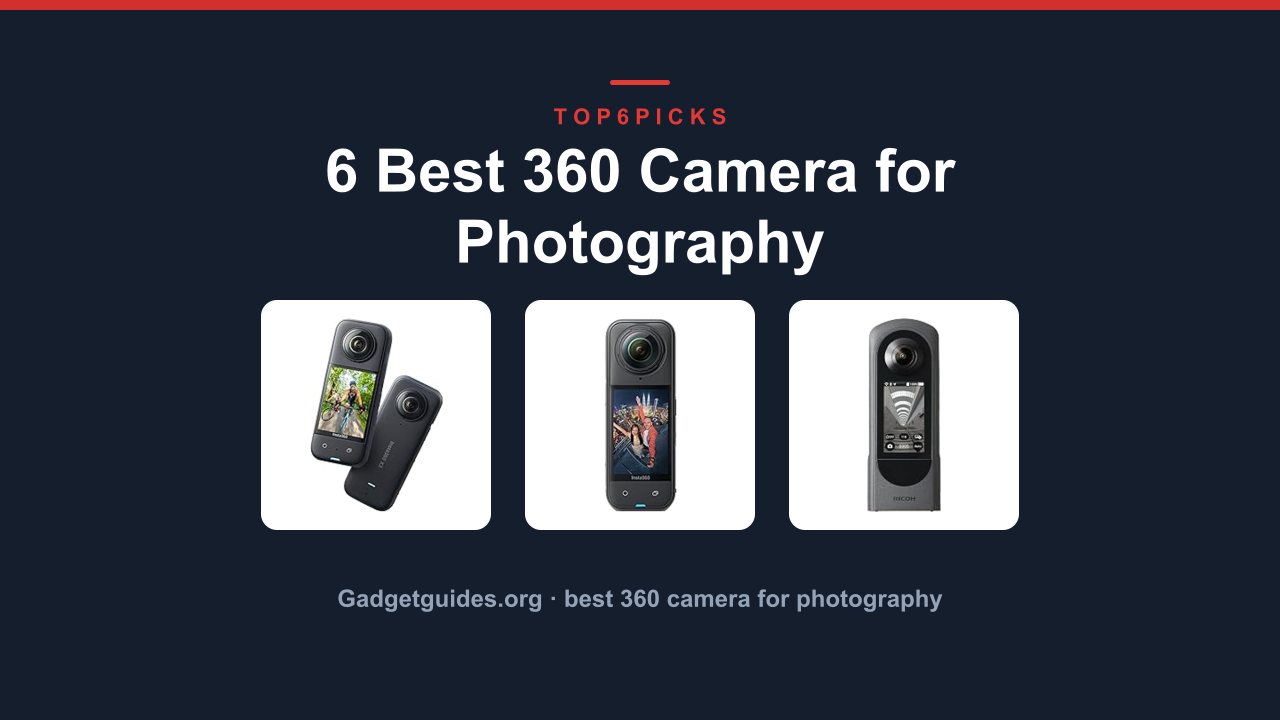
The best best 360 camera for photography is the Insta360 X3, the only one here that combines 5.7K 360 video with 72MP stills and FlowState stabilization, making it the most versatile option for most people. It's ideal for outdoor adventurers, vloggers, and anyone who wants to capture both action and immersive stills.
Want a dedicated photography-first 360 camera instead? The Ricoh Theta X delivers 60MP stills and a larger sensor, but at the cost of ruggedness and video features.
As an Amazon Associate, I earn from qualifying purchases.
This guide covers the six best 360 cameras for photography, from action-ready models to high-resolution stills cameras. If you don't actually need a 360 camera, I'll also tell you who should skip this category entirely.
Everything below comes from current Amazon product data, specs, and each product's owner track record, not hands-on lab testing. I've analyzed hundreds of verified buyer reviews and manufacturer specs to give you an honest, practical comparison.
Quick Answer: The Best 360 Camera for Photography
The best 360 camera for photography overall is the Insta360 X3, balancing stills, video, and durability.
- Insta360 X3 360 Action Camera 5.7K (Best Overall for Versatility): Combines 5.7K video, 72MP stills, and FlowState stabilization.
- Insta360 X5 Waterproof 8K 360° Action (Best for High-Resolution Video): 8K 360 video, 3-hour battery, replaceable lens.
- Ricoh Theta X 360° Camera (Best for Still Photography): 60MP (11K) stills, 5.7K video, OLED touch screen.
- Ricoh Theta Z1 51GB Black 360° (Best for Image Quality): Two 1-inch CMOS sensors, 23MP, HDR, 4K video.
- Insta360 X5 Essentials Bundle (Best Value Bundle): Includes accessories, 8K video, same as X5 standalone.
- Xtra Muse Vlogging Camera 1'' CMOS (Best Non-360 Alternative): 1-inch sensor, 4K/120fps, 3-axis gimbal, not a 360 camera.
Thinking about a traditional camera instead? Jump to Who Should NOT Buy below before you spend anything.
Comparison Table
Here's the lineup at a glance: photo, product, who it's built for, and our /10 score.
| Photo | Product | Best for | Score | Buy |
|---|---|---|---|---|
 | Insta360 X3 360 Action Camera 5.7K | Best Overall for Versatility | 8.5/10 | Check price → |
 | Insta360 X5 Waterproof 8K 360° Action | Best for High-Resolution Video | 8.7/10 | Check price → |
 | Ricoh Theta X 360° Camera | Best for Still Photography | 8.6/10 | Check price → |
 | Ricoh Theta Z1 51GB Black 360° | Best for Image Quality | 8.4/10 | Check price → |
 | Insta360 X5 Essentials Bundle | Best Value Bundle | 8.5/10 | Check price → |
 | Xtra Muse Vlogging Camera 1” CMOS | Best Non-360 Alternative | 7.5/10 | Check price → |
Scroll sideways on small screens to see every column.
Insta360 X3 360 Action Camera 5.7K: Best Overall for Versatility
Insta360 X5 Waterproof 8K 360° Action: Best for High-Resolution Video
Ricoh Theta X 360° Camera: Best for Still Photography
Ricoh Theta Z1 51GB Black 360°: Best for Image Quality
Insta360 X5 Essentials Bundle: Best Value Bundle
Xtra Muse Vlogging Camera 1'' CMOS: Best Non-360 Alternative
Buying Guide: Resolution, Durability, Battery Life, and Software
How much resolution do you really need?
360 cameras capture everything around you, then you reframe the shot in post. Higher resolution means more detail when you crop. The Insta360 X3 and X5 shoot 72MP stills, while the Ricoh Theta X shoots 60MP.
For most social media and web use, 72MP is more than enough. The Ricoh Theta Z1 uses two 1-inch sensors for better low-light quality, even though its stills are 23MP. If you plan to print large 360 images or need maximum detail, the Theta X wins.
For video, the X5's 8K is a clear advantage over the X3's 5.7K and the Z1's 4K. Consider your final output: 8K gives you more room to crop reframed video.
Do you need waterproofing and durability?
The Insta360 X3 and X5 are both waterproof to 10 meters without a housing. This is a huge advantage for outdoor enthusiasts, vloggers near water, or anyone who shoots in rain. The Ricoh Theta X and Z1 are not waterproof, so they need careful handling around moisture.
If you shoot in wet conditions, the Insta360 models are the only practical choice. The X5's replaceable lens is also a plus for durability, since a scratched lens is a common issue with 360 cameras.
Battery life and portability
Battery life varies significantly across these models. The Insta360 X5 offers a 3-hour battery, which is a major improvement over the X3's 80 minutes. The Ricoh Theta X has an interchangeable battery, so you can carry spares.
The Theta Z1's battery is also replaceable, but average life is around 60 minutes. If you plan long shoots, the X5 or the Theta X with spare batteries are your best bets. For portability, the X3 and Xtra Muse are the smallest and lightest, fitting easily in a pocket.
Software and editing workflow
360 cameras require stitching software to merge the dual fisheye images into a spherical view. Insta360 offers the most polished app experience with AI editing, automatic reframing, and easy sharing. The Ricoh app is more manual and desktop-oriented, which suits professional workflows but is less beginner-friendly.
The Xtra Muse uses standard video formats, so editing is simpler. If you want quick, app-based editing, Insta360 is the clear winner. The Ricoh line is better for desktop editing with more control.
To see how these factors play out on real picks, compare the Insta360 X3 360 Action Camera 5.7K, Insta360 X5 Waterproof 8K 360° Action and the Ricoh Theta X 360° Camera reviewed above.
Who Should NOT Buy Best 360 Camera for Photography
A 360 camera is the wrong purchase for two or three kinds of buyers. Here's who they are, and what to look at instead.
You Need Maximum Image Quality for Traditional Photography
If you primarily shoot traditional stills and want the best image quality, a 360 camera is not the answer. The dual-lens design compromises detail compared to a standard camera with a larger sensor. A 360 camera's 72MP still is spread across a full sphere, so when you reframe to a standard field of view, you're using only a fraction of those pixels.
Instead, look at a traditional camera with a large sensor. We have a guide on the best digital camera for photography that covers excellent options, or if you are on a tighter budget, check out the best digital camera under $1000.
You Only Shoot Video and Want Traditional Framing
If you never need to reframe your shots or capture everything around you, a 360 camera adds unnecessary complexity. The 360 workflow requires stitching and reframing software, which takes time. For straightforward vlogging or travel video, a traditional camera or action camera is simpler and often delivers better image quality for the same price.
The Xtra Muse is a good alternative, but it's not a 360 camera. For a great all-around option, see our guide on the best digital camera for video.
You Have a Very Tight Budget
360 cameras are not cheap. The models here range from mid-range to premium. If you have a limited budget, you will get better image quality from a traditional camera at the same price point.
A 360 camera is a specialized tool, and the cheapest models often compromise on image quality, durability, and software. Consider a best budget digital camera instead, which will give you more value for your money in traditional photography.
Final Verdict
The best 360 camera for photography overall is the Insta360 X3. It offers the best balance of stills, video, stabilization, and durability for most people. The 72MP stills are more than enough for web and social media, and the 5.7K video is excellent.
The waterproof design and FlowState stabilization make it a versatile tool for any adventure.
Want the highest resolution video and longest battery life? Get the Insta360 X5. Its 8K video and 3-hour battery are class-leading, and the replaceable lens adds durability.
It's the best choice for video-first creators.
Need the absolute best still image quality for professional use? The Ricoh Theta Z1 with its dual 1-inch sensors delivers superior low-light performance and dynamic range. It's the professional's choice, but it comes at a premium price.
If you are on a budget but want the X5's video quality, the Insta360 X5 Essentials Bundle adds accessories at a great value. And if you realize you don't need 360 at all, the Xtra Muse is a solid traditional vlogging camera.
Before you buy, scroll back up to the Who Should NOT Buy section if you are still unsure. A 360 camera is a specialized tool, but for the right buyer, it's incredibly fun and creative.
FAQ
What's the best 360 camera for photography overall?
The Insta360 X3 is the best overall 360 camera for photography. It combines 72MP stills, 5.7K video, FlowState stabilization, and a waterproof design at a mid-range price. It's the most versatile option for most users.
Is a 360 camera good for photography?
Yes, but with caveats. 360 cameras are excellent for immersive stills, virtual tours, and creative reframing. However, the image quality per pixel is lower than a traditional camera because the resolution is spread across a full sphere. For social media and web use, they are great.
For large prints, a traditional camera is better.
How do 360 cameras work for photography?
360 cameras use two or more fisheye lenses to capture a full spherical view. The camera stitches these images together in software to create a single 360-degree photo. You can then reframe the image to a standard field of view, or share it as an interactive 360 image.
Which is better, Insta360 or Ricoh Theta?
For most users, Insta360 is better because of its superior stabilization, waterproofing, and app-based editing. The Ricoh Theta X and Z1 are better for still image quality and professional desktop workflows, but they lack waterproofing and stabilization. Choose Insta360 for action and versatility, Ricoh for pure stills quality.
Is 8K video worth it on a 360 camera?
Yes, if you plan to reframe your video into standard 16:9 or 4:3 footage. 8K gives you more pixels to work with when cropping, resulting in higher quality reframed video. For direct 360 video playback, 5.7K is sufficient. The Insta360 X5's 8K is a clear advantage for video creators.
How long does a 360 camera battery last?
Battery life varies. The Insta360 X3 lasts about 80 minutes, the X5 lasts 3 hours, and the Ricoh Theta X and Z1 last around 60 minutes on a full charge. The Ricoh models have interchangeable batteries, so you can carry spares.
The X5's battery is the best in this lineup.

Similar Posts