6 Best Budget Instant Camera
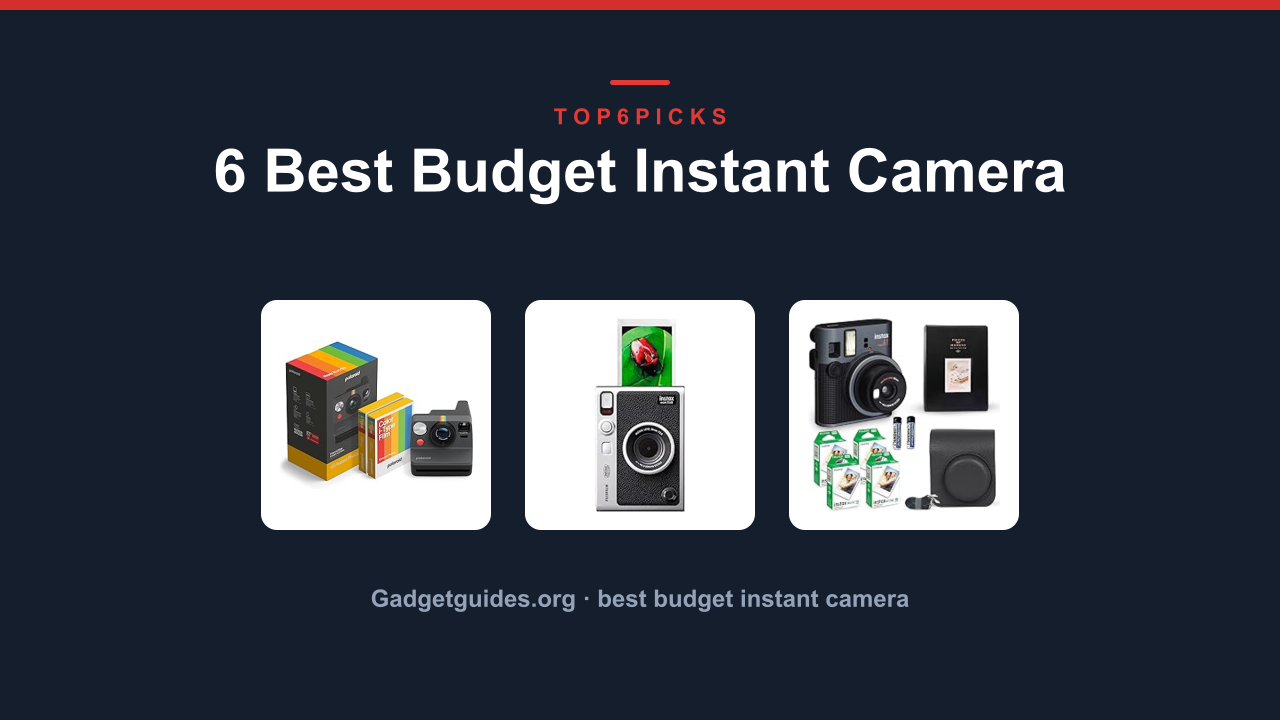
The best best budget instant camera is the Polaroid Now 3rd Generation I-Type Instant, the only one here that bundles 16 color photos in the box so you can start shooting right away. It’s the pick for anyone who wants classic Polaroid square prints with zero learning curve.
Want a hybrid that lets you preview shots before printing? The Fujifilm Instax Mini EVO gets you there, as long as you’re okay with a higher upfront cost for that digital‑analog combo.
As an Amazon Associate, I earn from qualifying purchases.
This guide tells you what to look for in film size, print quality, and long‑term running costs before you buy. It also names the kinds of buyers who should skip instant cameras entirely and grab a cheap digital camera instead.
Everything below comes from current Amazon product data, specs, and each model’s owner track record, not hands‑on lab testing. I’ve done the research so you can decide with confidence.
Quick Answer: The Best Budget Instant Camera
The Polaroid Now 3rd Generation I-Type Instant is the best overall value because it includes film, a rechargeable battery, and a simple point‑and‑shoot design.
- Polaroid Now 3rd Generation I-Type Instant (Best Overall Value): Classic Polaroid square prints with a bundle of 16 color photos.
- Fujifilm Instax Mini EVO Instant Camera (Best Hybrid Digital‑Analog): Lets you pick and edit shots before printing.
- Fujifilm Instax Mini 41 Instant Camera (Best Bundle for Beginners): Comes with a case, album, and 40 sheets.
- Fujifilm Instax Mini 12 Instant Camera (Best Budget All‑Rounder): Compact, automatic, and reliable for everyday snapshots.
- Fujifilm Instax Mini 12 Instant Camera (Best Value Bulk Bundle): 60 sheets with case and album for heavy users.
- Fujifilm QuickSnap Flash 400 One-Time-Use Camera (Best Disposable Pick): No batteries, no film packs, shoot and send to lab.
Thinking about a digital camera instead? Jump to Who Should NOT Buy below before you spend anything.
Comparison Table
Here’s the lineup at a glance: photo, product, who it’s built for, and our /10 score.
| Photo | Product | Best for | Score | Buy |
|---|---|---|---|---|
 | Polaroid Now 3rd Generation I-Type Instant | Classic instant with film included | 8.2/10 | Check price → |
 | Fujifilm Instax Mini EVO Instant Camera | Hybrid digital/analog | 8.8/10 | Check price → |
 | Fujifilm Instax Mini 41 Instant Camera | Starter kit with extras | 8.5/10 | Check price → |
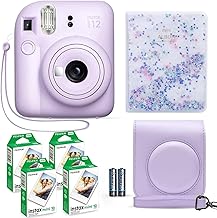 | Fujifilm Instax Mini 12 Instant Camera | Compact automatic | 8.0/10 | Check price → |
 | Fujifilm Instax Mini 12 Instant Camera | Bulk film bundle | 7.8/10 | Check price → |
 | Fujifilm QuickSnap Flash 400 One-Time-Use Camera | Disposable travel | 7.2/10 | Check price → |
Scroll sideways on small screens to see every column.
Polaroid Now 3rd Generation I-Type Instant: Best Overall Value for Beginners
Polaroid Now 3rd Generation I-Type Instant: Best Overall Value for Beginners
Fujifilm Instax Mini EVO Instant Camera: Best Hybrid Digital-Analog
Fujifilm Instax Mini EVO Instant Camera: Best Hybrid Digital-Analog
Fujifilm Instax Mini 41 Instant Camera: Best Starter Kit with Extras
Fujifilm Instax Mini 41 Instant Camera: Best Starter Kit with Extras
Fujifilm Instax Mini 12 Instant Camera: Best Budget Compact All-Rounder
Fujifilm Instax Mini 12 Instant Camera: Best Budget Compact All-Rounder
Fujifilm Instax Mini 12 Instant Camera: Best Value Bulk Bundle
Fujifilm Instax Mini 12 Instant Camera: Best Value Bulk Bundle
Fujifilm QuickSnap Flash 400 One-Time-Use Camera: Best Disposable Pick
Fujifilm QuickSnap Flash 400 One-Time-Use Camera: Best Disposable Pick
Buying Guide: Film Format, Bundle Value, and Long-Term Costs
Film Format: Polaroid I-Type vs. Instax Mini
The biggest difference between the Polaroid Now and the Fujifilm Instax models is the film format. Polaroid I-Type film produces a square print that is 3.1 x 3.1 inches, with the classic white border. It's a larger image size, which gives a more nostalgic, retro feel.
However, I-Type film is typically more expensive per print, often costing around $1.50 to $2 per shot depending on the pack.
Instax Mini film, used by all the Fujifilm cameras here, produces a credit-card-sized print (2.1 x 3.4 inches). It's much more affordable, usually around $0.75 to $1 per print. It's also available in a wider variety of colors and finishes.
If you plan to shoot a lot, Instax Mini is the cheaper option in the long run.
Bundle Value: What's in the Box Matters
The Polaroid Now 3rd Generation comes with 16 color photos in the box, which is a generous start. But the Fujifilm bundles, especially the Mini 41 and the Mini 12 with 60 sheets, give you much more film upfront. The Mini 41 bundle includes 40 sheets, a case, and an album, making it the best value for a beginner who wants everything in one purchase.
The Mini 12 bundles (both Lilac Purple and Clay White) also include a case and album, but the Clay White version has 60 sheets instead of 40. If you're a heavy shooter, the Clay White bundle is the better value. If you want a compact, portable option, the Lilac Purple bundle is a great choice.
Long-Term Costs: The Hidden Expense
The real cost of instant photography is the film. A Polaroid I-Type pack of 16 photos may cost around $20, while an Instax Mini pack of 20 sheets is around $15. Over a year of moderate shooting (say, 200 prints), the Polaroid will cost you about $250 for film, while the Instax will cost about $150.
Factor that into your decision.
The disposable cameras (QuickSnap) cost about $5 per camera, but you also have to pay for development, which can be $10 to $15 per roll. That makes the cost per print around $0.55 to $0.75, which is comparable to Instax Mini film. But you have to wait for development, and you cannot see your photos until then.
To see how these factors play out on real picks, compare the Polaroid Now 3rd Generation I-Type Instant, Fujifilm Instax Mini EVO Instant Camera and the Fujifilm Instax Mini 41 Instant Camera reviewed above.
Who Should NOT Buy Best Budget Instant Camera
Instant cameras are the wrong purchase for several kinds of buyers. Here's who they are, and what to look at instead.
You Need Digital Photos to Share Online
If your main goal is to share photos on social media or edit them on your phone, an instant camera is not the right tool. The prints are physical and cannot be easily digitized without scanning. You will need to take a photo of the print with your phone, which reduces quality.
Instead, consider a budget digital camera or a smartphone upgrade. A good mirrorless camera with WiFi or a smartphone with a decent camera will give you immediate digital files that you can edit and share. If you want something more advanced, a dedicated mirrorless camera offers much better image quality and flexibility.
You can also look at a travel-friendly option that is compact and lightweight.
You Want to Take a Lot of Photos Without High Film Costs
If you plan to shoot more than 100 photos per month, the cost of instant film will add up quickly. At $1 per print, 100 photos per month is $100 per month, or $1,200 per year. That's a significant expense.
Instead, consider a budget digital camera that uses a memory card. You can take thousands of photos without any ongoing cost. A good used DSLR or mirrorless camera can be found for a similar price to an instant camera bundle, and you will never have to buy film again.
The versatility of interchangeable lenses and manual controls also gives you much more creative freedom.
You Need High Image Quality or Low Light Performance
Instant cameras have a fixed aperture and a simple lens. They work best in bright daylight. In low light, the flash is weak and the images will be grainy or dark.
The image quality is not comparable to even a budget smartphone camera.
If you need good low-light performance or sharp, detailed images, look at a dedicated camera with a larger sensor. A mirrorless camera with a 4K video capability and a fast lens will give you much better results. Even a used smartphone from the last few years will outperform an instant camera in low light.
Final Verdict
The Polaroid Now 3rd Generation I-Type Instant is the best overall value for anyone who wants the classic Polaroid experience. It comes with film in the box, a rechargeable battery, and a simple point-and-shoot design. It's the best starting point for beginners who want to try instant photography without a large upfront investment.
Want a hybrid that lets you save money on film by choosing which shots to print? Get the Fujifilm Instax Mini EVO. It's more expensive upfront, but you can preview and select shots, saving film in the long run.
Need a compact, budget-friendly option? The Fujifilm Instax Mini 12 (either bundle) is a reliable, affordable choice. If you want the most film included, go with the Clay White bundle with 60 sheets.
If you're still unsure whether an instant camera is right for you, go back to the Who Should NOT Buy section above. It will save you money and frustration.
FAQ
What's the best budget instant camera overall?
The Polaroid Now 3rd Generation is the best overall value. It includes 16 color photos, a rechargeable battery, and uses the classic Polaroid square format. It's the best starting point for beginners.
What's the difference between Polaroid I-Type and Instax Mini film?
Polaroid I-Type film produces a larger square print (3.1 x 3.1 inches) with a classic white border. Instax Mini film is credit-card-sized (2.1 x 3.4 inches) and cheaper per print. Instax is more affordable for regular use.
How many photos can I take with an instant camera before buying new film?
Each film pack contains a set number of sheets, typically 8, 10, 16, or 20. The Polaroid bundle includes 16 sheets. The Fujifilm bundles include 40 or 60 sheets.
After that, you need to buy a new film pack.
Do instant cameras need batteries?
Most instant cameras use batteries. The Polaroid Now has a built-in rechargeable battery via USB-C. The Fujifilm Instax Mini 12 and Mini 41 use two AA batteries.
The QuickSnap disposable camera needs no batteries.
Can I see my photos before printing?
Only the Fujifilm Instax Mini EVO has a digital screen that lets you preview and select shots before printing. All other cameras print immediately after you press the shutter.
Is an instant camera worth it for a child?
Yes, instant cameras are great for kids because they provide immediate physical prints. The Fujifilm Instax Mini 12 is a popular choice for children due to its ease of use and durable design. The Polaroid Now is also a good option for older kids.

Similar Posts