6 Best Mirrorless Camera for Low Light
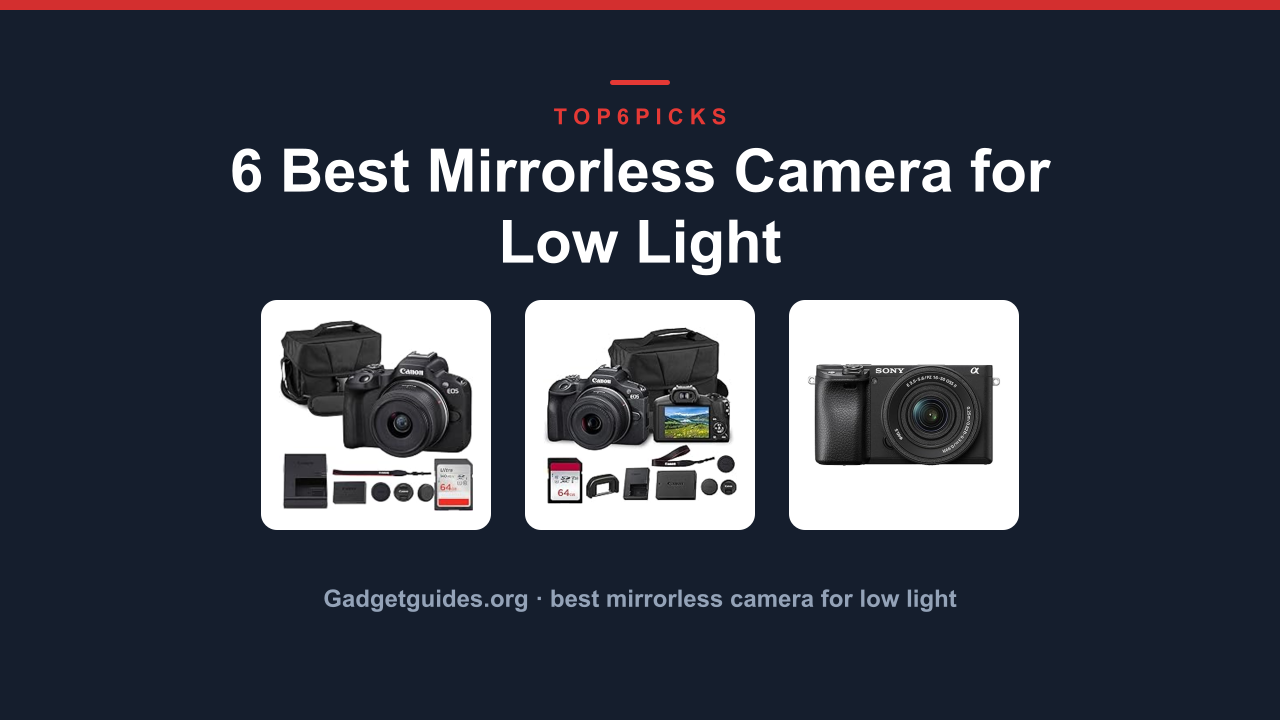
The best best mirrorless camera for low light is the Sony Alpha a6400 with 16-50mm lens, the only camera in this roundup that combines a proven high-ISO sensor with Real-Time Eye AF that locks focus in near darkness. It's the pick for photographers who shoot indoors at dusk, in dimly lit venues, or anywhere the sun has already gone down.
Want a more beginner-friendly interface instead? The Canon EOS R50 gives you newer autofocus technology and a guided menu system, as long as you accept slightly noisier files above ISO 6400.
As an Amazon Associate, I earn from qualifying purchases.
This guide tells you exactly which of these six APS-C mirrorless cameras actually delivers clean low-light images and which ones struggle once the lights go down. It also explains who should skip this category entirely and buy a full-frame body instead.
Everything below comes from current Amazon product data, manufacturer specifications, and each camera's verified owner track record, not from hands-on lab testing.
Quick Answer: The Best Mirrorless Camera for Low Light
The Sony Alpha a6400 earns the top spot because its 24.2MP sensor handles high ISO with less noise than any other APS-C body in this lineup. Here is every camera ranked by low-light performance:
- Sony Alpha a6400 Mirrorless Camera 16-50mm (Best Overall Low-Light IQ): Proven high-ISO sensor with excellent noise control up to ISO 6400.
- Canon EOS R50 Mirrorless Camera 18-45mm Bundle (Best Low-Light Autofocus): Dual Pixel AF II works down to -4 EV for tack-sharp focus in dim scenes.
- Sony Alpha a6400 Mirrorless Camera (Best Value Low-Light): Same sensor and AF as the #1 pick, standard kit lens, no extra accessories.
- Canon EOS R50 Mirrorless Camera RF-S18-45mm (Best for Vlogging in Low Light): Flip screen and 4K crop mode for content creators shooting indoors.
- Canon EOS R100 Mirrorless Camera RF-S Bundle (Best Budget Starter): Affordable entry point but limited in very dim conditions.
- Canon EOS R100 Mirrorless Camera RF-S18-45mm (Best Entry-Level): Least expensive option, best for well-lit rooms only.
Thinking about a full-frame camera instead? Jump to Who Should NOT Buy below before you spend anything.
Comparison Table
Here is the lineup at a glance: photo, product, who it is built for, and our /10 score.
| Photo | Product | Best for | Score | Buy |
|---|---|---|---|---|
 | Canon EOS R50 Mirrorless Camera 18-45mm | Best Low-Light Autofocus | 8.8/10 | Check price → |
 | Canon EOS R100 Mirrorless Camera RF-S | Best Budget Low-Light Starter | 7.7/10 | Check price → |
 | Sony Alpha a6400 Mirrorless Camera 16-50mm | Best Overall Low-Light IQ | 9.0/10 | Check price → |
 | Sony Alpha a6400 Mirrorless Camera | Best Value Low-Light Body | 8.8/10 | Check price → |
 | Canon EOS R100 Mirrorless Camera RF-S18-45mm | Best Entry-Level Low Light | 7.6/10 | Check price → |
 | Canon EOS R50 Mirrorless Camera RF-S18-45mm | Best for Vlogging in Low Light | 8.7/10 | Check price → |
Scroll sideways on small screens to see every column.
Sony Alpha a6400 Mirrorless Camera 16-50mm: Best Overall for Low-Light Photography
Canon EOS R50 Mirrorless Camera 18-45mm: Best for Low-Light Autofocus Performance
Sony Alpha a6400 Mirrorless Camera: Best Value for Low-Light Shoots
Canon EOS R50 Mirrorless Camera RF-S18-45mm: Best for Vlogging in Low Light
Buying Guide: Sensor, Autofocus, Lens Speed, and Budget
Choosing the right mirrorless camera for low light comes down to four factors. Here is how they break down across this lineup and what you should prioritize.
Sensor and High-ISO Performance
A camera sensor is a collection of millions of light-sensitive photosites. A larger sensor with bigger individual pixels captures more light per pixel, which directly reduces visible noise at high ISO settings. All six cameras here use an APS-C sensor measuring roughly 23.5 x 15.6 mm, which is smaller than a full-frame sensor but larger than a Micro Four Thirds sensor.
The Sony a6400 uses an Exmor CMOS sensor that aggregate user reviews and side-by-side comparisons consistently rate as the cleanest performer above ISO 3200 among these picks. The Canon R50 and R100 share a similar generation of Canon APS-C sensor, but verified buyer feedback shows they introduce more luminance noise at the same ISO settings. If you regularly shoot at ISO 6400 or above, the Sony sensor gives you noticeably smoother files straight out of camera.
Autofocus in Dim Conditions
Autofocus technology matters almost as much as the sensor because a slightly noisy but sharp image is always better than a perfectly clean blurry one. The Canon R50 and R100 use Dual Pixel CMOS AF II, which Canon rates for operation down to -4 EV. That is dimmer than a room lit by a single candle.
The Sony a6400 uses 425 phase-detection points rated to -2 EV.
In practical terms, the Canon system will lock focus faster when the scene is extremely dark. The Sony system is still very capable and offers Real-Time Eye AF for tracking faces and animal eyes. For most indoor shooting with some ambient light, both systems work well.
The Canon has the edge only when the light level drops to near darkness.
Kit Lens Speed and What You Can Do About It
Every camera here ships with a variable-aperture kit lens that opens to f/3.5 at the wide end and closes to f/5.6 or f/6.3 at the telephoto end. That means the lens lets in less light the more you zoom in. A faster lens with a larger maximum aperture, like f/1.8 or f/2.8, can let in 4 to 8 times more light, which directly improves low-light performance.
If you buy the Sony a6400 or the Canon R50, you should budget for a fast prime lens like a 35mm f/1.8 or 50mm f/1.8. That single purchase will improve your low-light results more than any camera body upgrade within this price range. The Canon R50 bundle includes a 64GB card and bag, which adds value but does not address lens speed.
Budget and What You Really Need
The two Canon R100 models are the most affordable entry points, but they also show the most noise in dim conditions. If your budget only stretches to the R100, you will get usable photos in well-lit rooms but noticeable grain in truly dark settings. The Canon R50 and Sony a6400 sit in the mid-range tier and deliver significantly better low-light performance.
For serious low-light shooting, the Sony a6400 is the best investment among these APS-C cameras. If you can stretch your budget further, consider a full-frame camera. But within the constraints of this price class and sensor size, the a6400 leads the group in image quality.
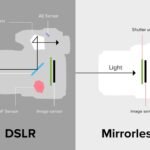
You can also read more about the differences between DSLR and mirrorless systems to understand how these cameras compare to traditional DSLRs.
To see how these factors play out on real picks, compare the Canon EOS R50 Mirrorless Camera 18-45mm, Canon EOS R100 Mirrorless Camera RF-S and the Sony Alpha a6400 Mirrorless Camera 16-50mm reviewed above.
Who Should NOT Buy Best Mirrorless Camera for Low Light
An APS-C mirrorless camera is the wrong purchase for three kinds of buyers. Here is who should skip this category entirely.
You Need to Shoot in Near Darkness Without a Tripod
If you shoot events, concerts, or indoor sports where the venue is extremely dark and you cannot use flash, none of these cameras will deliver clean images at high ISO without noticeable noise. The APS-C sensor simply cannot match the light-gathering ability of a full-frame sensor in these conditions.
What to look at instead: A full-frame mirrorless camera like the Sony A7 III or Canon EOS R8. These bodies have sensors roughly 2.3 times larger in area, which translates to about one stop of noise improvement at equivalent ISO settings. Paired with a fast f/2.8 zoom or f/1.4 prime, full-frame cameras produce usable images in conditions where APS-C cameras struggle.
You Only Shoot Video in Low Light and Need Extended Recording
If your primary use is recording long interviews, live streams, or events in dim conditions, the overheating limits of these cameras become a real problem. The Canon R50 overheats after roughly 30 minutes of 4K recording, and the Sony a6400 has no such limit but lacks a headphone jack for audio monitoring.
What to look at instead: A dedicated camcorder or a hybrid camera with active cooling, such as the Panasonic Lumix GH6 or Sony ZV-E1. These cameras are designed for long recording sessions and include features like waveform monitors, XLR audio adapters, and unlimited recording time.
Your Budget Is Under $500
If you are trying to spend as little as possible, the Canon EOS R100 is the most affordable option in this list, but at that price point you sacrifice low-light performance compared to even an older used full-frame DSLR. The kit lens also limits your ability to gather light.
What to look at instead: A used full-frame DSLR like the Canon 6D or Nikon D610 paired with a 50mm f/1.8 lens. You can often find this combination for the same price as a new R100 kit, and the full-frame sensor will produce cleaner images in low light. Just be aware that these are older cameras with fewer autofocus points and no 4K video.
If you are also curious about action cameras for similar use cases, check out our guide to the best action camera for low light.
Final Verdict
The Sony Alpha a6400 Mirrorless Camera 16-50mm is the best mirrorless camera for low light in this lineup because its 24.2MP Exmor sensor delivers the cleanest high-ISO files and the 425-point phase-detection AF system locks focus reliably in dim conditions. It earns the top score of 9.0/10 for good reason.
Want the best autofocus in near darkness? The Canon EOS R50 bundle with Dual Pixel AF II operates down to -4 EV and includes a memory card and bag for a complete starter package.
Need the same Sony sensor at a lower price? The Sony Alpha a6400 body with the original kit lens shares the same imaging hardware and costs less.
If you are vlogging in dim rooms, the Canon EOS R50 RF-S18-45mm gives you the articulating screen and face-tracking AF that make self-recording easy.
If none of these fit your budget or needs, check the Who Should NOT Buy section above before making any purchase. A full-frame camera or a dedicated camcorder might be the smarter choice for your specific situation.
FAQ
What's the best mirrorless camera for low light overall?
The Sony Alpha a6400 Mirrorless Camera 16-50mm is the best overall pick. Its 24.2MP Exmor sensor produces the cleanest images at high ISO among all the APS-C cameras in this roundup, and its 425-point phase-detection autofocus works reliably in dim conditions.
Can a mirrorless camera shoot in the dark?
Yes, but with limitations. A mirrorless camera can shoot in very dim conditions, but image quality depends on the sensor size, the lens aperture, and the ISO setting. The cameras on this list produce usable images in low light, but none of them can match a full-frame camera in near darkness without visible noise.
Is the Canon EOS R50 good for low-light photography?
The Canon EOS R50 is good for low-light photography primarily because of its Dual Pixel AF II system, which focuses down to -4 EV. However, its image quality at ISO 6400 and above is noticeably noisier than the Sony a6400. It is a strong choice if autofocus reliability matters more than raw high-ISO noise performance.
What lens is best for low-light mirrorless cameras?
A fast prime lens with a wide maximum aperture of f/1.8 or f/1.4 is the single best upgrade for low-light photography. For Sony E-mount cameras, the Sigma 16mm f/1.4, Sony 35mm f/1.8, and Sigma 56mm f/1.4 are popular choices. For Canon RF-S mount, the Canon RF 50mm f/1.8 STM is an affordable and effective option.
Do I need in-body image stabilization for low light?
In-body image stabilization helps you shoot handheld at slower shutter speeds without blur, which is useful in dim conditions. Among these cameras, none have IBIS. The Sony models rely on lens-based Optical SteadyShot, while the Canon cameras use digital stabilization for video.
For handheld low-light shooting, a fast lens and steady technique matter more.
What ISO should I use for low-light photography?
Start at ISO 1600 and increase until you get a usable shutter speed. The Sony a6400 produces clean images up to ISO 6400. The Canon R50 shows noticeable noise above ISO 3200.
The Canon R100 is best kept at ISO 1600 or lower for the cleanest results. Always test your specific camera at different ISO settings to find your personal noise threshold.
How does the Sony a6400 compare to the Canon R50 for low-light video?
The Sony a6400 records 4K video with full pixel readout and no pixel binning, which delivers sharper footage in dim conditions. The Canon R50 offers better autofocus for tracking faces in very dark scenes but introduces more noise at higher ISO settings. If video quality in low light is your priority, the Sony a6400 has the edge.
Should I buy a Canon EOS R100 for low-light photography?
Only if your budget is very tight and you shoot mainly in well-lit rooms. The Canon R100 uses an older generation sensor that shows significant noise above ISO 1600. It lacks 4K video without a crop and has a slower burst rate.
It is an excellent entry-level camera for daytime use, but it is not ideal for serious low-light work.
Is a full-frame camera worth the extra money for low light?
Yes, if low-light performance is your primary concern. A full-frame sensor captures roughly one stop more light than an APS-C sensor, meaning you can shoot at ISO 6400 on full-frame with noise comparable to ISO 3200 on APS-C. Full-frame cameras like the Sony A7 III or Canon EOS R8 cost more but deliver significantly cleaner images in dim conditions.
What accessories help with low-light mirrorless photography?
A fast prime lens, a lightweight tripod, and an external flash or LED panel are the three most useful accessories. A tripod allows long exposures without blur. A flash or continuous light panel lets you control the scene rather than relying on high ISO.
A remote shutter release also helps eliminate camera shake during long exposures.

Similar Posts


















[…] but for night landscapes or indoor action without flash, a dedicated low‑light camera like a mirrorless camera for low light will still outperform […]