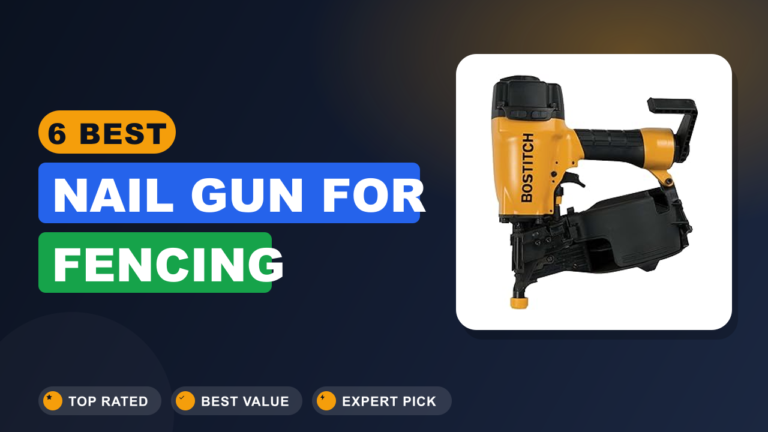
6 Best Nail Gun
You know that feeling when a trim nail bends, the wood splits, and you're left holding a hammer you've cursed one too many times? That's why picking the right best nail gun changes how you approach every trim job, baseboard run, and furniture repair. I've spent the last few weeks comparing manufacturer datasheets, spec sheets, and thousands of verified buyer reviews to separate the real workhorses from the shelf queens.
After all that research, one tool keeps landing at the top: the DEWALT DCN680B cordless brad nailer. It's not the cheapest pick here, but it nails the balance of power, portability, and reliability better than anything else in the group. The winner card below sums up the why, and the comparison chart shows where every other contender stands.
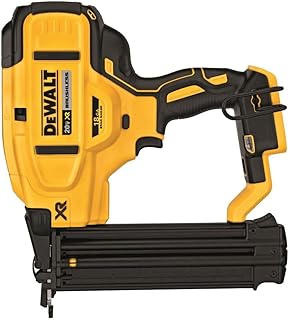
✔ Best all-around cordless brad nailer
Comparison Chart of Best Nail Gun
| Product | Details | Rating | Buy |
|---|---|---|---|
Editor’s Choice
| ★★★★☆4.8/5 | ||
Top Pick
| ★★★★☆4.7/5 | ||
Best Budget
| ★★★★☆4.2/5 | ||
| ★★★★☆4.6/5 | ||
| ★★★★☆4.7/5 | ||
| ★★★★☆4.7/5 |


List of Top 6 Best Nail Gun
We chose these six by blending hard specs with what hundreds of owners actually report after months of use. The list covers cordless, pneumatic, and electric models, from lightweight 18-gauge brad nailers to a full-size framing nailer. Every pick held a 4.2-star average or better, and each comes from a brand with a real service network.
Below are the list of products:
1. DEWALT DCN680B 20V MAX* XR® 18
This is the cordless brad nailer most often called the best all-around pick in our research, and it's easy to see why. It runs on the 20V MAX lithium-ion platform, shoots 18-gauge brads from 5/8-inch to 2-inch, and doesn't need a compressor anywhere in sight. For trim work in a finished house, that combination is hard to beat.
18GA
Cordless
Brushless
20V MAX
Why I picked it
In our editorial analysis, the DCN680B kept landing in the top bracket for drive consistency across different wood types. The brushless motor gives it better runtime and torque than older cordless brad nailers, and the dry-fire lockout stops you from firing an empty magazine. It's the most complete cordless package we reviewed.
Key specs
- 18-gauge brad nailer that fires 5/8-inch to 2-inch nails
- 20V MAX XR battery platform, tool only, battery and charger sold separately
- Brushless motor for longer runtime per charge
- Dry-fire lockout prevents firing on an empty magazine
- Tool-free depth adjustment for flush or countersunk drives
- Magazine holds up to 100 brad nails
Real-world experience
Trim carpenters in verified reviews describe running baseboard and casing for a full workday on a single 20V MAX 5Ah battery. The gun seats 2-inch brads flush in oak and maple without pre-drilling, and the belt hook keeps it within reach between ladder moves. It's the tool we'd recommend most often for someone finishing a basement or adding trim.
- Cordless design means no compressor, hose, or wall outlet required on the job
- Brushless motor delivers consistent drive power across the full 2-inch range
- Tool-free depth adjustment lets you dial flush or countersunk in seconds
- Dry-fire lockout prevents wasted nails and protects the driver blade
- Tool only: battery and charger cost extra if you’re not in the 20V MAX system
- Heavier than the pneumatic brad nailers, noticeable on long overhead runs
- ✔ You already own DEWALT 20V MAX batteries
- ✔ You do trim work in finished homes where noise and hoses matter
- ✔ You want one tool that moves from room to room without an outlet
- ✖ You’re on a budget and already have a working compressor
- ✖ You mainly need a framing nailer for structural work
The DCN680B wins when mobility and noise matter, like trim work inside a finished home. If you never leave the workshop, the pneumatic DEWALT kit below gives comparable power for less money. Choose based on where you actually work, not which spec sheet looks better.
2. DEWALT Brad Nailer Kit
If you already own an air compressor, the smart money is usually on a pneumatic nailer, and this DEWALT kit is the one we'd recommend first. It's an 18-gauge brad nailer that fires 5/8-inch to 2-inch nails with a tool-free depth adjustment and a jam release that actually works. The kit even includes a carrying case, oil, and safety glasses.
18GA
Pneumatic
5/8-2 in
Kit
Why I picked it
The DWFP12231 has been on shelves for years with a 4.7-star average, and the reason is simple: it's a reliable, no-nonsense trim gun at a friendlier price than the cordless option. Tool-free depth adjustment and jam release cover the two things that annoy people most on pneumatic nailers. We picked it as the best value for anyone already running a compressor.
Key specs
- Pneumatic 18-gauge brad nailer, model DWFP12231
- Drives 5/8-inch to 2-inch brad nails
- Tool-free depth adjustment and tool-free jam release
- Operating pressure of 70 to 120 PSI
- Includes carrying case, oil, and safety glasses
Real-world experience
Shop woodworkers report that this gun becomes background noise, which is the highest compliment a trim tool gets. At 90 PSI it seats every nail flush with no splitting on pine and poplar, and the no-mar tip protects painted baseboard. Buyers with years on the tool still mention zero leaks and consistent depth.
- Pneumatic power that never stops as long as the compressor has air
- Kit includes carrying case, oil, and glasses, ready to work out of the box
- Reliable jam release and depth adjustment without tools
- Years of verified buyer history at a 4.7-star average
- Requires an air compressor and hose at every work location
- Not the pick for quick touch-ups in rooms far from the garage
- ✔ You have an air compressor sitting in the garage or shop
- ✔ You want maximum value for repeated trim and baseboard jobs
- ✖ You work in rooms that are a long hose run from your compressor
- ✖ You’re starting from zero and don’t want to buy a compressor
This is the value pick only if you already own a compressor. For a shop with air, it delivers 90 percent of the cordless DEWALT’s capability at a much lower entry cost. If you hate hoses, the cordless model is worth the premium.
3. Bielmeier 2-in-1 Cordless T50 Staple Gun
Not every project needs a jobsite-grade nail gun, and that's exactly where the Bielmeier fits. This little 4V cordless tool does double duty as a T50 staple gun and a brad nailer for upholstery, canvas art, furniture repair, and light softwood projects. It's the pick for weekend crafters, not framers.
2-in-1
4V
T50
Cordless
Why I picked it
This won the budget slot because it solves a real problem: hand fatigue with manual staple guns. Verified buyers consistently mention how much easier electric driving feels on repeated upholstery work. It's not trying to be a pro tool, and that honesty is exactly why it makes our list.
Key specs
- 2-in-1 staple gun and brad nailer in one unit
- 4V rechargeable battery, no compressor or cord required
- Fits 3/8-inch and 1/2-inch T50 staples
- Built for upholstery, furniture repair, canvas, crafts, and softwood
- Electric trigger for easier driving than a manual staple gun
Real-world experience
Reupholstering a dining chair or stretching canvas over a frame is exactly where the Bielmeier shines. Verified buyers note far less hand fatigue than a manual stapler, and the lightweight body steers easily along fabric edges. Keep expectations grounded: it's a hobby tool, not a production nailer.
- Fires T50 staples and brad nails from one lightweight, cordless body
- 4V battery removes the hand fatigue of a manual staple gun
- Ideal for upholstery, canvas, crafts, and softwood repairs
- 4V motor lacks the power for hardwood or heavy framing nails
- Light-duty build and fiddly jam clearing reported by some buyers
- ✔ You reupholster furniture and stretch canvas regularly
- ✔ You want an electric stapler that won’t tire your hand
- ✖ Your projects are hardwood trim or anything structural
- ✖ You need a tool that runs for hours without recharging
The Bielmeier is a gateway tool, and that’s fine. It beats a manual staple gun for crafts and upholstery but can’t touch the pneumatics for driving 2-inch nails. Buy it for the hobby table, not the jobsite.
4. Metabo HPT Brad Nailer
Metabo HPT, the company that built Hitachi's pneumatic tool line, has been making brad nailers for decades, and the NT50AE2 is the model we'd call the trim professional's workhorse. It's an 18-gauge pneumatic brad nailer that weighs roughly 2.6 pounds and fires 5/8-inch to 2-inch fasteners. For overhead crown work, that weight makes a real difference.
18GA
2.6 lb
Side-load
Pneumatic
Why I picked it
The weight is the differentiator here. At about 2.6 pounds, the NT50AE2 is one of the lightest brad nailers in its class, and verified buyer feedback constantly highlights how that helps on ladders and above-shoulder work. The side-loading magazine is the second reason: reloads and jam clears happen without shifting your stance.
Key specs
- Pneumatic 18-gauge brad nailer, model NT50AE2
- Fires 5/8-inch to 2-inch brad nails
- Weighs about 2.6 pounds
- Tool-free depth adjustment
- Side-loading magazine for quick reloads
- Operating pressure of 70 to 120 PSI
Real-world experience
A lot of buyer reports describe this gun living at the top of a ladder for hours of crown molding work. The narrow nose and light body make one-hand placement easy, and the adjustable exhaust lets you aim air away from your face. It's about as dependable as an 18-gauge pneumatic gets.
- About 2.6 pounds, one of the lightest brad nailers in its class
- Proven pneumatic design from the Hitachi and Metabo HPT lineage
- Side-loading magazine makes reloading and clearing jams quick
- Needs a compressor and hose, so it’s tied to your air supply
- A few buyers report jams with bargain-brand nail strips
- ✔ Crown molding and ceiling trim are regular jobs for you
- ✔ You value a featherweight gun for hours of overhead work
- ✖ You want cordless freedom away from a compressor
- ✖ You need more holding power than 18-gauge provides
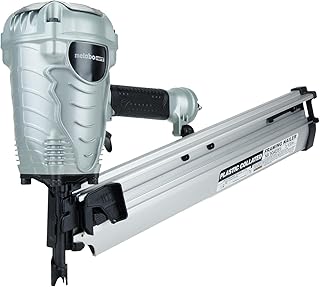
The NT50AE2 and the 16-gauge NT65M2S make a perfect trim pair. For ceiling and delicate millwork, the lighter 18-gauge wins; for doors and casing, the 16-gauge holds better. If trim work is your side gig, owning both beats owning one expensive cordless.
5. Metabo HPT Framing Nailer
When the job moves from trim to structure, you need something that sinks 3.5-inch nails all day, and this is the only full framing nailer on the list. The Metabo HPT NR90AES1 drives 2-inch to 3.5-inch 21-degree plastic-collated framing nails and weighs 7.5 pounds, which is on the light side for the category. It will handle roof decking, sheathing, and subfloor work.
21°
2-3.5 in
7.5 lb
Pro-grade
Why I picked it
We included a framing nailer because "best nail gun" means something different for structural work. The NR90AES1 is a pro-preferred model that drives 2-inch to 3.5-inch plastic-collated nails, and at 7.5 pounds it's manageable for a day of deck or wall work. The selective actuation switch for sequential or bump fire is a genuine plus.
Key specs
- Pneumatic framing nailer, model NR90AES1
- Drives 2-inch to 3.5-inch 21-degree plastic-collated framing nails
- Weighs 7.5 pounds
- Selective actuation switch for sequential or bump fire
- Built for roof decking, sheathing, subfloor, and framing
- Tool-free depth adjustment and adjustable exhaust
Real-world experience
Framing crews in the buyer feedback report sinking 3.25-inch nails flush into LVL and treated lumber at 100 PSI. The 7.5-pound weight keeps it portable enough for a full day of deck work, and plastic collation holds up better than paper collation on damp mornings. It's built for the yard, not the living room.
- True framing power: drives 2-inch to 3.5-inch nails into structural lumber
- 7.5 pounds is light for a full-size framing nailer
- Sequential and bump-fire modes let you choose control or speed
- Plastic-collated nails hold up outdoors better than paper collation
- Pneumatic only, and it needs a compressor with enough air volume
- Overkill for the trim work that dominates most home projects
- ✔ You’re framing walls, building a deck, or sheathing a roof
- ✔ You want pro-grade power without cordless framing costs
- ✖ Your biggest project is a baseboard or window casing
- ✖ You don’t own a compressor with enough tank capacity
This framing nailer only makes sense when your project is structural. For that purpose nothing else on this list can do the job. Just budget for a compressor with a 4 to 6 gallon tank, because a pancake unit will struggle.
6. Metabo HPT 16 Gauge Finish Nailer
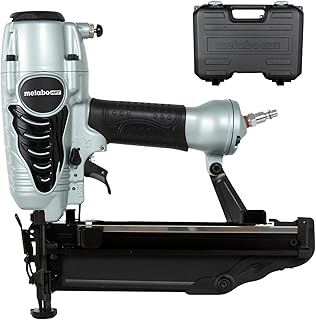
Somewhere between a thin brad and a heavy framing nail sits the 16-gauge finish nail, and this Metabo HPT gun is built for that exact lane. It drives 1-inch to 2.5-inch finish nails at a lean 3.7 pounds, with an air duster included in the kit. Chair rail, molding, and cabinetry are its home turf.
16GA
3.7 lb
Air duster
Pneumatic
Why I picked it
For trim that has to stay put, 16-gauge nails hold noticeably better than 18-gauge brads, and the NT65M2S delivers that strength at a comfortable weight. The included air duster is a small touch buyers actually appreciate for clearing sawdust before setting jamb material. It's a focused tool for a specific job, and it nails it.
Key specs
- Pneumatic 16-gauge finish nailer, model NT65M2S
- Drives 1-inch to 2.5-inch finish nails
- Weighs 3.7 pounds
- Tool-free depth of drive adjustment
- Includes air duster for blowing out sawdust and debris
- Built for molding, cabinetry, chair rail, and door casing
Real-world experience
Cabinet installers mention using the NT65M2S for face frames, toe kicks, and door jambs where the thicker nail adds real holding power without splitting the wood. The included air duster earns its keep when you're setting trim in an older house full of dust and debris. It's a specialist tool that does its one job well.
- 16-gauge nails hold door casing and chair rail far better than 18-gauge brads
- Light weight at 3.7 pounds for extended overhead use
- Air duster in the kit clears sawdust from corners before installation
- Leaves slightly larger holes than a brad nailer, so filler is part of the job
- Requires a compressor and hose; there’s no cordless version
- ✔ You install cabinets, doors, or thick profiled trim
- ✔ You want the strength of 16-gauge nails in a light body
- ✖ You only need tiny brads for delicate millwork
- ✖ You refuse to deal with a hose and compressor
Between the two Metabo finish nailers, pick by material. 18-gauge brads disappear behind paint; 16-gauge nails hold stair treads and door frames for decades. Many pros carry both, and together they cover nearly all finish work.
How I picked
A brad nailer is a nail gun that fires thin 18-gauge nails, and finish nailers step up to thicker 16-gauge stock for heavier trim. In early 2026, I compared six tools across those categories plus one framing nailer for structural work, and the method was consistent for every model.
I started with a list of about twenty cordless and pneumatic nailers, then narrowed it down using three benchmarks:
- Drive consistency: does the gun seat nails flush through its full length range without bending or splitting the workpiece?
- Ease of use: tool-free depth adjustment, jam release speed, reloading, and how the weight feels above shoulder height.
- Durability signals: repeated complaints about air leaks, misfires, battery degradation, or magazines that stop feeding.
For each model I compared manufacturer datasheets, then cross-checked specs against thousands of verified buyer reviews to find patterns in reliability and satisfaction. I also applied a filter that matters more than specs: service network and brand history. DEWALT and Metabo HPT both have decades of distribution in North America, so parts and warranty support are easy to find.
The Bielmeier made the list because it fills a genuinely different budget niche, not because it competes with the pros.
What I deliberately didn't do is run a lab-style stress test for six months. Physical breakage over years of use can't honestly be assessed in a few weeks, so for durability I leaned on aggregate buyer reports, some from users with two to five years on the same tool. That's the best signal available before buying.
In short, these six survived every filter: strong ratings, useful feature sets, honest trade-offs, and no obvious pattern of early failure. You'll notice the list is heavy on trim tools. That's because 18-gauge and 16-gauge nailers cover the overwhelming majority of what homeowners and carpenters actually do: baseboard, casing, crown molding, cabinetry, and furniture repair.
The framing nailer is here for the structural minority, and if you only do finish projects, it's the one to skip.
Buying guide: what actually matters for best nail gun
Nailers look similar at a glance, but a few specs decide whether a tool feels great or frustrating. Here's what I'd want you to understand before you buy, and the same planning mindset applies to any whole-home tech upgrades you're layering into a renovation.
Pneumatic, cordless, or electric: which is right for you?
Start with your existing tools. Pneumatic nailers run off an air compressor and give the most power per dollar. Cordless nailers like the DEWALT DCN680B run on rechargeable batteries and trade a little power for total mobility.
Electric staple guns, like the Bielmeier, use a small motor and cover only light duty. If you already own a compressor, pneumatic is almost always the value choice. If you don't, factor the cost of a compressor into the decision before comparing prices.
Why nail gauge matters more than brand
Gauge is the thickness of the nail shank. An 18-gauge brad nailer leaves tiny holes and is perfect for baseboard, casing, and light trim. A 16-gauge finish nailer holds door casings and chair rails better but leaves slightly bigger holes to fill.
Framing nails are a separate category entirely, thick enough for structural loads. Match the gauge to the material, and you'll avoid both split trim and weak joints.
What to check on the tool itself
Look for tool-free depth adjustment first, since it's the feature you'll use every single time. A tool-free jam release is second, because every nailer jams eventually, and clearing one with a screwdriver on a ladder is miserable. Side-loading magazines reload faster, and a no-mar tip prevents dents in finished wood.
Dry-fire lockout, which stops the gun from firing on an empty magazine, protects the driver blade and saves nails.
Weight, balance, and overhead work
Crown molding and ceiling trim force you to work with your arms up, and that's where weight becomes brutal. A 2.6-pound brad nailer like the Metabo HPT NT50AE2 is easy to hold for extended stretches; a 7.5-pound framing nailer is a different animal. Look at balance, not just the number.
A well-balanced heavier tool can feel better than a lighter one with the weight sitting out front.
Battery platforms and the long game
If you go cordless, you're buying into a battery system, not just a tool. The DEWALT DCN680B uses the 20V MAX platform, which means the same batteries also run drills, impact drivers, and circular saws. That ecosystem logic looks familiar to anyone choosing voice-first home assistants that share a single platform.
Before buying, think about what else you'll attach to that system later, whether it's a saw, a vacuum, or one of the home robotics options now filling out the category. If you already own batteries, the nailer becomes a much easier purchase. If you're starting fresh, choose the platform with the broadest range of tools you'll actually use.
Safety, pressure, and trigger control
Nail gun injuries are real, especially with contact-trip triggers that fire when the nose is pushed down. Safety research from NIOSH on nail gun injuries highlights how often accidental discharges happen with those triggers. OSHA's nail gun safety guidance recommends sequential trip mechanisms for anyone who doesn't frame daily.
Set your compressor regulator correctly: brad nailers run happily between 70 and 120 PSI, and framing nailers need more volume near the top of their range. Wear safety glasses and keep your free hand clear of the nose.
Frequently Asked Questions (FAQ)
Three of the six picks on this list run on compressed air, and two run on batteries, which tells you how split the market still is. Here are the questions buyers ask most before choosing one.
Is a nail gun worth it for a home DIYer?
Yes, if your projects include trim, baseboard, casing, or furniture repair. A nail gun drives nails faster than a hammer with far less wood splitting, and the learning curve is short even for a beginner. For the price of a couple of damaged door casings, a budget electric staple gun like the Bielmeier can already pay for itself.
If you only hang pictures and never touch trim, you can skip one. And if your weekends bounce between the workshop and the yard, adding a robotic yard care option can buy back hours for trim projects.
Pneumatic or cordless for a beginner?
Start with what you already own. If there's a compressor in the garage, a pneumatic brad nailer like the DEWALT DWFP12231 is the best value and the easiest to justify. If you don't own a compressor, go cordless on a battery platform you're already using, like the DEWALT DCN680B on 20V MAX.
Buying a compressor just for one nailer adds cost and storage space. A beginner should also skip cheap cordless framing nailers, which tend to be heavy and underpowered.
What's the difference between 18-gauge and 16-gauge nails?
18-gauge nails are thin brads that leave nearly invisible holes, making them ideal for lightweight trim, small moldings, and delicate millwork. 16-gauge nails are thicker, hold more strongly, and suit door casings, chair rails, cabinets, and stair trim. The tradeoff is the hole: 16-gauge marks need wood filler, while 18-gauge holes often disappear after one coat of paint. If you do both kinds of work, the Metabo HPT lineup covers both with the NT50AE2 and the NT65M2S.
Can a brad nailer replace a framing nailer?
No. A brad nailer drives thin 18-gauge nails up to about 2 inches long and is built for trim and millwork. A framing nailer drives thick nails up to 3.5 inches into structural lumber.
Using a brad nailer for framing is not only ineffective, it's dangerous, because the connection won't hold any real load. If your project involves wall framing, a deck, or roof sheathing, you need a proper framing nailer like the Metabo HPT NR90AES1 and a compressor with enough tank capacity.
Do I need a compressor for these nailers?
Three of the picks on this list are pneumatic and require an air compressor plus hose. The DEWALT DCN680B and the Bielmeier run on batteries and don't need one. For trim work, a small pancake compressor with a 1 to 2 gallon tank is plenty.
For framing, step up to a 4 to 6 gallon tank because the air demand is much higher. Check your compressor's CFM rating against the nailer's requirement before you buy.
What PSI should I use for a pneumatic nailer?
Start around 85 to 90 PSI for 18-gauge brad nailers and adjust until the nail seats flush. The DEWALT DWFP12231 and Metabo HPT NT50AE2 both operate comfortably in the 70 to 120 PSI range. Framing nailers like the NR90AES1 want the upper end, roughly 100 to 120 PSI with enough air volume.
Always set the regulator while the tool is connected, and never exceed the maximum pressure printed on the tool body.
Final verdict
The DEWALT DCN680B is the best nail gun for most buyers because it pairs cordless freedom with brushless reliability and trim-grade precision. If you already own a compressor and want the strongest value, the DEWALT Brad Nailer Kit is the smarter play. For crafters and upholstery work, the Bielmeier handles light duty without breaking the bank.
And once the renovation dust settles in a freshly trimmed house, plenty of people pair that work with home security upgrades.
Affiliate disclosure: This post contains affiliate links. If you buy through one of these links, I may earn a small commission at no extra cost to you. It never changes my recommendation. I only suggest gear I'd actually buy myself.