5 Best AI Glasses for Travel: Top Picks for Smart Trips

The best AI glasses for travel combine hands-free photos, translation, open-ear audio, and simple voice help in one wearable.
Picture standing in a busy airport with one hand holding your passport and the other pulling a suitcase. You need directions, a quick translation, or a photo, but reaching for your phone feels slow and awkward. The best AI glasses for travel can make these small tasks easier. They keep your hands free while you capture video, hear audio, identify objects, or ask an assistant for help. I reviewed the main features, travel benefits, comfort points, and limits of five camera AI glasses listed on Amazon. I also looked at privacy, battery, lens use, and daily practicality before making these picks.

AI Smart Glasses with Camera,…
【AI Real-Time Translation & ChatGPT Assistant】AI glasses break language barriers instantly with AI real-time translation. The built-in ChatGPT voice assistant helps you communicate, learn, and handle travel or business conversations…

AI Smart Glasses with Camera,…
HD Camera & EIS Stabilization: These smart glasses with camera feature an 8MP HD lens that captures smooth 30fps videos and supports high-resolution photos. Combined with multi-frame noise reduction and…

AI Smart Glasses with Camera,8MP…
【1080P HD Video & 8MP Photo Capture】AI smart glasses with a built-in 8MP HD camera that support 1080P video recording and high-definition photo capture. Equipped with anti-shake algorithm, recording glasses…
AI Smart Glasses With 4K Camera
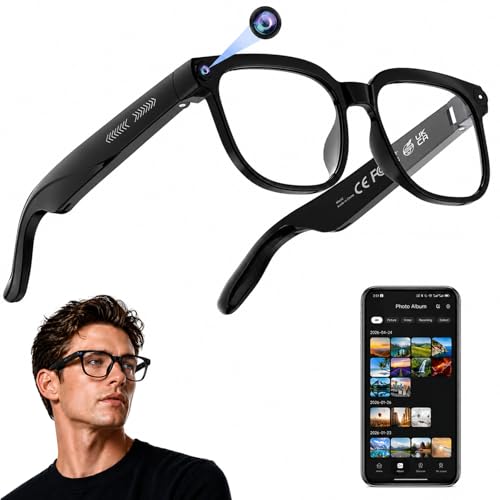
This model stands out for travelers who want a camera-first pair of smart glasses. Its listing highlights 4K video and photo capture, an AI assistant, real-time translation, open-ear audio, and object recognition. That feature mix covers the tasks I often want on a trip without pulling out a phone. The transparent lens also gives it a more natural look for indoor use, museums, airports, and city walks.
The open-ear design is useful when I need to hear directions while staying aware of traffic and people around me. I would still keep the volume low near roads, train platforms, and airport announcements. The AI tools may help with simple questions, signs, and objects, but translation quality can depend on the app, internet access, language, and background noise. As with any wearable camera, I would check local privacy rules and ask before recording people at close range.
Pros:
- 4K camera capability for sharper travel clips
- Real-time translation feature for basic language help
- Open-ear audio keeps the ears clear
- Object recognition can support sightseeing and learning
- Transparent lenses suit indoor and outdoor daily use
- Voice assistant access reduces phone handling
- Useful hands-free design for walking tours and family trips
Cons:
- Camera and AI use may reduce battery life faster
- Transparent lenses do not provide strong sun protection
- Translation and AI features may need a phone or data connection
- Nearby people may feel uncomfortable around a camera-equipped wearable
My Recommendation
I recommend this pair for travelers who want the widest feature set in one device. It is especially suited to city explorers, international tourists, students, and content creators who value 4K capture more than a discreet design. The open-ear audio is a strong benefit for walking, while the transparent lens makes the glasses less tied to bright outdoor weather. Among the options in this review, it is a strong candidate for the Best AI Glasses for Travel if you want camera quality, translation, and object recognition together. Before a trip, I would test the companion app, charge the glasses fully, and confirm which AI tools work without mobile data. Its value is strongest for buyers who will use several features rather than only taking occasional photos.
8MP AI Camera Glasses for Men and Women

These AI camera glasses take a simpler approach. The listing centers on an 8MP HD camera and Bluetooth support, making them a practical choice for hands-free pictures and short videos. I see them fitting travelers who want to record a market, a hike, or a family moment from their own point of view. The design is also listed for both men and women, so it may work well as a shared travel gadget.
An 8MP camera can produce useful images in good light, but I would not expect it to replace a dedicated camera or a modern flagship phone. Image quality can change with movement, indoor light, glare, and lens position. Bluetooth may handle audio or phone connection tasks, but buyers should confirm the exact app controls, storage method, charging time, and battery rating on the live product page. I like this model for its focused feature list, since fewer advanced tools can make setup less stressful for first-time users.
Pros:
- 8MP camera offers a practical level of image detail
- Bluetooth connection supports hands-free use with a phone
- Good fit for casual travel photos and short clips
- Simple feature set may feel less overwhelming for new users
- Can capture a first-person view while walking or sightseeing
- Suitable for a broad range of men and women
- May work well as a backup camera for family vacations
Cons:
- Does not emphasize 4K video in the listed title
- Advanced AI functions may be more limited than on feature-heavy models
- Small wearable cameras still need careful framing
- Bluetooth range and app performance can vary by phone
My Recommendation
This pair is best for a buyer who wants a basic camera wearable without paying for a long list of advanced travel tools. I would consider it for vacations, theme parks, casual city trips, and family events where quick first-person photos matter. It may also suit a traveler who already uses a phone for translation and navigation but wants a hands-free camera as an extra tool. If your main goal is a straightforward Bluetooth camera, this can be a sensible Best AI Glasses for Travel option. I would choose another model if real-time translation, object recognition, or higher-resolution video is essential. Its overall value depends on how well the app handles file transfer and how often you plan to record.
8MP Photochromic AI Glasses With 1080p Video

This model adds several travel-focused tools to an 8MP camera. The listing includes 1080p anti-shake video, real-time translation, an AI voice assistant, object recognition, Bluetooth, and photochromic lenses. That combination makes it more versatile than a camera-only wearable. The photochromic lens is a useful idea for travelers who move between indoor spaces and daylight during the same day.
Photochromic lenses can darken in bright conditions and clear in lower light, though the speed and level of change can vary. They may not become dark enough inside a car, behind some windshields, or in every type of bright setting. The anti-shake feature should help reduce small hand and head movements, but it cannot remove all blur during fast walking. I would treat the translation and object tools as helpful travel aids, not as a replacement for a human guide, official sign, map, or emergency service.
Pros:
- Photochromic lens design adapts to changing light
- 1080p anti-shake video suits everyday travel recording
- Real-time translation can help with simple conversations
- Object recognition adds useful sightseeing support
- AI voice assistant allows hands-free questions
- Bluetooth enables connection with compatible mobile devices
- 8MP camera provides a balanced choice for casual photos
Cons:
- 1080p video is less detailed than 4K options
- Photochromic lenses may not darken fully in every situation
- AI tools may require an app, internet access, or account setup
- Translation accuracy can drop with accents, noise, or rare words
My Recommendation
I would choose this model for travelers who move often between sunlight and indoor spaces. It is a good match for walking tours, road trips, outdoor markets, and sightseeing days that include cafés or museums. The photochromic lens gives it a practical edge, while anti-shake recording can make clips easier to watch later. For many people, this balance makes it one of the Best AI Glasses for Travel, especially when 4K is not a must-have. It is less suitable for buyers who need prescription lenses, strong polarized glare control, or professional video quality. Check the lens details and app requirements before ordering because those points can shape the real travel experience.
Coucur AI Glasses With 4K Video
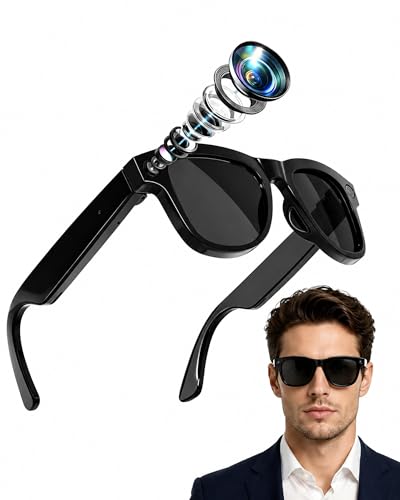
Coucur’s AI glasses focus attention on 4K video recording and use a black lens style. This design may appeal to travelers who want a darker look for sunny walks, beach visits, and outdoor events. A 4K mode can preserve more detail than standard HD when lighting is good and the file settings are configured correctly. I see this as a camera-led product for people who want a wearable way to capture a trip.
Higher resolution also creates larger files, which can fill phone storage faster and take longer to transfer. It may increase battery use as well, so I would carry a power bank and clear storage before leaving home. A black lens can be comfortable in bright light, but it may be less flexible indoors than a clear or photochromic option. Buyers should also verify whether the product includes audio features, AI functions, app support, and the exact video stabilization method because the short listing title focuses mainly on recording.
Pros:
- 4K video can capture fine detail in bright travel scenes
- Black lenses suit sunny outdoor activities
- Useful for first-person clips without holding a camera
- Good fit for beaches, parks, festivals, and city walks
- Higher resolution gives more room for later cropping
- Camera-centered design may appeal to casual creators
- Can complement a phone instead of replacing it
Cons:
- 4K files need more storage space
- High-resolution recording may use power quickly
- Black lenses may feel too dark indoors or at dusk
- The listing provides less detail about translation and audio features
- Video quality still depends on light, movement, and lens position
My Recommendation
Coucur is best for travelers who care most about video detail and prefer a darker lens style. I would pack it for outdoor trips, scenic drives, sporting events, and destination content where 4K footage has clear value. It may be less useful for a traveler whose top needs are translation, navigation, or open-ear audio. For the right buyer, it can be a strong Best AI Glasses for Travel choice because it puts recording first and keeps the camera wearable. I would confirm the included accessories, memory process, charging method, and app reviews before purchase. Bring extra storage and power if you plan to record long clips.
SGUKZF 4K EIS Photochromic AI Glasses
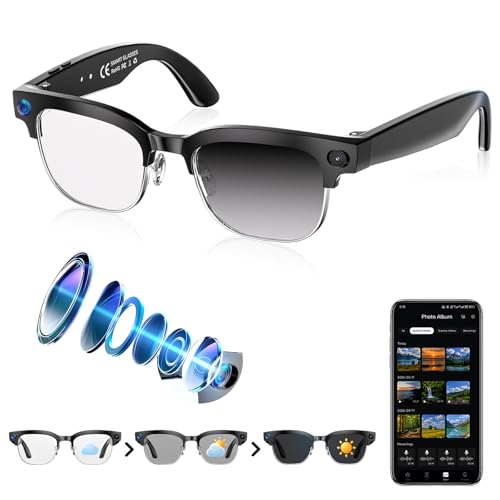
SGUKZF combines a 4K camera with EIS anti-shake, photo capture, real-time translation, open-ear Bluetooth audio, and object recognition. It also uses a photochromic lens, which gives it a broad travel profile. This is the kind of feature list I would look at when one pair needs to handle photos, short videos, audio, and basic AI help. The mix feels aimed at travelers who want more than a simple camera.
Electronic image stabilization can help smooth small movements, but results depend on the recording mode and lighting. The photochromic lens may make the glasses easier to wear across a full day, although it is not the same as dedicated sunglasses or prescription lenses. Open-ear audio can help me hear a prompt while keeping some awareness of my surroundings, yet I would avoid loud playback in busy traffic. Before buying, I would review privacy laws at the destination, test voice commands, and confirm how recordings are stored and shared.
Pros:
- 4K photo and video capture supports detailed travel memories
- EIS anti-shake may improve clips during walking
- Photochromic lenses suit changing indoor and outdoor light
- Open-ear Bluetooth audio supports hands-free listening
- Real-time translation may help with signs and basic speech
- Object recognition adds context during sightseeing
- Broad feature set reduces the need to carry another small gadget
Cons:
- Many features may require more setup and app permissions
- Battery life can vary when 4K, audio, and AI run together
- Photochromic lenses are not a full substitute for quality sunglasses
- AI translation still needs human judgment for important information
- Camera use raises privacy concerns in some public places
My Recommendation
SGUKZF is my pick for travelers who want the most complete feature mix from this group. It suits international trips, walking tours, outdoor sightseeing, and travelers who enjoy capturing a point-of-view record of the day. The combination of 4K, EIS, open-ear audio, translation, and photochromic lenses gives it a strong claim as the Best AI Glasses for Travel for all-around use. I would not recommend relying on it alone for emergency translation, navigation, or medical information. Still, for daily travel convenience, it offers a useful blend of camera and smart features. Availability, price, app quality, and user feedback may change, so check the current Amazon listing before ordering.
How I Compare AI Glasses for Travel
Travel glasses need to do more than look clever on a product page. I first look at camera resolution, stabilization, lens type, audio design, AI tools, and phone support. I also consider whether the features solve a real travel problem or simply add another menu to learn. A good wearable should feel like a quiet helper, not a tiny computer that demands attention all day.
Comfort matters just as much as camera quality. A pair that feels heavy after 20 minutes may stay in a hotel bag for the rest of the trip. I look for a frame that can sit securely without pressing hard on the nose or ears. Buyers should check frame size, bridge fit, lens options, and return terms because comfort is personal and online photos cannot show every fit issue.
Camera Quality and Video Modes
Camera numbers tell only part of the story. More megapixels or a 4K label can help, but light, lens position, focus, compression, and movement also shape the result. Outdoor daylight usually gives the best performance. Inside a dim restaurant or train, even a high-resolution camera may show noise or blur.
For travel, I prefer a camera that starts quickly and saves files in a simple format. Stabilization helps when walking, but it does not turn a moving head into a tripod. If you plan to record long clips, check storage, transfer speed, heat, and battery life. Short clips are easier to manage and often tell a better travel story than one long recording.
Translation and AI Help
Real-time translation can be useful at a café, store, airport desk, or train station. Yet it should remain a backup tool. AI may misunderstand slang, names, accents, poor audio, or a sign with unusual lettering. It may also need a connected phone, a supported app, or internet access.
I suggest downloading important travel phrases before departure. Keep your passport, booking details, and emergency contacts in a normal phone app or printed copy too. The Best AI Glasses for Travel should make small tasks easier, but they should not become your only source of vital information.
Open-Ear Audio and Awareness
Open-ear audio sends sound toward the ear without sealing the ear canal. This can help travelers hear prompts while also hearing announcements and nearby sounds. It is useful on a walking tour or when following a spoken direction. Sound can leak in quiet places, though, and busy streets can make audio hard to hear.
I keep volume moderate near roads, bikes, stairs, and platforms. I also pause audio before crossing a street or speaking with a staff member. No smart glasses can replace attention to the environment. The safest wearable is one that supports awareness rather than competing with it.
Lens Choice for Different Trips
Transparent lenses work well indoors and in mixed settings. They may be better for museums, airports, shopping, and evening use. Black lenses can feel more comfortable in strong sun, but they may be less useful after sunset. Photochromic lenses offer a middle path by changing tint with light.
Photochromic lenses do not always react perfectly inside vehicles or behind windows. They also may not provide the glare reduction of polarized lenses. If you already wear prescription glasses, check whether the frame accepts prescription inserts or custom lenses. Do not assume that every camera frame can be safely modified by an optician.
Battery and Charging on the Road
Camera recording, Bluetooth, audio, and AI processing all use power. The more features I use, the less likely a small battery is to last from breakfast to bedtime. Charging habits matter. I would charge the glasses before leaving, pack the correct cable, and carry a small power bank when recording is important.
Do not judge battery life from standby time alone. Ask how long the glasses record, how long audio plays, and how much use the AI features allow. Heat, cold, weak Bluetooth signals, and repeated file transfers can also affect performance. A travel case is valuable because it protects the frame and keeps the charging parts together.
Privacy and Responsible Recording
Camera glasses deserve extra care in public. A small camera can be less obvious than a phone, and that creates a duty to act clearly and respectfully. I avoid recording private conversations, security areas, children I do not know, and people who have not agreed to be filmed. I also follow signs that ban photography or recording.
Rules vary by country, state, venue, and transit system. Some places treat audio recording more strictly than video. The Federal Trade Commission has long advised consumers to understand how connected products collect and share data, while travel and transportation agencies may impose their own rules. Read the app permissions, use a visible recording indicator when available, and delete files you do not need.
Phone, App, and Internet Needs
Most AI glasses are not fully independent computers. They often use a phone for setup, controls, file transfer, firmware updates, or internet-based AI tasks. That means your phone still matters. Before flying, install the app, pair the glasses, update the firmware, and test a photo, a video, and an audio command.
International data can cost money. A local SIM, eSIM, or travel plan may help, but coverage can still fail in tunnels, rural areas, and crowded venues. Save offline maps and key addresses. If the glasses stop working, your trip should continue without them.
Best Features for Different Travelers
| Best for | Why |
|---|---|
| International city travelers | Translation, voice help, object recognition, and open-ear audio can support daily tasks. |
| Outdoor video creators | 4K capture and stabilization can record hands-free clips during walks, tours, and events. |
| First-time smart-glass buyers | A simpler Bluetooth camera design may be easier to learn and use. |
What to Check Before Buying
Start with your real travel habit. If you take only a few pictures, a camera-first pair may be enough. If you visit other countries often, translation and voice tools may matter more. If you spend most of the day outside, lens tint and glare control should move higher on your list.
Next, check the return policy and current product details. Amazon listings can change, and sellers may update accessories, colors, software, or specifications. Read recent reviews for comfort, pairing, battery use, file transfer, and app stability. I pay special attention to reviews that include long-term use rather than only first impressions.
Also check whether the glasses include a case, charging cable, spare nose pads, lens cloth, and instructions. Small missing parts can become a major problem on a trip. Confirm the charging plug for your destination or pack a suitable adapter. If you need prescription support, ask an optician before ordering.
How to Use Smart Glasses on a Trip
I recommend a short practice session at home. Wear the glasses for 30 minutes and walk around while taking a few short clips. Test the shutter control, voice command, Bluetooth audio, app transfer, and charging process. This simple test can reveal fit problems before you reach the airport.
Set a clear recording routine. I use short clips, then stop recording when the moment ends. This saves storage and battery. It also reduces the chance of recording people or private conversations by accident. A small red light or sound may show that the camera is active, but I never assume everyone understands the signal.
Keep your phone close during setup and travel. The phone may show battery level, recording status, settings, and saved files. Turn off features you do not need when battery life matters. Carry a backup pair of normal glasses or sunglasses too. Smart glasses are helpful tools, but they should not be the only eyewear in your luggage.
FAQs Of Best AI Glasses for Travel
Can AI glasses translate languages while I travel?
Some models list real-time translation, but the exact experience depends on the app, supported languages, phone connection, and internet access. Use translation as a helpful aid, not as the only tool for legal, medical, or emergency information.
Do AI travel glasses need a smartphone?
Many models need a smartphone for setup, Bluetooth, file transfer, updates, and AI services. Check the product listing and app requirements before buying. Test the connection at home before your trip.
Are camera glasses allowed on airplanes?
Airline and airport rules can vary. Follow crew instructions and respect signs that restrict recording. Turn off the camera during security checks and in other controlled areas unless staff clearly allow it.
Are photochromic lenses good for travel?
They can be useful when you move between indoor and outdoor areas. However, they may not darken fully behind a windshield or in every bright setting. They are not always a replacement for polarized sunglasses.
How can I protect privacy when using camera glasses?
Ask permission before recording people, avoid private spaces, and follow local laws and venue rules. Review app permissions and store files securely. Stop recording when you no longer need the camera.
Final Verdict: Which Should You Buy?
For the broadest feature mix, I would choose the SGUKZF 4K EIS Photochromic model. It combines 4K capture, stabilization, translation, open-ear audio, object recognition, and changing-light lenses.
The other picks suit simpler needs, from casual 8MP photos to camera-focused 4K video. Choose the Best AI Glasses for Travel that match your trip, phone, lens needs, and comfort.

Similar Posts