Best AI Autonomous Drones: Top Picks For Smart Flight
The best AI autonomous drones blend smart flight tools, strong safety features, clear video, and simple controls for confident flying.
A first drone can feel hard to manage. You watch the screen, steer the aircraft, check the battery, and worry about trees or walls all at once. AI flight tools help reduce that load. They can support hovering, tracking, obstacle awareness, voice control, and automatic return. I reviewed these four options with a practical eye, focusing on flight control, camera use, battery time, learning curve, size, and value. This guide to the Best AI Autonomous Drones will help beginners, families, travelers, and hobby pilots choose a drone that fits real use rather than flashy claims.

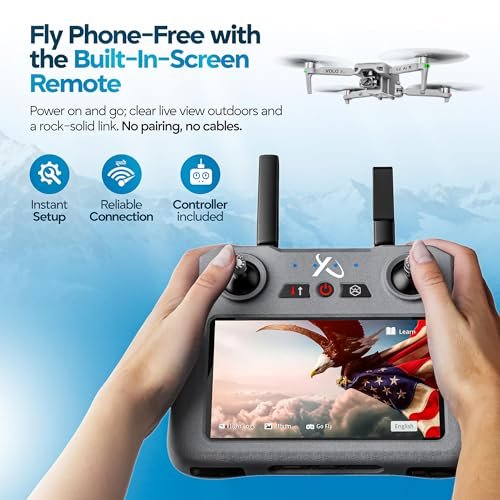
DCX Volo X EZ AI…
SMART TECH THAT FLIES FOR YOU: Our camera drone AI-assisted features like Follow Me and Obstacle Avoidance for beginners make it easy to capture smooth aerial shots; this 4k drone…
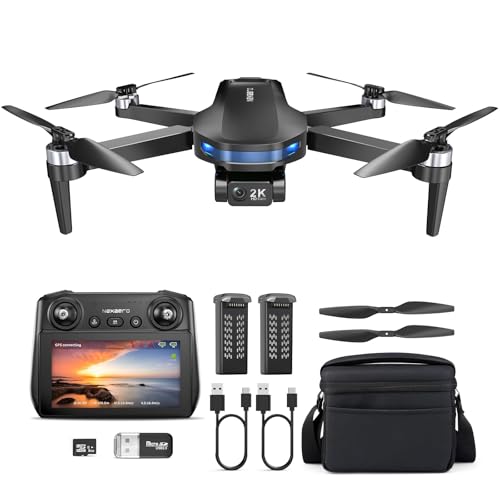
GPS Drone with EIS 2K…
7.22-Inch Screen Remote Control: Instant Flight, No Phone Needed – Experience true plug-and-play flying. The included remote features a large 7.22-inch display for real-time FPV, eliminating the need for a…

Drone with AI Optical Flow…
[AI-POWERED “NEVER-LOST” DRONE | 2-Step Flight for Kids & Beginners] Say goodbye to first-flight fear with this drone with camera for kids! The S118S drone fuses AI Optical Flow Vision…
DCX Volo X EZ AI Drone

The DCX Volo X EZ stands out as the most complete choice in this group. Its feature list combines a 4K camera, AI-assisted flight control, 360-degree obstacle avoidance, and a design aimed at adult beginners. That mix gives new pilots more support during takeoff, turns, and camera work. I like this approach because a drone should feel helpful, not like a second job.
The camera makes this model a strong pick for outdoor clips, trips, and family events. Obstacle sensing can add a useful safety layer, although no sensor system removes the need for careful flying. The product listing also notes FAA approval and U.S. support, which may give buyers more confidence when they need setup help. Before flying, I would still check current FAA rules, local limits, and registration needs for the exact aircraft weight and use.
Pros:
- 4K camera supports sharper photos and video than basic 1080p models
- AI-assisted flight control can reduce the learning curve
- 360-degree obstacle avoidance adds awareness near common hazards
- Adult-friendly design suits travel, hobbies, and casual outdoor filming
- U.S. support can make setup and troubleshooting easier
- FAA approval information may simplify buyer research before flight
Cons:
- Obstacle avoidance is a support feature, not a guarantee against crashes
- Advanced camera and safety features may require more setup time
- Outdoor flight still depends on wind, space, and local rules
In daily use, the key strength here is confidence. New pilots often move the sticks too quickly because they focus on the drone and the phone at the same time. AI-assisted control can act like training wheels while the pilot learns smoother inputs. I would start in a wide, open area and test each feature one at a time instead of activating every smart mode on the first flight.
The Volo X EZ also makes sense for someone who wants room to grow. A toy drone may be fun for a weekend, but a 4K camera and more advanced flight support can keep the experience useful for longer. Its value depends on how well the app, remote, battery system, and support match your needs. Still, among these Best AI Autonomous Drones, this is the most balanced choice for an adult beginner who wants smart features without jumping straight into a professional platform.
GPS Drone With 2K EIS Camera

This GPS drone takes a different path from the Volo X EZ. It focuses on flight time, simple camera use, and a large 7.22-inch screen built into the remote controller. The listed 64-minute flight time can be useful for long practice sessions or several short filming attempts. Its 2K camera and electronic image stabilization, or EIS, aim to produce smoother footage than a basic fixed camera.
The drone also lists Follow Me, AI Track, AI Night Shot, automatic return, and three adjustable speeds. These tools give beginners more ways to learn at a comfortable pace. The under-249-gram design may appeal to travelers, but buyers should confirm the final takeoff weight with the installed battery and accessories. Weight rules can change based on the aircraft and how you operate it, so I always advise checking current FAA guidance before flight.
Pros:
- Long listed flight time supports extended practice and filming
- Built-in 7.22-inch remote screen reduces reliance on a phone
- GPS functions can help with position awareness and automatic return
- EIS may reduce small shakes in casual video
- Follow Me and AI Track add hands-free filming options
- Three speed settings help beginners move from slow to faster flight
- Foldable body is easier to pack for trips and outdoor use
Cons:
- GPS performance can vary near buildings, trees, and signal interference
- Night shooting may not match the quality of a larger camera system
- Automatic return still needs a clear path and correct home-point setup
I see this model as a practical travel drone. The large remote display removes one common annoyance: trying to balance a phone, controller, and sunlight at the same time. A bright outdoor screen can make framing easier, though buyers should still check how the display looks in their normal flying conditions. The three speed modes also create a gentle learning path for someone who has never used a GPS drone.
The 64-minute claim deserves a careful reading, as flight-time figures usually depend on conditions and may represent combined time from more than one battery. Wind, cold weather, camera use, and repeated acceleration can reduce real flight time. That does not make the feature unhelpful; it simply means I would plan each session with a reserve. For buyers who value endurance, GPS tools, and a self-contained controller, this model is one of the most useful Best AI Autonomous Drones on the list.
AI Optical Flow 1080P FPV Drone
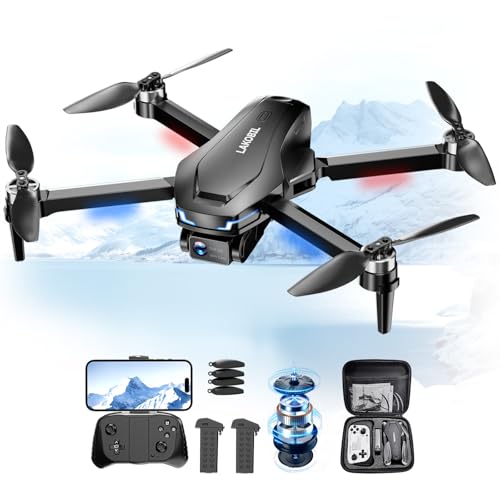
This foldable drone is aimed at kids, beginners, and adults who want a simple first step into camera flight. It combines AI optical flow, voice and gesture control, a 1080P FPV camera, brushless motors, and a one-key start function. Those features make the drone feel approachable without requiring advanced piloting skills. The 3D flip mode adds a playful touch for users who want tricks as well as basic video.
Optical flow can help the aircraft hold position when it has enough visual detail below it. It may work less reliably over dark, glossy, plain, or low-light surfaces, so I would not treat it as a replacement for GPS. The package lists two batteries and up to 26 minutes of flight, which can provide more time than a single small battery. Voice and gesture features are fun, but I would use the physical controls first until I understood how the drone reacts.
Pros:
- AI optical-flow support can improve indoor hovering over suitable surfaces
- Voice and gesture control make basic commands more engaging
- 1080P FPV camera provides an affordable way to view flight footage
- Brushless motors may offer better efficiency and durability than basic brushed motors
- Two batteries can extend the practice session
- Foldable design makes storage and transport simple
- One-key start helps new pilots begin with less stress
Cons:
- 1080P video has less detail than the 2K and 4K choices here
- Optical flow can struggle over plain, dark, shiny, or dim surfaces
- Voice and gesture commands may need quiet surroundings and clear movement
- Small drones can react strongly to outdoor wind
This is the type of drone I would choose for a family learning area, a large room, or calm outdoor practice. Its controls give a child or first-time adult pilot several ways to interact with the aircraft. The low-pressure design matters because early success builds skill faster than a complex menu full of confusing options. I would keep the first flights low, slow, and away from people, pets, glass, and ceiling fans.
The camera is suitable for casual FPV viewing and simple clips, but it is not the main reason to buy this model. The stronger reasons are ease of use, fun controls, two batteries, and a foldable frame. Parents should still supervise children and review local airspace rules. In the Best AI Autonomous Drones category, this model is best viewed as a friendly starter drone with smart control features rather than a serious aerial camera.
Hand-Operated AI Motion Sensor Drone

This hand-operated drone is the most playful option in the group. Instead of relying mainly on a traditional remote, it uses AI motion sensing to react to hand movement. The design includes auto hover, 360-degree flips and rolls, and a rechargeable battery. It is made for children and families who want quick fun with a short learning curve.
The enclosed or protected toy-style format can make indoor play feel less intimidating than flying a larger camera drone. Still, any spinning aircraft can cause harm if a child throws it, grabs the propellers, or uses it near a face. I would keep a clear area around the drone and supervise younger users. This model does not target long-range filming, GPS navigation, or advanced aerial photography, and that clear purpose helps set the right expectations.
Pros:
- Hand motion control is easy for young beginners to understand
- Auto hover helps the drone stay at a manageable height
- 360-degree flips and rolls add instant play value
- Rechargeable design avoids constant disposable battery purchases
- Small format suits indoor use when the room is clear
- Simple controls reduce the frustration common with first remote drones
- Works well as a birthday or holiday gift for children who enjoy active play
Cons:
- It is not designed for GPS flight or high-quality aerial photography
- Motion sensors may react poorly in crowded or cluttered spaces
- Battery time is likely shorter than that of the larger camera drones
- Children need adult supervision around moving props
I would recommend this model to a parent who wants a quick, screen-free activity. It feels more like a flying game than a camera platform, which can be a benefit for younger children. A child can learn cause and effect by moving a hand near the drone and watching how it responds. That simple feedback can build interest before the child moves to a standard remote-controlled aircraft.
The main buying decision is whether you want a toy or a camera drone. If you need landscape video, GPS return, or long outdoor range, choose another model in this guide. If you want a fun gift that starts flying with less setup, this hand-operated option has a clear advantage. It is not the most advanced entry in the Best AI Autonomous Drones group, but it may be the best match for supervised indoor play.
How I Evaluate AI Autonomous Drones
I do not judge a drone by the word “AI” alone. Some products use that term for optical-flow hovering, while others apply it to tracking, gesture control, or assisted flight. These functions can be useful, but they do not all mean that the drone can safely fly without a pilot. I look at what the feature does, where it works, and what limits a beginner should understand.
Camera quality is another major part of the review. A 4K label can provide more detail, but the final result also depends on stabilization, lighting, lens quality, compression, and the pilot’s movement. A 2K camera with EIS may create smoother casual clips than a poorly tuned higher-resolution camera. A 1080P FPV camera can still be a good choice when the main goal is fun and live viewing.
Flight time needs the same careful review. Listed battery numbers may reflect ideal conditions or combined batteries. Wind, speed, cold air, payload, and repeated climbs all affect the real result. I prefer a drone that gives clear battery warnings and has a sensible return-to-home feature, but pilots should always leave enough power to land by hand.
Safety matters more than a clever mode. Obstacle avoidance may detect some objects but miss thin branches, wires, glass, low-contrast surfaces, or fast-moving hazards. GPS can help with position and return, but it does not replace visual awareness. I advise every buyer to read the manual, check local rules, keep the drone within legal operating limits, and never assume an automatic mode can replace the pilot.
What “Autonomous” Really Means in Consumer Drones
In consumer drones, “autonomous” often means assisted rather than fully independent. The aircraft may hold its position, follow a person, return to a home point, or respond to a gesture. These tasks still depend on sensors, software, battery power, signal quality, and a safe environment. The pilot remains responsible for the aircraft.
That distinction helps prevent disappointment. A Follow Me mode may lose a subject behind a tree. An optical-flow system may drift over a plain floor. An obstacle sensor may not see a fine wire. I treat AI as a helpful co-pilot, not an invisible expert who can solve every flight problem.
The Best AI Autonomous Drones are valuable because they reduce common mistakes. They can make hovering easier, create smoother shots, and give beginners more time to think. They also help families enjoy flight without spending hours learning advanced controls. The best result comes when smart tools support good habits rather than replace them.
Camera Quality and Video Use
Choose the camera based on how you plan to use the footage. A 4K camera is the better fit for cropping, travel scenes, and detailed outdoor clips. A 2K camera can handle social posts, family videos, and basic landscape shots with less storage demand. A 1080P camera works well for FPV practice and casual viewing.
Stabilization also matters. EIS can reduce small shakes caused by motor vibration or minor movement. It cannot fix every fast turn or strong gust. I would fly slowly, avoid sudden stick inputs, and record in good light for the cleanest results.
Do not ignore the live-view system. A drone can capture good files but still feel hard to use if the preview lags or the display is too small. The GPS model’s large built-in screen may suit outdoor pilots who dislike using a phone. The Volo X EZ may appeal more to users who want stronger image detail and a broader set of smart flight tools.
Battery Life and Charging Tips
Battery life affects fun more than many buyers expect. A short session can end just as the pilot starts to feel comfortable. Two batteries can help, but they also add charging time and storage needs. If a listing gives a combined flight figure, read the details instead of assuming one battery will last that long.
For safer use, I land before the battery reaches a critical level. I avoid flying a nearly drained battery far away or over water. I store lithium batteries in a cool, dry place and follow the charger instructions. A spare battery is useful only when it is made for the drone and charged with the correct equipment.
Obstacle Avoidance and Flight Safety
Obstacle avoidance is one of the most attractive features in the Best AI Autonomous Drones. It can help detect some objects and reduce the chance of a direct impact. The word “360-degree” sounds complete, but sensor coverage and software behavior still vary by direction, distance, speed, light, and object type.
I recommend testing obstacle features in a large open space. Never test them near a person, pet, road, power line, or valuable object. Keep the drone in sight and be ready to stop or land. A safe pilot leaves room for sensor error.
Automatic return is useful when the signal drops or the battery gets low. The pilot must set the home point correctly and choose a return height that clears nearby trees and buildings. The drone may not avoid every object while returning. It is a backup tool, not permission to fly beyond safe visual range.
Indoor Versus Outdoor Flying
Small optical-flow and hand-operated drones can work well indoors when the room is open. Remove fragile items and keep people away from the flight area. Air from fans, vents, and open windows can move a light drone more than expected. Low ceilings also leave little time to correct a mistake.
Outdoor flying gives a drone more space but adds wind, trees, birds, wires, and changing light. A lightweight aircraft may drift quickly in a gust. I would practice outdoors only on a calm day, start at a low height, and avoid crowded parks.
GPS models usually make more sense outside because they can use satellite positioning and return features. Camera drones also need enough light for better footage. The right environment can make a modest drone feel smooth, while the wrong environment can make an expensive drone seem difficult.
Rules, Registration, and Responsible Use
U.S. drone rules depend on the aircraft, its weight, and how you fly it. Recreational pilots should review current FAA guidance before takeoff. Some drones need registration even when they look small, while other rules may apply to operations over people, near airports, or in controlled airspace.
Check airspace before every outdoor flight. Respect privacy and avoid filming into homes or private areas without permission. Never fly near emergency work, active roads, or restricted locations. The product listing is not a substitute for current government requirements.
Rules can change, so I recommend using official FAA resources and checking local park or city rules. The FAA’s recreational guidance, TRUST test requirements, Remote ID rules, and registration information are useful starting points. Responsible use protects other people and keeps the hobby enjoyable.
Which Drone Is Best for Beginners?
A beginner should choose the drone that makes the first ten flights feel manageable. The DCX Volo X EZ offers the richest mix of camera quality and assisted flight tools. The GPS model gives a large screen, longer listed flight time, and tracking modes. The 1080P optical-flow model keeps the controls simple and adds playful voice and gesture features.
For a young child, the hand-operated model may be easier than a stick-based remote. It allows active play without asking the child to understand every control at once. Adult supervision remains important, even with a small toy drone.
I would not choose based only on the largest number in the listing. Think about where you will fly, who will use it, whether you need video, and how much setup you accept. A simple drone used often has more value than a powerful drone that stays in a closet.
My Recommendation
For most adults who want the best balance, I recommend the DCX Volo X EZ. Its listed 4K camera, AI-assisted control, obstacle avoidance, adult-focused design, and U.S. support create a strong all-around package. It fits beginners who want to learn, travelers who want better footage, and hobby users who may explore more advanced flight modes later.
The GPS drone is my alternate pick for buyers who value long sessions and a large remote display. It is a practical choice for outdoor practice, Follow Me shots, and users who want GPS-based features. The 1080P optical-flow drone is better for families, casual indoor use, and first-time pilots who want voice or gesture control without a complex setup.
The hand-operated drone has the clearest audience: young children and families seeking a fun gift. It does not compete with the camera models for range or image quality. Its value comes from easy play, motion sensing, auto hover, and quick enjoyment. In the Best AI Autonomous Drones market, matching the product to the user matters more than choosing the longest feature list.
| Best for | Why |
|---|---|
| Adult beginners and travel video | The DCX Volo X EZ combines a listed 4K camera with assisted flight and obstacle-awareness features. |
| Long practice sessions and outdoor tracking | The GPS model offers a large controller screen, GPS tools, Follow Me, AI Track, and a long listed flight time. |
| Children and simple indoor fun | The optical-flow and hand-operated models offer easy controls, playful modes, and beginner-friendly operation. |
FAQs Of Best AI Autonomous Drones
What makes a drone an AI autonomous drone?
Most consumer drones use AI or smart software for assisted tasks. Examples include optical-flow hovering, subject tracking, gesture control, voice commands, obstacle awareness, and automatic return. These tools help the pilot, but they do not make the drone fully independent. You still need to control it, monitor the area, and follow local rules.
Are AI autonomous drones safe for beginners?
They can be easier for beginners because smart features may support hovering, tracking, and return functions. Safety still depends on the pilot, location, battery, weather, and sensor limits. Start in an open area and learn manual controls before using advanced modes. Keep the drone away from people, pets, wires, roads, and water.
Which drone has the best camera in this review?
The DCX Volo X EZ has the strongest listed camera specification, with a 4K camera. The GPS model lists a 2K camera with EIS, while the optical-flow model lists a 1080P camera. Actual video quality also depends on light, stabilization, lens performance, and flight movement.
Can obstacle avoidance prevent every crash?
No. Sensors may miss thin wires, glass, dark surfaces, fast objects, or hazards outside their coverage. Light, speed, and software settings can also affect performance. Treat obstacle avoidance as an extra safety layer, not as a replacement for visual control.
Do I need to follow FAA drone rules?
Yes. U.S. drone rules can apply based on aircraft weight and how you operate the drone. Check current FAA guidance for registration, TRUST, Remote ID, airspace, and recreational flight requirements. Also review state, city, and park restrictions before flying.
Final Verdict: Which Should You Buy?
The DCX Volo X EZ is the best all-around pick here. Its listed 4K camera, assisted flight, obstacle awareness, and adult-friendly design make it the strongest choice for many buyers.
For long sessions, choose the GPS model. For family fun, choose the optical-flow or hand-operated drone. These Best AI Autonomous Drones offer useful options at different skill levels and budgets.

Similar Posts