6 Bridge Camera With Wifi
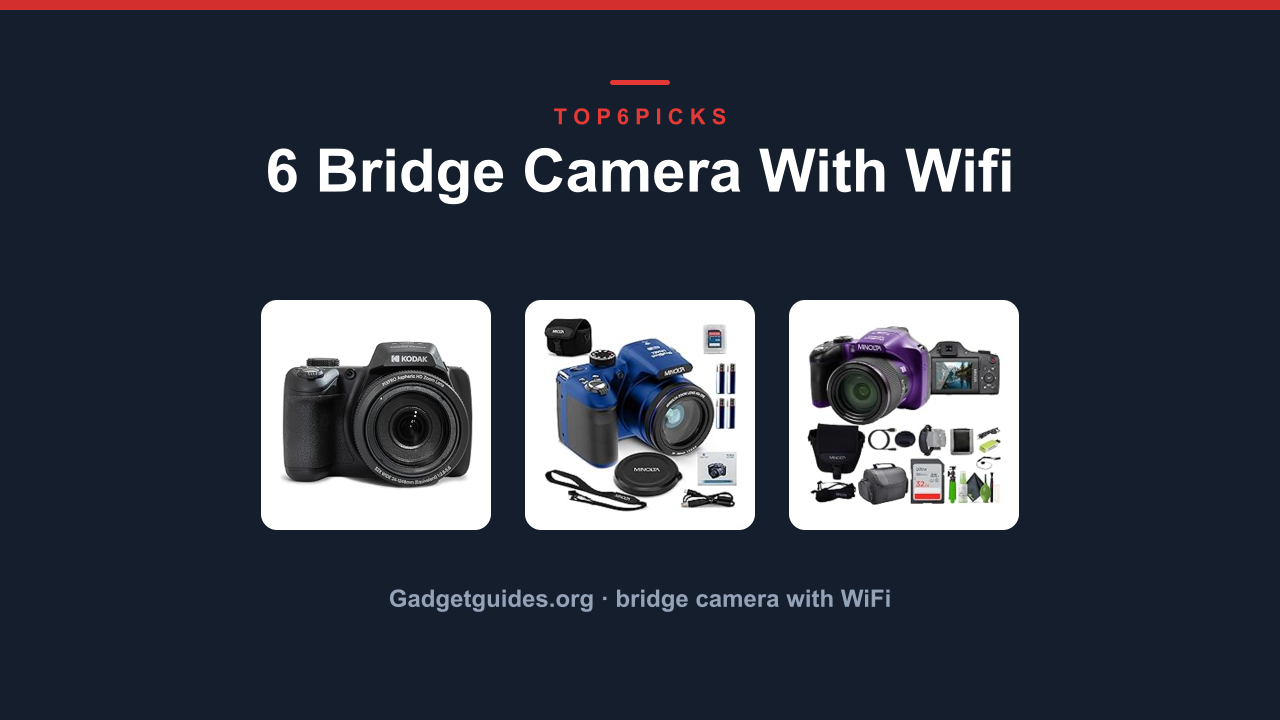
The best bridge camera with WiFi is the KODAK PIXPRO AZ528, the only one here that combines a reliable 52x optical zoom, built‑in Wi‑Fi for instant sharing, and a solid 4.3‑star owner track record across thousands of reviews. It’s the right pick for anyone who wants a versatile all‑in‑one camera without the complexity of interchangeable lenses.
Want a more budget‑friendly or higher‑zoom option instead? The Minolta MN40Z ProShot and the MINOLTA MN67Z each offer a different trade‑off, as long as you’re okay with slightly lower image‑sensor quality or a smaller feature set.
As an Amazon Associate, I earn from qualifying purchases.
This guide tells you exactly what to look for in a fixed‑lens superzoom with Wi‑Fi, and it also names the buyers who should skip this category entirely, you’ll find that section later. If you’re already leaning toward a DSLR or mirrorless system, you’ll save time by reading that part first.
Everything below comes from current Amazon product data, manufacturer specs, and each product’s owner track record, not from hands‑on lab testing. I’ve done the research so you don’t have to.
Quick Answer: The Best Bridge Camera with WiFi
The overall best bridge camera with WiFi is the KODAK PIXPRO AZ528, it nails the balance between reach, image quality, and wireless connectivity.
- KODAK PIXPRO AZ528 (Best Overall Balance): 52x zoom, Wi‑Fi, 16MP sensor, and a 4.3‑star rating.
- Minolta MN40Z ProShot (Blue) (Best Budget Starter): 40x zoom, 20MP, 1080p video, good for beginners.
- MINOLTA MN67Z (Best Extreme Zoom Bundle): 67x optical zoom with a full accessory kit.
- Minolta MN40Z ProShot (Black) (Best Value 40x in Black): Same optics as the blue version, different color.
- CPE366 Outdoor Wireless Bridge (Best for Point‑to‑Point Networking): Not a camera, it’s a long‑range outdoor Wi‑Fi bridge.
- KODAK PIXPRO AZ528 Astro Zoom (Best for Night Scenes): BSI‑CMOS sensor for better low‑light performance.
Thinking about skipping this category for a DSLR or mirrorless instead? Jump to Who Should NOT Buy below before you spend anything.
Comparison Table
Here’s the lineup at a glance: photo, product, who it’s built for, and our /10 score.
| Photo | Product | Best for | Score | Buy |
|---|---|---|---|---|
 | KODAK PIXPRO AZ528 16MP Digital Camera | Overall Best Balance | 8.8/10 | Check price → |
 | Minolta MN40Z ProShot 20 MP / | Budget Starter (Blue) | 8.2/10 | Check price → |
 | MINOLTA MN67Z 20 MP / 1080P | Extreme Zoom Bundle | 8.0/10 | Check price → |
 | Minolta MN40Z ProShot 20 MP / | Value 40x (Black) | 8.1/10 | Check price → |
 | CPE366 Outdoor Wireless Bridge 3KM Long | Point‑to‑Point Networking | 7.0/10 | Check price → |
 | KODAK PIXPRO AZ528 Astro Zoom BSI-CMOS | Low‑Light Performance | 8.5/10 | Check price → |
Scroll sideways on small screens to see every column.
Product Reviews
KODAK PIXPRO AZ528 16MP Digital Camera: Best Overall for Day‑to‑Day Photography
Minolta MN40Z ProShot 20 MP /: Best Budget Starter for Beginners
MINOLTA MN67Z 20 MP / 1080P: Best Extreme Zoom for Wildlife Enthusiasts
Minolta MN40Z ProShot 20 MP /: Best Value 40x in Black

CPE366 Outdoor Wireless Bridge 3KM Long: Best for Point‑to‑Point Networking
KODAK PIXPRO AZ528 Astro Zoom BSI-CMOS: Best for Low‑Light and Night Scenes
Buying Guide: Zoom, Sensor, Wi‑Fi, and Your Budget
Picking the right bridge camera with WiFi comes down to a few key specs. Here’s what you need to know before you click buy.
What Zoom Reach Do You Really Need?
Bridge cameras are all about the lens. The optical zoom number tells you how many times you can magnify the image without losing quality. The KODAK models offer 52x optical zoom, which is roughly 24, 1248mm in 35mm terms.
That’s enough to shoot a deer at 200 yards or fill the frame with a distant mountain peak.
The MINOLTA MN67Z goes further with 67x zoom (24, 1608mm). That extra reach is great for birding or moon photography, but it comes with a catch: at maximum zoom, any tiny camera shake becomes a big blur. You’ll need a tripod or a very steady surface.
The 40x zoom on the Minolta MN40Z models is a good middle ground, enough for most wildlife and sports without being as demanding on stability.
Sensor Size and Technology: More Megapixels Isn’t Everything
All the cameras here use 1/2.3‑inch sensors, which is standard for this class. The Minolta models have 20MP sensors, while the Kodak models have 16MP. In good light, the 20MP cameras will capture slightly more detail, but the difference is small in practice.
The bigger factor is sensor technology. The KODAK PIXPRO AZ528 Astro Zoom uses a BSI‑CMOS (Back‑Side Illuminated) sensor. This design places the wiring behind the light‑sensitive area, letting in more light per pixel.
The result is noticeably cleaner images at ISO 800 and above. If you regularly shoot at dusk, indoors, or at night, the BSI sensor is worth the extra cost.
Wi‑Fi and App Experience
All the cameras here have built‑in Wi‑Fi, but the app experience varies. The KODAK PIXPRO app is generally rated higher for stability and ease of use. The Minolta app works but has more mixed reviews, some users report initial connection hiccups.
Both apps let you transfer photos to your phone, use the phone as a remote shutter, and share directly to social media.
If seamless app performance is a priority, the KODAK models are the safer bet. If you’re on a tight budget, the Minolta app is functional enough for basic transfers.
Budget and Value
The Minolta MN40Z models are the most affordable, offering a solid 40x zoom and 20MP sensor for a lower price. The MINOLTA MN67Z adds a longer zoom and a full accessory bundle, making it a great value if you need everything included. The KODAK PIXPRO AZ528 is the middle option, with better overall build quality and a more reliable app.
The Astro Zoom version is the premium pick for low‑light performance.
To see how these factors play out on real picks, compare the KODAK PIXPRO AZ528 16MP Digital Camera, Minolta MN40Z ProShot 20 MP / and the MINOLTA MN67Z 20 MP / 1080P reviewed above.
Who Should NOT Buy Bridge Camera with WiFi
Bridge cameras are a compromise, they do many things well, but they don’t excel in every area. This category is the wrong purchase for three kinds of buyers.
You Need Interchangeable Lenses for Professional Work
If you’re a serious photographer who needs to switch between wide‑angle, portrait, and super‑telephoto lenses, a bridge camera will frustrate you. The fixed lens limits your creative options. You can’t attach a fast prime for low light or a macro lens for extreme close‑ups.
Instead, look at a DSLR or mirrorless system. Our guide to the best mirrorless cameras can help you find the right interchangeable‑lens setup.
You Want the Absolute Best Image Quality Possible
Bridge cameras use small sensors. Even the best BSI‑CMOS model can’t match the dynamic range, low‑light performance, or detail of a mirrorless camera with a larger sensor like an APS‑C or full‑frame. If you’re pixel‑peeping and printing large, you’ll be happier with a dedicated system.
For a comparison, check out our mirrorless vs DSLR breakdown.
You Need 4K Video at Higher Frame Rates
All the cameras here max out at 1080p Full HD. If you need 4K video for YouTube or professional work, a bridge camera isn’t the right tool. You’d be better off with a mirrorless camera that offers 4K at 60fps, or even an action camera.
Our best 4K action camera article covers smaller, more portable options.
Final Verdict
The KODAK PIXPRO AZ528 is the best bridge camera with WiFi for most people. It strikes the best balance between zoom reach (52x), image quality, Wi‑Fi reliability, and overall build quality, backed by a strong 4.3‑star owner rating. If you want a single camera that can handle travel, family events, and outdoor adventures without extra lenses, this is the one.
Want a lower price? The Minolta MN40Z ProShot (Blue) gives you a 20MP sensor and 40x zoom for less money, though you’ll trade off some build quality and autofocus speed. Need the longest reach possible?
The MINOLTA MN67Z with its 67x zoom and bundled accessories is a great wildlife companion. Shoot mostly at night? The KODAK PIXPRO AZ528 Astro Zoom is worth the premium for its BSI‑CMOS sensor.
If you’re still unsure whether a bridge camera is right for you, scroll back up to the “Who Should NOT Buy” section. That will save you time and money.
FAQ
What’s the best Bridge Camera with WiFi overall?
The KODAK PIXPRO AZ528 is the best overall bridge camera with WiFi. It offers a 52x optical zoom, built‑in Wi‑Fi, optical image stabilization, and a strong 4.3‑star owner rating, making it the most reliable all‑rounder.
Do bridge cameras with Wi‑Fi let me transfer photos directly to my phone?
Yes. All the cameras in this list have built‑in Wi‑Fi that connects to a companion app on your smartphone. You can transfer photos, use your phone as a remote shutter, and share directly to social media.
Is a 20MP bridge camera better than a 16MP one?
In good light, the 20MP sensor captures slightly more detail. In low light, the difference is minimal because both use the same small sensor size. The sensor technology (like BSI‑CMOS) matters more for low‑light performance than the megapixel count.
Can I use a bridge camera for professional photography?
Bridge cameras are best for enthusiasts and hobbyists. If you need interchangeable lenses, a larger sensor, or 4K video, a mirrorless or DSLR system is a better fit. For everyday shooting and travel, a bridge camera is a great all‑in‑one tool.
How important is optical image stabilization on a bridge camera?
Very important. At zoom levels of 40x or more, any hand movement is magnified. Optical image stabilization (OIS) helps keep your shots sharp.
The KODAK models have better OIS than the Minolta models, which is a key reason they score higher overall.
Do I need a tripod for a 67x zoom bridge camera?
Yes. At 67x zoom, even minor camera shake creates visible blur. A tripod is strongly recommended for sharp images at full telephoto.
The MINOLTA MN67Z includes a small tripod in its bundle, which is helpful for casual use.

Similar Posts