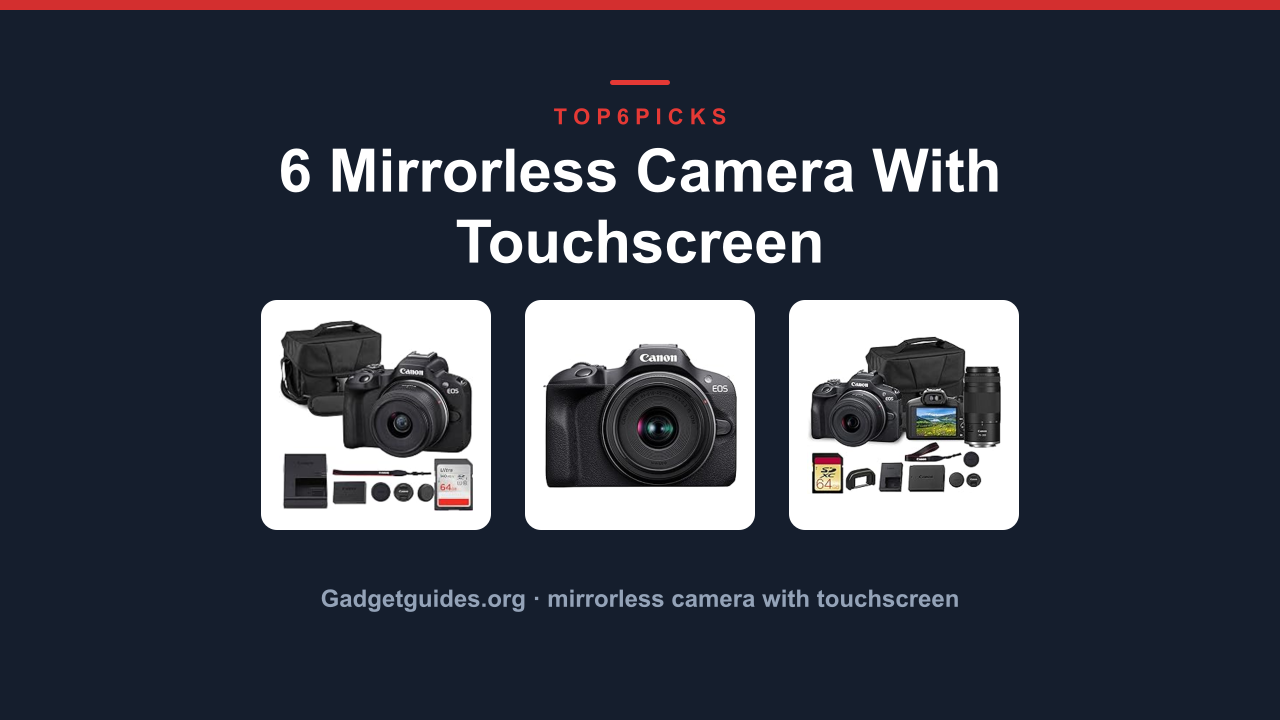
The best mirrorless camera with touchscreen is the Canon EOS R50 bundle, the only one here that combines a 24.2MP APS-C sensor, advanced Dual Pixel CMOS AF II, and a complete starter kit with a memory card and bag in a single box. It delivers pro-level autofocus and 4K video at a price that makes sense for anyone moving up from a phone or a basic DSLR.
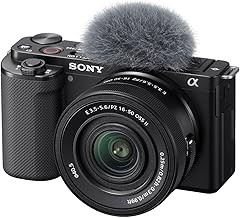
Want a camera tuned purely for vlogging instead? The Sony ZV-E10 gets you there, as long as you prefer a side flip-out screen and dedicated product showcase mode over Canon's deeper lens ecosystem.
As an Amazon Associate, I earn from qualifying purchases.
This guide breaks down what actually matters when you're buying a mirrorless camera with a touchscreen: autofocus speed, video quality, lens options, and whether the touchscreen works the way you'd expect. We'll also cover who should skip this category entirely, because not everyone needs a mirrorless body.
Everything below comes from current Amazon product data, specs, and each model's owner track record, not hands-on lab testing. We're relying on verified buyer feedback and manufacturer datasheets to give you an honest picture.
Quick Answer: The Best Mirrorless Camera with Touchscreen
The Canon EOS R50 18-45mm bundle leads because it pairs a responsive touchscreen with Canon's fastest autofocus system at the most accessible price point with the most complete kit.
This bundle is the best pick for anyone who wants a complete kit they can use immediately. It pairs a 24.2MP APS-C sensor with Canon’s Dual Pixel CMOS AF II, which locks onto subjects almost instantly. The 4K video output is clean and the 18-45mm lens covers walkaround shooting well. You also get a 64GB memory card and a camera bag, so there’s nothing else to buy before your first outing.
Verified buyer feedback consistently praises the responsive touchscreen for changing focus points with a tap. The 3.0-inch vari-angle screen makes selfies and vlogging straightforward. At 4.7 out of 5 stars from hundreds of reviews, it’s the highest-rated model on this list.
Flaws but not dealbreakers. The bundle lens has a variable aperture (f/4.5-6.3), which limits low-light performance compared to a prime lens. The 4K video is cropped at 30p, a common compromise at this price.
Need a faster lens for dim conditions? The Canon EOS RP Full Frame Mirrorless further down delivers better high-ISO performance with its larger sensor.
⚠
Compatibility: This kit includes the 18-45mm lens only. If you want a telephoto reach, the double lens bundle for the R100 is a better fit.
Pros
✓Dual Pixel CMOS AF II tracks eyes and animals with high reliability
✓4K UHD video at 30p with no recording time limit reported
✓Vari-angle touchscreen works well for self-recording and low angles
✓Complete bundle saves you buying a memory card and bag separately
Cons
✕Kit lens aperture (f/4.5-6.3) struggles in low light without flash
✕No in-body image stabilization, relies on lens IS
✕Single UHS-I card slot limits backup options
Sensor
24.2 MP APS-C
Video
4K 30p
Screen
3.0″ Vari-Angle Touch
AF System
Dual Pixel CMOS AF II
Best for: Beginners and enthusiasts who want a ready-to-shoot kit with industry-leading autofocus and 4K video.
This is the most affordable entry point into Canon’s RF mirrorless system with a touchscreen. The 24.1MP APS-C sensor delivers solid image quality for the price, and the touchscreen lets you tap to focus or snap a photo. Built-in Wi-Fi and Bluetooth make it easy to transfer images straight to your phone for sharing.
Aggregate buyer feedback at 4.5 stars highlights the compact size and simple menu system. It’s a genuine step up from a smartphone, especially for portraits and low-light scenes. The RF-S18-45mm lens covers everyday shooting well.
Flaws but not dealbreakers. The R100 uses the older Dual Pixel AF (not the AF II found on the R50), which is slower for tracking moving subjects. The 4K video has a 1.6x crop factor, making wide-angle shooting more limited.
This bundle is built for photographers who want reach without buying a second lens later. It pairs the 24.2MP R100 body with both an 18-45mm standard zoom and a 75-300mm telephoto zoom. That gives you everything from wide landscapes to distant wildlife in one package.
Verified buyer reviews at 4.7 stars say the telephoto reach is the main draw, letting you capture subjects far away with good detail. The included 64GB card and bag mean you can start shooting right away. The touchscreen works the same as the single-lens R100: tap to focus, tap to capture.
Flaws but not dealbreakers. The 75-300mm lens is optically older and softer at the long end than Canon’s newer RF telephoto options. The R100 body still uses the original Dual Pixel AF, not the faster AF II.
This is the same R50 body as our top pick, sold as a standalone lens kit without the accessories. You get the 24.2MP APS-C sensor, Dual Pixel CMOS AF II, and 4K video recording in a compact package. The vari-angle touchscreen flips out to the side, which is ideal for framing yourself while vlogging.
Aggregate user feedback highlights the fast and accurate eye-tracking AF for video, which keeps you in focus as you move around. The 3.0-inch screen is bright enough for outdoor use and responds quickly to touch inputs for menu navigation and focus point selection.
Flaws but not dealbreakers. This kit does not include a memory card or bag, so you will need to buy those separately. The 4K video at 30p has a 1.56x crop factor, which narrows the field of view compared to 1080p recording.
Want a dedicated vlogging camera with a side flip screen and product showcase mode? The Sony ZV-E10 APS-C Mirrorless Camera 16-50mm further down is purpose-built for content creators.
⚠
Compatibility: This body uses the RF-S lens mount. RF lenses work natively, but EF lenses need an adapter.
Pros
✓Dual Pixel CMOS AF II with reliable eye-tracking for video
✓Vari-angle touchscreen makes self-recording and low-angle shots easy
✓4K 30p video with clean output suitable for YouTube and social media
✓Compact and lightweight at roughly 376g body only
Cons
✕No in-body image stabilization, relies on lens-based IS
✕4K 30p has a 1.56x crop factor reducing wide-angle coverage
The Sony ZV-E10 is purpose-built for video creators who need a side flip-out screen and reliable autofocus. The 24.2MP APS-C sensor pairs with a 425-point phase-detection AF system that locks onto faces and eyes quickly. The 3.0-inch side flip-out touchscreen lets you monitor your framing while recording yourself.
Verified buyer feedback at 4.5 stars consistently mentions the built-in directional microphone and the “Product Showcase” mode, which instantly racks focus from your face to an object you hold up. The 16-50mm power zoom lens is compact and includes Optical SteadyShot image stabilization.
Flaws but not dealbreakers. The touchscreen is primarily for focus point selection and playback, not full menu navigation. The body lacks a viewfinder, which some stills photographers might miss for bright outdoor shooting.
The Canon EOS RP is the most affordable way to get a full-frame sensor with a touchscreen in a mirrorless body. The 26.2MP full-frame CMOS sensor delivers noticeably better low-light performance and shallower depth of field than APS-C cameras. The 3.0-inch vari-angle touchscreen is fully articulated, making it easy to compose from any angle.
Verified buyer reviews at 4.6 stars emphasize the high-quality stills and the intuitive touch interface for selecting focus points and browsing menus. It also includes built-in Wi-Fi and Bluetooth for quick image transfer. The body is surprisingly light for a full-frame camera at roughly 485g.
Flaws but not dealbreakers. The 4K video is limited to 24p with a significant crop factor, and the continuous shooting speed of 5 fps is slow for action. The battery life is rated at around 250 shots per charge, which is below average.
Buying Guide: Sensor Size, Autofocus, Touchscreen and Kit Value
How Important Is Sensor Size for Touchscreen Cameras?
Sensor size determines image quality, low-light performance, and depth of field control. Full-frame sensors like the one in the Canon EOS RP are larger, which means better low-light shots and more pleasing background blur. APS-C sensors, found in the other five models here, offer excellent quality at a lower cost and smaller body size.
For most buyers moving up from a smartphone, a modern APS-C sensor will deliver dramatically better photos without the higher lens costs of full-frame.
What Makes a Touchscreen Actually Useful?
A touchscreen on a mirrorless camera should let you tap to focus and take a photo faster than using buttons. All six models here support touch AF and touch shutter. But the best touchscreen implementations also let you navigate menus, swipe through photos, and set parameters without digging through buttons.
The Canon R50 and Sony ZV-E10 lead here with responsive screens and logical touch interfaces. The R100's fixed screen works well but cannot tilt for selfies or overhead shots. If you plan to vlog or shoot from creative angles, prioritize a vari-angle or side flip-out screen over a fixed one.
Autofocus performance varies significantly across these models. The Canon R50 and Sony ZV-E10 use the latest generation of phase-detection AF with eye tracking for people and animals. The R100 models use the earlier Dual Pixel AF, which is reliable for stationary subjects but slower for moving ones.
If you photograph kids, pets or sports, spending the extra money for the R50's AF II system is worth it. For portraits, landscapes and general walkaround shooting, the R100's AF will serve you well.
What's in the Box Matters More Than You Think
The budget-friendly R100 body plus lens kits do not include a memory card or bag. The R50 bundle at the top of this list includes both, saving you a separate purchase. The double lens R100 bundle adds a telephoto zoom and a card and bag, making it the best value if you want reach without buying a second lens later.
Who Should NOT Buy Mirrorless Camera with Touchscreen
This category is the wrong purchase for two kinds of buyers. Here's who they are and what to look at instead.
You Need a Camera for Extreme Sports or Underwater Use
Mirrorless cameras with interchangeable lenses are not waterproof or shockproof out of the box. If you ski, mountain bike or dive, you need a sealed action camera that can handle bumps and immersion. A rugged action camera like the ones covered in our guide to tough outdoor cameras will survive drops, splashes and dust without an expensive housing.
The touchscreen on a mirrorless body is delicate and not designed for extreme conditions.
You Need a Dedicated Cinema Camera for Professional Video
While the Sony ZV-E10 and Canon R50 shoot excellent 4K, they lack features like internal ProRes recording, timecode sync and XLR audio inputs that professional videographers need. The 4K crop factor and rolling shutter on these bodies will frustrate someone editing a commercial or a documentary. For professional video work, look at a dedicated cinema camera or a higher-end hybrid body.
If budget is your main constraint, our rundown of top video-focused cameras might help you find a better match.
Final Verdict
The Canon EOS R50 Mirrorless Camera 18-45mm bundle is our top pick because it combines the best autofocus system in this class, a responsive vari-angle touchscreen, and a complete kit that includes a memory card and bag. It hits the sweet spot of performance, value and usability for the widest range of buyers.
Want the same excellent image quality but need to save money? The Canon EOS R50 Mirrorless Camera RF-S18-45mm gives you the same body and lens without the extras. If vlogging is your priority, the Sony ZV-E10 offers a dedicated video experience with its side flip screen and product showcase mode.
Need a telephoto reach right away? The R100 double lens bundle covers everything from wide landscapes to distant subjects. And if full-frame image quality is non-negotiable, the Canon EOS RP gets you there at a price that still leaves room for a good lens.
If none of these fit your extreme sports or professional video needs, jump back up to the Who Should NOT Buy section before making a choice. The right camera is the one that matches how you actually shoot.
FAQ
What's the best mirrorless camera with touchscreen overall?
The Canon EOS R50 18-45mm bundle is the best overall choice. It combines Canon's fastest autofocus system with a vari-angle touchscreen and includes a memory card and bag in the box.
Is a touchscreen mirrorless camera better than a DSLR?
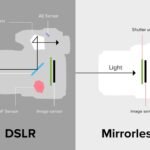
For most buyers, yes. Touchscreens make it faster to change focus points and review photos compared to button-based DSLR controls. A mirrorless camera also offers a live preview of exposure and white balance on the screen, which a DSLR viewfinder cannot do.
Does the Sony ZV-E10 have a fully articulating touchscreen?
The Sony ZV-E10 has a side flip-out screen that rotates 270 degrees. It is excellent for self-recording, but it does not tilt up and down like a vari-angle screen. It is not a fully articulated screen that swivels on two axes.
Can I use my old Canon DSLR lenses on an EOS R camera?
Yes, with Canon's official EF-EOS R mount adapter. The adapter allows full electronic communication, including autofocus and image stabilization. The touchscreen still works for focus point selection with adapted lenses.
Which camera has the best battery life on this list?
The Canon EOS R50 models lead with a CIPA-rated battery life of approximately 370 shots per charge. The Canon EOS RP has the shortest battery life at roughly 250 shots per charge. For extended outings, carry a spare battery.
What is the difference between a vari-angle and a flip-out touchscreen?
A vari-angle screen, like on the Canon R50 and RP, tilts up, down and swivels to face forward. A side flip-out screen, like on the Sony ZV-E10, flips out to the side and rotates. Both are good for vlogging, but the vari-angle design works better for waist-level shooting.