5 Best Portable AI Translators: Top Picks For Travel
The best portable AI translators make travel, work, and language practice faster, easier, and less stressful.
Picture arriving at a busy airport where every sign feels unfamiliar. Then imagine meeting a client, asking for help, or ordering food without finding the right words. A portable AI translator can act like a small bridge between you and another language. The best portable AI translators are light, quick to use, and useful on trips, at work, or during daily practice. I focused on ease of use, language support, wearable comfort, battery needs, and real-world value in the products below.

SHAPERME Smart AI Wearable Translator,…
Real-Time 160+-Language Translation Instant two-waytranslation between Mexican Spanish & English with 0.5s lowlatency, perfect for restaurant, retail, hotel and dailycommunication.Breaks language barriers at work and lifeseamlessly. As a portable Bluetooth…

AI Translation Earbuds Real Time…
Supports 164 Languages Worldwide: Powered by cutting-edge AI translation technology, these translator earbuds real time support translation in 164 languages including English, Spanish, German, Italian, French, Japanese, Chinese, and more….

Sakerplus AI Real Time Language…
100+ LANGUAGES & DIALECTS FOR DAILY PRACTICE – When memorized vocabulary is difficult to use in a real conversation, this Sakerplus AI language practice companion supports more than 100 languages…
SHAPERME Smart AI Wearable Translator

The SHAPERME Smart AI Wearable Translator is built for people who want translation close at hand without holding a phone all day. Its listing highlights support for more than 160 languages, plus a focus on Spanish and English practice. The wearable format may feel more natural during a walk, a lesson, or a quick chat. I like this design because it aims to reduce the usual phone-handling steps.
This device also makes sense for travel and business use. A wearable translator can help keep both hands free while you carry luggage, read a map, or greet a customer. Its practice focus may appeal to learners who want help with words and short exchanges. As with most AI translators, results can depend on an internet connection, the companion app, speech clarity, and the language pair in use.
Pros:
- Supports a broad range of listed languages
- Wearable design keeps translation within easy reach
- Useful for Spanish and English practice
- Hands-free format may feel less awkward in public
- Suitable for travel, study, and business conversations
- Compact form can reduce the need to carry another large device
Cons:
- Some features may require a phone or companion app
- AI translation quality can vary by language and accent
- Wearable controls may take time to learn
AI Translation Earbuds With 164 Languages
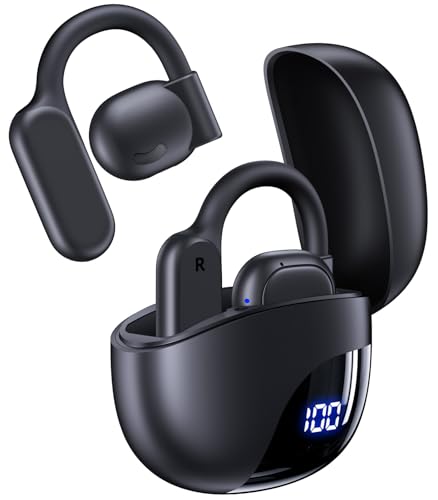
These AI translation earbuds combine language support with the familiar shape of wireless earphones. The product listing states real-time translation for 164 languages and up to 80 hours of playtime. That long playtime claim may be attractive to frequent travelers, although actual use can vary with volume, calls, translation mode, and charging habits. The black K08 design also looks simple enough for daily use.
Earbuds can be a good choice when you want a quiet and personal translation experience. They may work well in a meeting, on public transport, or during a guided tour. Bluetooth pairing and app setup will matter, so I would test the earbuds at home before a major trip. I would also check whether the target language needs online access and whether both speakers must share one earbud or use a specific conversation mode.
Pros:
- Earbud form is familiar to most smartphone users
- Listing advertises support for 164 languages
- Long claimed playtime reduces frequent charging
- Can provide a more private listening experience
- Useful for travel, meetings, study, and casual conversation
- Wireless Bluetooth design avoids a cable between the earbuds and phone
Cons:
- Small earbuds can be easy to misplace
- Fit and comfort will vary from one listener to another
- Translation tools may depend on Bluetooth, an app, and internet access
Sakerplus AI Language Practice Companion
The Sakerplus AI Language Practice Companion takes a slightly different path. Instead of focusing only on quick travel translation, it highlights pronunciation, grammar, and conversation practice. The listing states support for more than 100 languages and calls out Spanish practice in particular. This makes it a strong fit for someone who wants to build skill rather than translate one isolated sentence.
I see value in a dedicated practice device because regular use can make language study feel less like homework. You can use it to rehearse a greeting, repeat a phrase, or work through a short dialogue. It may also help travelers prepare before they leave home. Still, no AI tool replaces a teacher, a fluent speaker, or careful review when a message involves legal, medical, or financial details.
Pros:
- Focuses on pronunciation, grammar, and conversation
- Supports more than 100 listed languages
- Useful for learners who want active practice
- Spanish practice makes it appealing for many beginners
- Portable design fits study sessions and travel bags
- Can help users prepare useful phrases before a trip
Cons:
- May offer less convenience for fully hands-free use
- Advanced functions may rely on an app or network connection
- AI feedback should not be treated as perfect language instruction
AI Wearable Translator for English and Spanish

This white AI wearable translator is aimed at English and Spanish voice translation. That focused language pair may be helpful for travelers, families, service workers, and learners who use these languages often. A smaller language focus can sometimes make a device easier to understand and operate. The wearable style also lets you start a conversation without constantly reaching for a phone.
I would consider this model for simple, repeated exchanges rather than complex business negotiations. It may help with directions, greetings, shopping, and basic questions. The white finish looks clean, but it may show marks more easily than a dark model. Before relying on it, I would confirm how it charges, how it pairs, and whether its translation mode works offline or needs a data connection.
Pros:
- Designed around English and Spanish voice translation
- Wearable format can support quick hands-free access
- Useful for common travel and daily conversations
- Simple language focus may suit beginners
- Light design should be easy to carry or wear
- Helpful for families and workplaces with English-Spanish needs
Cons:
- More limited language focus than broad multi-language models
- White exterior may need more care to stay clean
- Voice recognition may struggle with noise or fast speech
AI Real-Time Translation Earbuds

These AI real-time translation earbuds use Bluetooth 5.4 and a compact earphone design. They may suit shoppers who want one device for audio and language support. Because earbuds sit close to the ear, translated speech can feel more direct than reading a screen. The design is also easy to pack for a flight, train ride, conference, or day tour.
Bluetooth 5.4 can support a modern wireless connection, but the number alone does not guarantee perfect translation. The companion software, microphone quality, phone compatibility, and network signal still matter. I would test them with a friend and try more than one speaking speed before travel. For the best result, speak clearly, pause between ideas, and avoid placing the microphone under a scarf or heavy clothing.
Pros:
- Compact earbud design is easy to pack
- Bluetooth 5.4 supports a current wireless connection
- Can combine translation use with ordinary earbud listening
- Real-time format may help during fast travel moments
- Private audio can reduce the need to display every translation aloud
- Suitable for travelers who prefer a familiar earbud shape
Cons:
- Earbud fit may not work for every ear shape
- Small controls can be difficult while moving
- Translation performance may depend on the phone and network
My Recommendation
After comparing these five options, I would choose based on the way you plan to use the translator. The SHAPERME wearable model stands out for travelers and business users who want broad language coverage in a hands-free format. The 164-language translation earbuds make more sense for people who already enjoy wireless earbuds and want a private way to hear translated speech. The Sakerplus model is the better match for learners because it focuses on pronunciation, grammar, and conversation practice.
The English-Spanish wearable translator is a practical choice for users who need that pair often. It avoids the distraction of a phone and may feel simple for basic daily exchanges. The Bluetooth 5.4 earbuds suit users who want a small audio device that can fit into a normal tech kit. In my view, the best portable AI translators are not the ones with the biggest number on the box alone; they are the ones that match your language, comfort, connection, and daily habits.
| Best for | Why |
|---|---|
| Frequent travelers | SHAPERME offers a wearable design and broad listed language support. |
| Language learners | Sakerplus emphasizes pronunciation, grammar, and conversation practice. |
| Earbud users | The translation earbuds provide a familiar wireless listening format. |
How to Choose the Best Portable AI Translators
A translator can look impressive on a product page and still feel frustrating in daily use. I look past the language count first. A long list matters only if the device supports the language pair you need, recognizes natural speech, and gives useful output in the places where you plan to use it. A short, clear exchange in your target language is often more valuable than a long list of rarely used languages.
Language Support
Check both translation directions. Some products may list many languages but offer different features for each one. Voice translation, text translation, pronunciation help, and offline translation may not cover the same languages. If you need English to Spanish, confirm that both directions work before buying.
Also check regional speech. Spanish in Mexico, Spain, and parts of South America can sound different. The same applies to English accents from the United States, the United Kingdom, Australia, and other regions. AI systems improve all the time, but clear speech still gives better results.
Online and Offline Use
Many AI translation tools use cloud software. That means your voice may travel through a phone or online service before the device shows or speaks the result. A strong Wi-Fi or mobile data signal can help. A weak signal may slow the reply or stop the feature.
Offline support can be very useful in airports, rural areas, ships, and foreign cities where roaming costs are high. However, offline language packs may support fewer languages and fewer features. Read the current product details and app notes before assuming that offline translation is included.
Microphone and Speaker Quality
Good translation starts with good sound. A device must hear your words over traffic, music, wind, and nearby voices. Earbuds and wearables can work well in quiet settings, but no small microphone can remove every loud background sound.
I recommend speaking in short phrases. Avoid slang when accuracy matters. Pause after each idea so the system has a clean audio sample. This small habit can make a larger difference than many buyers expect.
Wearable Versus Handheld Design
Wearable translators keep your hands free. That helps when you carry bags, take photos, use a passport, or move through a crowded station. They can also feel less formal than holding a phone between two people.
Earbuds offer private listening, but they need a secure and comfortable fit. A handheld or phone-based translator may provide a larger screen and easier text review. Think about your normal day. The best portable AI translators should remove effort, not add another device you must manage.
Battery and Charging
Battery claims often describe ideal playback conditions. Translation, Bluetooth, bright screens, microphones, and mobile connections may use power at different rates. Long playtime is helpful, but I still recommend carrying a charging cable or compact power bank on long trips.
Look for a case or charging system that fits your routine. Earbuds often recharge inside their case. A wearable device may use a separate cable. Before travel, charge the device, update its app, and test the full translation process.
Privacy and Personal Data
Voice translation can involve personal information. Do not speak passwords, bank details, passport numbers, or private medical information into an AI tool unless you understand how the service handles that data. Review the app permissions and privacy policy when available.
Privacy rules differ by country and service. A device that processes speech online may have different data practices from one that works offline. This does not make cloud translation bad, but it does make informed use important. I treat a portable translator like any connected microphone: useful, but worth using with care.
Ease of Setup
A good translator should not require a long lesson every time you use it. Check whether the product needs an app, an account, Bluetooth pairing, or a subscription. These details can affect the real cost and the time needed before your first conversation.
I suggest setting up the translator before leaving home. Test the microphone, speaker, language pair, charging method, and app permissions. Try a short conversation with a friend. This simple test can expose pairing problems before they become travel problems.
Who Should Buy a Portable AI Translator?
Travelers are the clearest audience. A translator can help with directions, menus, hotel questions, train tickets, and simple social moments. It cannot replace common sense or a human interpreter in high-risk situations, but it can lower the stress of everyday communication.
Students and language learners can also benefit. Practice devices can help users repeat phrases and hear a model pronunciation. They work best as a daily aid. Ten minutes of regular practice may teach more than one long session before a trip.
Business users may find value during casual meetings and early conversations. A translator can help both sides exchange basic ideas while they decide whether they need a professional interpreter. For contracts, safety instructions, medical topics, and legal matters, use a qualified human translator.
Families may appreciate a translator when relatives speak different languages. A wearable device or earbuds can make short exchanges easier. Still, the family should agree on how to use the device and avoid treating every AI result as exact.
Tips for Better Translation Results
Start with short sentences. “Where is the train station?” is easier for an AI system to process than a long sentence with several questions. Speak at a steady pace. Do not shout unless the other person truly cannot hear you, because loud speech can distort the microphone.
Use common words when accuracy matters. Humor, idioms, local slang, and wordplay can confuse machine translation. If a result sounds strange, say the idea again in a simpler way. You can also ask the listener to confirm the meaning.
Keep the microphone clear. Do not cover it with your hand or clothing. Move away from loud fans and engines when possible. In a crowded place, face the device toward the speaker and take turns talking.
Download updates before a trip. Apps may improve language models, fix bugs, or add compatibility support. But avoid updating for the first time at the airport. Test the new version at home and keep any needed language packs ready.
Portable AI Translator Versus a Phone App
A phone app is often the cheapest way to start. Most people already carry a smartphone, and many translation apps offer text, speech, camera, and conversation tools. A phone also has a larger screen for checking spelling and reading signs.
A dedicated translator can still offer comfort and speed. It may have a simpler purpose, better access to a microphone, or a hands-free form. Earbuds can make replies feel more private. A wearable can reduce the need to unlock your phone during every exchange.
The better choice depends on your habits. If you translate only once in a while, an app may be enough. If you travel often, study daily, or need quick speech translation, a dedicated device may earn its place in your bag. Compare the full cost, including possible app fees and mobile data.
Are AI Translators Accurate Enough?
AI translators can handle many everyday phrases well. They are often useful for travel needs and simple conversations. Accuracy can fall with noise, poor speech, rare terms, strong accents, mixed languages, and unclear sentence structure.
Context also matters. One word can have several meanings. A machine may choose the wrong one if it does not understand the situation. I always repeat important details and ask for confirmation when a mistake could cause harm.
For medical care, legal documents, immigration matters, safety work, and financial agreements, use a qualified human interpreter or translator. Portable AI translators are helpful tools, but they are not a substitute for expert judgment.
FAQs Of Best Portable AI Translators
Do portable AI translators need internet access?
Many models use a phone app and an online service for speech translation. Some may offer offline language packs, but offline features can be more limited. Check the product page and app information for the exact language pair you need.
Are translation earbuds better than a wearable translator?
Neither design is best for everyone. Earbuds suit people who want private audio and already like wireless earphones. Wearable translators suit users who want quick access while keeping their ears open.
Can these devices translate every language equally well?
No. Language quality can vary by language pair, accent, noise level, and network connection. A device may support many languages but provide its strongest results in common language pairs.
Can I use an AI translator for medical or legal communication?
You should not rely on an AI translator alone for high-risk communication. Use a qualified interpreter for medical, legal, financial, immigration, and safety matters. These devices work best for basic, low-risk exchanges.
What should I test before taking a translator abroad?
Test charging, Bluetooth pairing, the app, microphone, speaker, language settings, and offline options. Try a short conversation in a quiet room and a noisy room. Carry a backup translation app if the device needs a network connection.
Final Verdict: Which Should You Buy?
For most travelers, I would start with the SHAPERME wearable translator because it combines broad listed language support with a hands-free design. Choose Sakerplus for focused language practice, or translation earbuds for private audio and familiar wireless use.
The best portable AI translators can make daily travel and study feel less intimidating. Pick the model that fits your language, connection, comfort, and routine, then test it before you leave home.