Can AI Translation Devices Translate Voice: How It Works
Yes, AI translation devices can translate voice by converting speech into text, meaning, and spoken output.
The answer to “can AI translation devices translate voice” is clearly yes, but the process is more advanced than simple word swapping. These devices listen to speech, identify the language, understand context, translate the message, and play or display the result. This guide explains how voice translation works, what these devices can do well, where they fail, and how to choose one with confidence.
How Do AI Translation Devices Translate Voice?
AI translation devices use several systems at once. Think of them as a small team working together inside one device. One system listens, another reads the speech, a third translates it, and a fourth speaks or displays the answer.
The usual process has four steps:
- Speech recognition captures the speaker’s voice.
- Language processing turns speech into written words.
- Machine translation changes the words into another language.
- Text to speech reads the translated message aloud.
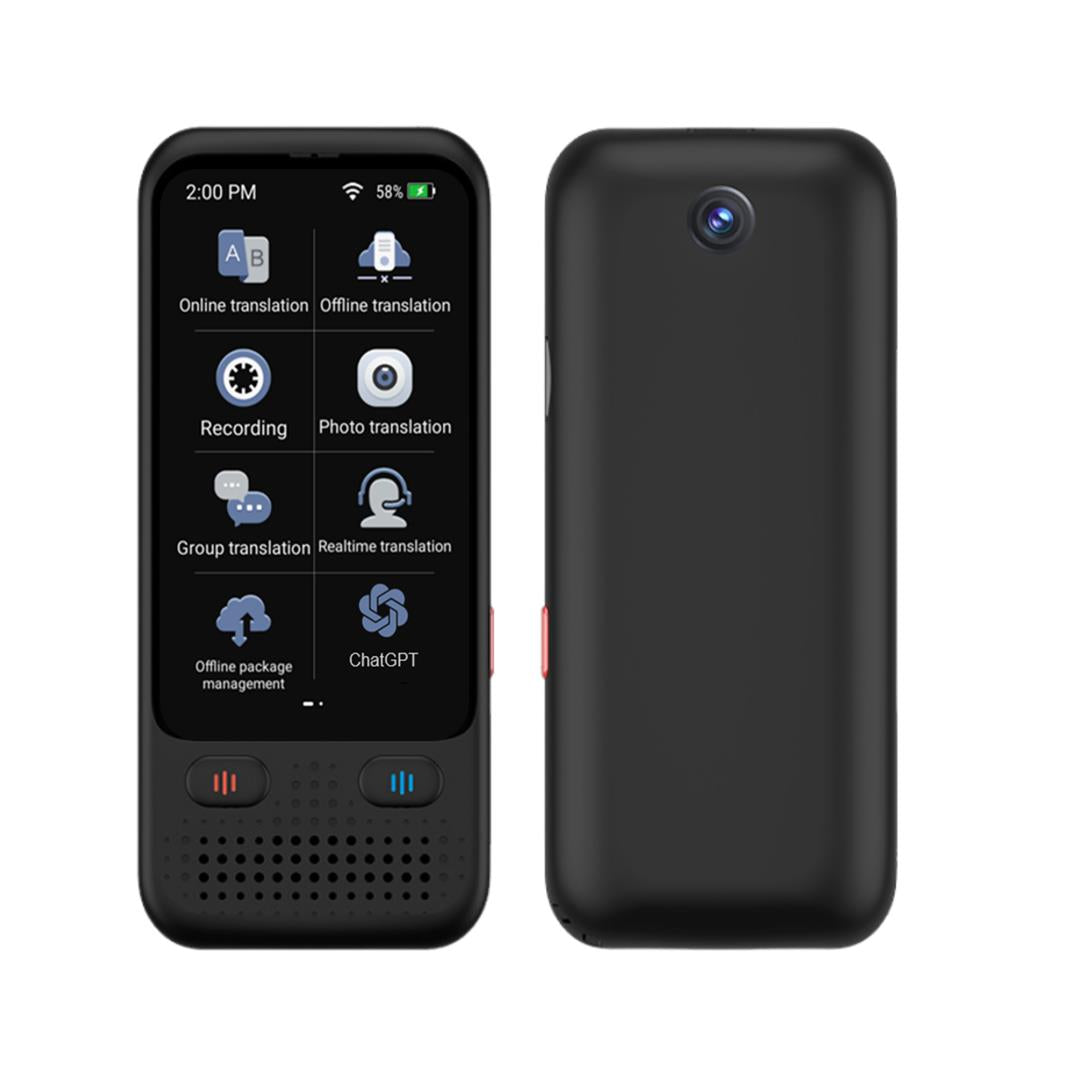
This process happens within seconds on many modern devices. Some products use cloud servers for better accuracy, while others offer offline language packs for travel in places with weak internet access.
The answer to “can AI translation devices translate voice” depends on how well each part of this chain works. A strong microphone, a good speech model, and a reliable translation engine all matter.
What Technology Powers Voice Translation?
Voice translation is built on artificial intelligence, machine learning, and natural language processing. These technologies help a device understand not only words, but also accents, pauses, speech patterns, and sentence structure.
Automatic speech recognition
Automatic speech recognition, or ASR, changes spoken language into text. It looks for sound patterns and matches them with likely words.
Modern ASR systems can handle many common accents. However, they may struggle with:
• Heavy background noise
• Very fast speech
• Strong regional accents
• Whispering or soft voices
• Several people speaking at once
• Unusual names and local slang
Neural machine translation
Neural machine translation uses large language models to predict the best translation for a full sentence. This is better than translating each word alone.
For example, the English phrase “It’s raining cats and dogs” should not be translated word for word. A good system recognizes that the phrase means heavy rain and chooses a natural phrase in the target language.
Text to speech
After translation, text to speech technology creates an audio response. Better devices use natural voices, correct pauses, and suitable pronunciation.
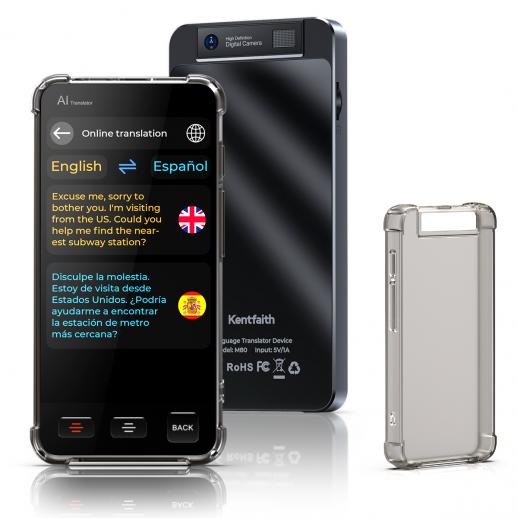
Some devices can also show the translated text on a screen. This helps when the audio is unclear or when you need to confirm names, prices, addresses, or medical terms.

Can AI Translation Devices Translate Live Conversations?
Yes, can AI translation devices translate voice during live conversations? Many can, especially when two people take turns speaking.
A typical conversation mode works like this:
- Person A speaks into the device.
- The device detects the source language.
- It translates the sentence.
- The device reads the translation to Person B.
- Person B responds in another language.
- The device repeats the process.
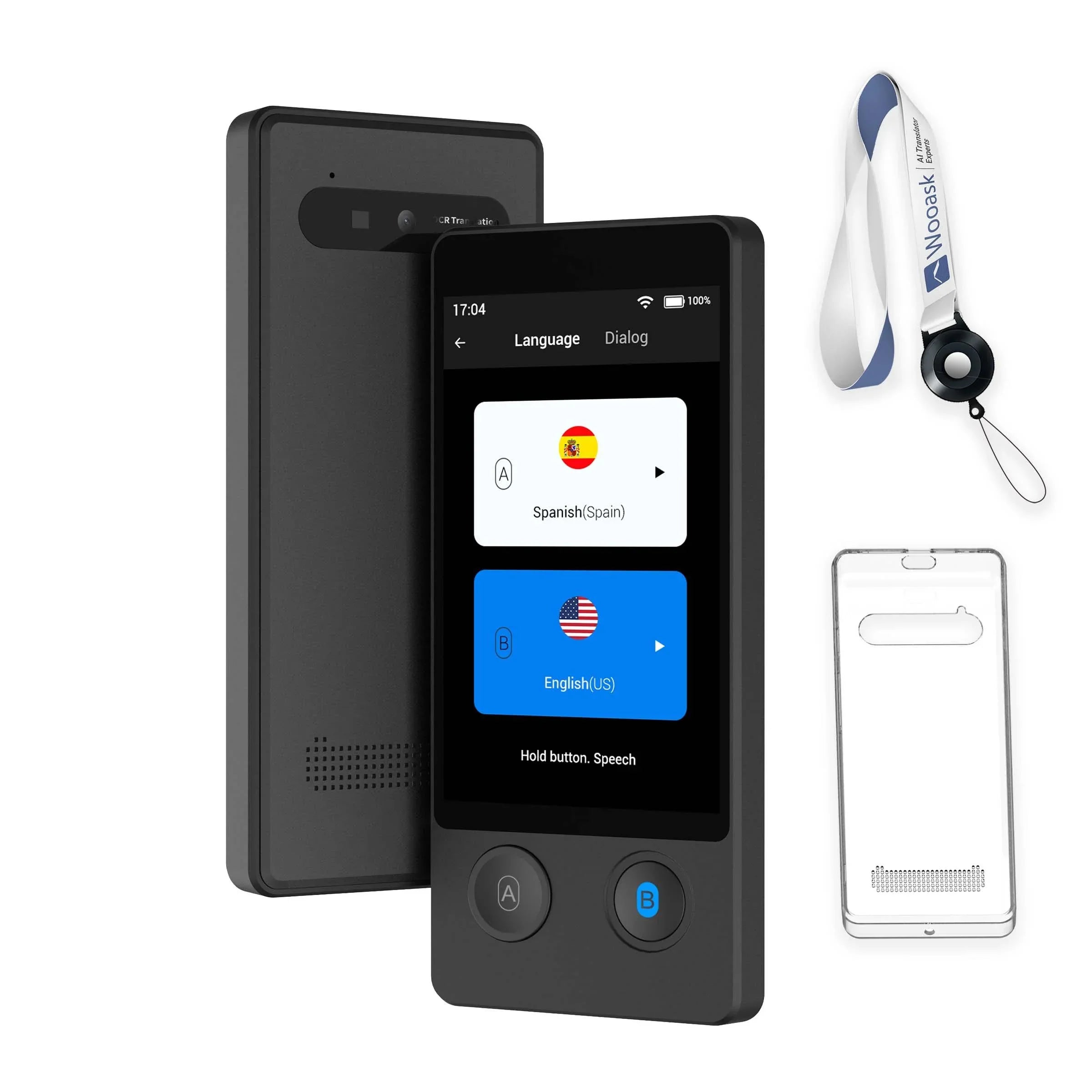
Some devices use a button. You press it while speaking, then release it when finished. Others use automatic speaker detection and switch between languages without manual control.
This feature can help during:
• Hotel check-ins
• Restaurant visits
• Taxi rides
• Business meetings
• Tourist tours
• Customer service calls
• Family conversations
• School or community events
Still, live translation is not the same as having a human interpreter. A short pause may occur between speakers. If both people talk at the same time, the device may capture only part of the conversation.

Can AI Translation Devices Translate Voice Without Internet?
Some can, but offline voice translation is usually more limited than online translation. An offline device stores language data on the device itself. It does not need to send your speech to a remote server.
Offline translation is useful when you are:
• Traveling without mobile data
• Flying or crossing borders
• Visiting rural areas
• Concerned about privacy
• Using a device with a limited data plan
The main trade-off is language coverage and accuracy. Offline packs may support fewer languages. They may also struggle with complex sentences, slang, and rare words.
Online systems often have access to larger databases and newer translation models. They can improve over time and may offer more accurate results. However, they need a stable connection, and some users may have privacy concerns about sending voice data to a cloud service.
Before buying a device, check whether offline support includes both speech recognition and spoken translation. Some products allow offline text translation but still need the internet for voice features.

How Accurate Are AI Voice Translation Devices?
The accuracy of AI voice translation devices varies. There is no single score that applies to every language, speaker, or situation.
Accuracy is often high for:
• Short, clear sentences
• Common languages
• Quiet rooms
• Standard accents
• Everyday travel phrases
• One speaker at a time
Accuracy may drop with:
• Idioms and jokes
• Medical or legal language
• Technical terms
• Local dialects
• Poor microphones
• Loud streets or airports
• Very fast speech
• Mixed-language sentences
A translation can be grammatically correct but still miss the speaker’s meaning. Tone can also be difficult. Sarcasm, politeness, humor, and emotion do not always move neatly from one language to another.
A useful rule is to treat the device as a helpful language bridge, not as a final authority. For a hotel booking, it may work very well. For a legal contract or medical diagnosis, use a qualified human interpreter.
Independent research on machine translation shows that performance differs by language pair. Translation between widely supported languages often performs better than translation involving less common languages or dialects.

What Are the Main Benefits of AI Voice Translation?
The biggest benefit is access. You do not need to speak a language well to ask for help, find a place, or start a simple conversation.
Faster communication
Voice translation is often quicker than typing each sentence into a phone app. You can speak naturally, wait for the result, and continue the conversation.
Better travel support
A translation device can help you ask about train times, food ingredients, directions, and local customs. It can reduce stress when you are tired or unsure of the right words.
More confidence
Many travelers avoid speaking because they fear making a mistake. A device gives them a safety net. Even a basic translated sentence can open the door to a friendly exchange.
Support for families
Families with different first languages can use conversation mode at home. This may help relatives, caregivers, and children understand one another more easily.
Accessibility
People who find typing difficult may prefer speaking. A voice translator can also display text, which gives users another way to follow a conversation.
The answer to “can AI translation devices translate voice” becomes especially valuable in these everyday moments. The device does not replace human connection. It helps make that connection possible.

What Are the Limitations of Voice Translation Devices?
AI translation devices are useful, but they are not magic. They can misunderstand a sentence in the same way a person can mishear someone in a busy room.
Common limitations include:
Noise interference
Traffic, music, wind, and crowds can confuse the microphone. Hold the device close to the speaker and face the microphone toward the person talking.
Turn-taking problems
Most devices work best when one person speaks at a time. Interruptions can create incomplete or mixed translations.
Context errors
The device may not know who “she,” “they,” or “that place” refers to. It may also misunderstand words with several meanings.
Cultural meaning
A literal translation can miss local manners or social meaning. A phrase that sounds polite in one language may sound too direct in another.
Battery and connection issues
Travel devices depend on power. Online devices may fail when the signal is weak. Carry a charger or power bank, and download offline language packs before leaving home.
Privacy concerns
Voice data may be processed on company servers. Read the privacy policy before using a device for personal, financial, medical, or workplace discussions.
These limits do not mean can AI translation devices translate voice is the wrong question. They show why you should match the device to the task.
How to Use an AI Voice Translator More Effectively
Good habits can improve results more than an expensive device. Clear speech often matters as much as the translation engine.
Use these practical tips:
- Speak in short sentences.
- Pause after each complete thought.
- Use common words instead of slang.
- Avoid speaking while another person is talking.
- Confirm important details on the screen.
- Repeat names, numbers, and dates slowly.
- Choose the correct source and target language.
- Use a quiet place when possible.
- Keep the microphone near the speaker.
- Download offline language packs before travel.
For example, instead of saying, “Could you possibly let me know if there’s any chance the last bus has already left?” say, “Has the last bus left?”
This is not about speaking like a robot. It is about giving the AI a clean signal. Short sentences act like clear road signs for the translation system.
A practical lesson from testing voice translation tools is simple: do not rush to fill the silence. People often speak again before the device finishes processing. That can cause missed words and confusing results.

How to Choose the Best AI Translation Device
When comparing products, look beyond the number of supported languages. A long language list may include text support but not voice support.
Check these features before you buy:
Voice language coverage
Confirm that the device supports spoken input and spoken output for the languages you need. Some languages may support text only.
Conversation mode
Look for two-way conversation features. A one-way translator may be enough for directions, but not for a real discussion.
Offline support
Check which languages work without internet access. Also check whether offline mode supports speech, translation, and audio output.
Microphone quality
A good microphone helps in airports, markets, and busy streets. Noise reduction is a valuable feature.
Speaker quality
A weak speaker can make a correct translation hard to hear. Test the volume range if possible.
Battery life
A device that lasts all day is more useful than one that needs frequent charging. Consider standby time and active translation time.
Screen and text display
A screen lets you confirm the words. This is important for addresses, names, prices, and instructions.
Privacy controls
Review data storage, account needs, and cloud processing. Choose a product with clear privacy settings.
Cost and subscriptions
Some devices require a monthly plan for mobile data or premium language services. Include that cost in your budget.
The best answer to “can AI translation devices translate voice” is not enough by itself. You also need to ask whether a specific device can translate your languages, in your environment, at an acceptable speed.
AI Translation Devices vs. Phone Translation Apps
A phone app may provide many of the same features as a dedicated translation device. Both can use speech recognition, machine translation, and audio playback.
A dedicated device may be better when:
• You travel often
• You want a simple interface
• You need longer battery life
• You do not want to hand over your phone
• You prefer physical buttons
• You want a device made for conversation
A phone app may be better when:
• You want to spend less
• You need many extra tools
• You already carry a modern smartphone
• You need maps, cameras, and translation together
• You want frequent software updates
Phone microphones and mobile apps have improved greatly. In many casual situations, a phone is enough. A dedicated device becomes more attractive when ease of use, durability, and quick access matter most.
I have seen people buy a translator with a large language list, then discover that their most important language requires an internet connection. Check the exact feature table before purchase. Marketing labels can hide important limits.
Are AI Translation Devices Safe for Private Conversations?
The answer depends on how the device handles voice data. Some products process speech on the device. Others send recordings or speech data to cloud servers for analysis.
Before using a voice translator for sensitive content, review:
• Whether audio is stored
• How long data is kept
• Whether recordings are used to improve models
• Whether the company shares data
• Whether you can delete your information
• Whether the device supports offline processing
Avoid relying on consumer translation devices for confidential legal, financial, or medical information unless the provider clearly explains its security controls.
For workplace use, ask your organization’s privacy or information security team for approval. A convenient device should not create a hidden data risk.
Can AI Translation Devices Replace Human Interpreters?
No. AI translation devices can support simple communication, but they do not fully replace trained interpreters.
Human interpreters understand context, intent, emotion, culture, and sensitive details. They can ask questions when a phrase is unclear and notice when a speaker is confused.
Use a professional interpreter for:
• Medical appointments
• Court hearings
• Immigration interviews
• Legal agreements
• Mental health care
• High value business negotiations
• Emergency instructions
For travel and casual conversation, a device can be very helpful. For high-stakes communication, use AI as a support tool only, not as the final voice.
Frequently Asked Questions About Can AI Translation Devices Translate Voice
Can AI translation devices translate voice in real time?
Yes, many devices translate short spoken phrases within a few seconds. The speed depends on the device, internet connection, language pair, and background noise.
Do voice translation devices need Wi-Fi?
Not always. Some devices offer offline translation for selected languages, while others need Wi-Fi or mobile data for most voice features.
Can an AI translator understand accents?
Many systems understand common accents, but accuracy can fall with strong regional accents, unclear speech, or fast talking. Speaking slowly and using short sentences can improve results.
Can these devices translate both sides of a conversation?
Many models have two-way conversation mode. Each person speaks in their own language, and the device translates the message for the other person.
Are AI translation devices accurate enough for travel?
They are often accurate enough for directions, shopping, hotels, restaurants, and basic questions. Do not use them alone for medical, legal, or other high-risk communication.
Can a voice translator work offline?
Some can work offline after you download language packs. Offline mode usually supports fewer languages and may offer less accurate results than cloud-based translation.
Do AI translation devices record conversations?
Some devices process or store voice data, especially when they use cloud services. Check the privacy policy and device settings before discussing private information.
Conclusion
So, can AI translation devices translate voice? Yes, they can listen to speech, convert it into text, translate the meaning, and speak or display the result. They are useful for travel, daily conversations, and basic access across language barriers.
Their performance is strongest when speech is clear, sentences are short, and the setting is quiet. Internet access, language support, privacy rules, and context all affect the result. For important medical, legal, or financial discussions, a trained human interpreter remains the safer choice.
Before buying one, test the exact languages and features you need. Compare offline support, microphone quality, battery life, privacy controls, and total cost. Explore trusted translation tools, try a few sample conversations, and share your experience or questions in the comments.

Similar Posts