Best AI Drones: Top Smart Picks For 2026
The best AI drones blend smart flight tools, sharp cameras, safe control, and simple setup for new and skilled pilots.
You may want smooth travel videos, a quick family flight, or a drone that can follow a subject without constant stick work. Yet many models promise smart flight and deliver confusing apps, weak cameras, or poor battery life. I tested these picks by looking at control, camera use, safety tools, portability, and real-world value. This guide compares four strong options, from a beginner-friendly 1080p flyer to advanced 4K camera drones with AI tracking, gimbal support, and long flight time. It also explains what each model does well, where it falls short, and which pilot will get the most from it.

DCX Volo X EZ AI…
SMART TECH THAT FLIES FOR YOU: Our camera drone AI-assisted features like Follow Me and Obstacle Avoidance for beginners make it easy to capture smooth aerial shots; this 4k drone…

Potensic Atom 2 Fly More…
【𝐁𝐮𝐢𝐥𝐭-𝐢𝐧 𝟓.𝟓” 𝐅𝐇𝐃 𝐓𝐨𝐮𝐜𝐡𝐬𝐜𝐫𝐞𝐞𝐧】The PTD 1 RC’s integrated 𝟓.𝟓-𝐢𝐧𝐜𝐡 𝟏𝟗𝟐𝟎×𝟏𝟎𝟖𝟎 𝐅𝐇𝐃 touchscreen delivers 𝟕𝟎𝟎 𝐧𝐢𝐭𝐬 of brightness. Enjoy total awareness and control—just power on the PTD 1 and take off….

Drone with AI Optical Flow…
[AI-POWERED “NEVER-LOST” DRONE | 2-Step Flight for Kids & Beginners] Say goodbye to first-flight fear with this drone with camera for kids! The S118S drone fuses AI Optical Flow Vision…
DCX Volo X EZ AI Drone

The DCX Volo X EZ is built for adults who want a capable camera drone without a steep learning curve. Its AI-assisted flight control helps reduce the small errors that often make a first flight stressful. The 4K camera gives travel clips and outdoor photos more detail than basic toy drones. I also like the 360-degree obstacle avoidance because it adds a useful layer of protection when the drone flies near trees, walls, or other objects.
This model focuses on ease rather than a long list of advanced filming modes. That makes it a good match for casual pilots, new drone owners, and families who want a more serious aircraft than a small indoor flyer. The foldable design should make transport simple, while U.S. support can help if setup or flight questions arise. Before flying, check current FAA rules, local restrictions, and registration needs because weight and use case can affect your legal duties.
Pros:
- AI-assisted controls make early flights easier to manage
- 4K camera supports clear outdoor video
- 360-degree obstacle avoidance adds confidence near objects
- Designed for adult beginners and casual pilots
- Foldable form helps with storage and travel
- U.S. support may simplify troubleshooting
Cons:
- It may not offer the same image stability as a premium three-axis gimbal drone
- Advanced pilots may want more manual camera settings
- Flight time and wind handling depend on battery condition and weather
My Recommendation
I recommend the DCX Volo X EZ for adults who want one of the more approachable Best AI Drones for learning. Its main appeal is the balance of 4K video, assisted control, and obstacle sensing. A new pilot can focus on framing a shot instead of making constant corrections. It also suits a buyer who wants a gift that feels like a real camera drone rather than a low-cost toy.
For the best experience, fly in an open area first. Practice takeoff, landing, slow turns, and return-to-home behavior before trying tight spaces. The Volo X EZ is a strong value choice when simple operation matters more than professional color control or advanced cinematic movement.
Potensic Atom 2 Fly More Combo
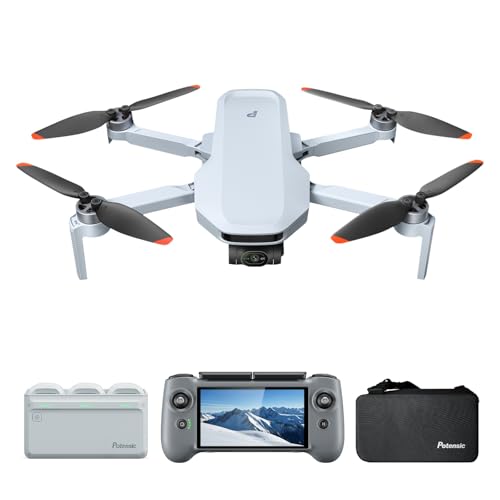
The Potensic Atom 2 Fly More Combo is aimed at pilots who care about image quality, flight range, and useful shooting modes. It records 4K video and supports 8K photos, which gives you room to crop still images while keeping a clean result. A three-axis gimbal helps smooth the camera during turns, stops, and light wind. The advertised 10-kilometer transmission range is generous, although real range can change with terrain, interference, weather, and local rules.
The combo package is especially useful because extra batteries reduce the pause between flights. Its listed 96-minute total flight time is a package figure, not one continuous flight, so pilots should still plan for safe reserve power and automatic landing margins. AI Track can help keep a person or moving subject in view, while vertical shooting suits short-form phone content. At under 249 grams, this is one of the Best AI Drones for travelers who want strong camera tools while keeping the aircraft light.
Pros:
- 4K video delivers detailed footage for travel and social posts
- 8K photo mode gives more cropping room for still images
- Three-axis gimbal helps keep video smooth
- AI Track supports hands-off subject framing
- Vertical shooting fits mobile-first content
- Fly More Combo adds useful battery capacity
- Under-249-gram design can simplify some registration concerns
Cons:
- Long transmission claims do not mean you should fly beyond visual line of sight
- Advanced features may take time to learn
- Small aircraft can still struggle in strong wind
My Recommendation
The Potensic Atom 2 Fly More Combo is my top pick for creators, travelers, and serious beginners. It offers the camera quality that most casual users seek, yet it remains compact and easier to pack than a larger professional drone. The gimbal is a major benefit because shaky video can ruin an otherwise beautiful flight. AI tracking and vertical capture also make it a practical tool for people who post travel clips, outdoor workouts, and short videos.
Buy this version if you expect to fly often. The extra batteries, charging gear, and carrying setup can save money and time compared with building the kit later. Among the Best AI Drones in this guide, it gives the strongest mix of image quality, smart modes, portability, and total package value.
Potensic ATOM 2 4K Camera Drone

The Potensic ATOM 2 is the standard-package choice for pilots who want the core aircraft without the larger Fly More setup. It has a 4K camera, 8K photo support, and a three-axis gimbal for steady footage. The drone also includes AI Track, vertical shooting, AI Night Shot, and QuickShots, giving new creators several ways to make polished clips. Its under-249-gram weight adds appeal for travelers who want a capable camera drone in a small bag.
This model makes sense when you already own compatible charging gear or do not need several batteries on day one. The 10-kilometer transmission specification sounds impressive, but I would treat it as a best-case technical figure rather than a normal target. The 96-minute flight figure applies to the Fly More package, so buyers should confirm the exact battery contents of the selected listing. As a camera platform, it is one of the Best AI Drones for pilots who want smart tools and a compact build without paying for every accessory at once.
Pros:
- 4K video is suitable for travel, property, and outdoor footage
- Three-axis gimbal reduces vibration and sudden camera movement
- AI Track helps follow selected subjects
- Vertical shooting supports social media formats
- AI Night Shot can improve low-light creative options
- QuickShots help beginners create motion-based clips
- Under-249-gram design is easy to carry
Cons:
- The standard package may include fewer batteries than the Fly More Combo
- Small sensors and compact size still have limits in very dark scenes
- Smart modes work best in open areas with clear subject contrast
My Recommendation
I would choose the standard Potensic ATOM 2 for a buyer who wants strong video first and accessories second. It is a good fit for a solo traveler, a small business owner who needs simple aerial clips, or a beginner who plans to add batteries later. The gimbal and QuickShots make the drone feel more polished than its size suggests. Its smart modes can help a new pilot create a usable clip before mastering full manual control.
This is also a sensible choice for people who want a lighter travel kit. If you fly for long sessions, the Fly More Combo may be the better deal. If you fly in short bursts, the standard ATOM 2 can provide better value and still deliver many features expected from the Best AI Drones.
AI Optical Flow Voice-Control Drone
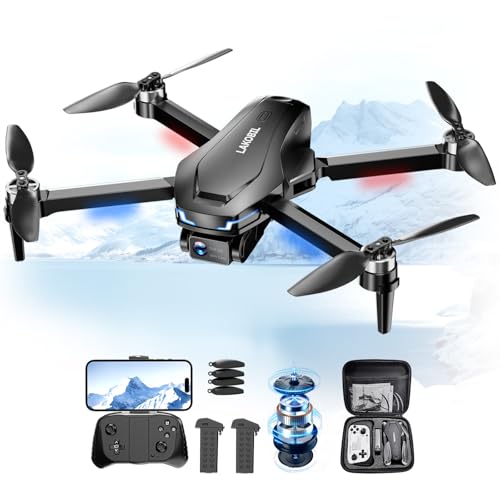
This foldable drone takes a different path from the larger 4K camera models. It uses a 1080p FHD camera, AI optical flow, voice control, and gesture control to make basic flight fun for kids, beginners, and adults. Optical flow can help the drone hold position more steadily when the surface and lighting give its sensors enough detail. The brushless motors should also provide a more durable and efficient design than the small brushed motors common in low-cost toy drones.
The package includes two batteries with a listed 26-minute total flight time, so you can practice without waiting after the first battery runs down. One-key start, 3D flips, and a foldable frame make it friendly for casual use. I would treat voice and gesture commands as fun extras rather than a replacement for learning the remote. This is one of the Best AI Drones for low-cost practice, indoor flights, and family entertainment, but it is not the right pick for professional aerial video.
Pros:
- Optical flow can improve basic hovering for new pilots
- Voice and gesture controls add simple hands-free fun
- 1080p camera supports casual FPV viewing and recording
- Brushless motors may offer better durability than toy-grade motors
- Two batteries extend practice time
- Foldable body is easy to store
- One-key takeoff helps reduce first-flight anxiety
- 3D flips add entertainment for family use
Cons:
- 1080p video lacks the detail of the 4K models in this guide
- Optical flow may weaken over dark, glossy, or featureless floors
- Voice and gesture commands may respond less reliably in noisy spaces
- It may be too limited for professional content work
My Recommendation
I recommend this drone for families, children with adult supervision, and first-time pilots who want a low-risk way to learn. It can be less intimidating than a long-range camera drone, and the two batteries help keep practice moving. Optical flow, one-key takeoff, and simple control modes act like training wheels while the pilot gains confidence. It also works well for indoor fun when the space is clear and the propellers have enough room.
Do not buy it expecting cinematic 4K footage, long-range mapping, or advanced tracking. Its value comes from ease, play, and basic flight practice. For buyers comparing the Best AI Drones by price and simplicity, this model is the most approachable option.
What Makes the Best AI Drones Different?
AI in a drone does not always mean the aircraft thinks like a human pilot. In many products, the term describes smart features that use sensors, software, and preset flight logic. These features may help the drone hold position, follow a subject, avoid an object, or create a repeatable camera move. The quality of each feature depends on light, distance, speed, wind, and the subject itself.
I separate AI drone features into four useful groups. The first group helps with control. Optical flow, satellite positioning, altitude sensors, and assisted flight modes can make hovering and movement easier. The second group helps with safety. Obstacle sensing, return-to-home tools, low-battery alerts, and geofencing can reduce mistakes, but none removes the need for careful piloting.
The third group helps with filming. AI Track, subject follow, QuickShots, vertical shooting, and low-light modes can save time when you want a ready-to-share clip. The fourth group helps with convenience. Voice commands, gestures, automatic takeoff, folding arms, and simple app controls matter when you want to fly without carrying a large kit.
A smart drone still needs a smart pilot. I never treat obstacle avoidance as a license to fly close to people, roads, wires, or buildings. Sensors can miss thin branches, glass, dark objects, moving traffic, and objects outside their coverage area. Good judgment remains the most important safety feature.
How I Compare AI Camera Drones
When I review drones, I look past the biggest number on the box. A high resolution claim does not guarantee smooth video. A long transmission claim does not guarantee safe or legal long-distance flight. I focus on how the complete system works when a real person takes it from the case to the sky.
Flight Control and Learning Curve
A drone should respond in a steady and predictable way. New pilots need smooth starts, gentle turns, and easy landing control. AI assistance can help, but the remote and app must also feel clear. The DCX Volo X EZ and the optical flow model focus strongly on simple control, while the Potensic models offer more room to grow.
I also look at the difference between assisted flight and autonomous flight. Assisted flight helps the pilot keep control. Autonomous flight follows a programmed task or selected subject. The second can look impressive, but it requires more planning because the aircraft may move while the pilot watches the phone screen.
Camera Quality and Stabilization
For aerial video, resolution is only one part of the picture. A three-axis gimbal can keep the camera level as the drone moves. This often matters more than a small jump in resolution because shaky video is hard to fix later. The two Potensic ATOM 2 options stand out here with their gimbal systems.
A 1080p camera can still be enough for practice, family clips, and basic FPV viewing. It is also easier on storage and often keeps the product cost down. However, if you plan to crop, print, edit, or publish high-quality travel footage, a 4K system gives you more flexibility.
Battery Life and Package Value
A drone battery rarely provides the full advertised time in normal use. Wind, cold, fast movement, camera use, and safety reserves reduce the time available for filming. I prefer a package with extra batteries because the benefit is practical and immediate. You spend more time flying and less time waiting.
The Potensic Fly More Combo lists 96 minutes of total flight time across its included batteries. That is useful for a full outing, but I would still land early and keep a reserve. The optical flow drone lists 26 minutes with two batteries, which is modest but suitable for short practice sessions.
Weight and Travel
A compact drone is easier to carry, but small size does not make every flight risk-free. Light drones can react more to wind and may drift sooner in difficult conditions. They are often a better match for calm days, open parks, and travel use. A folding design also protects space in a backpack.
The under-249-gram class is popular because it can reduce some registration duties in the United States. Still, weight is not the only rule that matters. Recreational and commercial pilots must check current FAA requirements, airspace limits, remote identification rules, and local park restrictions before launch.
Obstacle Avoidance and Sensors
Obstacle avoidance can be useful near larger objects, but it is not a complete shield. A system may detect a wall while missing a thin cable. A camera-based sensor may work better in daylight than at dusk. A downward sensor may help with landing or hovering but may not protect the front, rear, or sides.
I view obstacle sensing as a backup, not a substitute for line-of-sight flying. Leave extra room around trees and buildings. Keep people away from the flight area. If the drone loses signal or behaves in an odd way, land as soon as it is safe.
AI Drone Buying Guide for 2026
The right choice depends on your goals. A child who wants flips does not need a gimbal or a 10-kilometer transmission system. A travel creator should not settle for a basic 1080p camera if the footage will support a business. Use the questions below to narrow the list.
Do You Need 4K Video?
Choose 4K if you want detailed travel clips, real estate shots, nature footage, or videos that you may crop later. The Potensic models and DCX Volo X EZ fit this need better than the 1080p optical flow drone. A 4K camera also gives you more room to edit a wide view into a vertical clip.
Choose 1080p if the drone is mainly for learning, indoor practice, or fun. It can reduce storage needs and keep the purchase cost lower. For a first flight, control matters more than perfect image quality.
Should You Buy a Gimbal Drone?
A gimbal is worth the extra cost when smooth video matters. It helps counter small movements from the drone and keeps the horizon more stable. This is why I favor the Potensic ATOM 2 models for creators.
A gimbal can add weight, cost, and another part that needs care. If you only want quick clips or a live view on your phone, a fixed camera may be enough. Handle the drone gently and keep the camera clean, since dust or damage can affect every shot.
Is AI Tracking Safe?
AI tracking is useful, but it needs space. The drone may follow a person while that person changes direction, passes behind an object, or moves near a hazard. The pilot must watch the aircraft, not just the subject on the screen.
Use tracking in an open area with a clear route. Start at a slow speed. Avoid roads, crowds, water edges, power lines, and dense trees. If the app gives a warning, stop the flight rather than forcing the mode to continue.
What Does Under 249 Grams Mean?
Under 249 grams describes the aircraft weight category used in some aviation rules. It does not mean you can fly anywhere or ignore safety law. A drone may still need compliance based on how you use it, where you fly, and whether you fly for recreation or business.
Rules can change, so review current FAA guidance before each new type of flight. You may also need to follow state, city, park, or property restrictions. Keep the aircraft within visual line of sight unless you meet an approved exception.
How Much Range Do You Really Need?
Most new pilots need less range than they think. A short flight close to the launch point is easier to monitor and safer to recover. Long transmission numbers can help maintain a stable link, but they do not give permission to fly beyond legal limits.
For travel and family use, reliable control at a sensible distance matters more than a record number. The Potensic models offer strong listed transmission capability, while the smaller beginner drone is better for close-range use. Always plan the flight before takeoff.
How Many Batteries Should You Get?
One battery can work for a short session, but two or three make the hobby more enjoyable. You can use one battery while another charges. Extra batteries also help when you find a good location and want more than a few minutes in the air.
The Fly More Combo is a good answer for frequent pilots. The optical flow drone includes two batteries, which suits practice. For the DCX Volo X EZ, confirm the package contents before ordering because bundles can vary.
What Should Beginners Practice First?
Start with a slow hover in a clear, open area. Learn how the drone moves when the nose points toward you, because left and right control can feel reversed. Practice gentle forward movement, a slow square pattern, and a controlled landing.
Next, test return-to-home and low-battery warnings in a safe setting. Do not wait for an emergency to learn how these features work. After that, try camera framing and smart modes. Skill grows in small steps, like learning to ride a bike on a quiet path before entering traffic.
Best AI Drones Comparison Table
| Best for | Why |
|---|---|
| Travel creators | Potensic Atom 2 Fly More Combo offers 4K video, a three-axis gimbal, AI Track, vertical shooting, and extra batteries. |
| Adult beginners | DCX Volo X EZ combines AI-assisted flight, 4K video, and 360-degree obstacle avoidance in an easy-to-use design. |
| Families and casual practice | The AI optical flow drone adds voice control, gestures, flips, two batteries, and simple one-key takeoff. |
Flight Safety Tips for New Drone Owners
Before the first flight, inspect the propellers and arms. Confirm that the battery locks in place and that the phone has enough charge. Check the wind, look for people and animals, and choose a clear launch point. A few minutes of planning can prevent a lost drone.
Keep the drone where you can see it. Do not depend on the camera feed alone. A phone screen can show a clean view while hiding a branch, bird, wire, or other hazard outside the frame.
Fly away from airports and restricted areas. Use approved airspace tools to check the location. Follow the current rules for recreational or commercial flight, including any registration or identification requirements that apply to your aircraft and use.
Avoid rain unless the manufacturer clearly rates the drone for it. Water can damage the motors, battery, camera, and flight board. Cold weather can also reduce battery performance. Land with enough power left to handle a return trip and an unexpected delay.
Respect privacy. Do not point a camera into private spaces or record people who do not know they are being filmed. Good drone use protects both the pilot and the people below.
How to Get Better Video From an AI Drone
Clean the camera lens before every flight. A small fingerprint can create haze, glare, and soft detail. If the drone has a gimbal, remove any protective cover before powering it on. A blocked gimbal may cause errors or poor stabilization.
Use slow movements. Push the stick gently and avoid fast turns while filming. A simple side move or slow rise often looks better than a complex trick. Let the scene provide the drama.
Film with the light behind or beside the drone when possible. Direct sun can create harsh contrast, while soft morning or late-day light can give the scene depth. AI Night Shot may help in dim settings, but no small drone camera can remove every limit of low light.
Use vertical shooting when the final video will appear on a phone. Use a wide horizontal view for landscapes, property clips, and family scenes. Think about the final format before takeoff, because changing the crop later can remove important parts of the frame.
Do not rely on automatic modes for every shot. QuickShots and AI Track are useful tools, but manual control gives you more creative choice. I suggest learning one smart mode at a time. This keeps the process fun and makes it easier to spot a problem.
Which Drone Is Easiest to Learn?
The AI optical flow voice-control drone is the easiest for simple practice. One-key takeoff, optical flow, and a small foldable body can make the first session less daunting. Its 1080p camera is enough for basic viewing and casual clips.
The DCX Volo X EZ is the best step up for an adult who wants a more serious camera. Its AI-assisted flight tools and 4K camera offer more room to grow. It may feel more useful after the beginner stage than a basic toy drone.
The Potensic ATOM 2 models require more attention because they offer more camera and flight choices. That extra depth is not a flaw. It means the pilot can keep learning instead of outgrowing the drone after a few weekends.
Which Drone Gives the Best Camera Value?
The Potensic Atom 2 Fly More Combo gives the best overall camera value in this group. Its 4K video, 8K photo mode, gimbal, AI Track, and vertical shooting cover many real use cases. Extra batteries make the package more practical for a full day outside.
The standard Potensic ATOM 2 offers nearly the same core camera appeal in a simpler kit. It is a good choice if you want to control the starting price or already have a plan for batteries. The DCX Volo X EZ follows closely for buyers who value assisted flight and obstacle avoidance.
The 1080p drone wins on fun and ease, not image quality. That distinction matters. The best camera depends on what you plan to do with the footage after the flight.
Which AI Drone Is Best for Travel?
For travel, I would choose the Potensic Atom 2 Fly More Combo when camera quality and battery access matter most. A folding body and low aircraft weight make packing easier. The gimbal can turn a rough vacation clip into a smoother memory.
The standard ATOM 2 may suit a lighter traveler who flies for short periods. The DCX Volo X EZ is appealing for a new pilot who wants added obstacle sensing. The optical flow drone is easiest to carry but offers a more basic camera.
Always check airline battery rules before packing. Spare lithium batteries often need special storage and carry-on handling. Protect the propellers and gimbal in a case, and never place a loose battery where metal objects can touch its contacts.
FAQs Of Best AI Drones
What are the Best AI Drones for beginners?
The DCX Volo X EZ is a strong adult beginner choice because it combines AI-assisted flight, 4K video, and obstacle avoidance. The optical flow voice-control drone is better for simple family practice and indoor fun.
Do AI drones fly by themselves?
Some smart modes can track a subject, follow a route, or perform a camera move. The pilot still needs to monitor the drone and remain ready to take control. AI features do not remove safety duties or legal requirements.
Are under-249-gram drones exempt from all FAA rules?
No. Weight can affect registration rules, but it does not allow unrestricted flight. Location, purpose, airspace, remote identification, and other rules may still apply. Check current FAA guidance before flying.
Is a three-axis gimbal better than a fixed camera?
For smooth aerial video, yes. A three-axis gimbal helps keep the camera steady during movement. A fixed 1080p camera can still work well for basic practice, live viewing, and casual clips.
How far can I fly an AI drone?
The usable distance depends on signal, terrain, interference, weather, and local rules. You must keep the drone within legal visual limits unless an approved exception applies. Never use the maximum advertised range as a normal flight goal.
Final Verdict: Which Should You Buy?
The Potensic Atom 2 Fly More Combo is the best overall pick for most buyers. It pairs 4K video, a gimbal, AI tracking, vertical shooting, and extra batteries in one useful kit.
For simple practice, choose the optical flow drone. For adult beginners, choose the DCX Volo X EZ. These Best AI Drones make smart flight more approachable, portable, and fun.