4 Best AI Drones for Photography: Top Camera Picks
The best AI drones for photography blend smart flight tools, steady cameras, and simple controls for better aerial shots.
You may have seen a perfect mountain, beach, or family moment but lacked a safe way to capture it from above. A good camera drone can turn that missed angle into a smooth photo or video. AI features help with tracking, hovering, gestures, night shots, and return-to-home tasks, so you can focus more on framing than on every control input. I reviewed these models by looking at camera claims, flight aids, battery setup, portability, ease of use, and likely value for real buyers in 2026.

Veeniix 6K Photo 3 Axis…
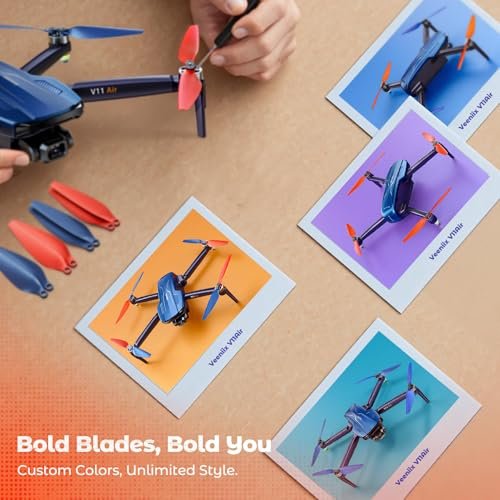
【𝐘𝐨𝐮𝐫 𝐒𝐤𝐲, 𝐘𝐨𝐮𝐫 𝐂𝐨𝐥𝐨𝐫】The blue and orange color scheme of the propellers makes every flight a spectacular visual treat, making it easy to keep an eye on the drone while…
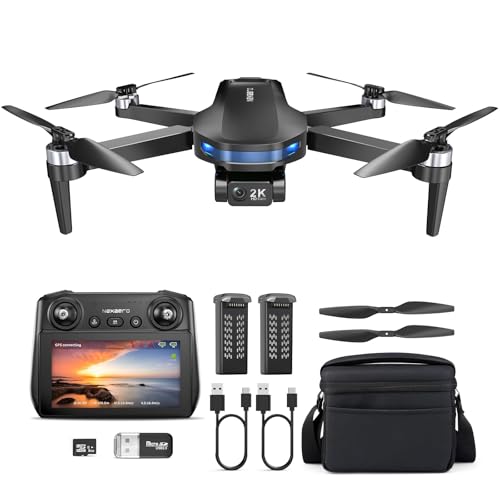
GPS Drone with EIS 2K…
7.22-Inch Screen Remote Control: Instant Flight, No Phone Needed – Experience true plug-and-play flying. The included remote features a large 7.22-inch display for real-time FPV, eliminating the need for a…

Drone with AI Optical Flow…
[AI-POWERED “NEVER-LOST” DRONE | 2-Step Flight for Kids & Beginners] Say goodbye to first-flight fear with this drone with camera for kids! The S118S drone fuses AI Optical Flow Vision…
Veeniix 6K Gimbal Camera Drone
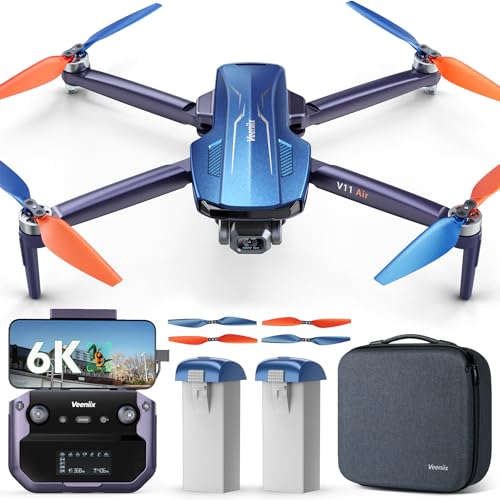
The Veeniix 6K camera drone is the most photo-focused model in this group. Its three-axis gimbal is the key feature because it can help keep the camera level as the aircraft moves. A gimbal works like a small shock-control system for the lens, which is useful when wind or a quick turn would otherwise make footage look shaky. The brushless motors should also offer better power and longer service life than basic brushed motors.
The advertised 6K photo output gives this drone a strong appeal for travelers, property shots, and scenic work. Still, buyers should view 6K as a stated camera specification rather than a promise of professional cinema quality. Sensor size, light, lens quality, compression, and software all affect the final image. I would use this model when smooth movement matters more than the smallest possible travel size, and I would check local flight rules before every outdoor session.
Pros:
- Three-axis gimbal can provide smoother, more level footage
- Advertised 6K photo resolution gives room to crop images
- Brushless motors should deliver strong and steady power
- Good fit for scenic photos, travel clips, and real estate views
- More advanced camera setup than a basic fixed-angle drone
- Useful choice for pilots who want to grow beyond toy-grade features
Cons:
- Higher camera claims do not guarantee professional image quality
- A gimbal system can add weight, cost, and parts to protect
- New pilots may need practice before using its full camera potential
GPS 2K Drone with AI Track

This GPS drone aims at buyers who want smart flight help without moving into a high-cost professional system. It pairs an EIS 2K camera with a large 7.22-inch screen built into the remote controller. That screen can make flight easier because you do not need to mount a phone or depend on a second device. The listed GPS, Follow Me, AI Track, AI Night Shot, and automatic return features give it a useful set of tools for casual outdoor photography.
The claimed 64-minute flight time likely refers to the total run time from two batteries, not 64 minutes from one battery. That is still helpful for a day at the park, a hike, or a short property shoot, but I would plan for charging breaks and wind. Electronic image stabilization can reduce small shakes, though it does not replace a mechanical gimbal. Its under-249-gram design may simplify some travel and registration questions in the United States, but pilots must still follow FAA rules, airspace limits, and Remote ID requirements when they apply.
Pros:
- Built-in 7.22-inch controller screen is convenient for outdoor use
- GPS positioning can help with steadier flight and return-home functions
- AI Track and Follow Me modes support hands-free activity shots
- AI Night Shot may help users capture scenes in low light
- Two batteries offer useful total flight time for casual shoots
- Foldable body is easier to pack for trips and day outings
- Under-249-gram design can be attractive to recreational pilots
Cons:
- 2K video has less detail than 4K and 6K camera systems
- EIS cannot provide the same motion control as a three-axis gimbal
- AI tracking can lose a subject behind trees, poles, or other objects
- Battery claims depend on wind, speed, payload, and flight conditions
AI Optical Flow 1080P Camera Drone
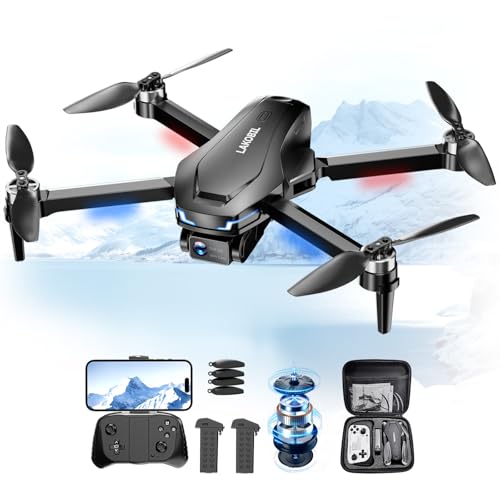
This foldable drone is built for beginners, families, and buyers who want fun controls more than high-end image quality. Its 1080P camera is suitable for simple clips, selfies, and learning the basics of aerial framing. AI optical flow can help the drone estimate its position by reading patterns on the ground. That feature may make indoor hovering and low-level flight easier, although it works best over a surface with visible texture and enough light.
Voice and gesture control add a playful way to start a photo or guide certain functions. The brushless motors are a welcome touch for a small beginner drone, and two batteries provide a listed 26 minutes of total flight time. I would treat this as a learning platform rather than a serious landscape camera. It can help a new pilot gain confidence before buying one of the more advanced AI drones for photography.
Pros:
- AI optical flow can improve basic hovering near the ground
- Voice and gesture controls make operation more approachable
- 1080P camera works for casual photos and short social clips
- Foldable shape makes storage simple in a backpack or drawer
- Brushless motors offer a useful upgrade over many toy drones
- Two batteries reduce the need to stop after one short flight
- One-key start and 3D flips add fun for new users
Cons:
- 1080P footage has limited detail for large prints or heavy cropping
- Optical flow may struggle over plain floors, water, or dark ground
- Shorter total flight time limits long outdoor photography sessions
- Voice and gesture tools may not work well in wind or noisy areas
HZMOFTJ 4K GPS Camera Drone
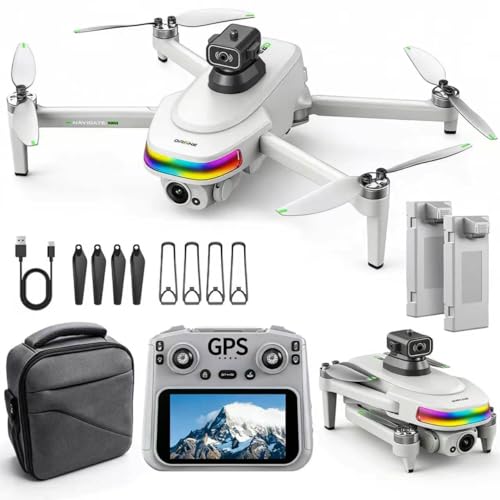
The HZMOFTJ 4K drone focuses on a balance of camera detail and usable flight time. Its advertised 4K camera should produce sharper video than a 1080P model, especially when the light is good. The listed 50-minute flight time comes with two batteries, which gives a pilot more freedom to repeat a shot or explore a wider area. For buyers who want an affordable step into landscape photos, this model has a practical starting point.
A two-battery kit is often more useful than a single battery with a higher claim because real flight includes setup, takeoff, positioning, and return time. I would still avoid judging the drone by resolution alone. A fixed camera, digital stabilization, wind response, app quality, and transmission range can matter just as much when the final clip is viewed. This drone may suit a casual creator who wants more detail than 1080P but does not need a heavy gimbal system.
Pros:
- Advertised 4K camera offers more detail for video and stills
- Two batteries provide a useful listed total of 50 minutes
- Good option for scenic trips, parks, and beginner content creation
- Extra flight time allows more attempts at a difficult shot
- Likely easier to justify for buyers who want value over premium features
- Higher resolution gives more flexibility for basic editing and cropping
Cons:
- 4K branding does not confirm sensor quality or true optical detail
- It may lack the smooth mechanical stabilization of a gimbal drone
- Two-battery flight totals depend on calm weather and gentle flying
- Budget drone apps and video links may vary in reliability
My Recommendation
After comparing these four options, I see a clear split between camera quality, smart help, and beginner value. The Veeniix is the strongest choice for buyers who care most about smooth camera movement and a more serious shooting setup. The GPS 2K model is better for users who want tracking tools, a built-in display, and a light foldable body. The HZMOFTJ makes sense for shoppers who want 4K detail and two-battery value, while the AI optical-flow drone is the friendliest pick for first-time pilots, children with adult supervision, and indoor practice.
My advice is to match the drone to the type of photo you will actually take. A gimbal matters for moving footage and cinematic turns. GPS and tracking matter when you film a person, cyclist, or walking route. Optical flow and gesture control matter more during practice than during professional image work. In the Best AI Drones for Photography category, the right model is not always the one with the biggest number on the box; it is the one whose controls, camera, and flight time fit your skill and shooting plan.
| Best for | Why |
|---|---|
| Smooth scenic video | Veeniix offers a three-axis gimbal and an advertised 6K camera. |
| Smart tracking and travel | The GPS 2K drone adds AI Track, Follow Me, a large controller screen, and a foldable body. |
| First-time pilots | The AI optical-flow model uses simple controls, gestures, and a compact design. |
How I Evaluate AI Drones for Photography
A drone can list a long set of AI features and still produce weak photos. I start with the camera path: resolution, stabilization, light performance, camera angle, and the way the drone saves files. A higher number such as 4K or 6K helps, but it does not tell the whole story. I also look at how much control the pilot keeps over exposure, movement, and composition.
Next, I check the flight aids. GPS can support position hold and return-to-home, while optical flow can help at low height when the ground has clear texture. Tracking modes can be useful, but they are not magic. A drone may lose a person when the subject blends into the background, moves behind an object, or leaves the camera frame.
I also consider the daily details that Amazon shoppers often discover after delivery. Can the drone fold into a small bag? Does the kit include two batteries? Does the controller need a phone? Are spare propellers easy to find? These points may sound small, but they shape whether a drone leaves the shelf or becomes a forgotten gadget in a closet.
Camera Resolution Is Only One Part of Photo Quality
Many buyers search for the highest camera number. That is understandable, but resolution alone cannot guarantee a sharp image. A small sensor may collect less light than a larger one. A digital zoom may enlarge a picture without adding real detail. A camera with a good gimbal can also beat a higher-resolution camera that shakes during flight.
For daylight travel photos, 1080P can look fine on a phone. It has limits, though, if you want to crop, print, or edit the footage. A 2K camera gives a modest step up. A 4K or advertised 6K camera gives more room for editing, but the final result still depends on lens quality, wind, motion, and file compression.
I suggest buyers ask one simple question: where will the image be viewed? If you mainly share short clips on a phone, the beginner model may meet your needs. If you want wide landscape views, home listings, or footage that can survive edits, a stabilized 4K or 6K setup makes more sense.
Gimbal, EIS, and Optical Flow Explained
A three-axis gimbal physically moves the camera to counter pitch, roll, and yaw. In plain terms, it helps the lens stay calm while the drone moves. That makes it especially helpful for slow pans, forward travel, and shots in light wind. The Veeniix stands out here because its listed gimbal is a major difference from the other models.
EIS, or electronic image stabilization, uses software to reduce shake. It can work well for small movements, but the camera may crop the frame to stabilize it. EIS cannot always fix a fast jolt or a strong vibration. The GPS 2K drone uses EIS, so I would expect useful casual footage but not the same smooth look as a proper mechanical gimbal.
Optical flow is a position aid, not a camera stabilizer. The drone looks down and reads surface patterns to estimate movement. It can help when GPS is not available, such as indoors or close to the ground. It needs enough light and visual texture, so a plain white floor, glossy surface, or dark room can reduce its effect.
Battery Claims and Real Flight Time
Drone listings often show a total flight number for all batteries in the box. That is why a “50-minute” or “64-minute” model may include two batteries. This is not misleading by itself, but buyers should read the battery count before comparing products. A battery rarely delivers its full laboratory number during a windy outdoor flight.
Smart pilots keep reserve power for the trip home. Cold weather can reduce battery performance, and fast climbs use more energy than gentle hovering. Heavy wind also makes the motors work harder. I prefer a kit with two batteries because a second pack can be more useful than a small increase in the maximum claim.
Before a first flight, charge the batteries with the supplied charger, inspect the cells for damage, and follow the maker’s storage advice. Never use a swollen or cracked battery. Keep spare packs away from heat, water, and loose metal objects. These basic steps protect both the drone and the person holding the controller.
AI Features That Help With Photography
AI Track can follow a selected person or object. It may help a solo traveler capture a walking shot without asking another person to hold a camera. Follow Me modes serve a similar purpose, though their exact behavior differs by model. I recommend testing tracking in a wide, open area before using it near trees, roads, cliffs, or water.
Gesture control lets the pilot use a hand signal to take a photo or start a function. It is convenient when the remote is not easy to reach. Voice control can also simplify basic commands, but outdoor wind and nearby voices may confuse it. These features add comfort, yet they should never replace the pilot’s attention.
Automatic return-to-home is one of the most useful safety tools on a GPS drone. The aircraft may return when the battery is low, the signal drops, or the pilot presses the return button. Pilots must set a safe return height first. A return command cannot avoid every tree, wire, tower, or building, so the pilot still needs to watch the flight path.
Safety and Legal Checks for US Pilots in 2026
In the United States, recreational pilots should review current FAA guidance before flying. Registration, TRUST testing, airspace rules, visual line-of-sight requirements, and Remote ID rules can apply based on the drone and the type of operation. A drone weighing under 249 grams may have fewer registration duties for some recreational flights, but that does not mean it can fly anywhere.
Never fly over people or moving vehicles unless the operation meets the applicable rule. Stay away from airports and restricted areas. Respect parks, private property, wildlife, and local privacy laws. I also avoid flying in rain unless the drone maker clearly rates the model for wet conditions, which most budget camera drones are not.
Good photography starts with a safe flight. I scout the launch area, check the wind, charge the controller, confirm the propellers, and set a return height above nearby obstacles. I also keep the drone in sight. A beautiful photo is never worth losing the aircraft or putting another person at risk.
Which Drone Is Best for Different Types of Photographers?
For landscape work, the Veeniix is the most attractive of these choices because a gimbal can make slow camera moves look cleaner. It is a better match for a user who already understands basic drone controls. The 6K claim may also help with cropping, but I would still test the camera in daylight before relying on it for paid work.
For solo activity videos, the GPS 2K drone offers the most complete smart feature set. Its screen removes the need to use a phone, and AI Track may help capture a hike, walk, or outdoor routine. The 2K camera is not as detailed as 4K or 6K, but the tracking tools may matter more to a casual creator.
For a budget-minded travel buyer, the HZMOFTJ is a sensible middle choice. It aims to combine 4K video with a 50-minute two-battery package. That can make it more useful for repeated shots than a one-battery drone. I would choose it for daylight clips, family trips, and general learning rather than demanding commercial production.
For a child, beginner, or indoor learner, the AI optical-flow drone is the easiest recommendation. Its voice and gesture controls make it inviting, and its smaller camera limits the cost of learning mistakes. Adults should supervise children, especially outdoors. Its 1080P camera is basic, but that may be enough for a first step into aerial photography.
Tips for Better Photos With Any Camera Drone
Fly during the first or last hour of daylight when possible. Soft light creates gentler shadows and richer color. Midday sun can still work, but it often makes the ground look flat and harsh. I also avoid shooting directly into the sun unless I want a deliberate silhouette.
Move slowly. A slow forward flight with a gentle turn often looks more polished than a fast rise or sharp spin. Keep the horizon level, and leave space around the main subject. If the app offers a grid, turn it on and use the lines to place buildings, roads, or people with care.
Take several versions of the same shot. Wind can change the drone’s position, and tracking can stop without warning. I may capture a wide image, a closer view, and a slow reveal from a different height. Extra takes cost less than returning home and finding that one short clip was blurred.
Clean the lens before every flight. A small fingerprint can create haze or bright spots that look like a camera fault. Store the drone in a case, protect the gimbal during transport, and remove the battery if the maker recommends it. Simple care keeps the camera ready for the moment you want to capture.
FAQs Of Best AI Drones for Photography
What is the best AI drone for photography in this comparison?
The Veeniix is the best choice for smoother camera work because it lists a three-axis gimbal and a 6K photo mode. It is most suitable for users who value camera movement and scenic footage. Buyers should still confirm current specifications and reviews before purchase.
Are AI tracking drones easy for beginners?
They can be easier, but tracking does not remove the need for pilot control. Start in an open space with a slow subject and good light. Keep the drone in sight and be ready to cancel tracking at once.
Is a 249-gram drone exempt from all FAA rules?
No. Weight can affect registration requirements, but pilots must still follow airspace, safety, privacy, and operating rules. Check current FAA guidance for your flight type and location.
Is 4K better than a three-axis gimbal?
They solve different problems. 4K can capture more detail, while a gimbal can make movement smoother. For many aerial clips, stable 2K or 4K footage may look better than shaky footage with a higher resolution claim.
Can I fly these drones indoors?
The optical-flow model is the best fit for careful indoor practice. Remove breakable items, keep people clear, and use a low speed. GPS drones may not hold position well indoors if they cannot receive a reliable satellite signal.
Final Verdict: Which Should You Buy?
The Veeniix is the best overall pick here for photography because its three-axis gimbal supports smoother shots. Choose the GPS 2K model for tracking, the HZMOFTJ for 4K value, or the optical-flow drone for beginner fun.
The Best AI Drones for Photography can make aerial images easier, but safe flying and good light still matter most. Match the camera and smart tools to your real needs before ordering.

Similar Posts