Best AI Fitness Devices: Top Smart Picks For Better Results
The best AI fitness devices turn daily health data into simple, useful steps you can follow.
You may want to move more, sleep better, or track workouts, yet still forget to check your data. That is where smart fitness tools help. They can record activity, watch heart rate, track sleep, and use AI to summarize patterns. Some also take calls, control music, or record notes on the go. I reviewed five different options for 2026 shoppers, from screen-free trackers to full smartwatches. I focused on useful features, comfort, battery life, app support, and the limits that matter before you buy.

Wearable Voice Activated AI Recorder…
【One-Tap AI Transcription】Press record and let the AI do the rest — this voice recorder turns speech into text with up to 95% accuracy across 109 languages, labels each speaker,…

Voice Activated Recorder, Fitness Tracker…
One‑click Recording: No complicated setup, just press the button and go. Capture every moment instantly, wherever you are, so you never miss a detail. Bluetooth 5.3 delivers a stable, low‑latency…

Smart Watch for Women, 1.39″…
【🎯120 Sports Modes & Comprehensive Fitness Tracking】DIVOAZBVO Smart Watches for Women Men features a 1.39″ HD IPS touchscreen , offering crystal-clear visuals. It includes 120 sports modes to track various…
Wearable AI Recorder and Fitness Tracker

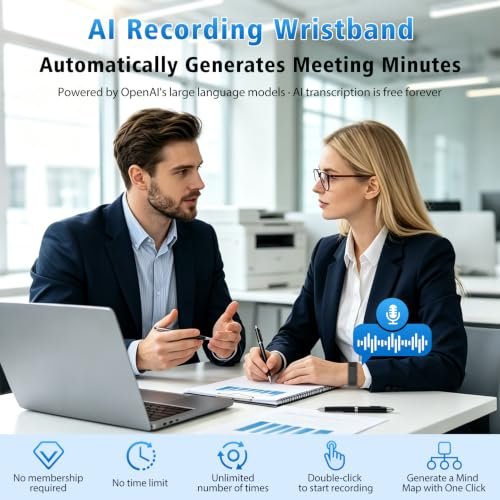
This wearable combines a voice recorder with basic fitness tracking. That makes it different from a normal watch or band. You can use it to save spoken notes, meeting ideas, workout thoughts, or quick reminders without reaching for your phone. The product listing also highlights voice activation, transcription, and AI support.
I see the most value here for people who want one small device for work and wellness. It may help a coach record a quick training note or help a busy user remember how a workout felt. Fitness data should still be treated as an estimate, not a medical reading. Before buying, I would check the app reviews, supported languages, storage rules, and whether the AI features need a paid plan.
Pros:
- Combines voice recording and fitness tracking in one device
- Voice activation can reduce phone use during busy moments
- AI transcription may turn spoken notes into searchable text
- Small wearable format may suit work, travel, and exercise
- Useful for users who want both audio notes and activity data
- Can support faster recall after meetings or workouts
Cons:
- AI features may depend on an app, internet access, or a subscription
- Recording rules differ by state and location
- It may not offer the deep health tools found on premium watches
My Recommendation
I recommend this device for students, coaches, field workers, and busy users who want hands-free notes plus fitness tracking. It stands out among the Best AI Fitness Devices because it treats your voice as useful data, not just your steps and heart rate. That can make it a smart pick for people who often think of an idea while walking or training.
I would not choose it as my only health device if I needed GPS, advanced workout maps, or strong medical features. I would also review privacy settings before recording other people. Overall, it offers a fresh mix of AI and activity tools, but its value depends on the quality of its app and transcription service.
AI Voice Recorder Fitness Tracker

This model focuses on voice recording, AI summaries, noise reduction, and fitness tracking. The listing claims support for more than 160 sport modes. That broad number may appeal to people who switch between running, cycling, gym work, and outdoor sports. It also gives the device a wider role than a simple step counter.
The AI tools may help turn long recordings into shorter notes. That feature can save time after a class, interview, work call, or training session. Still, I would test the transcription with names, accents, background noise, and exercise sounds before trusting it for important work. The fitness side should help with trends, but it cannot replace a doctor, certified test, or clinical monitor.
Pros:
- Supports voice recording, transcription, and summaries
- AI noise reduction may improve speech in busy places
- More than 160 listed sport modes offer broad activity coverage
- Useful for meetings, lectures, interviews, and workouts
- One device can reduce the need to carry a separate recorder
- May suit users who want fitness data with practical work tools
Cons:
- Many sport modes may provide only basic tracking for some activities
- Transcription quality can change with noise and speech style
- Privacy and consent need careful attention when recording audio
- Users should confirm battery life during long recordings
My Recommendation
This is one of the Best AI Fitness Devices for users who want a work tool and a workout tool in the same package. I like its fit for students, personal trainers, sales staff, journalists, and people who attend many meetings. The large sport-mode count adds flexibility, while the recorder gives the product a clear purpose beyond counting steps.
I would choose it over a basic band if transcription matters to you. I would not choose it only because it lists many activity modes. Check how the app labels data, how it stores recordings, and whether the AI summary feature has limits. If those details suit your routine, this model can offer strong everyday value.
Women’s Smartwatch with AI Assistant

This pink smartwatch offers a larger 1.39-inch HD touchscreen, up to 120 sports modes, an AI voice assistant, and Bluetooth calling. It also lists heart-rate and sleep monitoring. These features make it a familiar choice for someone who wants a watch that handles fitness, calls, music, and daily alerts.
A color screen makes workout details easier to read at a glance. It may also feel more natural for users who want to see steps, time, notifications, and activity records without opening a phone. I would treat heart-rate and sleep results as wellness estimates. The FDA and other health authorities warn that consumer wearables are not a substitute for approved medical devices, so unusual symptoms still need proper care.
Pros:
- Large touchscreen should make menus and workout data easier to view
- Up to 120 sport modes offer useful variety for active users
- AI voice assistant can make some tasks more hands-free
- Bluetooth calling adds convenience during daily errands
- Heart-rate and sleep tracking support basic wellness habits
- Music controls may help during walks, runs, and gym sessions
- Pink styling may appeal to shoppers seeking a softer look
Cons:
- Actual accuracy can vary by fit, skin contact, and movement
- Battery life may fall when calls and screen features stay active
- Phone compatibility and app quality should be checked before purchase
- It may lack the polished health ecosystem of top premium brands
My Recommendation
I recommend this smartwatch for women who want a visible, colorful watch with broad fitness support. It is among the Best AI Fitness Devices for shoppers who care about calls, music, alerts, and workout modes as much as health tracking. The screen may also help older users or anyone who finds tiny band displays hard to read.
This is a better fit for daily wellness than for clinical monitoring. I would check the wrist size range, return policy, app permissions, and phone support before ordering. For the price, the mix of sports, calls, sleep data, and voice control may offer good value if you want a general-purpose smartwatch.
Fitbit Air Stephen Curry Edition Tracker

The Fitbit Air Special Edition Stephen Curry tracker takes a quieter approach. It has no full screen, so it avoids the constant pull of messages, apps, and glowing alerts. A screenless tracker can work well for someone who wants activity data but does not want another mini phone on the wrist.
This type of design may support a calmer routine. You can focus on a walk, a workout, or a game, then review the data later in the Fitbit app. The Stephen Curry edition may also attract basketball fans and users who like athlete-linked products. Before buying, check the exact features, membership terms, charging method, and phone requirements because Fitbit tools can vary by model and service plan.
Pros:
- Screenless design reduces visual distractions
- Fitbit app support may offer clear activity and habit trends
- Stephen Curry edition adds a strong sports identity
- Small form may feel light during sleep and exercise
- Delayed data review can encourage less phone checking
- May suit users who prefer simple, low-profile wearables
Cons:
- No screen means you cannot view workout data directly on the tracker
- Some advanced Fitbit insights may require a paid membership
- Users who want calls, maps, or music controls need another device
- App-based use may feel less convenient during a workout
My Recommendation
I recommend this tracker for people who want quiet, simple health feedback. It is one of the Best AI Fitness Devices for users who dislike large watches or who already carry a phone for calls and maps. It may also suit basketball fans who want the Stephen Curry design without wearing a bulky sports watch.
This is not the best choice for someone who needs live stats on the wrist. It works better as a habit tool than as a full smartwatch. If you like screen-free design and already trust the Fitbit app, it can be a clean and focused option. Check the current membership details before you commit to the wider Fitbit ecosystem.
Long-Battery AI Smart Bracelet

This smart bracelet uses a tiny LED screen and claims more than 50 days of battery life. It also lists 24/7 step, heart-rate, and blood oxygen tracking, plus AI analysis through a free app. The long battery claim is the main attraction. Fewer charging sessions can make it easier to wear a tracker every day and night.
A small screen keeps the bracelet light and less distracting than a full smartwatch. The app may then turn raw readings into simple trends. I would read “free app” and “AI analysis” with care, since features can change through updates or account rules. Blood oxygen data can be affected by movement, fit, temperature, and skin contact, so I would never use it alone to make a health decision.
Pros:
- Claimed 50-plus-day battery life could reduce charging stress
- Tiny LED screen offers basic information without a large watch face
- Tracks steps, heart rate, and blood oxygen around the clock
- AI analysis may make trends easier for beginners to understand
- Free app may lower the long-term ownership cost
- Light bracelet design may work well for sleep tracking
- Simple display may suit users who want fewer distractions
Cons:
- Battery life will likely vary with screen use and tracking settings
- Tiny display may be hard for some users to read
- AI advice should not replace professional medical guidance
- App privacy, updates, and phone support need review
My Recommendation
I recommend this bracelet for travelers, light sleepers, older users who dislike frequent charging, and people starting a fitness habit. It earns a place among the Best AI Fitness Devices because long battery life can solve a common problem: buying a tracker, then leaving it in a drawer while it charges. The small screen also keeps the design simple.
I would choose it for trend tracking, not diagnosis. Confirm the band size and app support before purchase, and compare the real battery claim with your preferred settings. If the listing remains accurate in 2026, this could be one of the better low-maintenance fitness bands for basic daily tracking.
Best AI Fitness Devices: What I Looked For
AI sounds impressive, but the label alone does not make a fitness device good. I look first at the problem the device solves. A tracker should make movement, sleep, or recovery easier to understand. It should not bury simple facts under confusing charts.
I also check how the device collects data. A heart-rate sensor needs steady skin contact. Step counts can change with hand movement. Sleep tools often estimate sleep stages rather than measure them directly. These limits matter because honest expectations lead to better choices.
Useful AI Features
The best AI fitness devices use AI to organize information. They may summarize a recording, spot a pattern, suggest a goal, or explain a trend in plain words. That is more useful than an app that simply adds a flashy label to a basic sensor.
I favor tools that let you see the source data. A short AI summary should not hide the numbers behind it. You should be able to review your activity, change goals, and turn off features that you do not need.
Sensor Accuracy and Fit
Fit matters as much as the sensor. A loose band may miss heart-rate readings. A tight band can cause discomfort and skin trouble. I prefer a device that stays in place without feeling like a clamp.
Consumer trackers can support habits, but they are not automatically medical tools. The CDC supports regular physical activity for broad health benefits, while the American College of Sports Medicine stresses gradual progress and safe training. A wearable can help you follow those habits, but it cannot judge every health risk.
Battery Life
Battery life shapes real use. A device with many features may need more frequent charging. A simple bracelet may last much longer. Think about your routine rather than the biggest number on the product page.
If you travel often, long battery life may matter more than calls or a large screen. If you train indoors, easy charging may be enough. The right balance depends on how often you want to wear the device.
Privacy and Data Control
AI fitness devices can collect sensitive information. This may include sleep times, location, heart-rate readings, voice recordings, and daily routines. I always suggest reading the privacy policy before pairing a new device.
Voice products need extra care. In many places, recording another person without clear consent can create legal problems. Turn off voice activation when you do not need it, use a strong account password, and check whether the app shares data with other services.
App Quality and Support
The app is part of the product. A great band with a poor app can feel frustrating after a week. Look for clear charts, stable syncing, export options, useful goals, and regular updates.
I also check whether the device works with your phone. Android and iPhone support may differ. Some features may need Bluetooth permissions, location access, or an account. These small details can change the whole ownership experience.
How to Choose the Right AI Fitness Device
Start with your main goal. If you want hands-free notes, choose a voice recorder tracker. If you want calls and live data, choose a smartwatch. If you want quiet habit support, choose a screenless band.
Next, decide how much feedback you want. A large screen gives quick access to data. A screenless device encourages you to review results later. Neither approach is best for everyone.
Then check the cost beyond the purchase price. Some brands place advanced reports behind a subscription. Others offer a free app but limited support. A low first price may not be the lowest long-term cost.
Finally, choose comfort over hype. You will gain more from a basic tracker worn every day than from an advanced watch left at home. The best AI fitness devices are the ones that fit your habits so well that you forget they are there.
| Best for | Why |
|---|---|
| Voice notes and fitness | The wearable AI recorder combines spoken notes, transcription, and activity tools. |
| Calls and broad workout support | The women’s smartwatch offers a color screen, Bluetooth calls, voice control, and many sport modes. |
| Low-maintenance tracking | The long-battery smart bracelet focuses on simple data, AI trends, and fewer charging sessions. |
Using AI Fitness Data the Right Way
Do not chase every number. Look for patterns across several days. One poor sleep score does not prove that you have a sleep problem. One high heart-rate reading may come from stress, caffeine, heat, or movement.
Use the data as a gentle nudge. If your steps fall for a week, take a short walk after lunch. If your sleep time drops, set a calmer bedtime. Small changes often work better than a strict plan that feels like a punishment.
AI can help explain trends, but it can also sound more certain than the data allows. Treat its suggestions as ideas, not orders. If you feel pain, shortness of breath, faintness, or another serious symptom, stop and seek proper medical advice.
Keep your device clean and dry according to its instructions. Wear it snugly, but not too tight. Charge it before important trips, update the app, and review permissions from time to time.
FAQs Of Best AI Fitness Devices
What is an AI fitness device?
An AI fitness device uses software to organize sensor data or voice data. It may summarize workouts, spot trends, transcribe speech, or suggest simple goals. The quality depends on the sensors, app, and data rules.
Are AI fitness trackers accurate?
They can be useful for trends, but they are not perfect. Results may change with fit, movement, skin contact, and device design. Do not use a consumer tracker as a medical diagnosis tool.
Do I need a smartwatch with a screen?
No. A screenless tracker may be better if you want fewer alerts and less phone-like behavior. Choose a screen if you need live stats, calls, maps, music controls, or quick notifications.
Is AI fitness data private?
Privacy depends on the company and its app policy. Check what data the device collects, where it stores data, and whether it shares data. Voice recording products need clear consent when other people are nearby.
Which feature matters most when buying?
Choose the feature that solves your main problem. Battery life matters for travelers. A large screen helps with quick viewing. AI transcription suits voice notes. Comfort and app support matter for every user.
Final Verdict: Which Should You Buy?
For most shoppers, the women’s smartwatch offers the widest mix of screen access, calls, sports, and wellness tools. The long-battery bracelet is best for simple tracking, while the voice devices suit note-heavy users.
The Best AI Fitness Devices work best when they support a real habit. Choose the model you will wear, trust, and use often for clearer daily progress.

Similar Posts