Amana Heating And Air Conditioning Troubleshooting
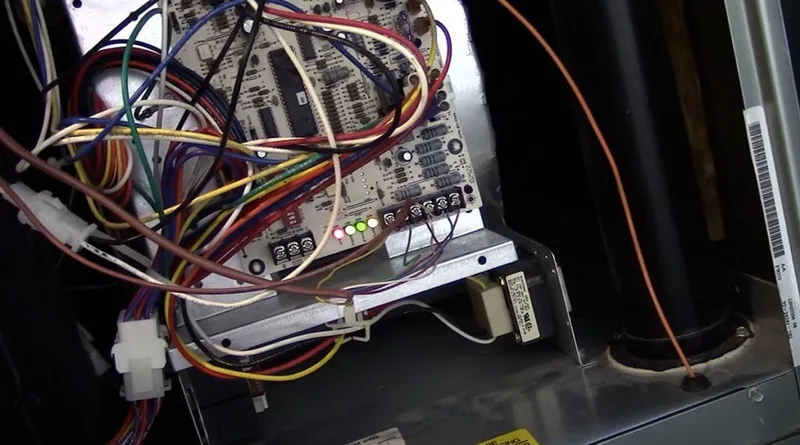
Your Amana system doesn't have to mean a costly service call. If something is acting up, most common issues trace back to airflow, power, or a small sensor problem. In our research, those three causes account for the vast majority of residential HVAC failures.
As of 2026, nearly every Amana furnace and air conditioner uses a self-diagnostic LED panel that flashes specific error codes. That little window is your first clue.
Image source: Bing (Web (fair-use with source credit))
What's Actually Going Wrong? A Quick Way to Narrow It Down
Before you touch anything, answer one question. What is the system doing or refusing to do? That answer sends you down a specific troubleshooting branch.
Randomly checking parts wastes time and can lead to wrong guesses.
| What you notice | Most likely culprits | Where to look next |
|---|---|---|
| No power, blank thermostat | Dead batteries, tripped breaker, float switch | Section 2 |
| System runs but no heat or cool | Clogged filter, dirty flame sensor, frozen coil | Section 3 |
| Fan runs but shuts off after 2-5 minutes | High limit switch, blocked vent, airflow restriction | Section 3 |
| Loud squealing, banging, or hissing | Motor bearings, loose blower wheel, refrigerant leak | Section 4 |
| Blinking LED on the furnace panel | Self-diagnostic error code | Section 4 |
If your symptom appears in the table, jump to the matching section. If you are not sure, start with the blinking LED. Nearly every Amana furnace and air conditioner built in the last decade has a self-diagnostic control board.
That little window shows a burgundy or green flashing light.
Count the flashes. A pattern of 2, 3, 4, or 5 flashes means something specific. Two flashes usually point to a pressure switch problem.
Four flashes often mean a gas valve or flame sensor issue. Write the pattern down before turning anything off.
Also locate the rating plate. It is the metal sticker on the side of the furnace or condenser with the model number and serial number. Photograph it.
If you need to call a technician or order a part, that info is essential.
Is Your System Completely Dead? Three Things to Check Before You Panic
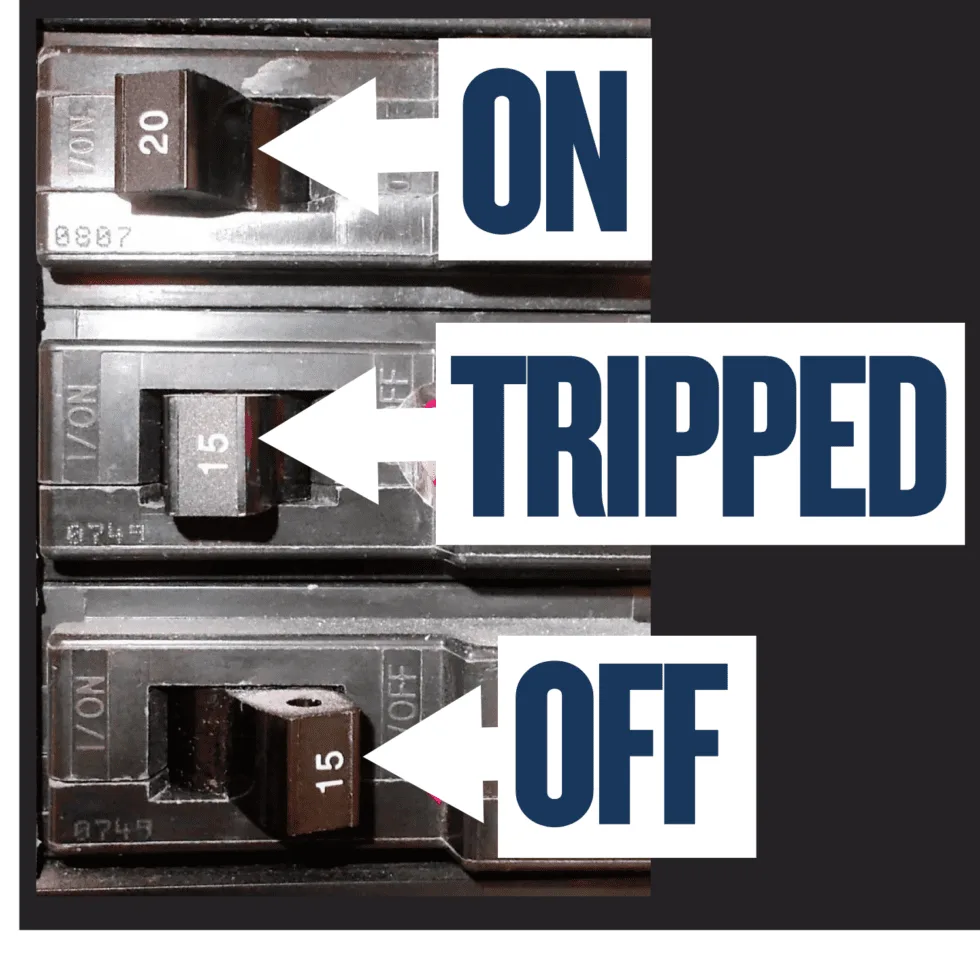
Image source: Bing (Web (fair-use with source credit))
A completely dead system with no sounds and no air movement is the scariest scenario. It is also the one with the most common, cheap fixes. Try these three checks in order.
Check 1: The Thermostat
Look at the screen first. Is it blank? Replace the batteries.
Are the batteries fine but the display shows "Cool" or "Heat"? Make sure the setpoint is at least 5 degrees away from the room temperature. A setting that is too close keeps the system off.
Check 2: The Breaker
Go to your electrical panel. Find the breaker labeled "Furnace," "HVAC," or "AC." If it tripped, it sits somewhere between ON and OFF. Flip it fully to OFF, wait 10 seconds, then flip it back ON.
This resets the internal overload. Then check the outdoor disconnect box as well.
Check 3: The Float Switch
This one catches a lot of people. If your condensate drain line clogs, water backs up into the pan. A small safety switch trips and kills power to the entire system.
Look for a standalone switch with a float on the drain pan. If there is standing water, clear the drain with a wet or dry vacuum. Then reset the switch.
If the breaker trips again as soon as you reset it, stop. A short circuit or a failing compressor can cause repeated trips. Each reset risks damage and a small fire hazard.
Turn the breaker off and call a pro.
System Runs but Doesn't Heat or Cool? Diagnose the Real Issue
The fan moves air. The unit hums. But the conditioned air never comes.
This branch splits depending on whether you are troubleshooting a furnace or an air conditioner.
Start With Airflow
Remove the air filter and hold it to a light. If you cannot see through it, airflow is restricted. A fresh filter fixes a surprising number of systems.
While you are at it, confirm all supply registers are open and not blocked by furniture.
Gas Furnace: No Heat
Check the status LED on the control board. If it is flashing 4 times, the flame sensor might be coated in soot. Pull it out.
Clean the metal rod with 200-grit sandpaper or a light abrasive pad. Reinstall it. If you see a code related to a pressure switch, inspect the PVC vent pipes outside for snow, leaves, or a nest.
Air Conditioner or Heat Pump: No Cool
Look at the big copper lines near the indoor unit. If there is frost or ice, you have a frozen coil. Turn the system off at the breaker.
Let the ice thaw completely. Running it while frozen can damage the compressor. After thawing, replace the filter and try again.
If it freezes within a week, you likely have a refrigerant leak. That requires EPA-certified handling under Section 608 of the Clean Air Act. Call a professional.
Heat Pump: No Heat
Check the outdoor unit fan. Does it spin when the thermostat calls for heat? If not, the capacitor or contactor may be failing.
These are straightforward parts for a technician to replace. If the fan runs but the air feels cool, the reversing valve might be stuck. That also needs a pro.
What Do Those Weird Noises and Error Codes Actually Mean?
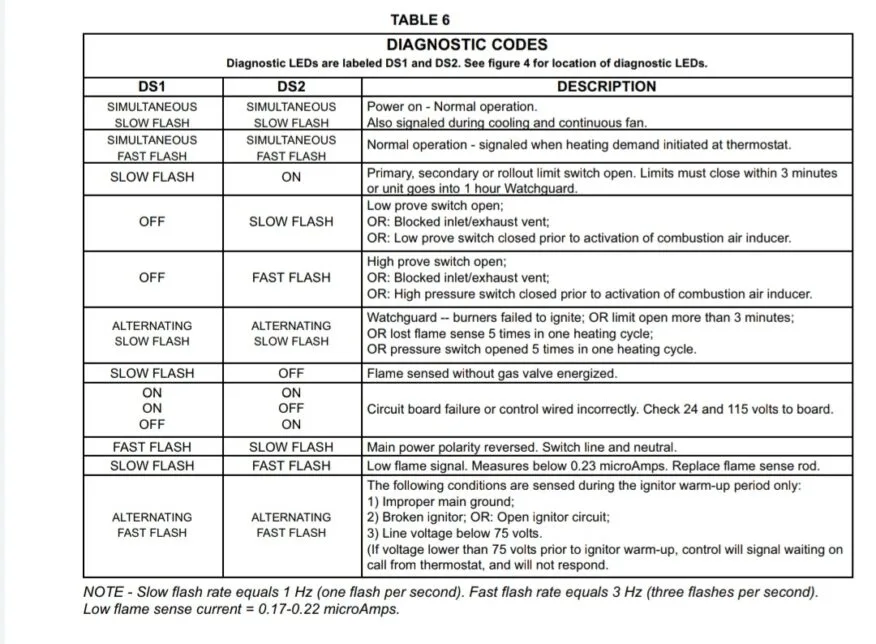
Image source: Bing (Web (fair-use with source credit))
Your Amana system communicates through sound and light. Both are signals, but only if you know how to read them.
Reading the LED Blink Codes
On Amana furnaces, the control board uses a blinking LED. The number of flashes in a group corresponds to a fault type. One flash often means an igniter failure.
Two flashes point to a pressure switch. Three flashes signal an airflow issue. Four flashes indicate a flame sensor or gas valve problem.
Check your manual for the exact code list for your model.
Noise Cheat Sheet
| Sound | What it usually means | Action |
|---|---|---|
| Squealing | Blower motor bearings are dry or worn | Call a technician |
| Banging | Loose blower wheel or failing compressor | Shut off and call |
| Rattling | Loose panel or debris in the blower | Tighten or remove debris |
| Hissing | Refrigerant leak | Turn off AC and call |
| Gurgling | Clogged condensate drain | Vacuum out the line |
A hissing sound is urgent. Low refrigerant can destroy a compressor quickly. Banging is equally serious.
Do not run the system when you hear either sound.
Always photograph the error code before you reset anything. If you need to describe it to a professional later, you will have accurate information. Codes point to the area to test, not always the failed part.
The pressure switch code may just mean a blocked tube, not a bad switch.
The Biggest Mistakes People Make (That Cost Them Money or Safety)
These avoidable errors turn small fixes into big repairs.
Ignoring the Air Filter
The number one cause of blower motor failures and frozen coils is a clogged filter. Running a system with a dirty filter restricts airflow, overheats the motor, and kills parts over time. Replace it every 1 to 3 months.
Resetting the Breaker Repeatedly
If a breaker trips 3 times in a row, something is forcing it. Keep resetting it, and you risk overheating the wiring. Repeated trips can also damage the compressor.
After the second trip, leave it off and call a professional.
Messing With Refrigerant
Refrigerant is regulated by the EPA under Section 608. Only certified technicians can handle it. Trying to top off a low system without fixing the leak is illegal and wasteful.
It also causes further compressor damage.
Touching the Capacitor Without Discharging It
Capacitors store a serious electrical charge even when power is off. Touching the terminals without discharging it can shock you. If you are not trained to discharge it safely, do not risk it.
Dipping Too Deep Without a Manual
DIY forums are full of bad advice. One wrong guess can fry a control board. Use the official Amana manual for your model.
It is the only reliable reference.
Not Killing Power First
Always kill power at the breaker and the outdoor disconnect before doing any mechanical work. This applies to cleaning the flame sensor or swapping a capacitor. One slip with a metal tool and you have a bad day.
Should You Keep DIYing or Call a Pro? A Simple Decision Guide
You have probably reached a point where you are staring at a component and wondering, "Can I fix this or am I about to make things worse?" That question has a clear answer.
When DIY Is the Right Call
Stick to what is safe and low risk. You can replace the air filter, reset a tripped breaker, check the thermostat mode and batteries, and clear a blocked condensate drain line. You can also inspect the outdoor vent pipes for obstructions and vacuum out the drain pan.
You can clean the flame sensor on a gas furnace. Remove the single screw, pull the sensor out, and wipe the metal rod with a light abrasive. Reinstall it, and the system will fire up more often than not.
When You Must Call a Professional
Call a technician for refrigerant leaks, compressor failures, heat exchanger cracks, and repeated breaker trips. These require specialized tools, certification, or professional judgment.
Per the U.S. Environmental Protection Agency (EPA), only certified technicians can handle refrigerant. The same rule applies to gas valve repairs and main control board replacements.
Any job that requires opening the sealed refrigerant loop or working inside the gas burner assembly is a hard stop.
How to Decide in 30 Seconds
Ask yourself one question. "Does the fix require opening the sealed system, working with high voltage after a capacitor discharge, or adjusting a gas valve?" If yes, call a pro. If no, proceed with caution and the manual in hand.
The cost of a service call is cheaper than the cost of a new furnace from a botched repair.
Frequently Asked Questions About Amana Troubleshooting
Why is my Amana furnace not turning on at all?
Start with the thermostat batteries and the circuit breaker. A blank thermostat usually means dead batteries. A tripped breaker sits off center.
Flip it to OFF, wait 10 seconds, then back to ON. If the furnace still does nothing, check the float switch on the condensate drain pan.
What does a blinking red light on my Amana furnace mean?
The blinking light is a self-diagnostic error code. Count the flashes between pauses. Two flashes often point to a pressure switch issue.
Four flashes typically indicate a flame sensor or gas valve problem. Check your owner's manual for the exact code chart for your model.
Why does my Amana AC run but not blow cold air?
The most common cause is a frozen evaporator coil. Turn the system off and let the ice thaw completely. Change the air filter before restarting.
If the problem returns within a week, you likely have a low refrigerant charge and need a technician.
Is it safe to reset my Amana furnace multiple times?
Resetting once or twice to clear a temporary fault is fine. Resetting repeatedly, especially if the breaker trips again immediately, is not safe. Repeated trips indicate a serious electrical short or a failing component.
Leave the power off and call a professional.
How often should I change the air filter in my Amana system?
Change a standard 1-inch fiberglass filter every 30 days. A pleated filter can go up to 90 days, but check it monthly. A dirty filter restricts airflow, stresses the blower motor, and causes frozen coils and short cycling.
It is the cheapest and most important maintenance step.
When should I replace my Amana furnace or AC instead of repairing it?
Consider replacement if the unit is over 15 years old, the repair cost exceeds half the cost of a new system, or you have had three or more service calls in two years. New Amana models offer higher efficiency. A technician can help you run the numbers.

Similar Posts