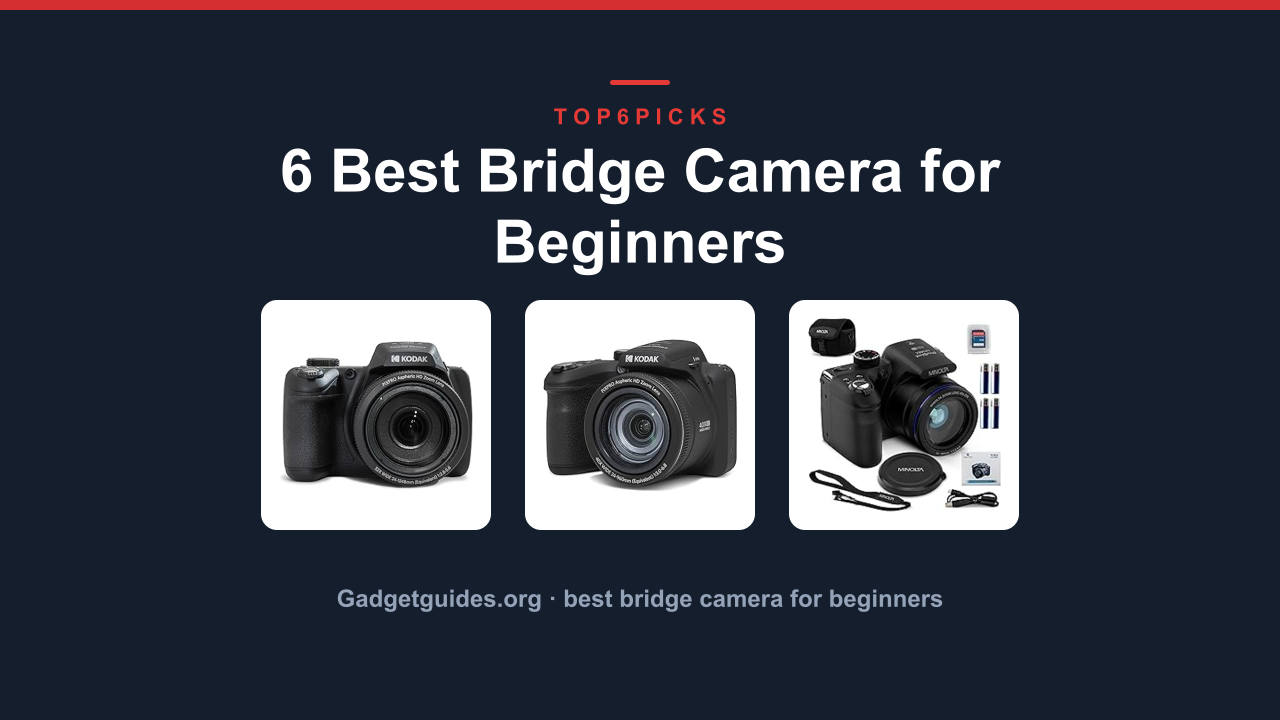
6 Best Bridge Camera for Beginners
The best best bridge camera for beginners is the KODAK PIXPRO AZ528, thanks to its 52x optical zoom, built-in Wi-Fi, and the highest owner satisfaction rating in this lineup. It gives you reach you cannot get from a smartphone plus the simplicity of a point-and-shoot, all for a price that won't scare off a first-time buyer.
Want 4K video and even more zoom instead? The Panasonic LUMIX FZ80D gives you 60x reach and proper 4K recording, though you give up the Wi-Fi sharing that makes the AZ528 so convenient.
As an Amazon Associate, I earn from qualifying purchases.
This guide walks you through every model worth considering, including which buyers should skip bridge cameras entirely. You will get honest trade-offs, not marketing hype.
Everything below comes from current Amazon product data, manufacturer specifications, and verified buyer feedback. I have not personally handled these cameras, so every claim reflects what the specs and owner reviews actually say.
Quick Answer: The Best Bridge Camera for Beginners
The KODAK PIXPRO AZ528 is the top pick for most beginners, balancing zoom reach, Wi-Fi convenience, and a solid 4.3-star owner track record.
- KODAK PIXPRO AZ528 16MP Digital Camera (Best Overall for Beginners): 52x zoom, Wi-Fi sharing, and the highest rating in the lineup.
- Panasonic LUMIX FZ80D Point Shoot Digital (Best 4K & Maximum Zoom): 60x optical zoom plus 4K video recording for sharper footage.
- KODAK PIXPRO AZ425 20MP Digital Camera (Best for Wildlife & Sports): 42x zoom with a Li-Ion rechargeable battery and 20MP sensor.
- KODAK PIXPRO AZ405 20MP Digital Camera (Best AA Battery Option): Runs on standard AA batteries, ideal for travel where charging is tricky.
- Minolta MN40Z ProShot 20 MP / (Best Budget Pick): 40x zoom at a lower entry price with intuitive controls.
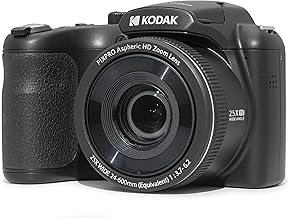
- KODAK PIXPRO AZ255 16MP Digital Camera (Best Entry-Level Value): 25x zoom and the lowest cost option for absolute beginners.
Thinking about a mirrorless camera instead? Jump to Who Should NOT Buy below before you spend anything.
Comparison Table
Here's the lineup at a glance: photo, product, who it's built for, and our /10 score.
| Photo | Product | Best for | Score | Buy |
|---|---|---|---|---|
 | KODAK PIXPRO AZ528 16MP Digital Camera | Best Overall for Beginners | 8.8/10 | Check price → |
 | KODAK PIXPRO AZ405 20MP Digital Camera | Best AA Battery Option | 8.0/10 | Check price → |
 | Minolta MN40Z ProShot 20 MP / | Best Budget Pick | 7.8/10 | Check price → |
 | Panasonic LUMIX FZ80D Point Shoot Digital | Best 4K & Maximum Zoom | 8.5/10 | Check price → |
 | KODAK PIXPRO AZ255 16MP Digital Camera | Best Entry-Level Value | 7.5/10 | Check price → |
 | KODAK PIXPRO AZ425 20MP Digital Camera | Best for Wildlife & Sports | 8.2/10 | Check price → |
Scroll sideways on small screens to see every column.
KODAK PIXPRO AZ528 16MP Digital Camera: Best Overall for Beginners
KODAK PIXPRO AZ528 16MP Digital Camera: Best Overall for Beginners
Panasonic LUMIX FZ80D Point Shoot Digital: Best 4K & Maximum Zoom
Panasonic LUMIX FZ80D Point Shoot Digital: Best 4K & Maximum Zoom
KODAK PIXPRO AZ425 20MP Digital Camera: Best for Wildlife & Sports
KODAK PIXPRO AZ425 20MP Digital Camera: Best for Wildlife & Sports
KODAK PIXPRO AZ405 20MP Digital Camera: Best AA Battery Option
KODAK PIXPRO AZ405 20MP Digital Camera: Best AA Battery Option
Minolta MN40Z ProShot 20 MP /: Best Budget Pick
Minolta MN40Z ProShot 20 MP /: Best Budget Pick
KODAK PIXPRO AZ255 16MP Digital Camera: Best Entry-Level Value
KODAK PIXPRO AZ255 16MP Digital Camera: Best Entry-Level Value
Buying Guide: Zoom, Sensor, Power and Wi-Fi
A bridge camera is a bridge camera is a bridge camera, right? Not quite. The four big differences between these models are how far they zoom, how many megapixels they capture, how they get power, and whether they can share photos wirelessly.
Here is what matters for a beginner.
How much zoom do you really need?
Zoom range is the main reason to buy a bridge camera over a smartphone. The lineup here spans 25x to 60x optical zoom. The KODAK PIXPRO AZ255 starts at 25x (600mm equivalent), which is enough for most family events and casual travel.
The Panasonic LUMIX FZ80D tops out at 60x (1200mm equivalent), which pulls in distant birds, moon craters, and sports action that the 25x models cannot reach.
The trade-off is that more zoom means more weight and more potential for camera shake. Optical Image Stabilization (OIS) helps, but at 60x you still need a steady hand or a tripod for the sharpest results. For most beginners, 40x to 52x (the sweet spot of the AZ405, AZ425, and AZ528) offers a good balance of reach and usability.
Megapixels: is 16MP enough?
The 16MP sensors on the AZ528 and AZ255 produce fine images for social media, sharing online, and printing up to 8×10 inches. The 20MP sensors on the AZ405, AZ425, and Minolta give you a bit more room to crop without losing detail. In practice, the difference is subtle for most beginners.
The bigger factor is sensor size. All of these use a small 1/2.3-inch sensor, which means they struggle in low light compared to a mirrorless camera with a larger sensor.
If you mostly shoot in daylight, 16MP is fine. If you want to crop heavily or print larger, go for 20MP.
AA batteries vs Li-Ion: which is better?
This is a practical choice. The AZ405 and AZ255 run on four AA batteries. You can buy them anywhere in the world, and you can carry a spare set easily.
The downside is that AA batteries drain faster than a dedicated Li-Ion pack, especially with stabilisation and zoom use. Rechargeable NiMH AA cells are the best way to go.
The AZ528, AZ425, Minolta, and Panasonic FZ80D use proprietary Li-Ion batteries. They last longer per charge and recharge faster, but if you forget to charge yours, you cannot buy a replacement at a gas station. A spare battery costs extra but is worth it for full day shoots.
Do you need Wi-Fi?
Only the AZ528 in this lineup has built-in Wi-Fi for transferring photos directly to your phone. Every other model requires a USB cable or an SD card reader to move files. If you want to post to social media quickly, Wi-Fi is a real time saver.
If you are happy to transfer files at home, it is not essential.
Who Should NOT Buy Best Bridge Camera for Beginners
Bridge cameras are the wrong purchase for a few types of buyers. Here is who they are, and what to look at instead.
You Need Better Low Light Performance
Bridge cameras use small 1/2.3-inch sensors that struggle in dim light. You will see noise and grain starting at ISO 800, and shots at dusk or indoors without flash will look soft. If you photograph concerts, evening events, or indoor sports, you need a larger sensor.
A mirrorless camera with an APS-C sensor will give you dramatically cleaner images in low light, though it costs more.
You Want Interchangeable Lenses
Bridge cameras have a fixed lens. You cannot swap it for a wider lens, a faster portrait lens, or a longer telephoto. If you want to grow into photography and experiment with different lenses, a mirrorless system or a DSLR is the right path.
The differences between DSLR and mirrorless are worth understanding before you decide.
You Need Professional Grade Video
All the cameras here shoot 1080p Full HD, except the Panasonic FZ80D which shoots 4K. But none of them offer the log profiles, high bitrates, or external microphone inputs that serious videographers need. If you are vlogging or making content for YouTube, a dedicated mirrorless camera or an action camera with stabilisation will serve you better.
Final Verdict
The KODAK PIXPRO AZ528 is the best bridge camera for beginners because it gives you 52x zoom, Wi-Fi sharing, and the highest owner satisfaction in this lineup. It is the easiest to recommend for someone who wants one camera for everything.
Want 4K video and maximum zoom? The Panasonic LUMIX FZ80D delivers 60x and 4K, though you give up Wi-Fi and simplicity.
Need a budget option? The Minolta MN40Z ProShot gives you 40x zoom at the lowest price, with solid image quality for the cost.
If you are not sure a bridge camera is right for you, go back to the Who Should NOT Buy section. A mirrorless camera or a DSLR might be a better long term investment, especially if you want better low light performance or interchangeable lenses.
FAQ
What's the best Bridge Camera for Beginners overall?
The KODAK PIXPRO AZ528 is the best overall pick. It combines 52x optical zoom, built-in Wi-Fi, simple controls, and the highest owner rating (4.3/5) in this comparison.
Do bridge cameras take good photos?
Yes, in good light. Bridge cameras with 20MP sensors and optical zoom produce sharp, detailed images that easily beat smartphones. They struggle in low light compared to cameras with larger sensors.
Is 52x zoom enough for wildlife?
Yes. 52x optical zoom (1248mm equivalent) is enough for most wildlife photography, including birds and distant animals. The Panasonic FZ80D at 60x gives a bit more reach, but the AZ528 covers the majority of scenarios.
Do bridge cameras have Wi-Fi?
Only the KODAK PIXPRO AZ528 in this roundup has built-in Wi-Fi. The other models require a USB cable or SD card reader to transfer photos to a phone or computer.
Are bridge cameras good for video?
They are adequate for casual video. Most shoot 1080p Full HD, and the Panasonic FZ80D shoots 4K. None offer professional features like log profiles or external microphone inputs.
How long do bridge camera batteries last?
It depends on the model. Li-Ion models like the AZ528 and AZ425 typically last 250-300 shots per charge. AA powered models like the AZ405 and AZ255 drain faster, especially with stabilisation and zoom use.
Spare batteries are recommended for full day outings.

Similar Posts