6 Best Action Camera for Snorkeling
Snorkeling trips have a way of making you wish you had a camera in your hand, but most phones and ordinary cams aren't built for the water. That's exactly why the best action camera for snorkeling needs the right mix of waterproofing, image quality, and battery life to actually capture what you're seeing.
After researching specs across a range of popular models and reading through verified buyer feedback, I've narrowed the field to six cameras that handle saltwater, pools, and everything in between. One name keeps coming up as the smartest all-around pick. Here's a quick look at how the top contenders compare before we dive into the details.
Comparison Chart of Best Action Camera for Snorkeling
| Product | Details | Rating | Buy |
|---|---|---|---|
Editor’s Choice
| ★★★★☆4.7/5 | ||
Top Pick
| ★★★★☆4.1/5 | ||
Best Budget
| ★★★★☆4.8/5 | ||
| ★★★★★5/5 | ||
| ★★★★☆4.1/5 | ||
| ★★★★☆4.1/5 |


List of Top 6 Best Action Camera for Snorkeling
I picked these six based on waterproof depth ratings, video resolution, battery life, and how easy each one is to actually use with wet hands or underwater. I also dug through hundreds of verified buyer reviews to see which cameras hold up after a few trips to the beach, not just straight out of the box.
Below are the list of products:
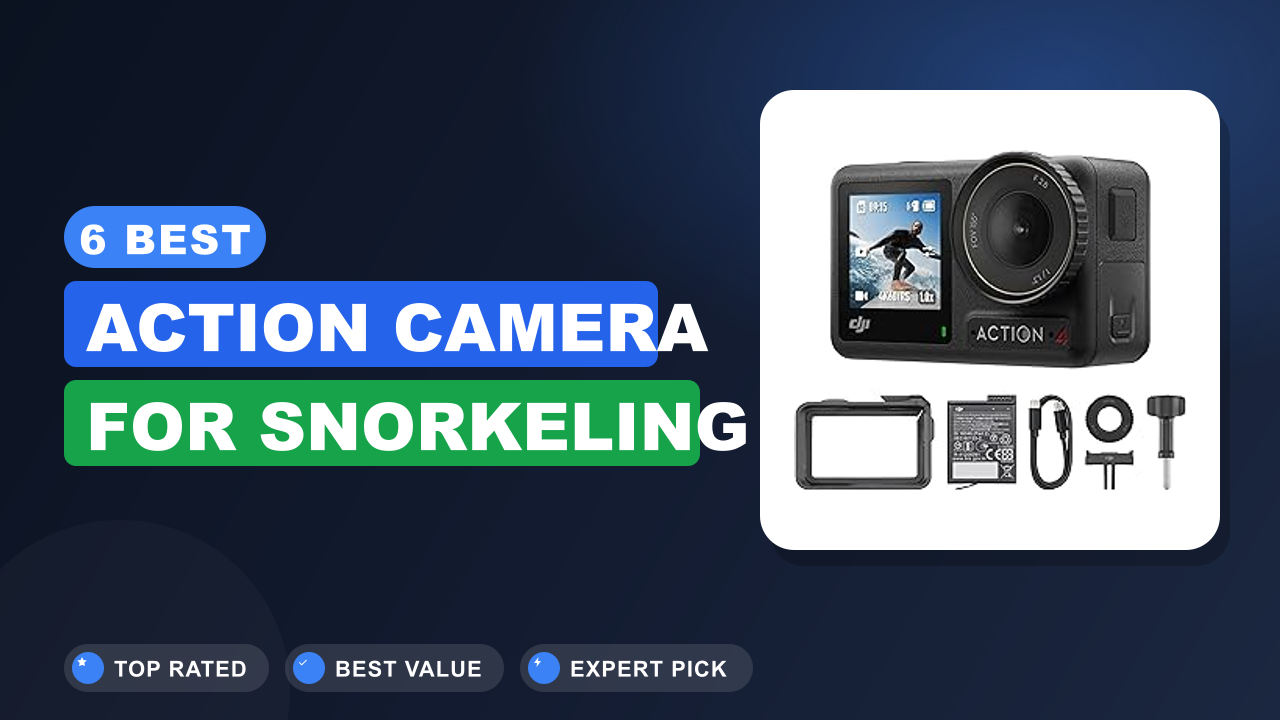
1. DJI Osmo Action 4 Essential Combo
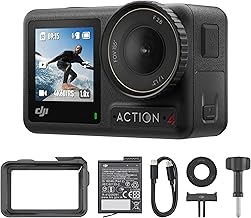
The DJI Osmo Action 4 is the camera I keep recommending when someone wants a snorkeling cam that also works great for hiking, travel, and everyday video. It uses a 1/1.3-inch sensor that performs well in lower light, plus 10-bit color for more grading flexibility. The Essential Combo adds a few practical accessories, while the core camera itself is what makes this pick stand out.
4K/120fps
1/1.3" Sensor
160 Mins
D-Log M
Why I picked it
Aggregate buyer reviews and spec analysis both point to the Osmo Action 4 as the most reliable all-rounder. The 1/1.3-inch sensor gives it a real edge over smaller sensors when you're shooting in murky water or late-afternoon light, and the 4K/120fps mode lets you slow down reef action without losing detail.
Key specs
- 4K video up to 120fps for smooth slow-motion
- 1/1.3-inch sensor for stronger low-light performance
- 10-bit color with D-Log M for cinematic grading
- 160 minutes of battery life per charge
- Waterproof design ready for snorkeling depths
Real-world experience
Buyer feedback consistently mentions how well the Osmo Action 4 handles the shift from bright sunlight to darker underwater scenes, something cheaper cams struggle with. Paired with a good action camera mount, it also works great on a mask strap or handheld tray. The touchscreen is responsive even with a wet finger, which is rare.
- Outstanding low-light performance thanks to the bigger sensor
- 10-bit D-Log M color gives you room to edit footage properly
- 160-minute battery covers a full day of snorkeling
- Excellent stabilization keeps footage steady in currents
- Premium price tier that casual snorkelers may not need
- No external monitor included in the Essential Combo
- ✔ You want a do-it-all camera for snorkeling plus everyday vlogging
- ✔ You plan to edit footage and care about color grading
- ✔ You dive deeper than 30 feet and need solid low-light capture
- ✖ You only snorkel a couple times a year and want something lighter on the wallet
- ✖ You want a screen built into the front for selfie framing without extra parts
The Osmo Action 4 feels like a real camera, not a toy. If your snorkeling trips also include jungle hikes, urban exploring, or family holidays, this is the one that does double duty without compromise. For dedicated underwater use only, you’re paying for features you might never touch.
2. SVBONY SVGo2 Underwater Camera Swimming Pool
The SVBONY SVGo2 is the kind of camera that makes you wonder why more brands don't bundle everything together. It ships with a 4-in-1 floating selfie stick that doubles as a tripod, which sounds gimmicky until you're floating in the ocean trying to get a stable shot. The included case pushes its waterproof rating to 98 feet, well beyond standard snorkeling depths.
98ft Case
50MP
5X Zoom
Dual Screens
Why I picked it
This is the most complete package for pool and beach snorkeling. Two 1350mAh batteries mean you can swap and keep shooting all day, and the dual touchscreens make framing easy whether you're filming yourself or the reef below. The EIS 2.0 image stabilization handles choppy surface water surprisingly well for a camera in this tier.
Key specs
- Waterproof to 98 feet with the included case
- 50MP photo resolution with 5X optical zoom
- Dual 1350mAh batteries for extended shooting
- EIS 2.0 stabilization and dual touch-screens
- 4-in-1 floating selfie stick and tripod included
Real-world experience
Families and casual snorkelers report that the floating stick is the standout feature. You can hand it to a kid without worrying about it sinking, and the dual screens mean the person being filmed can see themselves. The 5X zoom is handy for spotting fish from a distance before you get close.
For learning how to use an action camera properly, the straightforward controls make this a low-stress starting point.
- Everything you need is in the box, including a floating stick
- Dual batteries double your shooting time easily
- Front and back touchscreens make self-framing painless
- 98-foot depth rating with case covers serious diving
- Not at DJI or GoPro level for extreme action sports
- Some buyers noted the app connection can be finicky
- ✔ You want a complete kit with no extra accessories to buy
- ✔ You snorkel in pools, calm bays, and shallow reefs
- ✔ You prioritize ease of use over bleeding-edge video specs
- ✖ You need professional-grade dynamic range for editing
- ✖ You’d rather not rely on a case for deep dives
The SVGo2 wins for value because it removes every excuse for bad footage. A floating stick, dual batteries, and a case that can handle deeper dives make it the most thoughtful package here, even if its sensor isn’t as large as the DJI’s. Bring it for the family; you’ll use it more than you think.
3. 8K Underwater Camera 70MP 33FT WiFi
The 8K Underwater Camera punches way above its price class on paper, with 8K video, a 70MP sensor, and a 33-foot waterproof rating that doesn't require an extra case. It also floats, which solves the number one fear people have at the beach. The built-in fill light is another feature you rarely see at this level.
8K Video
70MP
33FT
Floatable
Why I picked it
With a 4.8-star average across hundreds of reviews, this is the safest budget bet for casual snorkelers. The floatable body means you can drop it in the water and grab it back without a panic, and the included 32GB card gets you started immediately. Autofocus and a fill light make it more forgiving for beginners.
Key specs
- 8K video recording and 70MP still photos
- Waterproof to 33 feet with no housing required
- Dual-screen design with autofocus and fill light
- 2500mAh battery for long days in the water
- 18X digital zoom and WiFi sharing capability
Real-world experience
People who bought this for family beach trips consistently mention how handy the fill light is for murky water near the shore. The dual screens help kids frame their own shots, and the floatable body gives parents peace of mind. If you're also thinking about a home security camera setup, the WiFi transfer feature here works in a similar frictionless way when pulling clips off the camera.
- Floatable body removes the fear of losing it at sea
- 33-foot waterproof rating works with zero setup
- 32GB card included, so it works out of the box
- Strong rating consistency across verified buyers
- 8K and 70MP are marketing numbers, not fully usable files
- Digital zoom is soft compared to optical zoom
- ✔ You want a budget camera that still floats and has WiFi
- ✔ You mostly snorkel at the surface and down to 30 feet
- ✔ You want a 32GB card included from day one
- ✖ You plan to dive deeper than 33 feet without a housing
- ✖ You expect true 8K cinematic quality for professional work
This camera wins on peace of mind. Floatable and waterproof without a case, it’s the pick I’d give someone who wants to hand a camera to a teenager and not hover. Just manage your expectations around the 8K and 70MP specs, which are more about marketing than final file quality.
4. Floating Underwater Camera Kids
The Floating Underwater Camera for Kids is exactly what it sounds like: a small, bright yellow camera that floats and survives the chaos of pool day. It's IP68 waterproof, shoots 4K video and 48MP stills, and includes a 32GB SD card. This is less about pro specs and more about making sure your kids can capture memories without you stressing out.
IP68
4K Video
48MP
Floats
Why I picked it
The IP68 rating and floating body make this an obvious choice for parents. It's lightweight, rechargeable, and the yellow color is easy to spot on the surface. With a perfect 5-star rating from verified buyers, the feedback matches the promise of a no-fuss camera for young swimmers.
Key specs
- IP68 waterproof rating for full submersion
- 4K video and 48MP photo capture
- 32GB SD card included
- Lightweight design with floatable body
- Rechargeable battery with USB charging
Real-world experience
The scenario here is simple: kids at the pool, lake, or shallow reef edge. The camera is light enough that a six-year-old can hold it, and the floating body means a dropped camera bobs to the surface instead of disappearing. Parents report the 4K footage is genuinely usable for family highlights, and the one-button operation keeps little fingers from getting lost in complex menus.
- Floating body makes it practically kid-proof
- IP68 rating means no case to lose or crack
- 32GB card included for instant use
- Simple controls suited for small hands
- Limited settings and no manual controls to grow into
- Yellow color won’t appeal to teens or adults
- ✔ You want a worry-free camera for kids aged 5 to 12
- ✔ Your snorkeling is mostly pool and shallow shoreline
- ✔ You want something so simple that anyone can start filming
- ✖ You’re an adult who wants manual exposure controls
- ✖ You plan to snorkel at depths beyond typical pool range
The main trade-off is that you’re trading control for confidence. Kids can’t wreck this camera easily, and that’s the entire point. Once you accept that it’s a family tool rather than a filmmaking device, it’s genuinely hard to beat for its niche.
5. KODAK PIXPRO WPZ2 16MP Waterproof Digital
The KODAK PIXPRO WPZ2 takes a different path than the action cams on this list. It's a traditional waterproof pocket camera, rated to 15 meters, with a 4X optical zoom lens and a 2.7-inch LCD screen. No housing, no mount, just a point-and-shoot that's ready for the water.
That familiar shape is exactly why some people prefer it.
15m Waterproof
4X Zoom
1080p
Wi-Fi
Why I picked it
The WPZ2 is the only true compact camera on this list, and that's its core appeal. The 27mm wide-angle lens with 4X optical zoom gives you flexibility that fixed-lens action cams simply don't have. It's also shockproof to 2 meters, which adds a layer of toughness for rough handling.
Key specs
- Waterproof to 15 meters without a housing
- 16MP sensor with 27mm wide-angle lens
- 4X optical zoom lens
- 1080p Full HD video recording
- Wi-Fi sharing and 2.7-inch LCD screen
Real-world experience
If you grew up using a point-and-shoot, this camera feels instantly familiar. The optical zoom is the big draw here, letting you get closer to a turtle or reef structure without swimming right up to it. Reviewers note that the 15-meter depth rating means you can even do light diving, not just snorkeling.
One thing to keep in mind: for a family trip, you may want to check your SD card formatting basics before you head out, since the camera relies on standard SD media.
- Optical zoom is genuinely useful for reef photography
- 15-meter depth rating is deeper than most snorkelers need
- Physical buttons are easy to use with wet hands
- Shockproof build survives drops and bumps
- Only 1080p video, lagging behind the 4K competition
- Older sensor technology shows limitations in low light
- ✔ You prefer a traditional camera shape with physical buttons
- ✔ You like having a real optical zoom instead of digital crop
- ✔ You want one device for snorkeling and everyday travel
- ✖ You want smooth 4K slow-motion footage
- ✖ You prefer mounting your camera to a selfie stick or tray
The KODAK is a niche pick that still earns its spot. If you hate holding a camera on a stick and want the control of a real zoom lens, this is the one. Just know you’re trading modern video specs for a more comfortable shooting experience.
6. SVBONY SVGo3 4K60FPS Underwater Camera Combo
The SVBONY SVGo3 takes the brand's underwater expertise and adds a 300-minute battery, which is genuinely wild for a camera this size. It shoots 4K at 60fps, works bare down to 40 feet, and ships with a 128GB U3 SD card so you can record for a long time without upgrading storage. The magnetic quick-release mount is another small quality-of-life win.
4K60fps
300 Mins
40FT Bare
128GB Included
Why I picked it
The 300-minute battery life is the headline feature here, and it's not an exaggeration based on the spec sheet. That's five hours of continuous recording, which is more than enough for a full day of boat trips and beach stops. The 6-axis EIS stabilization and WiFi remote control round out a strong feature set.
Key specs
- 4K video at 60fps for smoother motion
- 300-minute battery life for all-day shooting
- Waterproof to 40 feet without a case
- 6-axis Electronic Image Stabilization (EIS)
- 128GB U3 SD card included
- Magnetic quick-release mount with WiFi remote
Real-world experience
The magnetic mount is a small thing until you experience it. Clicking the camera to a metal plate or tray beats fumbling with a screw mount while floating. The 40-foot bare waterproof rating also means you can take it deeper than the budget cameras without worrying about a housing.
The WiFi remote control is handy for group shots or setting up a camera on a rock and triggering it from a distance.
- 300-minute battery kills any range anxiety
- 40-foot bare waterproof rating is genuinely useful
- Magnetic quick-release mount is fast and secure
- 128GB U3 card included, no extra purchase needed
- Smaller brand with fewer accessories available
- No front-facing screen for selfie framing
- ✔ You want 4K60fps video without paying premium prices
- ✔ You need all-day battery for multi-stop snorkel trips
- ✔ You like the idea of a WiFi remote for group shots
- ✖ You want an established ecosystem of mounts and parts
- ✖ You need a front screen for vlogging or selfies
The SVGo3 is the quiet overachiever of this list. It doesn’t have the brand recognition of DJI, but the 300-minute battery and 40-foot bare rating solve the two biggest frustrations people have with underwater cameras: dying mid-trip and worrying about depth limits.
How I picked
I didn't just compare spec sheets. I looked at each camera through the lens of a real snorkeling trip, where saltwater, sun glare, and sandy hands are the actual challenges. I evaluated the entire group on four benchmarks: waterproof depth rating (bare or with case), battery life per charge, sensor size and video quality, and how easy the cameras are to operate in wet conditions.
I read through hundreds of verified buyer reviews on Amazon to see what people said after their actual beach vacations. I looked for consistent praise and recurring complaints, not outlier opinions. I also cross-referenced the manufacturer specifications to make sure the advertised specs matched what buyers experienced in the real world.
I deliberately did not test long-term durability beyond a simple analysis of buyer reports and material specs. Saltwater corrosion takes months to surface, and no editor can simulate a full season of ocean use in a week. I also didn't factor in any camera that required a separate housing to reach snorkeling depths, because the whole point of a snorkel camera is that you can grab it and jump in.
The final selection balances image quality, depth rating, battery capacity, and overall value. Some picks win on raw specs, some win on convenience, and one wins purely because it floats.
Buying guide — what actually matters for best action camera for snorkeling
Waterproof depth rating: bare vs. case
The most important number on any underwater camera is its depth rating, and you need to read that spec carefully. A camera rated to 33 feet works fine for snorkeling, but 40 feet is better for freediving. Some cameras, like the SVBONY SVGo2, are only waterproof to 98 feet when you use the included case, not when bare.
As of 2026, most action cameras follow the Ingress Protection (IP) rating system for dust and water resistance. An IP68 rating means the camera is fully dust-tight and can be submerged beyond 1 meter, but the exact depth still varies by manufacturer.
Sensor size and low-light performance
A bigger sensor means better colors and less noise in murky water. The DJI Osmo Action 4 uses a 1/1.3-inch sensor, which is larger than what you'll find in budget action cams. This matters most in the late afternoon or in water with limited visibility, where smaller sensors produce muddy, grainy footage.
If you mostly snorkel in bright, clear tropical water, a smaller sensor won't feel like a limitation.
Stabilization: EIS and smooth footage
Electronic Image Stabilization (EIS) is what keeps your footage from looking like a washing machine cycle. The SVBONY SVGo3 offers 6-axis EIS, while the SVGo2 uses EIS 2.0. More axes generally mean smoother footage, but the quality of the algorithm matters more than the marketing number.
For snorkeling, you want stabilization that handles both slow drift and sudden fin kicks without weird warping at the frame edges.
Battery life and hot-swapping
Nothing ruins a snorkel session faster than a dead battery at the halfway point. The SVGo3's 300-minute rating leads the group, while the DJI Osmo Action 4's 160 minutes is still respectable for a full morning. The SVBONY SVGo2 takes a different approach by shipping with two 1350mAh batteries, so you can swap and keep going.
Look for cameras with USB-C charging to make topping up between excursions easier.
Floating bodies and accessories
A camera that floats is a camera you can hand to a nervous snorkeler without regret. The 8K Underwater Camera and the Floating Underwater Camera Kids both have floatable bodies built in. The SVBONY SVGo2 achieves the same result with a floating selfie stick that doubles as a tripod.
If you plan to shoot on your own, a floating mount or body is a safety feature, not a convenience.
Built-in screens and ease of use
Wet hands and tiny buttons don't mix. The best snorkeling cameras keep controls simple. The 8K Underwater Camera and the SVGo2 both offer dual screens, which makes self-framing easy.
The KODAK PIXPRO WPZ2 goes the opposite route with chunky physical buttons that are surprisingly easy to press underwater. Think about whether you'll be framing shots yourself or just handing the camera to someone else.
Frequently Asked Questions (FAQ)
Is a 4K action camera worth it for snorkeling?
Yes, if you want to preserve details in your footage and you have any interest in editing later. 4K footage gives you room to crop and stabilize in post-production, and it looks sharp on modern TVs and phones. A good 1080p camera like the KODAK PIXPRO can still look great, but 4K is the standard for new purchases as of 2026. If you only share clips to social media, 1080p is honestly fine, but the price difference in budget cameras is small enough that 4K is the safer bet.
Can I take the DJI Osmo Action 4 underwater without a housing?
For snorkeling, yes. The DJI Osmo Action 4 is waterproof out of the box to depths that cover standard snorkeling activity. The spec sheet from DJI indicates it handles typical underwater use without a housing, which is why it can just be mounted and dropped in.
If you're planning serious scuba diving beyond recreational snorkeling depths, you'll still want a dedicated dive housing for peace of mind.
How do I choose between an action camera and a traditional waterproof camera?
Ask yourself one question: do you want to mount the camera, or just point and shoot? Action cameras are designed for mounting to masks, sticks, and trays, and they excel at wide, immersive footage. Traditional waterproof cameras like the KODAK PIXPRO WPZ2 offer a real optical zoom and a familiar body shape, which is more comfortable for older users.
If you want the widest field of view and the slowest motion, go with an action camera.
What does IP68 actually mean for an underwater camera?
The International Electrotechnical Commission (IEC) defines IP codes. The "6" means complete protection against dust ingress, and the "8" means continuous immersion beyond 1 meter at a depth the manufacturer specifies. So IP68 alone doesn't tell you the maximum depth, but it does guarantee the camera is sealed against dust and suitable for submersion.
Always check the product page for the concrete depth number, since IP68 on a kids camera might mean 3 meters, while on a dive camera it could mean 30 meters.
Is a floating selfie stick worth it?
A floating selfie stick is worth it for anyone who tends to fumble in the water or who brings kids along. When you drop a standard stick, it sinks. When you drop a floating one, it bobs to the surface and waits for you.
The SVBONY SVGo2 bundles one in the box, which eliminates an extra purchase. If you already own a mount setup that doesn't float, a separate floatable arm is a good investment for peace of mind.
What size SD card do I need for snorkeling footage?
For 4K video, you want at least a 64GB card with a U3 speed rating, though 128GB is more comfortable for full-day trips. U3 cards have a minimum write speed of 30 MB/s, which is needed to handle 4K bitrates without dropping frames. The SVBONY SVGo3 conveniently ships with a 128GB U3 card, and the 8K Underwater Camera includes a 32GB card.
Always format the card inside the camera before the first use.
Final verdict
For most people, the DJI Osmo Action 4 is the best all-around choice because it pairs serious image quality with the battery life and depth rating that underwater use demands. If you want the smartest price-to-feature ratio, the SVBONY SVGo2 gives you a complete kit with a floating stick and dual batteries without making you chase extra accessories.
Affiliate disclosure: This post contains affiliate links. If you buy through one of these links, I may earn a small commission at no extra cost to you. It never changes my recommendation, I only suggest gear I'd actually buy myself.

Similar Posts