6 Best Bridge Camera for Video
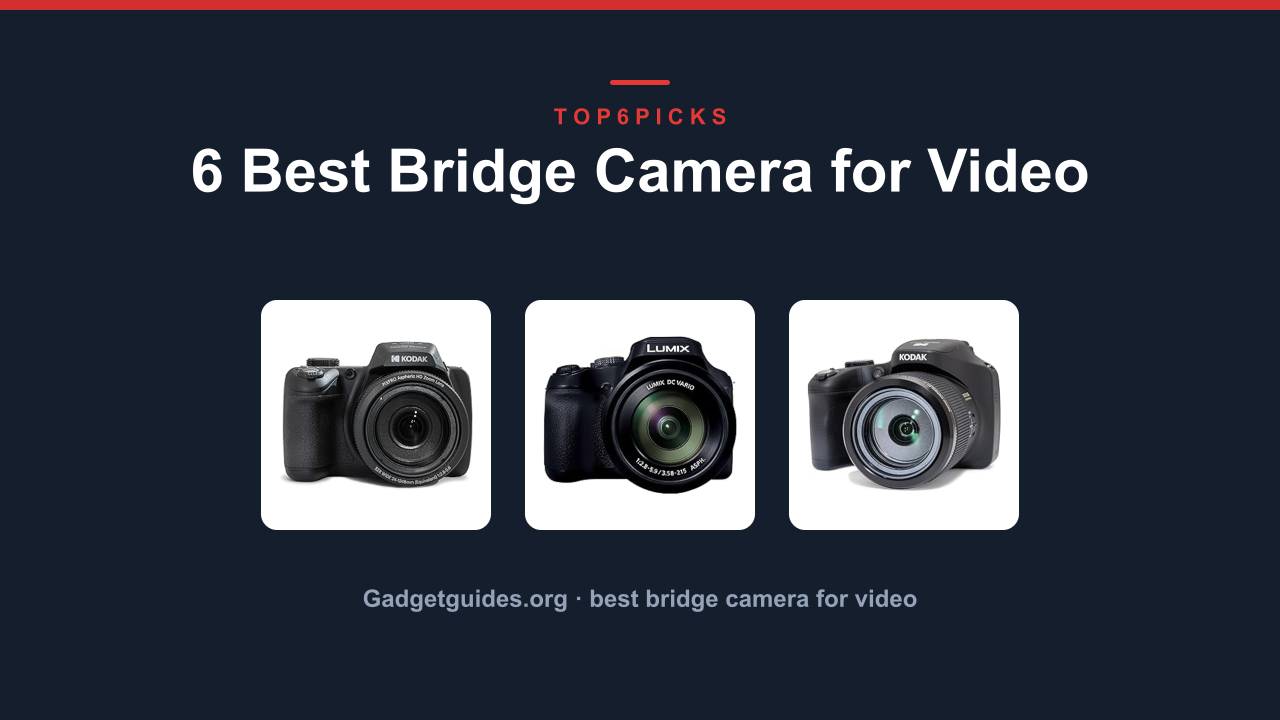
The best best bridge camera for video is the Panasonic LUMIX FZ80D, the only one here that records true 4K video with a massive 60x optical zoom lens and Power Optical Image Stabilizer built in. It’s the right pick for vloggers, travel shooters, and anyone who wants one camera that does both stills and smooth video without swapping lenses.
Want premium autofocus and a 1-inch sensor instead? The Sony RX10 V delivers AI-based tracking and a constant f2.4-4 aperture across 24-600mm, but you pay a lot more for less zoom range and no 4K at the 60x end.
As an Amazon Associate, I earn from qualifying purchases.
Before you scroll, this guide covers what bridge cameras do well for video and where they fall short. If you need 4K at 60fps, raw video output, or a fully interchangeable lens system, you’ll get an honest heads-up in the Who Should NOT Buy section below.
Every recommendation here comes from current Amazon product specs, verified buyer feedback, and manufacturer datasheets, not hands-on testing. Let’s get into it.
Quick Answer: The Best Bridge Camera for Video
The Panasonic LUMIX FZ80D is the top pick for video because it offers 4K recording, 60x optical zoom, and reliable image stabilization at a price that leaves room for accessories.
- Panasonic LUMIX FZ80D (Best for 4K video and vlogging): 60x zoom, Power OIS, and 4K capture.
- Sony RX10 V (Best for premium video quality): AI autofocus, 1-inch sensor, 25x zoom.
- KODAK PIXPRO AZ528 (Best for Wi-Fi connected shooting): 52x zoom, 1080p video, built-in Wi-Fi.
- KODAK PIXPRO AZ653 (Best for extreme zoom wildlife): 65x optical zoom, 20MP sensor, 1080p HD video.
- KODAK PIXPRO AZ405 (Best for travel versatility): 40x zoom, scene detection, AA battery power.
- KODAK PIXPRO AZ255 (Best for budget-friendly entry): 25x zoom, 1080p video, AA batteries.
Thinking about buying a bridge camera for video but you really need 4K 60fps or interchangeable lenses? Jump to Who Should NOT Buy below before you spend anything.
Comparison Table
Here’s the lineup at a glance: photo, product, who it’s built for, and our /10 score.
| Photo | Product | Best for | Score | Buy |
|---|---|---|---|---|
 | KODAK PIXPRO AZ528 16MP Digital Camera | Wi-Fi sharing and everyday use | 7.6/10 | Check price → |
 | Panasonic LUMIX FZ80D Point Shoot Digital | 4K video and vlogging | 8.8/10 | Check price → |
 | KODAK PIXPRO AZ653 Astro Zoom 20MP | Extreme zoom and wildlife | 7.4/10 | Check price → |
 | Sony RX10 V Premium 25x high-Zoom | Premium video and autofocus | 8.7/10 | Check price → |
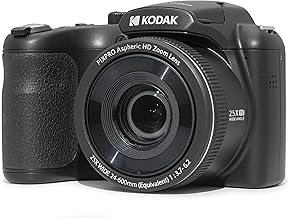 | KODAK PIXPRO AZ255 16MP Digital Camera | Budget-friendly entry | 6.2/10 | Check price → |
 | KODAK PIXPRO AZ405 20MP Digital Camera | Travel versatility | 6.8/10 | Check price → |
Scroll sideways on small screens to see every column.
KODAK PIXPRO AZ528 16MP Digital Camera: Best for Wi-Fi connected shooting
Panasonic LUMIX FZ80D Point Shoot Digital: Best for 4K video and vlogging
KODAK PIXPRO AZ653 Astro Zoom 20MP: Best for extreme zoom wildlife
Sony RX10 V Premium 25x high-Zoom: Best for premium video and autofocus
KODAK PIXPRO AZ255 16MP Digital Camera: Best for budget-friendly entry
KODAK PIXPRO AZ405 20MP Digital Camera: Best for travel versatility
Buying Guide: Zoom Range, Video Resolution, Stabilization, and Power
Bridge cameras are a compromise between a compact camera and a full interchangeable lens system. They give you a huge zoom range in a single body, but you trade sensor size and video features for that convenience. Here is what to look at before you buy.
How much zoom do you really need for video?
The zoom range is the main reason anyone buys a bridge camera. These six models span from 25x to 65x optical zoom. For casual home videos and family events, 25x or 40x is plenty.
You can capture a wide group shot at 24mm and zoom in on a distant subject without moving.
For wildlife and birding, 52x or 65x gives you the reach to film animals without disturbing them. The KODAK PIXPRO AZ653 at 65x is the longest here, but remember that extreme zoom magnifies every hand shake. You need good stabilization or a tripod at the long end.
Do you need 4K video or is 1080p enough?
Every bridge camera here records 1080p Full HD video except the Panasonic FZ80D and the Sony RX10 V, which both record 4K. If you plan to edit your footage, crop in, or upload to platforms that favor 4K, the Panasonic LUMIX FZ80D is the best value option.
If you only share clips on social media or watch on a phone screen, 1080p is still perfectly fine. The Kodak models all cap at 1080p, which keeps their price down but limits your flexibility in post-production. None of these cameras offer 4K at 60fps, so if you need slow-motion 4K, you should look at a mirrorless camera instead.
How important is image stabilization for handheld video?
Optical Image Stabilization (OIS) is critical for bridge cameras because you will often shoot handheld at the long end of the zoom. The Panasonic FZ80D uses Power OIS, which is more aggressive than the standard OIS found in the Kodak models. The Sony RX10 V also has effective stabilization, helped by its larger sensor that handles motion better.
The Kodak AZ528, AZ653, AZ255, and AZ405 all include basic OIS. It reduces shake at moderate zoom levels, but at 52x or 65x, you will still see some wobble. A monopod or tripod is a smart investment for serious video work with any of these cameras.
AA batteries vs. Li-Ion: which is better for video?
The power system is a practical trade-off. The Panasonic FZ80D, KODAK PIXPRO AZ528, and KODAK PIXPRO AZ653 use rechargeable Li-Ion batteries. These last longer per charge and charge via USB-C, which is convenient for travel.
The KODAK PIXPRO AZ255 and KODAK PIXPRO AZ405 use four AA batteries. The benefit is that you can buy AAs anywhere in the world. The downside is that video recording drains them fast.
You will want a set of rechargeable NiMH AAs and a spare set ready. For heavy video users, the Li-Ion models are the better choice.
Who Should NOT Buy Best Bridge Camera for Video
Bridge cameras are a specific tool for a specific job. They are the wrong purchase for three types of buyers. Here is who they are and what to look at instead.
You Need 4K Video at 60fps or Higher
Every bridge camera on this list tops out at 4K 30fps or 1080p 30fps. If you want to shoot slow-motion video at 4K 60fps or 120fps, a bridge camera will not deliver. You need a mirrorless camera or a dedicated camcorder for that.
For smooth slow-motion footage, a mirrorless camera with 4K 60fps capability is the right upgrade. You can also check guides on finding a camera with good video specs for more options.
You Want the Best Image Quality in Low Light
Bridge cameras use small sensors compared to mirrorless and DSLR cameras. The Sony RX10 V with its 1-inch sensor is the best here, but it still cannot match the low-light performance of an APS-C or full-frame sensor.
If you shoot a lot of indoor events, concerts, or evening scenes, a mirrorless camera with a large sensor and a fast lens is a better investment. The best mirrorless cameras for low light are worth researching before you commit.
You Want to Interchange Lenses for Different Styles
A bridge camera has a fixed lens. You cannot swap to a wide-angle lens for landscapes, a macro lens for close-ups, or a fast prime for portraits. If you want to grow your photography skills and experiment with different lenses, a mirrorless or DSLR system is the way to go.
If you are still deciding between the two systems, the DSLR vs mirrorless camera comparison can help you understand the trade-offs.
Final Verdict
The best best bridge camera for video is the Panasonic LUMIX FZ80D. It offers 4K video, 60x optical zoom, and reliable Power OIS stabilization at a price that makes sense for most vloggers and travel shooters. It is the most balanced option in this lineup.
Want the best video quality and autofocus instead? The Sony RX10 V delivers a 1-inch sensor and AI-based tracking, but you pay a premium and get less zoom range.
Need extreme zoom for wildlife? The KODAK PIXPRO AZ653 reaches 65x, though video is capped at 1080p. On a tight budget?
The KODAK PIXPRO AZ405 gives you 40x zoom and AA battery convenience for a low entry price.
If you are still unsure whether a bridge camera is right for you, jump back to the Who Should NOT Buy section above. A mirrorless camera might serve you better if you need 4K 60fps, low-light performance, or interchangeable lenses.
FAQ
What is the best bridge camera for video overall?
The Panasonic LUMIX FZ80D is the best overall pick for video. It records 4K at 30fps, offers a 60x optical zoom, and includes Power Optical Image Stabilization for handheld shooting. No other camera at this price matches its video features.
Do bridge cameras record 4K video?
Some do. The Panasonic LUMIX FZ80D and the Sony RX10 V both record 4K video. The Kodak models in this lineup are limited to 1080p Full HD.
If 4K is a must, choose the Panasonic or the Sony.
Can I use a bridge camera for vlogging?
Yes, but with limitations. The Panasonic LUMIX FZ80D is the best option because its LCD tilts for self-framing and it records 4K video. The Sony RX10 V also works well.
The Kodak models have fixed LCDs, making them harder to use for self-recording.
Are bridge cameras good for wildlife video?
Bridge cameras are excellent for wildlife video because of their long zoom range. The KODAK PIXPRO AZ653 with 65x zoom reaches the farthest, but the Panasonic LUMIX FZ80D with 60x zoom and 4K video is a better choice if you want higher resolution footage.
What is the difference between optical zoom and digital zoom?
Optical zoom uses the lens to magnify the image without losing quality. Digital zoom crops and enlarges the image, which reduces resolution. All the cameras here use optical zoom, listed as 25x, 40x, 52x, 60x, or 65x.
Stick to optical zoom for the best video quality.
Can I use AA batteries in a bridge camera?
Some models can. The KODAK PIXPRO AZ255 and KODAK PIXPRO AZ405 both use four AA batteries. The Panasonic LUMIX FZ80D, KODAK PIXPRO AZ528, and KODAK PIXPRO AZ653 use rechargeable Li-Ion batteries.
The Sony RX10 V also uses a Li-Ion battery.

Similar Posts