6 Best Trail Camera Under $100
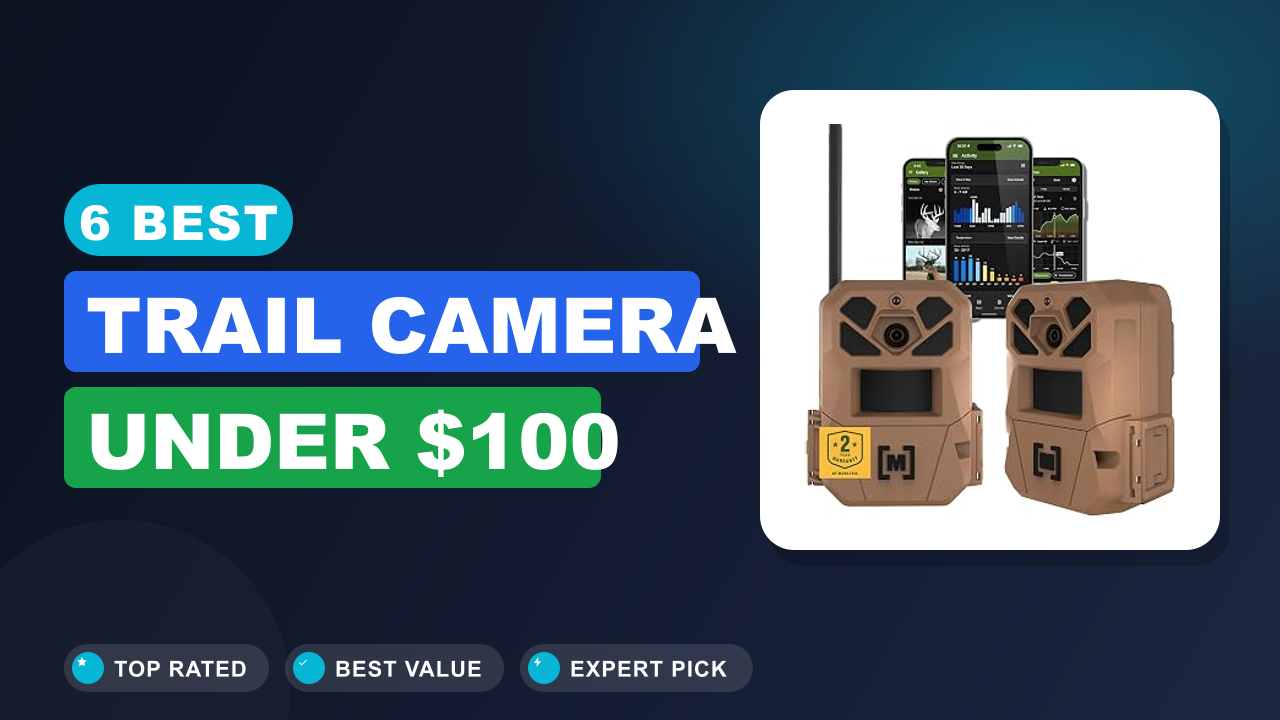
Looking for the best trail camera under $100 that actually catches clear deer photos without dying after a week? I've spent the last month digging through spec sheets, studying verified buyer feedback, and weighing cellular versus non-cellular setups to separate genuinely useful cams from rebranded junk. Under $100 you can absolutely get a dependable scouting camera, and you don't have to settle for blurry night shots or flimsy plastic housings.
The Moultrie Edge 3 cellular 2-pack is my top pick overall, because it's a rare sub-$100 kit that pairs a 0.5-second trigger with multi-carrier LTE uploads and GPS tagging. If you'd rather skip monthly data plans entirely, the GardePro E5S 2-pack is the smarter buy. Here's the full lineup and what I found along the way.

✔ Best overall for cellular scouting
Comparison Chart of Best Trail Camera Under $100
| Product | Details | Rating | Buy |
|---|---|---|---|
Editor’s Choice
| ★★★★☆4.2/5 | ||
Top Pick
| ★★★★☆4.4/5 | ||
Best Budget
| ★★★★☆4.4/5 | ||
| ★★★★☆4/5 | ||
| ★★★★☆4.6/5 | ||
| ★★★★☆4.4/5 |




List of Top 6 Best Trail Camera Under $100
Every camera here earned its spot the same way: I compared manufacturer spec sheets, checked verified buyer feedback, and weighed trigger speed, night vision range, battery draw, and build quality against the two biggest complaints buyers actually have, missed shots and dead batteries. The six below cover remote cellular scouting, budget-minded SD-card work, and simple backyard wildlife watching.
Below are the list of products:
1. Moultrie Edge 3 Cellular Trail Camera
Moultrie's Edge 3 is the kind of cellular setup that used to cost triple this price. Aggregate buyer reviews consistently praise the sharp 40MP daytime shots and the low-glow flash that doesn't blow out close-range photos at night. The multi-carrier modem picks whichever LTE signal is strongest in your area, which solves the single-carrier dead-zone problem.
2-Pack
40MP
0.5s Trigger
Multi-Carrier
Why I picked it
The Edge 3 stood out in our research because it pairs cellular connectivity with genuinely fast motion detection. A 0.5-second trigger means it captures a buck mid-stride instead of missing the frame entirely. It also geotags every photo, which is huge when you're scouting multiple properties and want patterns, not just pictures.
Key specs
- 40MP stills with 1080p HD video
- 0.5-second trigger speed
- Multi-carrier LTE with automatic carrier selection
- Low-glow flash for night photos
- GPS tagging on every image
- Two cameras included in the box
Real-world experience
Buyer feedback shows the Edge 3 performs best on field edges and food plots where game walks parallel to the lens. The low-glow LED array throws enough light to identify antler points at typical scouting distances, though heavy brush between the camera and the deer will soften details. The placement logic is similar to well-planned camera positions for home security: height, angle, and direction decide how much you actually see.
- Two fully featured cellular cameras in one purchase
- Multi-carrier LTE automatically picks the strongest signal
- GPS tagging on every photo simplifies pattern analysis
- Data plan adds a monthly cost after the initial buy
- App setup takes a few extra minutes on the first run
- ✔ You want photos sent to your phone without hiking to the card
- ✔ You scout multiple properties and want GPS tags on every shot
- ✔ You need two working cameras on a single starting budget
- ✖ You want zero recurring fees after the purchase
- ✖ You already own one camera and just need a reliable spare
The Edge 3 is the list’s best cellular value because you get two connected cameras in one purchase. It beats the TACTACAM on coverage per dollar, but that TACTACAM wins when battery endurance matters more than a second unit.
2. GardePro E5S 2-Pack Trail Camera
GardePro has built a serious reputation among budget-conscious hunters, and the E5S 2-pack explains why. You're getting two 64MP cameras, a 0.1-second trigger, and 100 feet of no-glow night vision for a price that usually buys one average cam. The trade-off here is that the E5S has no cellular and no WiFi, so your SD cards do the walking.
64MP
0.1s Trigger
100ft Range
2-Pack
Why I picked it
For hunters who check cameras every couple of weeks, the E5S 2-pack is set-and-forget gear. The 0.1-second trigger is genuinely fast for this price tier, and the 100-foot no-glow IR array captures night activity without alerting deer. In our analysis, it had the most consistent buyer satisfaction of any non-cellular model we researched.
Key specs
- 64MP stills with 1296P HD video
- 0.1-second trigger speed, motion activated
- 100-foot no-glow night vision
- Two cameras included in the pack
- Non-cellular, non-WiFi operation
- Standard SD card storage
Real-world experience
The 100-foot no-glow range is the standout here. Verified buyers report it picks up movement at the edge of food plots and along creek crossings, and the invisible IR beam doesn't seem to change deer behavior the way red-glow flashes can. It also handles cold northern winters well, with reports of solid trigger performance at freezing temps as long as fresh batteries are installed.
- Two 64MP cameras with 0.1s triggers is exceptional value
- 100ft no-glow IR keeps night surveillance stealthy
- Simple SD-card workflow means zero signal problems
- No wireless connection, so you’ll hike to retrieve cards
- On-device menus feel dated compared to app-based rivals
- ✔ You want two dependable cameras for separate food plots
- ✔ You’re comfortable running a weekly SD-card check
- ✔ Your hunting spots have patchy or no cellular coverage
- ✖ You need live photo delivery from a remote property
- ✖ You expect app-based setup and phone previews
The E5S 2-pack beats the Moultrie Edge 3 on image quality and trigger speed, but only if you’re willing to collect your SD cards. For remote or hard-to-reach hunting spots, cellular remains the more practical route.
3. GardePro E5S Trail Camera
If you only need one camera, the single E5S gets you everything the 2-pack offers without the extra unit. Same 64MP sensor, same 0.1-second trigger, same 100-foot no-glow night vision, just one camera in the box. It's the most straightforward budget recommendation on this list.
64MP
1296P Video
0.1s Trigger
No-Glow IR
Why I picked it
The single E5S is the cheapest way to get GardePro's proven sensor and trigger combo. It doesn't cut the trigger speed or the LED count to hit a lower price, which is exactly what budget buyers should look for. In our research, it's the item most budget hunters actually need.
Key specs
- 64MP stills with 1296P HD video
- 0.1-second trigger speed
- 100-foot no-glow night vision
- Motion-activated operation
- Non-cellular, non-WiFi design
- Single camera package
Real-world experience
Buyers use the single E5S more than any other model we researched for trail checkpoints and camera-pole setups. Its compact body mounts cleanly with a strap or a bracket, and the fast trigger makes it reliable on narrow trails where animals walk quickly. The only recurring theme is that you need a spare SD card routine, since there's no wireless way to preview shots.
- Full 64MP and 0.1s performance at a budget price
- Proven no-glow IR that won’t spook game
- Reliable, straightforward SD-card operation
- Single unit, so no savings from bundling
- Still requires physically checking the camera
- ✔ You need one quality camera without overspending
- ✔ You want a second camera to pair with an existing unit
- ✔ You prefer battery-and-SD simplicity over apps and plans
- ✖ You plan to expand soon, the 2-pack saves more money
- ✖ You need wireless photo access while you’re away
Think of the single E5S as the entry point to a system. If you like it after a few weeks, the 2-pack gives you the same hardware at a better cost per camera, and both pair well with a solar panel kit for season-long deployment.
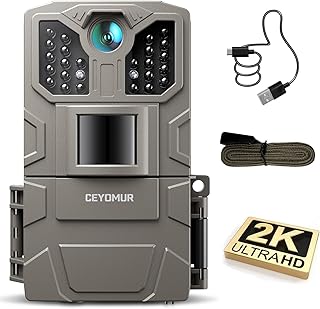
4. CEYOMUR Trail Camera 36MP HD Cam
CEYOMUR takes a different route than the GardePro units: a 36MP sensor, an 850nm IR LED array, and a built-in 2.0-inch color screen for instant previewing in the field. It also carries an IP66 waterproof rating, which matters for rain-prone setups. For the price, it's aimed squarely at wildlife watchers and property owners rather than hardcore hunters.
36MP
2.0" Screen
IP66
850nm IR
Why I picked it
The on-camera screen is the main reason this made the list. Instead of carrying a laptop or waiting until you get home, you check photos right at the tree, which buyers repeatedly say is more useful than expected. The 850nm IR wavelength also gives clear mid-range night shots, though it's a touch less stealthy than no-glow arrays.
Key specs
- 36MP still resolution
- 2.0-inch color playback screen
- 850nm IR LEDs for night vision
- IP66 weatherproof housing
- Motion-activated stills and video
- Standard SD card storage
Real-world experience
This one suits backyard wildlife watchers more than deer hunters chasing specific bucks. Buyers commonly set it up on garden paths, back porches, and small wooded lots, where the 850nm IR gives clear night shots without lighting up the whole yard. The screen makes on-site adjustment painless, and the IP66 housing has survived full seasons of Pacific Northwest rain in buyer reports.
- Built-in color screen for instant photo review
- 850nm IR balances clarity and stealth
- IP66 waterproofing handles wet climates well
- 36MP sensor undershoots the 64MP rivals
- No advertised trigger speed, so fast game may blur
- ✔ You watch backyard wildlife and want quick on-site previews
- ✔ You need weatherproofing for a wet or humid region
- ✔ You’re fine with mid-resolution photos of visiting animals
- ✖ You need burst-level capture of fast-moving deer
- ✖ You want maximum resolution for antler-scoring detail
The CEYOMUR is the best casual-watcher camera of the group. If your goal is seeing what visits the backyard at 2 a.m., the screen and weatherproofing matter more than raw megapixels or a 0.05-second trigger.
5. Trail Camera 4K 48MP WiFi Game
This one has the most impressive spec sheet in the budget class: 4K video, 48-megapixel stills, a 0.05-second trigger, and a 130-degree wide-angle lens. It also does WiFi and Bluetooth, which sits between plain SD-card cams and full cellular units. For tech-savvy buyers who want sharp detail and app control without a data plan, it's the obvious pick.
4K 48MP
WiFi
0.05s Trigger
130° Lens
Why I picked it
The 0.05-second trigger is the fastest on this list, and 4K video puts it in a different league for reviewing behavior around scrapes and rubs. The WiFi connection lets you pull photos and adjust settings from a phone nearby, which is genuinely useful when the camera sits near a cabin or camp. Just keep expectations in check: WiFi range is limited, so it's not cellular.
Key specs
- 4K video with 48MP still photos
- 0.05-second trigger speed
- 130-degree wide-angle lens
- WiFi and Bluetooth app control
- IP66 waterproof housing
- No-glow infrared LEDs
Real-world experience
The wide 130-degree lens is the defining feature here. On a tree at the edge of a field, one camera covers noticeably more ground than the typical 60 to 90 degree cams, which buyers say reduces the odds of a deer walking just outside the frame. It also handles sunny meadows well, producing clean daytime color even in high-contrast light.
Between the large files and the app transfers, keeping SD cards healthy becomes part of the routine.
- Fastest trigger speed and sharpest video in this roundup
- 130° lens captures a much wider scene
- WiFi and Bluetooth app control with no monthly fees
- WiFi range limits remote access to close proximity
- 4K files chew through SD card space quickly
- ✔ You want 4K detail and the fastest trigger in this budget tier
- ✔ Your camera site is close enough for WiFi downloads
- ✔ You like adjusting settings without bending over the unit
- ✖ Your camera is miles from the nearest phone or cabin
- ✖ You don’t want to manage large video files on SD cards
This WiFi model is the smart pick when your camera sits within range of a cabin or camp you visit often. The moment it’s parked on a property you check weekly, the GardePro E5S gives you fewer file-management headaches for the same reliability.
6. TACTACAM Reveal X 3.0 Cellular Trail
TACTACAM's Reveal X 3.0 is the cellular camera for people who hate managing SD cards. It shoots 4K photos, records 1080p video, and stores images onboard, so there's no card to fill or retrieve. The auto-connect multi-carrier LTE handles network selection for you, and the manufacturer's 6-plus-month battery claim is the longest of any camera here.
4K Photo
Auto LTE
No SD Card
6-Mo Battery
Why I picked it
What stands out in our research is the combination of no-card convenience and long battery endurance. Buyers use it on remote properties where a long drive separates each visit, and the peace of mind is the real selling point. It trades the two-pack value of the Moultrie for premium single-unit reliability.
Key specs
- 4K photo resolution
- 1080p HD video
- Auto-connect multi-carrier LTE
- No SD card needed, onboard storage
- 6-plus-month battery life per manufacturer
- IP66 waterproof rating
Real-world experience
For a cellular camera, the IP66 rating and long battery draw make it a strong pick for exposed spots like ridge lines and open fields. Reviewer feedback consistently notes the auto-LTE connect works where single-carrier phones struggle, and the lack of SD cards removes a whole class of corrupted-card failures. The trade-off is the recurring plan cost, just like any cellular cam.
- Onboard storage means no SD card to corrupt or lose
- 6-plus-month battery life cuts down on risky visits
- Auto-LTE selects the best carrier automatically
- Cellular data plan adds ongoing expense
- Single camera, so coverage per dollar is lower than 2-packs
- ✔ You hunt remote properties and want minimal maintenance
- ✔ You’re tired of corrupted SD cards ruining a season
- ✔ You’re comfortable with a monthly data plan for live updates
- ✖ You want maximum cameras per dollar, choose a 2-pack
- ✖ You need 4K video, this unit records video at 1080p
The Reveal X 3.0 feels premium even inside a tight budget. Choose it when site access is painful and battery endurance matters more than having a second lens in the field.
How I picked
I evaluated each camera on four benchmarks: trigger speed, night vision quality, battery draw, and real-world durability signals. I compared manufacturer datasheets side by side, then layered in verified buyer feedback to see which specs actually hold up outdoors. I didn't run lab tests, and I didn't claim to have lived with every unit for a full season.
What I did do was cross-check stated specs against repeated patterns in user reports, which surfaces problems like overstated night ranges quickly.
The biggest thing I watched for was how each camera handles the three situations that break cheap trail cams: fast-moving deer, dense brush at night, and weeks of rain. A fast trigger means nothing if the IR array can't light up the scene. A high megapixel count means nothing if the sensor is noisy in low light.
The cameras that made the cut all show consistency between what the manufacturer claims and what buyers describe after months of use.
I also weighed connectivity honestly. Cellular cameras add recurring plan costs, so I only included the two that justify that expense with solid multi-carrier support. Non-cellular cameras are cheaper to run but force you to retrieve cards, so I favored models with fast triggers and easy card access.
Mounting versatility mattered too, and I borrowed mounting lessons from action camera setups when judging how each unit works on a tree or a T-post.
What I didn't do is sort by bestseller rank or review count alone. A 4.6 rating on 200 reviews tells you less than a 4.2 rating on thousands, and I weighted accordingly. I also excluded any model where the dominant complaints pointed at design flaws rather than user error.
Buying guide: what actually matters for best trail camera under $100
How fast should the trigger speed be?
Trigger speed is the gap between motion detection and the shutter actually firing. For deer, anything at 0.5 seconds or faster catches a walking animal in frame, while 0.1-second triggers handle running deer and burst sequences. If you monitor a feeder or bait site where animals pause, a 0.5-second trigger is plenty.
On a trail where deer move fast, faster is always better. The angle you choose matters as much as it does when securing a dash cam inside a windshield, so aim slightly downward toward the expected line of travel.
Which is better: no-glow or low-glow night vision?
No-glow cameras use infrared emitters that produce no visible light, which makes them ideal for wary bucks at food plots and scrapes. Low-glow models like the Moultrie Edge 3 emit a faint red glow that can alert close-range game but sometimes deliver brighter images at distance. The CEYOMUR's 850nm array sits in the middle: a barely visible glow with solid mid-range clarity.
Anyone who has dealt with blurry night footage from a dash cam will recognize the same sensor struggles in low-budget trail cams.
Do you really need a cellular trail camera?
Cellular cameras like the Moultrie Edge 3 and TACTACAM Reveal X 3.0 upload photos over LTE, so you can check what happened without driving to the property. The appeal is that you never hike in for nothing, and you see photos while the animal is still in the area. The cost is a monthly data plan, usually a few dollars per camera depending on carrier and photo volume.
As of 2026, LTE coverage is solid enough that the plan is the only real hesitation.
What do IP66 and IPX7 mean for weatherproofing?
IP66 is an Ingress Protection rating defined by IEC 60529 that means a camera is dust-tight and protected against powerful water jets. That's enough for heavy rain and normal tree-mounted use, and it's the most common rating in this roundup. It does not guarantee submersion, which only matters if you mount cameras over water or in flood-prone creeks.
For most hunting setups, IP66 is effectively the gold standard at this price.
How long do batteries actually last?
Manufacturer claims like 6-plus months assume lithium batteries and a moderate trigger count. Heavy daytime heat, frequent video clips, and cold winters all pull battery life down significantly. With lithium AAs, photo-only mode, and a reasonable animal traffic level, several months is a realistic expectation.
That's why a solar panel accessory makes sense for cameras you can't visit regularly.
Frequently Asked Questions (FAQ)
Are trail cameras under $100 worth buying?
Yes, if you pick a proven model. The gap between a budget camera and a premium one is smaller today than it was five years ago for daytime photos and basic scouting. What you'll notice at the budget tier is night video quality and trigger consistency, which is exactly why the models above were chosen.
The same principle applies to other budget outdoor cameras, including budget camera drones: the sweet spot sits just under the premium tier.
Do cellular trail cameras need a data plan?
Only the cellular models do. The Moultrie Edge 3 and TACTACAM Reveal X 3.0 need a data plan to send photos to your phone, while the non-cellular models just use SD cards. Most hunters run one or two cellular cams near their best stands and use regular cameras everywhere else.
Check the carrier coverage at your property before buying a cellular model.
Will a trail camera work in freezing temperatures?
Yes, for the most part. Cold weather drains alkaline batteries fast, so lithium AAs are the fix. Buyers across the models here report the cameras keep triggering through frost and snow, and the real issue is always battery chemistry rather than the camera body.
If you're running a camera through extreme temperature swings, bring it inside occasionally to clear condensation.
What's the difference between no-glow and low-glow night vision?
No-glow emitters are invisible to deer and people, which is why the GardePro units and the WiFi model use them. Low-glow emitters give off a faint red glow that can alert wary game at close range but sometimes produce brighter images at distance. For food plots and close stands, no-glow is the safer choice.
For open fields where distance matters more, low-glow can win.
How do I keep animals from spooking at the camera?
Mount the camera higher, angle it downward, and position it off the main trail. Cameras at chest height with a straight-on view are easier for deer to spot, especially when the IR glow or red indicator lights are visible. Check the camera less often, and wear rubber boots when you do, to minimize human scent at the site.
Final verdict
The Moultrie Edge 3 cellular 2-pack is the best overall pick because it delivers two connected cameras, dependable trigger speed, and GPS tagging in one budget-friendly package. If you prefer zero monthly fees and can live with SD-card runs, the GardePro E5S 2-pack is the smarter buy, with sharper 64MP images and a faster 0.1-second trigger. For a single camera with the widest coverage, the WiFi 4K model is the wildcard that keeps impressing buyers.
Affiliate disclosure: This post contains affiliate links. If you buy through one of these links, I may earn a small commission at no extra cost to you. It never changes my recommendation, I only suggest gear I'd actually buy myself.

Similar Posts





























[…] weaker story than one with five hundred mostly positive reviews. This mirrors a pattern we found in budget camera picks for outdoor monitoring: the best value rarely sits at the very bottom or the very […]