Dslr Camera Battery Life

The lifeblood of any DSLR camera, whether you’re a seasoned professional capturing fleeting moments or an enthusiast exploring your creative vision, is its battery. Without a charged power source, even the most advanced technology becomes a sophisticated paperweight. Understanding and optimizing DSLR camera battery life is therefore paramount for uninterrupted shooting, ensuring you don’t miss that once-in-a-lifetime shot due to a depleted cell. This isn’t just about knowing how long a battery lasts; it’s about understanding the factors that influence it, the types of batteries available, and practical strategies to extend their performance in the field.
From the nuances of sensor technology and LCD screen usage to the impact of environmental conditions and shooting habits, numerous elements contribute to how quickly your DSLR drains its power. This comprehensive guide will equip you with the knowledge to maximize your camera’s uptime, troubleshoot common battery issues, and make informed decisions about battery management, ultimately enhancing your photography experience and reducing the anxiety of a dying battery.
Key Takeaways
- Battery Type Matters: Lithium-ion batteries are standard for modern DSLRs due to their high energy density and low self-discharge rate.
- Usage Patterns Significantly Impact Life: Frequent LCD use, live view, continuous shooting, and long video recordings drain batteries faster than using the optical viewfinder.
- Environmental Factors Play a Role: Extreme cold significantly reduces battery performance, while extreme heat can degrade batteries over time.
- Camera Settings Influence Consumption: Features like image stabilization, Wi-Fi, GPS, and screen brightness directly affect power draw.
- Battery Health Degradation: Batteries have a finite lifespan and performance diminishes with each charge cycle and over time.
- Effective Management Strategies: Simple practices like carrying spares, turning off unnecessary features, and proper storage can dramatically extend shooting time.
- Third-Party Batteries: While often cheaper, third-party batteries can vary in quality and may not always offer the same performance or reliability as OEM options.

Credit: elitesportsmedicine.com
Understanding Dslr Camera Batteries
The modern DSLR camera relies on sophisticated power management systems to fuel its complex internal components. At the heart of this system is the rechargeable battery, typically a lithium-ion (Li-ion) cell. These batteries have become the industry standard due to their superior energy density, meaning they can store a significant amount of power in a relatively small and lightweight package. Compared to older technologies like Nickel-Cadmium (NiCd) or Nickel-Metal Hydride (NiMH), Li-ion batteries offer several advantages crucial for photography:
- High Energy Density: More power in a smaller form factor.
- Low Self-Discharge Rate: They retain their charge for longer periods when not in use, which is essential for cameras that might sit idle for weeks or months between shoots.
- No Memory Effect: Unlike some older battery chemistries, Li-ion batteries do not suffer from the “memory effect,” where repeatedly charging a partially depleted battery can reduce its overall capacity. This means you can charge them whenever convenient without harming their long-term performance.
- Voltage Stability: They provide a relatively stable voltage output, which is important for consistent camera operation.
The capacity of a DSLR battery is typically measured in milliampere-hours (mAh). A higher mAh rating generally indicates a larger capacity and, consequently, longer potential run time. For example, a 1500 mAh battery will, under identical conditions, theoretically last longer than a 1000 mAh battery. However, this is a simplified view, as the actual battery life experienced in real-world use is influenced by a multitude of factors beyond just the mAh rating.
Oem Vs. Third-party Batteries
When it comes to replacing or supplementing your camera’s battery, you’ll encounter options from the original equipment manufacturer (OEM) and various third-party brands.
OEM batteries, made by your camera’s manufacturer (e.g., Canon, Nikon, Sony), are generally considered the safest and most reliable choice. They are designed and tested to meet the specific power requirements and safety standards of your camera model. This often translates to:
- Guaranteed Compatibility: They are guaranteed to work seamlessly with your camera’s charging and power management systems.
- Optimal Performance: They are engineered to deliver the advertised capacity and performance.
- Built-in Safety Features: They typically include advanced protection circuits to prevent overcharging, overheating, and short-circuiting.
- Higher Cost: The primary drawback is their significantly higher price point compared to third-party alternatives.
Third-party batteries come from a wide array of manufacturers and are often much cheaper. They can be an attractive option for budget-conscious photographers. However, their quality and reliability can vary greatly:
- Cost Savings: The main advantage is their affordability.
- Variable Quality: Some reputable third-party brands offer good quality batteries that perform comparably to OEM. However, many cheaper options may use lower-grade cells, have inaccurate mAh ratings, or lack robust safety features.
- Compatibility Issues: In some cases, third-party batteries might not be fully recognized by the camera, leading to inaccurate battery level indicators or even failure to charge.
- Potential Safety Risks: Lower-quality batteries may pose a higher risk of overheating or other safety issues due to inadequate protection circuits.
Pro Tip: Always research a third-party battery brand thoroughly before purchasing. Look for reviews that specifically mention compatibility with your camera model and discuss performance and longevity. If possible, opt for brands that offer a warranty.
Battery Health And Lifespan
Like all rechargeable batteries, DSLR camera batteries have a finite lifespan. This lifespan is typically measured in charge cycles. A charge cycle is generally defined as one full discharge and recharge. Most Li-ion batteries are rated for several hundred charge cycles (often between 300 and 500) before their capacity significantly degrades.
Beyond charge cycles, time also plays a role. Even if a battery is not frequently used, its internal chemistry degrades over time. After two to three years, you might notice a decrease in its maximum capacity and overall run time, even if it hasn’t been heavily cycled.
Signs of a degrading battery include:
- Significantly shorter run times than when the battery was new.
- The camera displaying an inaccurate battery level (e.g., dropping suddenly from full to empty).
- The battery failing to charge fully or taking an unusually long time to charge.
- The battery feeling unusually warm during charging or use.
When a battery’s performance has degraded to the point where it no longer meets your shooting needs, it’s time for a replacement. For critical shooting situations, it is always advisable to use a battery that is in good health.

Credit: www.youtube.com
Factors Influencing Dslr Battery Life
The advertised battery life for a DSLR camera is usually based on specific testing conditions, often involving the use of the optical viewfinder and minimal LCD screen activity. In real-world scenarios, your actual battery life can deviate significantly due to a variety of factors.
Understanding these influences is the first step towards managing your power effectively.
Usage Of The Lcd Screen And Live View
The LCD screen on the back of your DSLR is a powerful tool for reviewing images, changing settings, and composing shots. However, it is also one of the biggest power drains.
- Reviewing Images: Each time you press the playback button to review a photo or video, the LCD screen illuminates, consuming power. The longer you spend reviewing, the more battery it uses.
- Changing Settings: Accessing menus and adjusting settings via the LCD screen requires it to be on, contributing to power consumption.
- Live View Mode: This is where the most significant power drain occurs. When you use Live View, the camera’s image sensor is continuously active, sending a video feed to the LCD screen. This mimics the functionality of a mirrorless camera and is far more power-intensive than using the optical viewfinder. Manufacturers often quote battery life figures for Live View usage that are substantially lower than for viewfinder use. For instance, a camera rated for 800 shots using the viewfinder might only last 200-300 shots in Live View.
Optical Viewfinder Vs. Electronic Viewfinder (evf)
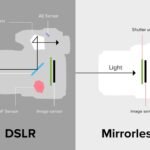
DSLRs primarily use an optical viewfinder (OVF), which shows a direct, unpowered view through the lens via a mirror and prism system. This is highly power-efficient. In contrast, mirrorless cameras use an electronic viewfinder (EVF), which is essentially a small, high-resolution screen. While EVFs offer advantages like displaying exposure previews and shooting information, they are a constant power draw. This is a fundamental difference that contributes to DSLRs generally having better battery life than comparable mirrorless cameras when using their respective viewfinders.
Continuous Shooting (burst Mode)
When you engage continuous shooting or burst mode, the camera rapidly captures a sequence of images. This involves the mirror flipping up and down repeatedly, the shutter firing multiple times, and the image sensor processing data at a high rate. While the LCD screen might not be actively used for composition during bursts, the sheer mechanical and electronic activity required for rapid image capture consumes a considerable amount of power. The longer and faster the burst, the more battery life it will deplete.
Video Recording
Shooting video is one of the most demanding tasks for a DSLR’s battery. Similar to Live View, video recording requires the image sensor to be constantly active, processing and writing data to the memory card in real-time. Furthermore, features like autofocus tracking during video recording, image stabilization, and the need to keep the LCD screen on for monitoring all contribute to rapid battery depletion. A battery that might last for hundreds of stills can often be drained in under an hour of continuous video recording.
Environmental Conditions
The environment in which you shoot can have a profound impact on battery performance.
- Cold Temperatures: Batteries, especially Li-ion, perform poorly in cold weather. Chemical reactions within the battery slow down significantly, reducing their ability to deliver power efficiently. You might notice a camera shutting down unexpectedly or showing a rapidly dropping battery indicator in freezing temperatures. While the battery might recover some performance as it warms up, its effective capacity is reduced.
- Example: In my experience, shooting in sub-zero temperatures often meant I could only get half to two-thirds of the usual shots from a single battery.
- Hot Temperatures: While not as immediately detrimental to performance as extreme cold, prolonged exposure to high heat can degrade a battery’s internal chemistry over time, leading to a permanent loss of capacity. It’s also advisable not to charge batteries in direct sunlight or very hot environments.
- Humidity: While less of a direct factor for battery performance itself, high humidity can increase the risk of condensation forming inside the camera, potentially causing electronic issues. Ensure your gear is properly acclimatized when moving between different humidity levels.
Camera Settings And Features
Numerous camera settings and built-in features contribute to power consumption.
- Screen Brightness: A brighter LCD screen consumes more power. Lowering the brightness can offer marginal savings.
- Image Stabilization (IS/VR): Lens-based or in-body image stabilization systems use motors to counteract camera shake. While invaluable for sharp shots, especially in low light or with telephoto lenses, they are an active power drain. Turning IS off when it’s not needed (e.g., when using a tripod) can save battery.
- Wi-Fi and GPS: Many modern DSLRs include built-in Wi-Fi for transferring images or remote control, and GPS for geotagging photos. These wireless communication modules are significant power consumers, especially when actively searching for signals or transmitting data. Turning them off when not in use is a simple way to conserve power.
- Autofocus (AF) System: While the AF system itself is relatively efficient, frequent and rapid autofocus adjustments, especially in low light or when tracking moving subjects, can consume more power than static focusing.
- Sensor Cleaning Function: Some cameras have an automatic sensor cleaning function that activates on startup or shutdown. While usually quick, it does involve a small power draw.
- Beep Sounds and Illumination: Audible beeps for focus confirmation or illuminated buttons/dials contribute to minor power usage.
Maximizing Dslr Battery Life: Practical Strategies
Knowing the factors that drain your battery is only half the battle. The other, more crucial half is implementing practical strategies to extend its life in the field. These tips range from simple habit changes to specific settings adjustments, all aimed at keeping your camera powered up for longer.
Optimize Camera Settings
Adjusting specific camera settings can lead to noticeable improvements in battery longevity.
- Reduce Screen Timeout: Set your camera’s LCD screen to turn off automatically after the shortest possible interval of inactivity. This minimizes the time the screen is powered on unnecessarily.
- Lower Screen Brightness: While a bright screen is easier to see in daylight, reducing the brightness slightly can save power. Many cameras have an “eco” or “power-saving” display mode.
- Disable Image Stabilization (When Not Needed): If you’re shooting with a tripod, using a very fast shutter speed, or photographing a static subject where camera shake is not a concern, turn off your lens or in-body image stabilization. This feature requires continuous power to operate.
- Turn Off Wi-Fi and GPS: Unless you are actively using these features to transfer images or geotag your photos, keep them switched off. They are significant power drains, even when passively searching for a connection.
- Disable Auto Review: Most cameras allow you to disable the automatic playback of images immediately after they are taken. This prevents the LCD from lighting up after every single shot, saving considerable power over a shooting session. You can still review images manually when needed.
- Limit Live View Usage: As mentioned, Live View is a major power consumer. Rely on the optical viewfinder for composing and shooting whenever possible. Use Live View sparingly for specific situations where the OVF is impractical (e.g., precise manual focus on a tripod).
- Power Saving Modes: Explore your camera’s menu for any dedicated power-saving or eco modes. These modes often automatically dim the screen, reduce processing speed, or disable certain features after a period of inactivity.
Smart Battery Management Habits
Beyond settings, adopting good habits with your batteries can make a significant difference.
- Carry Spare Batteries: This is the most effective strategy. Always have at least one, preferably two, fully charged spare batteries with you, especially for important shoots or long days out.
- Keep Spares Warm in Cold Weather: In cold environments, store your spare batteries in an inside pocket close to your body. This keeps them warmer and helps them perform better when you need to swap them out.
- Turn Off the Camera When Not Shooting: It might seem obvious, but it’s easy to leave the camera on between shots. Make it a habit to power down the camera when you’re waiting for a subject, moving between locations, or taking a break. Even in standby mode, cameras continue to draw a small amount of power.
- Remove Battery for Long-Term Storage: If you plan to store your camera for an extended period (e.g., several weeks or months), it’s best to remove the battery. This prevents any potential slow discharge or damage to the battery or camera electronics.
- Use Official Chargers: Always use the charger that came with your camera or a reputable, official replacement. Cheap, uncertified chargers may not provide the correct voltage or charging current, potentially damaging your battery or posing a safety risk.
- Avoid Partial Discharges (for Li-ion): While Li-ion batteries don’t suffer from the memory effect, constantly topping them up from a very low percentage might contribute slightly to faster degradation over many hundreds of cycles compared to charging them when they reach around 20-30% remaining. However, for practical purposes, charging when needed is perfectly fine.
Battery Maintenance And Storage
Proper care of your batteries when they are not in use can prolong their overall lifespan.
- Store Batteries at Room Temperature: For long-term storage, keep batteries in a cool, dry place, ideally around 15°C (59°F). Avoid extreme temperatures, both hot and cold.
- Partial Charge for Long-Term Storage: If storing a battery for many months, it’s often recommended to leave it with a partial charge (around 50-60%) rather than fully charged or fully depleted. This can help mitigate chemical degradation over time. Check your camera manual for specific manufacturer recommendations.
- Keep Contacts Clean: Ensure the battery’s electrical contacts and the corresponding contacts inside the camera are clean. Dust or grime can impede electrical flow, potentially leading to charging issues or intermittent power. A clean, dry cloth or a pencil eraser can be used to gently clean the contacts.
Real-world Examples Of Battery Life
To illustrate the impact of these factors, consider these hypothetical scenarios:
- Scenario 1: The Enthusiast on a Day Trip
- Camera: Mid-range DSLR with a 1200 mAh battery (rated 800 shots OVF).
- Usage: Uses OVF for most shots, takes 300 photos, reviews 50 on LCD, uses Live View for 10 minutes to frame a specific landscape, minimal video.
- Estimated Battery Life: Likely to achieve close to the rated 800 shots, perhaps slightly less due to review and brief Live View usage.
- Scenario 2: The Wedding Photographer
- Camera: Professional DSLR with two 1800 mAh batteries (rated 1000 shots OVF).
- Usage: Shoots 1500 photos throughout the day, constantly reviewing shots on LCD, uses Live View for candid shots, records 20 minutes of video, uses Wi-Fi occasionally to send previews.
- Estimated Battery Life: Will likely deplete both batteries completely. The constant LCD review, video, and Wi-Fi usage significantly reduce the effective shot count per battery.
- Scenario 3: Wildlife Photographer in Winter
- Camera: High-end DSLR with a 2000 mAh battery (rated 1200 shots OVF).
- Usage: Shoots 400 photos in sub-zero temperatures, uses burst mode frequently, relies heavily on OVF, keeps camera on for long periods waiting for wildlife.
- Estimated Battery Life: May only achieve 400-600 shots due to the extreme cold impacting battery chemistry, despite minimal use of power-hungry features.
These examples highlight how usage patterns, environmental conditions, and settings directly translate into tangible differences in battery performance.

Credit: www.diyphotography.net
Battery Performance Comparison: Key Metrics
When evaluating battery performance, several key metrics are often discussed. Understanding these allows for a more objective comparison between different batteries and shooting scenarios.
Capacity (mah) Vs. Actual Shots
The milliampere-hour (mAh) rating is the most common specification for battery capacity. A higher mAh means more potential energy storage. However, it’s crucial to understand that this is a theoretical maximum under ideal conditions. The actual number of shots you can take from a single charge is influenced by all the factors discussed previously (LCD use, Live View, burst shooting, environment, etc.).
- Example: A 1500 mAh battery might be rated for 700 shots using the optical viewfinder. If you heavily utilize Live View and video, this number could drop to as low as 200-300 shots, regardless of the mAh rating.
Battery Life Standards (cipa Rating)
The Camera & Imaging Products Association (CIPA) has established standards for measuring battery life, often referred to as the CIPA rating. This provides a more standardized benchmark for comparing cameras from different manufacturers. The CIPA standard typically involves:
- Shooting one image every 30 seconds.
- Using the optical viewfinder for composition and shooting.
- Minimal use of LCD screen playback or other features.
- Specific ambient temperature conditions.
Pro Tip: Always check the CIPA rating for a camera’s battery life, but understand that your real-world usage will likely differ. The CIPA rating serves as a baseline for comparison.
Real-world Vs. Cipa Rating Table
This table illustrates how real-world usage can drastically alter the number of shots compared to the standardized CIPA rating.
| Camera Model (Hypothetical) | Battery Capacity (mAh) | CIPA Rating (Shots – OVF) | Estimated Real-World Use (OVF, Moderate LCD) | Estimated Real-World Use (Heavy Live View/Video) |
|---|---|---|---|---|
| Camera A | 1250 | 800 | 550-700 | 150-250 |
| Camera B | 1800 | 1100 | 750-950 | 250-400 |
| Camera C | 1500 | 950 | 650-850 | 200-350 |
*Note: These are illustrative figures and actual performance will vary based on specific models and usage.*
Factors Affecting Charging Time
The time it takes to recharge a battery is also a relevant consideration, especially when time is critical.
- Charger Type: Official chargers are designed for optimal charging speed and safety. Third-party chargers may vary significantly; some might be slower, while others could potentially overcharge or damage the battery.
- Battery Health: An older, degraded battery may charge faster simply because it holds less capacity.
- Temperature: Charging in very cold or very hot conditions can slow down the charging process and is generally not recommended.
- Battery Size/Capacity: Larger capacity batteries (higher mAh) naturally take longer to charge from empty to full.
A typical OEM charger for a DSLR battery will usually recharge a fully depleted battery in 1.5 to 3 hours. Faster chargers are available, but it’s essential to ensure they are compatible and safe for your specific battery model.
Troubleshooting Common Dslr Battery Issues
Even with the best practices, you might encounter problems with your DSLR’s battery. Here are some common issues and their potential solutions.
Battery Not Charging
This is a frustrating issue that can halt your photography plans.
- Check Battery Contacts: Ensure the metal contacts on the battery and inside the charger are clean and free of debris. Wipe them gently with a clean, dry cloth.
- Verify Charger Connection: Make sure the charger is properly plugged into a working wall outlet and that the battery is seated correctly in the charger. Try a different outlet.
- Inspect Charger and Battery: Look for any visible damage to the charger’s cable or the battery casing. If either appears damaged, do not use it.
- Try a Different Battery/Charger: If you have a spare battery or charger, try using them to isolate the problem. If another battery charges, your original battery might be faulty. If another battery charges with the same charger, the charger might be the issue.
- Camera Recognition Issue: Sometimes, especially with third-party batteries, the camera or charger may not recognize the battery. Ensure you are using a compatible battery. If it’s an OEM battery, it might require servicing.
- Battery Fully Degraded: If the battery is very old and has undergone many charge cycles, it may have reached the end of its life and can no longer hold a charge.
Camera Suddenly Shuts Down
This often happens unexpectedly, even when the battery indicator shows some charge remaining.
- Cold Temperatures: As discussed, cold significantly impacts battery performance. The battery’s voltage may drop below the camera’s minimum operating threshold in the cold, causing it to shut down. Warming the battery (e.g., in a pocket) might allow it to power on again, but its capacity will be reduced.
- Battery Health: An old, degraded battery may not be able to supply the peak current required by the camera, especially during power-intensive operations like autofocus or burst shooting, leading to sudden shutdowns.
- Faulty Battery: A defect in the battery’s internal circuitry could cause intermittent power delivery.
- Camera Power Issue: Less commonly, the issue might lie with the camera’s power contacts or internal power regulation.
Inaccurate Battery Indicator
The battery level shown on the camera’s LCD may not be accurate.
- Degraded Battery: As batteries age, their ability to provide a stable voltage output diminishes. This can confuse the camera’s internal battery monitoring system, leading to inaccurate readings.
- Third-Party Battery Incompatibility: Some third-party batteries may not communicate their charge status correctly to the camera.
- Camera Firmware: In rare cases, outdated camera firmware might have bugs affecting battery level reporting. Check for firmware updates from your camera manufacturer.
- Battery Calibration: Some advanced batteries or external chargers offer a calibration function. This involves fully discharging and then fully recharging the battery to help reset the monitoring system. Consult your battery or charger manual.
Battery Swelling
This is a serious issue indicating a potentially dangerous battery failure.
- Warning: If you notice your battery is physically swelling or bulging, stop using it immediately. Do not attempt to charge it or put it in your camera.
- Causes: Swelling is usually caused by internal gas buildup due to overcharging, internal damage, or chemical breakdown.
- Action: Safely dispose of the swollen battery according to local regulations for hazardous waste. Do not puncture or incinerate it. Replace it with a new, reputable battery.
Battery Drains Quickly Even When Camera Is Off
If you find your battery depletes significantly overnight or after a few days of inactivity, even with the camera switched off.
- Wi-Fi/GPS: Ensure Wi-Fi and GPS modules are truly off, not just in a low-power standby state that still consumes some energy.
- Camera Not Fully Off: Some cameras have a very deep sleep mode rather than a complete shutdown. Check your camera’s manual for the definitive “off” state.
- Memory Card Activity: In rare cases, a faulty memory card might cause the camera to remain partially active, trying to write data. Try removing the memory card and see if the drain stops.
- Internal Fault: There could be a fault within the camera’s circuitry causing a continuous drain.
If you suspect a battery drain issue when the camera is off, remove the battery and store it separately. If it still loses charge rapidly when stored alone, the battery itself is likely faulty. If it holds its charge when removed from the camera, the camera may have an internal power leak.
Battery Recommendations And Future Trends
Choosing the right battery and understanding future trends can help you stay prepared and informed as a photographer.
Choosing The Right Battery For Your Needs
- For Critical Shoots (Weddings, Events, Wildlife): Always opt for OEM batteries. While expensive, their reliability and guaranteed compatibility are invaluable. Carry at least two fully charged spares.
- For General Photography and Travel: High-quality reputable third-party batteries can be a cost-effective solution. Research brands thoroughly and consider purchasing batteries with a warranty. Carry at least one spare.
- For Backup/Occasional Use: Cheaper third-party batteries might suffice, but be aware of the potential risks and lower performance. Ensure they are from a vendor with a good return policy.
Battery Capacity Trends
Manufacturers are continually working to improve battery technology. While Li-ion remains dominant, advancements focus on:
- Higher Energy Density: Developing new Li-ion chemistries or variations that offer more power in the same size or even smaller form factors.
- Faster Charging: Technologies that allow batteries to reach a higher charge level in a shorter amount of time.
- Improved Longevity: Batteries designed to withstand more charge cycles before significant degradation occurs.
The Rise Of Mirrorless And Battery Impact
The photography industry is increasingly shifting towards mirrorless cameras. A key difference, as noted, is their reliance on electronic viewfinders (EVFs) and often smaller body sizes which can house smaller batteries. While mirrorless cameras offer many advantages, their battery life, when measured in shots, is often lower than comparable DSLRs, primarily due to the constant power draw of the EVF and sensor. This makes battery management even more critical for mirrorless users.
Manufacturers are addressing this by:
- Larger Battery Capacities: Despite smaller camera bodies, some mirrorless cameras now use batteries with capacities rivaling those in DSLRs.
- Improved Power Efficiency: Optimizing sensor technology, processors,

Similar Posts































[…] at 8 fps.⚠Compatibility: The 75‑300mm lens requires a tripod collar for heavy use; consider a spare battery for long shoots — the T7 gets about 500 shots per charge per CIPA […]
[…] a deeper look at camera power management, check out our guide on battery life in DSLRs, which covers similar […]