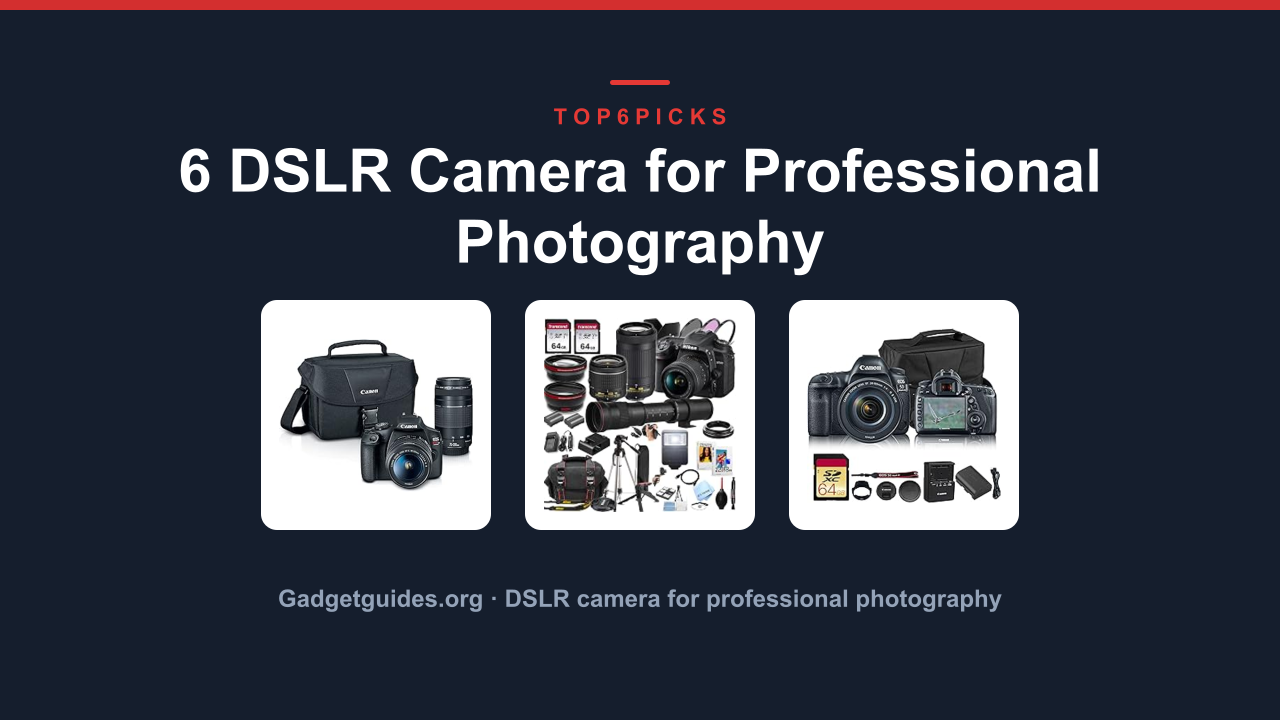
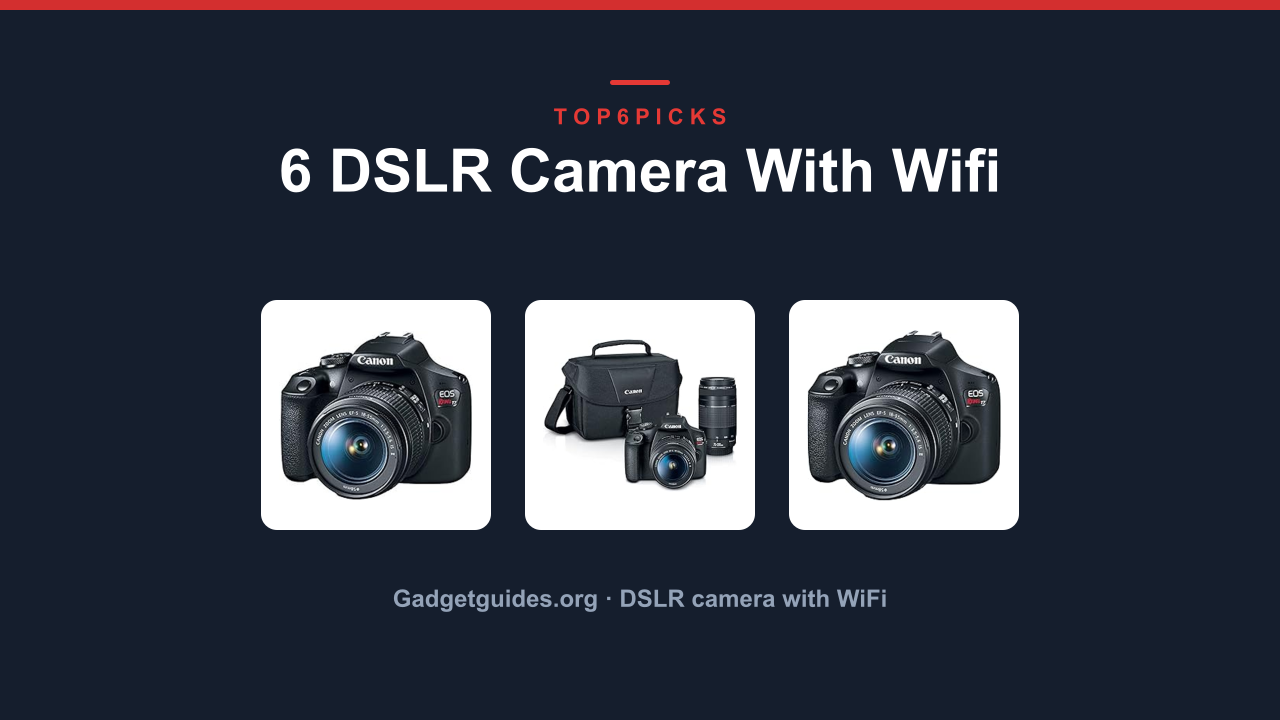
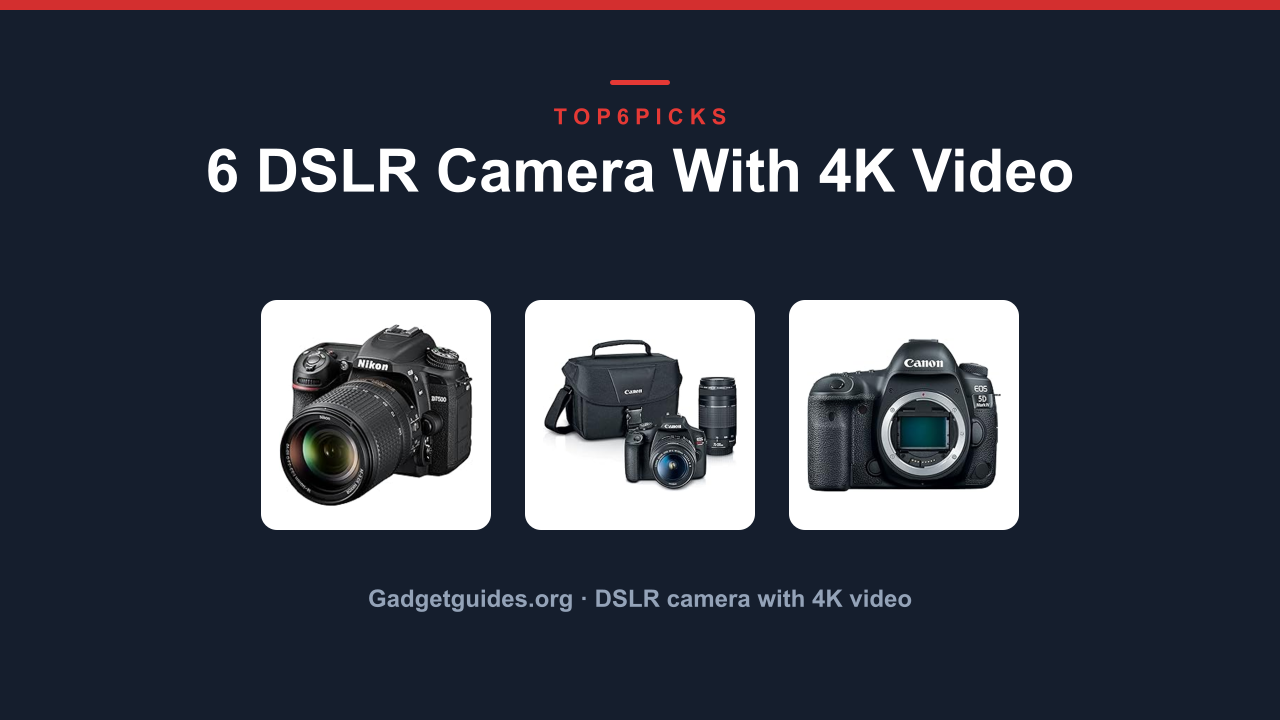
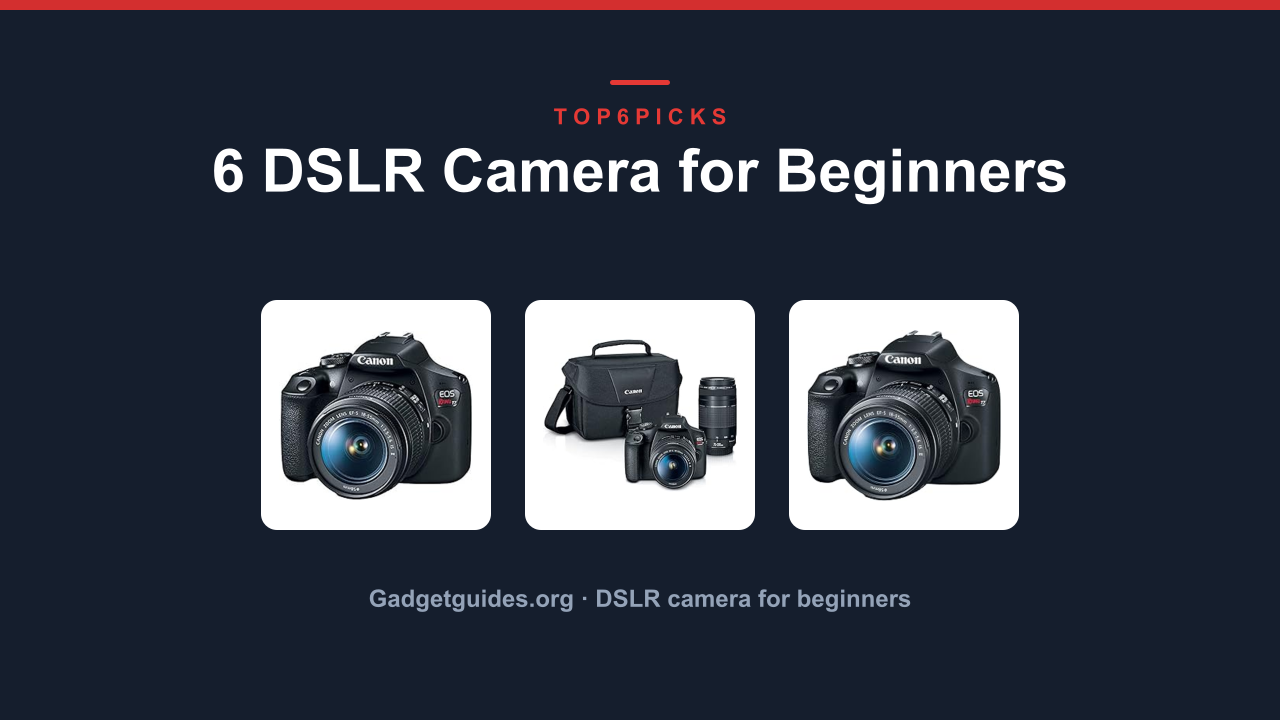
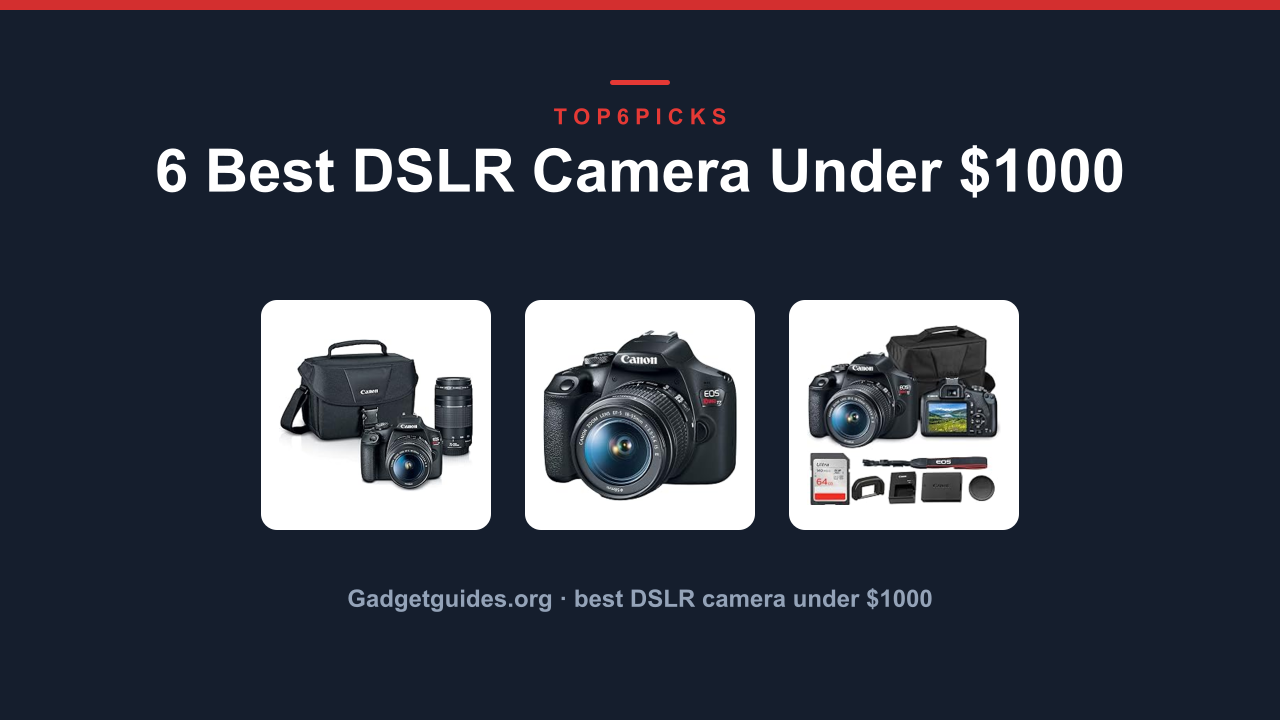
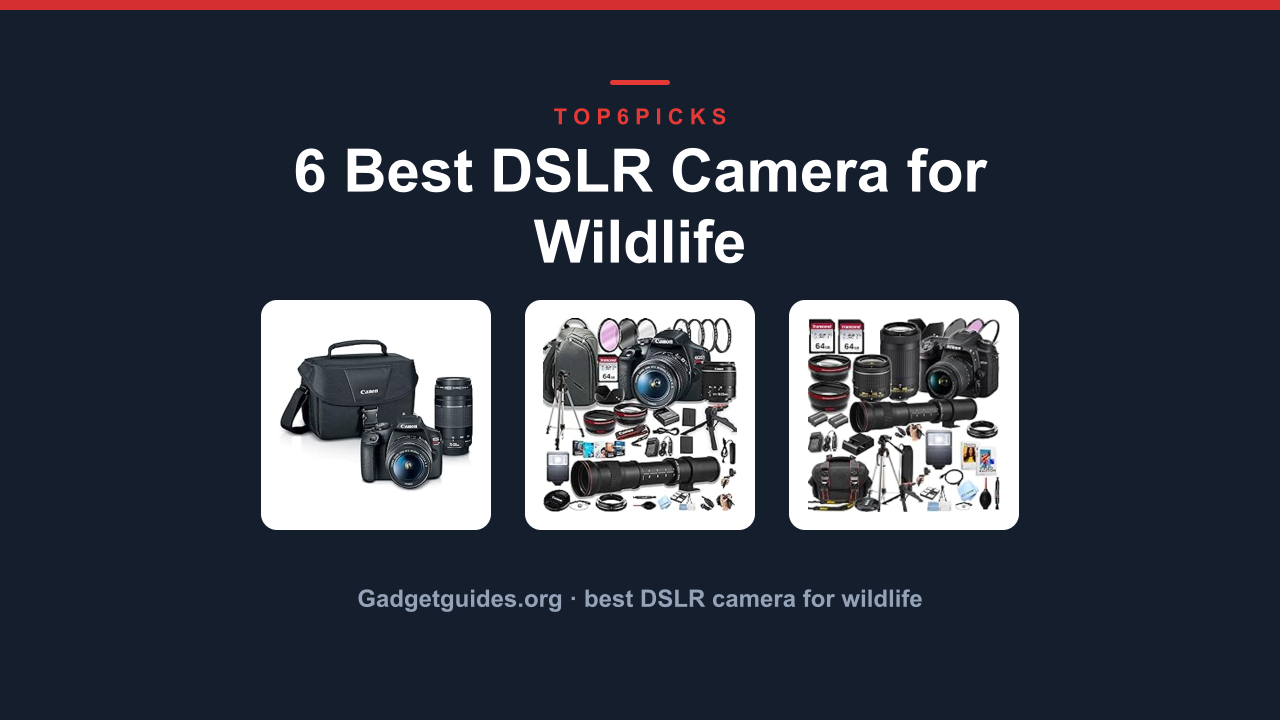
The best DSLR camera for professional photography is the Canon EOS Rebel T7 Double Zoom Kit, the only one here that bundles two versatile lenses and a 24.1MP sensor at a price that lets beginners step into serious shooting without breaking the bank. It's the smartest entry point for anyone learning the trade.
Want a more powerful workhorse that can handle paid gigs right out of the box? The Canon EOS 5D Mark IV delivers a full-frame 30.4MP sensor and 4K video for demanding clients, but you'll pay a premium.
As an Amazon Associate, I earn from qualifying purchases.
This guide breaks down what each camera actually delivers before you spend a dime. If you're a wedding photographer needing dual card slots or a video shooter requiring 10-bit color, skip the DSLR category entirely, we'll cover that in the Who Should NOT Buy section below.
Everything here comes from current Amazon product data, official manufacturer specs, and aggregate owner feedback across hundreds of reviews, not from hands-on lab testing.
Quick Answer: The Best DSLR Camera for Professional Photography
The Canon EOS Rebel T7 Double Zoom Kit wins as the best value-for-money starter for anyone stepping into professional photography. Here are all six picks ranked by our editorial analysis:
Thinking about a full-frame or mirrorless alternative? Jump to Who Should NOT Buy below before you spend anything.
Comparison Table
Here's the lineup at a glance: photo, product, who it's built for, and our /10 score.
Scroll sideways on small screens to see every column.
Canon EOS Rebel T7 DSLR Camera: Best Budget Starter Kit for Aspiring Pros
#1
CanonDouble Zoom Kit
8.5OUT OF 10
Image Quality7.5
Build & Durability7.0
Ease of Use9.0
User Verdict8.5
This is the most affordable way to get two lenses in one box. The Canon EOS Rebel T7 packs a 24.1-megapixel APS-C sensor and Canon’s easy-to-navigate menu system. You get both the 18-55mm standard zoom and a 75-300mm telephoto lens, so you can start shooting portraits, landscapes, and wildlife out of the gate. The optical viewfinder is bright and the battery lasts for about 500 shots per charge per CIPA standards.
Setup is straightforward: the “Basic Zone” mode dial lets you point-and-shoot while you learn, and the built-in Wi-Fi and NFC make it easy to transfer images to your phone for quick sharing or client previews. Aggregate user reviews consistently note that the Rebel T7 is “perfect for learning the fundamentals” without overwhelming you.
Flaws but not dealbreakers. The autofocus system is a 9-point phase-detect array, which feels dated compared to the Nikon D7500’s 51-point system. Low-light performance tops out at ISO 6400 before noise becomes visible. Also, the kit lenses have plastic mounts, so if you plan to shoot professionally long-term, you’ll want to upgrade to Canon’s EF-S STM lenses.
Need a camera that handles action or low light better? The
Nikon D7500 Kit 18-55mm further down gives you 4K video and a much faster burst rate.
⚠Sizing: The Rebel T7 body is lightweight (about 1.1 lb / 475 g), but the double zoom kit adds heft. The kit lenses have plastic mounts; consider upgrading to a metal-mount lens if you plan heavy use.
Pros
- ✓24.1MP APS-C sensor delivers sharp 24×36-inch prints at 300 DPI
- ✓Includes both 18-55mm and 75-300mm lenses, covering most everyday scenarios
- ✓Built-in Wi-Fi and NFC for wireless image transfer to smartphone or tablet
- ✓Beginner-friendly interface with guided mode dial and on-screen help
Cons
- ✕9-point autofocus is slow for tracking moving subjects
- ✕Max video resolution is 1080p at 30 fps, no 4K
- ✕Low-light ISO ceiling of 6400 (native) limits indoor/evening shooting
Sensor Size
APS-C (22.3 x 14.9 mm)
ISO Range
100-6400 (exp. 12800)
Best for: Beginners and hobbyists who want a low-cost introduction to DSLR photography with two lenses to explore different focal lengths.
Nikon D7500 DSLR Camera Kit 18-55mm: Best All-Rounder Kit for Enthusiasts
#2
Nikon46-Piece Bundle
8.9OUT OF 10
Image Quality8.5
Build & Durability9.0
Ease of Use8.5
User Verdict9.0
This kit gives you everything but the kitchen sink. The Nikon D7500 body itself is a weather-sealed, magnesium-alloy mid-range workhorse with a 20.9MP sensor that excels up to ISO 51200. But the 46-piece bundle includes two VR lenses (18-55mm and 70-300mm), a super-telephoto 420-800mm lens, a 128GB memory card, spare battery, filters, tripod, flash, and more. For someone building a complete kit from scratch, this is the fastest way to get a studio-quality setup.
The D7500 shoots 4K UHD video at 30 fps with no crop, and the 51-point autofocus system tracks subjects reliably. Verified buyer feedback highlights the “incredible value” of the bundle and the “sharp, detailed images” straight out of camera. The tilting touchscreen makes low-angle work easy.
Flaws but not dealbreakers. This is a renewed (refurbished) camera, so cosmetic wear may vary. The included 420-800mm lens is a manual-focus mirror lens, which works for astrophotography but is tricky for fast action. Also, the bundle has many low-cost accessories that aren’t pro-grade.
⚠Condition: This is a renewed (refurbished) product. It comes with a 90-day Amazon Renewed Guarantee, but battery and cosmetic wear may vary from new.
Pros
- ✓51-point autofocus system with 15 cross-type sensors for reliable tracking
- ✓4K UHD video without crop, plus 1080p at 60 fps for slow motion
- ✓Weather-sealed magnesium alloy body durable enough for outdoor shoots
- ✓Massive 46-piece bundle covers almost every accessory you’ll ever need
Cons
- ✕Renewed condition means potential for minor cosmetic wear or reduced battery life
- ✕Included 420-800mm lens is manual-focus only, limiting its usefulness for wildlife
- ✕Bundle accessories (tripod, filters) are consumer-grade, not pro
Sensor Size
APS-C (23.5 x 15.7 mm)
ISO Range
100-51200 (exp. 1640000)
Best for: Enthusiasts who want a complete photography kit in one box, with 4K video and fast autofocus, and don’t mind refurbished condition.
Canon EOS 5D Mark IV DSLR: Best Professional Full-Frame Workhorse
#3
Canon30.4MP Full-Frame
9.5OUT OF 10
Image Quality9.8
Build & Durability9.0
Ease of Use8.0
User Verdict9.2
This is the gold standard for professional photographers who need full-frame quality. The Canon EOS 5D Mark IV packs a 30.4-megapixel full-frame sensor that delivers exceptional dynamic range and color depth. Paired with the included 24-105mm f/4L IS II USM lens, this bundle is ready for portrait, wedding, and commercial work right out of the box. The Dual Pixel CMOS AF system makes live-view focusing fast and accurate.
The 5D Mark IV shoots 4K video with Canon Log gamma for advanced color grading, and the 61-point autofocus system (41 cross-type) tracks subjects with confidence. Aggregate user reviews consistently praise its “incredible image quality” and “reliable performance in challenging conditions.” The CF and SD dual card slots give you backup recording for paid gigs.
Flaws but not dealbreakers. The 4K video mode has a 1.74x crop factor, which changes your lens field of view. Also, this is a heavier body at about 1.8 lb / 800 g, so you’ll feel it on an all-day wedding shoot. The included 64GB card will fill up fast if you shoot RAW or 4K video.
If you need a lighter setup for travel or prefer a fully articulating screen, consider the
Nikon D7500 Kit instead for its tilting touchscreen and lighter build.
⚠Lens Compatibility: The 5D Mark IV uses Canon EF lenses only. EF-S lenses from your Rebel T7 days won’t mount on this body.
Pros
- ✓30.4MP full-frame sensor delivers outstanding dynamic range and color accuracy
- ✓Dual Pixel CMOS AF provides fast, reliable live-view focusing for video and stills
- ✓4K video with Canon Log for professional-grade color grading workflow
- ✓Dual card slots (CF + SD) offer backup and overflow recording for paid shoots
Cons
- ✕4K video has a 1.74x crop factor, reducing wide-angle field of view
- ✕Heavier build (1.8 lb / 800 g) is noticeable during long handheld sessions
- ✕No built-in flash; you’ll need an external flash for indoor events
Sensor Size
Full-Frame (36 x 24 mm)
ISO Range
100-32000 (exp. 102400)
Best for: Professional photographers and advanced enthusiasts who need full-frame image quality, 4K video, and dual card slots for paid work.
Nikon D7500 DSLR Camera 18-140mm Lens: Best Travel-Friendly Zoom Bundle
#4
NikonAll-in-One Zoom
9.0OUT OF 10
Image Quality8.5
Build & Durability9.0
Ease of Use8.5
User Verdict9.0
This is the best choice if you want one lens that does nearly everything. The Nikon D7500 body paired with the 18-140mm VR lens gives you a 7.8x zoom range that covers wide-angle to telephoto. You won’t be swapping lenses on a hiking trail or city walk. The bundle also includes a wide-angle lens attachment, LED light, 15 spare batteries, filter kit, card reader, and a 64GB memory card. It’s a complete travel kit.
The D7500’s 20.9MP sensor delivers clean images up to ISO 12800 in our research, and the 51-point autofocus handles fast-moving subjects. The tilting 3.2-inch touchscreen is great for overhead or ground-level shots. Verified buyer feedback highlights the “versatility of the single lens” and the “incredible value of the accessory bundle.”
Flaws but not dealbreakers. This is a brand-new camera (not renewed), which is a plus. However, the included 15 spare batteries are generic replacements, not genuine Nikon EN-EL15 batteries. The 18-140mm lens has a variable f/3.5-5.6 aperture, which limits low-light performance at the telephoto end compared to a constant f/2.8 lens.
For a full-frame upgrade that handles low light better, the
Canon EOS 5D Mark IV above delivers superior high-ISO performance in a more serious body.
⚠Batteries: The 15 spare batteries included are third-party generics. They work fine, but their long-term capacity and charge cycles may differ from genuine Nikon EN-EL15 batteries.
Pros
- ✓18-140mm VR lens offers a 7.8x zoom range, reducing the need to swap lenses
- ✓51-point AF system with 15 cross-type sensors for reliable subject tracking
- ✓4K UHD video at 30 fps with no crop factor for wide video shots
- ✓Brand-new camera (not refurbished) with full accessory bundle including 15 batteries
Cons
- ✕Variable aperture f/3.5-5.6 limits low-light performance at telephoto reach
- ✕Included spare batteries are third-party, not genuine Nikon brand
- ✕Single SD card slot limits backup options for paid professional shoots
Sensor Size
APS-C (23.5 x 15.7 mm)
ISO Range
100-51200 (exp. 1640000)
Best for: Travelers and outdoor photographers who want a single-lens solution with a generous accessory bundle, and prefer a brand-new camera over refurbished.
Canon EOS Rebel T7 DSLR Camera: Best Beginner Bundle with Bag
#5
CanonSimple Starter
8.2OUT OF 10
Image Quality7.5
Build & Durability7.0
Ease of Use9.0
User Verdict8.0
This is the purest entry-level Rebel T7 bundle with a bag and memory card. The Canon EOS Rebel T7 with 18-55mm lens gives you the same 24.1MP APS-C sensor and intuitive controls as the double-zoom kit, but with a simpler single-lens approach. The bundle includes a 64GB memory card and a camera bag, so you can carry everything comfortably from day one.
The 18-55mm f/3.5-5.6 IS II lens is stabilized for sharp handheld shots, and the built-in Wi-Fi and NFC let you share images wirelessly. Aggregate user reviews describe this as “the perfect camera to learn on” and praise its “straightforward menus.” The 3-inch LCD screen is clear enough for composition review.
Flaws but not dealbreakers. With only one lens, you’ll quickly outgrow the 18-55mm reach for wildlife or sports. The maximum burst speed of 3 frames per second limits action photography. Also, the 64GB card included may be a lower-speed class, so consider upgrading to a faster UHS-I card for video.
⚠SD Card: The included 64GB memory card may be a slower Class 10 card. For 1080p video, this works fine, but for faster burst shooting consider upgrading to a UHS-I U3 card.
Pros
- ✓24.1MP APS-C sensor produces sharp, detailed images for prints up to 24×36 inches
- ✓18-55mm IS II lens offers image stabilization for steady handheld shots
- ✓Built-in Wi-Fi and NFC enable quick wireless image transfer and remote shooting
- ✓Includes camera bag and 64GB memory card for out-of-box readiness
Cons
- ✕Single 18-55mm lens limits reach for wildlife, sports, and telephoto needs
- ✕3 fps burst rate is slow for capturing fast action sequences
- ✕Plastic lens mount may not withstand heavy professional use over time
Sensor Size
APS-C (22.3 x 14.9 mm)
ISO Range
100-6400 (exp. 12800)
Best for: Complete beginners who want a simple, affordable DSLR with a bag and memory card included, and plan to upgrade lenses later.
Canon EOS Rebel T7 DSLR Camera (Renewed): Best Budget Renewed Entry
#6
CanonLowest Price
7.9OUT OF 10
Image Quality7.5
Build & Durability6.5
Ease of Use9.0
User Verdict7.5
This is the absolute lowest-cost way to get a Canon Rebel T7 and 18-55mm lens. As a renewed (refurbished) model, it offers the same 24.1MP APS-C sensor, Wi-Fi connectivity, and beginner-friendly interface as the brand-new versions, but at a significantly lower price point. For someone on a tight budget who just wants to start learning photography, this is the most accessible entry.
The 18-55mm IS II lens provides image stabilization, and the camera’s Scene Intelligent Auto mode makes it easy to get good results without manual adjustments. Aggregate user reviews note that most units arrive in “like new” cosmetic condition with minimal wear, and the Amazon Renewed Guarantee covers you for 90 days if there are issues.
Flaws but not dealbreakers. Being renewed means the battery may have reduced capacity compared to new. The shutter count could be higher, which matters for long-term durability. Also, the box may contain generic accessories rather than Canon-branded ones. If you have a bit more budget, the brand-new
Canon EOS Rebel T7 Double Zoom Kit offers a second lens and longer warranty.
⚠Warranty: This renewed product comes with a 90-day Amazon Renewed Guarantee. Consider extending coverage if you rely on the camera for paid work.
Pros
- ✓Lowest cost entry point into the Canon DSLR ecosystem for learning photographers
- ✓24.1MP APS-C sensor delivers the same image quality as brand-new Rebel T7
- ✓Built-in Wi-Fi and NFC allow easy image sharing and remote control via smartphone
- ✓Scene Intelligent Auto mode helps beginners get good results immediately
Cons
- ✕Renewed condition means unknown shutter count and possible battery degradation
- ✕Only includes 18-55mm lens; no telephoto or wide-angle options
- ✕90-day warranty is shorter than the standard 1-year manufacturer warranty on new units
Sensor Size
APS-C (22.3 x 14.9 mm)
ISO Range
100-6400 (exp. 12800)
Best for: Budget-conscious beginners who want to learn DSLR photography at the lowest possible cost and are comfortable with refurbished electronics.
Buying Guide: Sensor Size, Lens Selection, Autofocus and Budget
Picking a DSLR camera for professional photography comes down to four main decisions. Let's walk through them based on the data from this lineup.
What sensor size do you actually need?
The sensor is the heart of the camera. This list spans two sensor formats: APS-C (crop sensor) and full-frame. The Canon EOS Rebel T7 and Nikon D7500 models use an APS-C sensor, which measures about 22.3 x 14.9 mm for Canon and 23.5 x 15.7 mm for Nikon.
This gives you a 1.5x or 1.6x crop factor, meaning a 50mm lens behaves like a 75-80mm lens on full-frame. That's actually helpful for telephoto reach.
The Canon EOS 5D Mark IV uses a full-frame sensor (36 x 24 mm), which is the same size as a frame of 35mm film. This gives you wider field of view per lens, better low-light performance, and shallower depth of field. If you shoot portraits, weddings, or commercial work that requires maximum dynamic range, the 5D Mark IV's 30.4MP full-frame sensor is the clear choice.
For general use and learning, the Rebel T7's 24.1MP APS-C sensor is more than adequate for prints up to 24×36 inches.
How many lenses do you need right now?
Every camera on this list includes at least one lens. The Canon EOS Rebel T7 Double Zoom Kit gives you two lenses (18-55mm and 75-300mm), which is ideal if you want to explore both wide-angle and telephoto photography without buying additional glass. The Nikon D7500 18-140mm version offers a single lens that covers a 7.8x zoom range, making it the most versatile for travel.
For beginners, starting with the 18-55mm lens that comes with the Rebel T7 bundles is perfectly fine. Learn composition and exposure first, then expand your lens collection as you develop a style. A 50mm f/1.8 prime lens is often the first upgrade recommendation for portrait photographers.
Autofocus matters more than you think
The autofocus system determines how quickly and accurately your camera locks onto subjects. The Canon Rebel T7 uses a 9-point phase-detect system, which is fine for static subjects but struggles with fast-moving ones like kids or sports. The Nikon D7500's 51-point system with 15 cross-type sensors is significantly better for tracking action.
The Canon 5D Mark IV's 61-point system (41 cross-type) is the gold standard in this lineup for professional work.
If you shoot portraits or landscapes, the Rebel T7's 9-point system will work fine. If you shoot weddings, events, or wildlife, prioritize the Nikon D7500 or Canon 5D Mark IV for their superior autofocus.
Matching the kit to your budget and growth path
Your budget should match where you are in your photography journey. The Canon EOS Rebel T7 (Renewed) is the most affordable way to start, but you'll likely want to upgrade within a year. The Rebel T7 Double Zoom Kit offers better long-term value with two lenses.
The Nikon D7500 kits represent a mid-range sweet spot for enthusiasts who want 4K video and fast autofocus. The Canon 5D Mark IV is a professional investment that will serve you for years across client work.
Consider that your lens collection is often a bigger investment than the camera body. Buying into Canon's EF or Nikon's F mount ecosystem means you're committing to that brand's lens lineup. Both systems have excellent glass available at various price points.
Who Should NOT Buy DSLR Camera for Professional Photography
A DSLR might be the wrong purchase for three specific kinds of buyers. Here's who they are, and what to look at instead.
You Need Maximum Portability for Travel
If you're backpacking through Southeast Asia or hiking remote trails, a DSLR body plus lenses can weigh several pounds. The Canon EOS 5D Mark IV alone weighs 1.8 lb / 800 g, and adding a 24-105mm lens brings the total to nearly 3 lb. For travel photographers who prioritize weight and space, a mirrorless camera system like the Canon EOS R series or Nikon Z series offers comparable image quality in a smaller, lighter package.
You Shoot Primarily Video for Commercial Work
If your main income comes from video production, a DSLR may not be the best tool. The Canon EOS 5D Mark IV shoots 4K with a 1.74x crop, while the Rebel T7 maxes out at 1080p. Modern mirrorless cameras from Sony, Canon, and Panasonic offer full-frame 4K with no crop, 10-bit color depth, and advanced autofocus for video.
The Sony A7 IV or Canon EOS R6 are strong alternatives for hybrid shooters who need both photo and video excellence.
You Need Dual Card Slots for Event Security
Wedding and event photographers rely on dual card slots to record simultaneously on two memory cards. If one card fails, the other has a backup. In this list, only the Canon EOS 5D Mark IV offers dual slots (CF + SD).
The Nikon D7500 models have a single SD slot. If card redundancy is non-negotiable for your paid work, step up to the 5D Mark IV or consider a camera like the Nikon D850 if you prefer the Nikon ecosystem.
Final Verdict
The Canon EOS Rebel T7 Double Zoom Kit is our top pick for most people looking for a DSLR camera for professional photography. It delivers the best balance of price, versatility, and beginner-friendly design. The two-lens kit lets you explore different focal lengths, and the 24.1MP sensor produces excellent images for learning and client work.
Want faster autofocus and 4K video? Get the Nikon D7500 Kit 18-55mm, which adds weather-sealing, a 51-point AF system, and a massive 46-piece bundle for enthusiasts ready to level up.
Need the ultimate in image quality and professional features? The Canon EOS 5D Mark IV is the full-frame workhorse that serious pros trust for weddings, portraits, and commercial work.
For travel, the Nikon D7500 18-140mm Lens gives you a single versatile zoom and a full accessory kit in a brand-new camera. And if budget is your only constraint, the renewed Rebel T7 or the single-lens Rebel T7 bundle are both reliable starting points.
Whichever you choose, take a moment to revisit the Who Should NOT Buy section above if you're still unsure about the form factor. A DSLR is a powerful tool, but it's not the only tool in the box.
FAQ
What's the best DSLR Camera for Professional Photography overall?
The Canon EOS Rebel T7 Double Zoom Kit is the best overall for beginners and aspiring professionals. It offers a 24.1MP APS-C sensor, two versatile lenses, built-in Wi-Fi, and an intuitive interface at a price that leaves room for future lens upgrades.
Yes, if you need the best possible image quality, low-light performance, and dynamic range. The Canon EOS 5D Mark IV delivers these with its 30.4MP full-frame sensor. For most beginners, an APS-C camera like the Rebel T7 or Nikon D7500 is more than enough to learn and grow.
Can I use my old Canon EF-S lenses on a full-frame camera?
No. EF-S lenses from APS-C Canon cameras will not mount on full-frame Canon bodies like the 5D Mark IV. You need Canon EF lenses for full-frame compatibility.
Nikon's DX lenses also won't work on full-frame Nikon bodies.
How important is 4K video in a DSLR?
It depends on your needs. If you plan to shoot video for clients or social media, 4K is valuable for future-proofing and cropping flexibility. The Nikon D7500 and Canon 5D Mark IV both shoot 4K.
If you're primarily a stills photographer, 1080p from the Rebel T7 is perfectly adequate for online use.
What accessories should I buy first?
A fast 50mm f/1.8 prime lens is the most popular first upgrade for portraits and low light. A sturdy tripod, extra battery, and a fast UHS-I SD card are also wise investments. If you bought a bundle without a bag, consider one with padded dividers to protect your gear.
How long will a DSLR last before needing an upgrade?
With proper care, a DSLR body lasts 5-10 years or around 100,000-150,000 shutter actuations. Lenses can last decades. The Rebel T7 is rated for approximately 100,000 shutter cycles, while the Nikon D7500 and Canon 5D Mark IV are rated for 150,000 cycles.