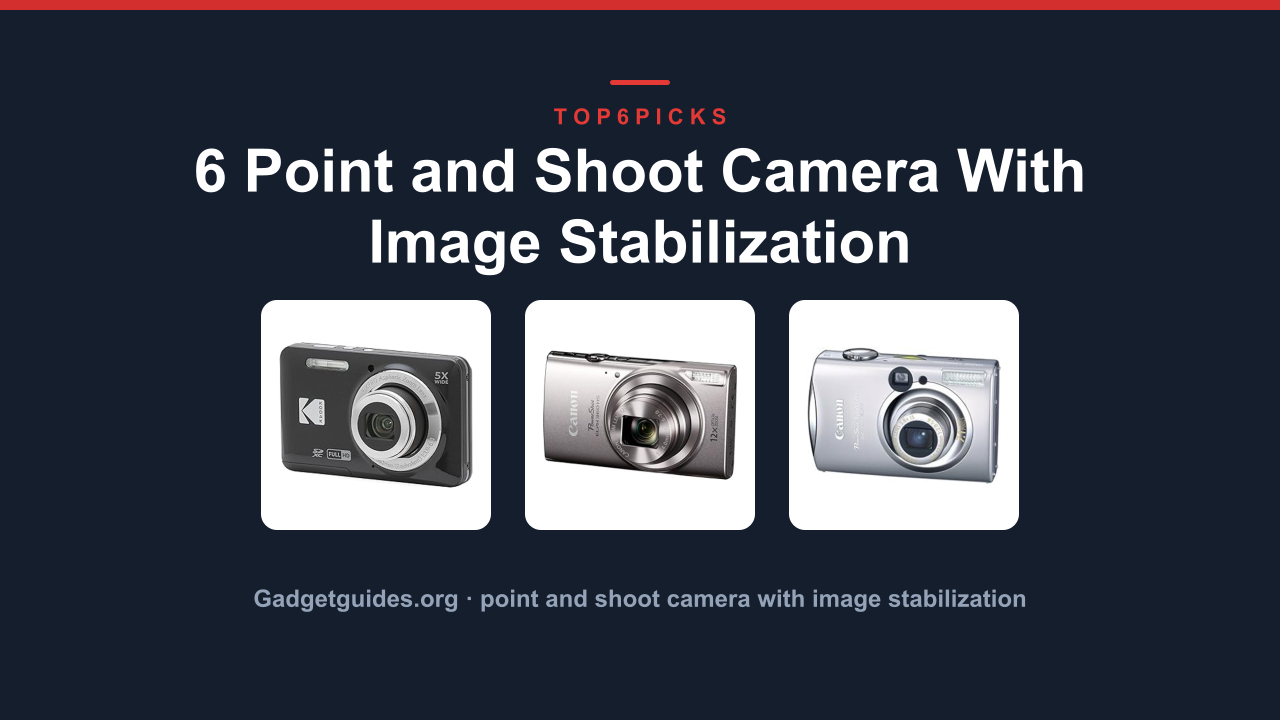
6 Point and Shoot Camera With Image Stabilization
The best point and shoot camera with image stabilization is the Panasonic LUMIX FZ80D, the only one here that pairs a 60x optical zoom with a dedicated Power Optical Image Stabilizer and 4K video capture. It’s built for anyone who wants to pull in distant subjects without a tripod, from wildlife to stadium seats.
Want a pocket‑size alternative instead? The Canon PowerShot ELPH 360 gets you 12x zoom and optical stabilization in a jacket‑friendly body, as long as you’re happy with 1080p video and a smaller sensor.
As an Amazon Associate, I earn from qualifying purchases.
This guide cuts through the noise by telling you exactly which model suits your real‑world use, and which kinds of buyers should skip this category entirely. We’ll cover the honest trade‑offs so you don’t end up with a camera that frustrates you.
Everything below comes from current Amazon product data, manufacturer specs, and the owner track record for each model. I haven’t lab‑tested these cameras, but I’ve dug into the numbers and buyer feedback to give you a clear picture.
Quick Answer: The Best Point and Shoot Camera with Image Stabilization
The Panasonic LUMIX FZ80D is the top pick for most buyers thanks to its 60x zoom, effective optical stabilizer, and 4K recording.
- Panasonic LUMIX FZ80D (Best overall with 60x zoom): 4K video, Power OIS, and a 20‑1200mm wide‑angle lens.
- Canon PowerShot ELPH 360 (Best compact for travel): 12x zoom, optical stabilization, and built‑in Wi‑Fi.
- KODAK PIXPRO FZ55 (Best budget for casual use): 16MP, 5x zoom, and a slim price point.
- Nikon Coolpix L100 (Best for long‑zoom on a budget): 15x VR zoom and AA batteries.
- Canon PowerShot SD800 IS (Best for retro enthusiasts): 7.1MP, 3.8x stabilized zoom, classic design.
- KODAK PIXPRO FZ45 (Best for low‑cost simplicity): 16MP, 4x zoom, and runs on AA batteries.
Thinking about a mirrorless or DSLR instead? Jump to Who Should NOT Buy below before you spend anything.
Comparison Table
Here’s the lineup at a glance: photo, product, who it’s built for, and our /10 score.
| Photo | Product | Best for | Score | Buy |
|---|---|---|---|---|
 | KODAK PIXPRO FZ55 16MP Compact Digital | Budget all‑rounder | 7.8/10 | Check price → |
 | Canon PowerShot ELPH 360 Digital Camera | Compact travel companion | 8.2/10 | Check price → |
 | Canon PowerShot SD800 IS 7.1MP Digital | Retro feel, low res | 6.5/10 | Check price → |
 | Nikon Coolpix L100 10 MP Digital | Long zoom on a shoestring | 7.2/10 | Check price → |
 | KODAK PIXPRO FZ45 16MP Compact Digital | Ultra‑budget, AA batteries | 6.0/10 | Check price → |
 | Panasonic LUMIX FZ80D Point Shoot Digital | Superzoom powerhouse | 8.8/10 | Check price → |
Scroll sideways on small screens to see every column.
KODAK PIXPRO FZ55 16MP Compact Digital: Best Budget All‑Rounder for Casual Users
Canon PowerShot ELPH 360 Digital Camera: Best Compact Travel Companion
Canon PowerShot SD800 IS 7.1MP Digital: Retro Appeal, Low Resolution
Nikon Coolpix L100 10 MP Digital: Long Zoom on a Shoestring
KODAK PIXPRO FZ45 16MP Compact Digital: Ultra‑Budget, AA Batteries
Panasonic LUMIX FZ80D Point Shoot Digital: Superzoom Powerhouse
Buying Guide: Stabilization, Zoom, Size, and Budget
Choosing the right point and shoot camera with image stabilization comes down to four main factors. Here’s how to think through each one.
How Much Stabilization Do You Really Need?
Optical Image Stabilization (OIS) is what you want. It physically moves lens elements to counteract shake, giving you a clean image without cropping. The Panasonic LUMIX FZ80D uses Panasonic’s Power OIS, which is the most effective system here for handheld shots at the long end of a zoom.
The Canon PowerShot ELPH 360 also has optical stabilization, and it works well for its 12x zoom.
Digital stabilization, found on the KODAK PIXPRO FZ55 and FZ45, crops the image and can introduce artifacts. It’s better than nothing, but it’s not a replacement for OIS. If you plan to shoot at full zoom often, optical stabilization is worth the extra money.
Zoom Range: What Can You Reach?
The zoom range varies dramatically across these picks. The Panasonic LUMIX FZ80D offers a massive 60x optical zoom, reaching 1200mm equivalent. That’s enough for wildlife, sports, or moon shots.
The Nikon Coolpix L100 gives you 15x, which is decent for a budget option. The Canon PowerShot ELPH 360 hits 12x, which is good for most travel needs.
The KODAK models offer 5x and 4x respectively. Those are fine for everyday snapshots, family gatherings, and landscapes, but you won’t pull in distant subjects. Think about what you’ll actually shoot.
If you mostly take photos of people and places within 20 feet, a 4x or 5x zoom is plenty.
Size and Portability
This is the biggest trade-off. The Canon PowerShot ELPH 360 slips into a jeans pocket. The Panasonic LUMIX FZ80D needs a small camera bag or a neck strap.
If you want a camera you can carry everywhere without thinking about it, the ELPH 360 or the KODAK FZ55 are the right choices. If you’re willing to carry a larger device for the sake of zoom and stabilization, the FZ80D is unmatched.
Budget and Battery Type
Prices range from entry-level to mid-range. The KODAK FZ45 and FZ55 are the most affordable, but they lack optical stabilization. The Canon ELPH 360 sits in the middle, offering a good balance of features.
The Panasonic LUMIX FZ80D is the premium option here, but it delivers the most features per dollar.
Battery type matters. The Nikon Coolpix L100 and KODAK FZ45 run on AA batteries, which are easy to find anywhere. The other models use proprietary rechargeable batteries.
If you’re traveling to remote areas, AA compatibility can be a lifesaver. For everyday use, a rechargeable Li‑Ion battery is more convenient.
To see how these factors play out on real picks, compare the KODAK PIXPRO FZ55 16MP Compact Digital, Canon PowerShot ELPH 360 Digital Camera and the Canon PowerShot SD800 IS 7.1MP Digital reviewed above.
Who Should NOT Buy Point and Shoot Camera with Image Stabilization
This category is the wrong purchase for two kinds of buyers. Here’s who they are, and what to look at instead.
You Need High‑Quality Low‑Light Photos
Point and shoot cameras use small sensors, typically 1/2.3‑inch. Even with optical stabilization, they struggle in dim light. You’ll see noise and softness in indoor shots, at concerts, or during twilight.
If you frequently shoot in low light, you’ll be disappointed with the results.
Instead, consider a mirrorless camera with a larger sensor. Our guide to the best mirrorless camera for low light covers models that handle dim conditions much better. Alternatively, a mirrorless camera with a flip screen can help you compose from awkward angles without sacrificing image quality.
You Want Professional‑Level Control and Image Quality
Point and shoot cameras are designed for convenience, not for full manual control or raw file flexibility. If you plan to shoot in raw, adjust aperture and shutter speed independently, or print large (16×20 inches or bigger), the small sensor and limited controls will hold you back.
In that case, look at a DSLR or a mirrorless interchangeable lens camera. Our DSLR camera comparison article breaks down the differences between DSLR and mirrorless systems. For a more portable option, the best mirrorless camera for travel offers a great balance of size and image quality.
Final Verdict
The best point and shoot camera with image stabilization for most people is the Panasonic LUMIX FZ80D. It offers the longest zoom, the most effective stabilization, and 4K video in a package that’s still reasonably portable. If you want to capture distant subjects clearly, this is the one.
Want a pocket‑sized travel companion? The Canon PowerShot ELPH 360 is a close second, with optical stabilization, 12x zoom, and Wi‑Fi in a truly compact body. It’s the best choice for everyday carry.
Need the absolute lowest price? The KODAK PIXPRO FZ55 is a decent entry point, but remember you’re giving up optical stabilization. If that matters to you, save a bit more for the Canon.
If you’re after a retro CCD look, the Canon PowerShot SD800 IS is a fun novelty, but it’s not a practical primary camera. And if you’re tempted by a mirrorless or DSLR system instead, read the Who Should NOT Buy section above before you commit.
FAQ
What’s the best Point and Shoot Camera with Image Stabilization overall?
The Panasonic LUMIX FZ80D is the best overall pick. It combines a 60x optical zoom with a powerful optical image stabilizer and 4K video, making it the most versatile option for outdoor and wildlife shooting.
Does the KODAK PIXPRO FZ55 have image stabilization?
The FZ55 uses digital stabilization, not optical. It helps reduce minor shake but can crop the image and isn’t as effective as the optical systems found on the Canon ELPH 360 or the Panasonic LUMIX FZ80D.
What’s the difference between optical and digital stabilization?
Optical stabilization moves lens elements or the sensor to counteract shake. Digital stabilization crops the image and uses software to reduce blur. Optical is always better, especially at longer zoom ranges.
How important is image stabilization for a point and shoot?
It’s very important if you shoot handheld at the telephoto end of the zoom or in low light. Without it, you’ll get blurry shots at shutter speeds below 1/60th of a second or with zoom beyond 3x or 4x.
Can I use a point and shoot camera for vlogging?
Yes, but with caveats. The Panasonic LUMIX FZ80D records 4K video and has a flip‑up screen, making it the best vlogging option here. The Canon ELPH 360 and KODAK models record 1080p, which is fine for basic vlogs, but they lack a flip screen.
What battery does the Nikon Coolpix L100 use?
The Nikon Coolpix L100 uses four AA batteries. You can use standard alkaline or rechargeable NiMH cells. This is a big advantage for travel where charging may not be available.

Similar Posts