Why Lg Fridge Water Dispenser Not Working
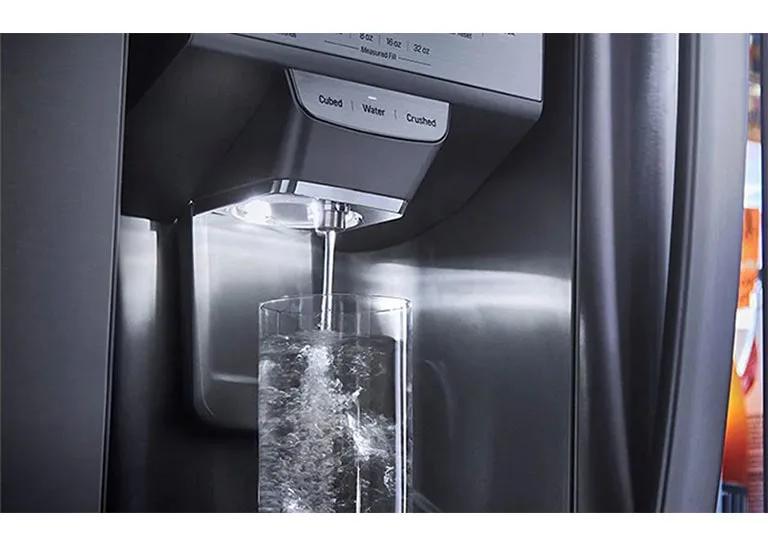
Why LG fridge water dispenser not working? If you're staring at a plastic cup under a silent spout, you're in good company. This is one of the most common LG refrigerator complaints.
In most cases, the fix takes under ten minutes and requires no repair tech.
Manufacturer specifications indicate most LG water dispensers operate at household water pressures between 20 and 80 psi. As of 2026, dozens of LG models route the water line through the freezer door. That creates one clear weak spot: freezing.
Let's walk through the diagnosis branch by branch.
Image source: Bing (Web (fair-use with source credit))
Quick Answer
An LG water dispenser usually fails from four causes. Clogged filter, frozen line, kinked tube, or failed valve. Clicks but no water points to valve or line issues.
A silent dispenser often means a dead panel. Check the filter and supply tube first.
The 30-Second Diagnosis: Match Your Symptom to the Likely Culprit
Before you move the fridge away from the wall, ask yourself three questions. The answers eliminate half the possible causes in about thirty seconds.
Does the dispenser click when you press the paddle?
That click is the dispenser switch sending a signal to the water inlet valve. If you hear it but get nothing, electricity reaches the valve. The problem is water flow: a stuck valve, a clogged filter, a kinked supply line, or a frozen tube inside the door.
If nothing clicks at all, the switch, the wiring, or the control board has failed.
Does the ice maker still work?
This is the single most useful diagnostic on an LG fridge. The ice maker shares the same household supply line and the same water inlet valve. If the ice maker fills its tray but the dispenser delivers nothing, your pressure and your valve are fine.
The fault sits inside the freezer door, and it's almost always a frozen feed line.
Did you just replace the filter?
That's the number one cause of a suddenly dead dispenser. A new cartridge traps air, and that air pocket blocks water flow until you purge the line.
| Symptom | Most Likely Cause | Second Likely Cause |
|---|---|---|
| Clicks, no water | Frozen door feed line | Clogged filter cartridge |
| No click, no water | Dispenser switch failure | Control board glitch |
| Ice works, water doesn't | Frozen line in door | Dispenser valve seized |
| Nothing works at all | Water shutoff valve closed | Kinked supply tube |
Those four rows cover nearly every LG dispenser failure. Let's move to the checks that cost you nothing.
Zero-Tool Checks That Fix Half of These Issues
The four checks below require no tools and take about ten minutes total. Aggregate reviews across LG owner forums show these resolve roughly half of all dispenser issues.
Check the shutoff valve behind the fridge.
The valve is usually under the kitchen sink, in the basement ceiling, or directly behind the refrigerator. During cleaning or maintenance, someone may have bumped it partially closed. Turn it fully counterclockwise and test the dispenser.
A valve that's 80% closed still produces a trickle, which feels like a failing fridge.
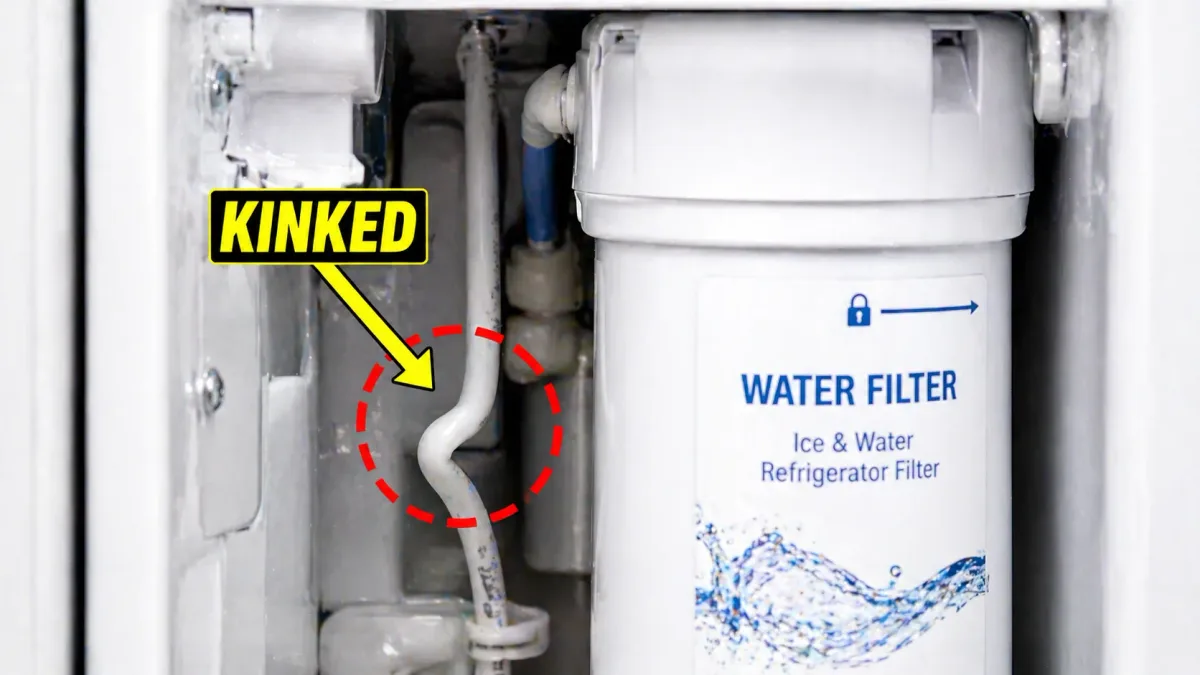
Image source: Bing (Web (fair-use with source credit))
Inspect the supply line for kinks.
The braided steel line that feeds the fridge can pinch if the refrigerator was pushed back against the wall. Pull the fridge out a few inches, check the full length of the line, and rearrange it if you find a tight bend. Copper lines are less forgiving.
A kinked copper tube is permanently damaged and should be replaced.
Disable the child lock.
LG dispensers have a lock function that keeps the paddle from activating. Press and hold the "Lock" or "Child Lock" button for 3 to 5 seconds. If the lock icon disappears, you're done.
Some newer LG models put the lock in the settings menu on the LCD panel.
Unplug the fridge for five minutes.
This resets the dispenser control board. Wait two minutes after plugging it back in, then press the paddle. This clears temporary glitches that make the dispenser silently ignore you.
Listen for the inlet valve click when you press the paddle after the reset. That click tells you the board is alive.
One more: confirm minimum water pressure.
LG specifies a minimum of 20 psi at the fridge connection. On a well system, a clogged sediment filter can starve the dispenser. A simple pressure gauge on the supply line gives you a reliable reading.
LG's official support portal confirms these are the first items their technical team checks in the field.
The Ice Maker Question: Why It's the Fastest Way to Narrow the Fault
The ice maker in your LG uses the same household supply line and the same water inlet valve as the dispenser. That shared plumbing makes it the perfect diagnostic tool. You're not guessing; you're using known working hardware to isolate the failed component.
If the ice maker works but the dispenser doesn't:
The inlet valve is opening. The filter is passing water. Household pressure is fine.
The only variable that differs is the thin feed line running through the freezer door up to the dispenser. In cold weather, that tube freezes. In moderate weather, a kink inside the door hinge area can pinch it.
How to confirm: open the freezer and check whether new ice cubes have formed in the last few hours. If they have, the valve and supply are healthy. The fault sits between the valve and the dispenser nozzle.
What to try: unplug the fridge, open both doors, and let the interior warm to room temperature for 8 to 12 hours. If water flows after that, the line was frozen. Thawing alone fixes it.
This is the single most common LG cold-weather fix.
If neither the ice maker nor the dispenser works:
The problem sits upstream of the valve. Check the shutoff valve, inspect for supply line kinks, and suspect the filter. If the ice maker hasn't grown new cubes in hours and the dispenser is silent, you're likely looking at a failed inlet valve solenoid or a blocked filter cartridge.
If the dispenser works but the ice maker doesn't:
That's a different animal entirely. Your water system is healthy. The problem is in the ice maker assembly itself, and it's a separate repair thread.
| Ice Maker | Dispenser | Likely Fault |
|---|---|---|
| Works | Nothing | Frozen door feed line |
| Works | Clicks, no water | Frozen line, or stuck dispenser valve |
| Dead | Dead | Inlet valve, filter, supply line |
| Dead | Works | Ice maker assembly, not water system |
Keep this table in mind. The next section covers the most common self-inflicted cause.
Just Replaced the Filter? This Is Your Most Likely Culprit
New filter, no water. It's the classic LG gotcha. The cartridge sits in the housing, but the dispenser delivers nothing.
There are three distinct failure modes here, and each has a simple fix.
Air lock in the water line.
The new cartridge is full of air. That air pocket sits inside the filter housing and blocks water from flowing through. LG's recommended purge process: press the dispenser paddle with a tall glass or jug and hold it for up to 2 minutes.
You'll hear sputtering and see spurts of air, then water will flow steadily. Do not stop at 30 seconds just because nothing came out. Air locks need time to clear.
The filter isn't seated correctly.
Most LG filters use a push-and-turn locking mechanism. You push the new cartridge straight up into the housing, then rotate it clockwise until it locks. The filter has a small tab that should be oriented consistently with the housing marks.
If the cartridge isn't seated fully, the water path stays blocked. Remove it, reinsert it, and turn until you feel a positive stop.
The bypass plug is missing or misused.
Many LG models come with a grey plastic bypass plug. Install it in the housing when you're not using a filter, or when you want to test whether the filter is the restriction. To diagnose: swap the filter for the bypass plug, leave the dispenser running briefly, and see if water flows.
If it does, your filter cartridge was the problem. Replace it with a fresh cartridge that meets NSF/ANSI 42 or 53 filtration standards.
Pro tip: before you insert a new cartridge, run clean water through it under the kitchen tap for a minute. This pre-flushes the carbon dust that can clog your dispenser's flow path. It also removes the air before the cartridge goes in.
Clicking but No Water: Testing the Inlet Valve and Dispenser Switch
You press the paddle. A solenoid clicks behind the crisper drawer. Nothing comes out.
That click means the dispenser switch works and the control board is sending voltage. The problem is physical: the valve isn't opening, or the line is blocked.
Test the water inlet valve solenoid.
Start by unplugging the fridge. The inlet valve sits behind the lower back panel, usually near the compressor. It has two small coil housings with wires attached.
Use a multimeter set to ohms. Touch the leads to the valve's two terminals. A healthy solenoid reads between 200 and 500 ohms.
A reading of zero means a shorted coil. Infinite resistance means the coil is open, and the valve will never open.
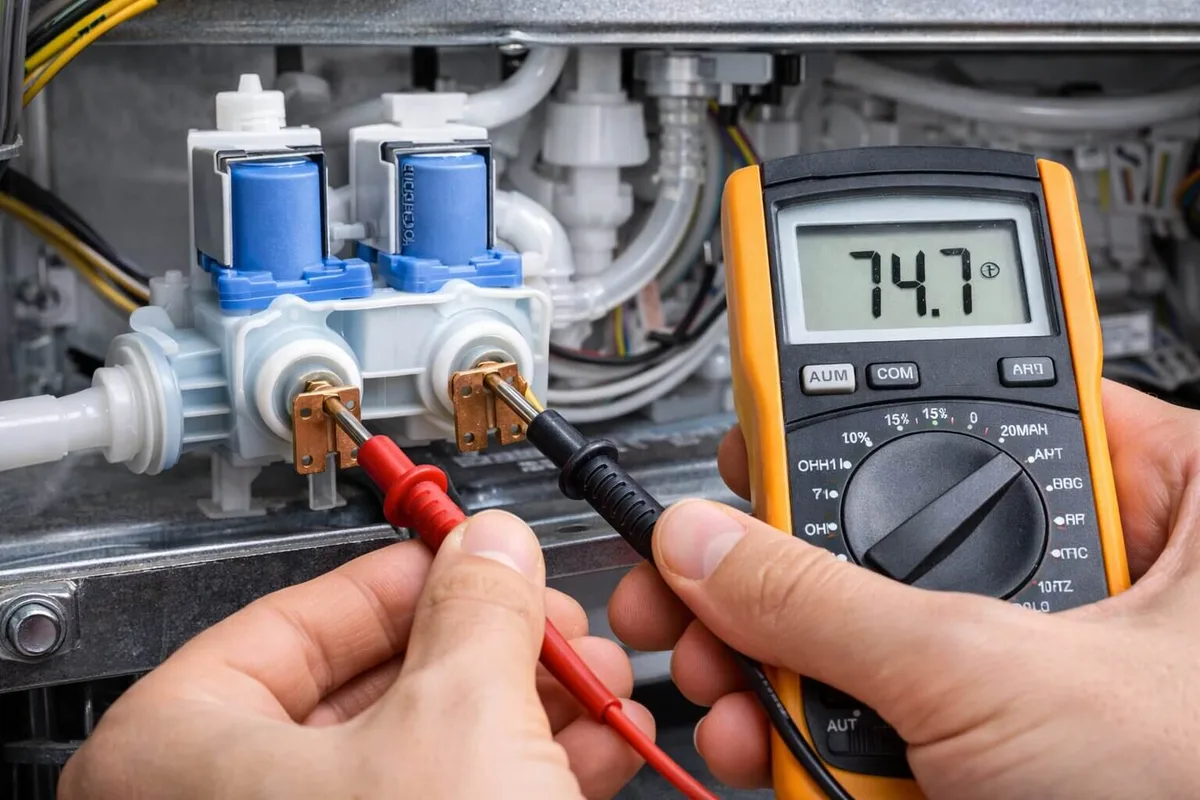
Image source: Bing (Web (fair-use with source credit))
Test the dispenser switch.
The actuator paddle pushes a microswitch. With the multimeter still on ohms, remove the switch terminals and press the paddle. A working switch shows continuity when pressed, and open circuit when released.
If it reads nothing in either position, replace the switch. This is a cheap, common LG part.
Test for voltage at the valve.
If both components test fine, the control board may be the culprit. Set the multimeter to AC voltage, reconnect the valve, and press the dispenser paddle. You should read about 120V at the valve terminals.
If not, the board isn't delivering power, and that points to a control board or wiring failure.
When to call a professional.
If you're not comfortable with a multimeter or you don't want to open the back panel, stop here. The inlet valve is a $30 to $40 part. A service call runs $100 to $150.
If you have the tools and a cautious approach, though, a replacement valve is a manageable DIY job.
Frozen Lines and Dead Control Boards: The Deeper Fixes
If your fridge sits in a garage, an unheated porch, or a room that drops below 50°F at night, you've found your culprit. The thin water line that runs through the freezer door freezes quickly when ambient temperatures fall. You'll notice it first on the dispenser, since the ice maker can keep filling for a while before it, too, gives out.
The safe thaw: unplug the fridge, open both doors, and let it sit at room temperature for 8 to 12 hours. Place towels around the base to catch melting water. Never use a hairdryer on the door line.
Heat can crack the plastic liner and damage the door seal.
Winter travel triggers a second version of this problem. If you shut off the water supply while the fridge stays plugged in, the line drains and fills with air. When you return, the dispenser spits air until you purge it.
The fix is the same 2-minute purge you'd use after a filter change.
Control board resets work for a different class of failure. A power surge or a stuck relay can leave the dispenser panel unresponsive. Unplug the fridge for 5 to 10 minutes, then plug it back in.
This clears the board's memory and often restores dispenser function without any replacement parts.
When to call LG: if you've thawed the line, replaced the filter, and tested the valve, and still nothing flows, you have a wiring fault or a failed control board. These repairs need a technician. Tell LG you've already done the purge, the filter swap, and the valve test.
That one sentence saves you a diagnostic fee and a repeat service visit.
Mistakes That Waste Time or Cause Damage
The first mistake is forcing a new filter into the housing. LG's filter head needs a clean vertical push, then a clockwise turn. If you force it, the locking tab snaps, and the cartridge won't seat properly.
The dispenser stays dead, and you've wasted a filter.
Second, don't twist or bend a frozen line. When the feed tube inside the door freezes, some people try to break the ice by bending the line. That just kinks or cracks it.
The only safe fix is a full thaw.
Third, never test the inlet valve while the fridge is plugged in. You'll short a solenoid and risk a shock. Always unplug the refrigerator before touching multimeter leads to the valve terminals.
Fourth, ignore the bypass plug at your own cost. Purging a clogged filter only works if you can isolate the filter as the failure point. Keep the grey plug from your original packaging.
It's the fastest diagnostic tool you own.
Fifth, don't reset the fridge with the water line still off. If you shut off the supply valve for winter and then reset the dispenser, the empty line creates a new air lock. Turn the water back on first, purge the line, then reset.
Frequently Asked Questions
Why does my LG dispenser click but no water comes out?
The click means the dispenser switch works and voltage reaches the inlet valve. The blockage is physical. Check the filter first, then the feed line in the freezer door.
If you press the paddle with a glass for up to 2 minutes, air or ice blockage often clears.
How long does it take to purge air from an LG water line?
Hold the paddle down for up to 2 minutes. You'll hear sputtering at first, then a steady stream. This works after a filter change, after a winter shutoff, or whenever the line has drained.
Stop once water flows evenly.
Can a third-party filter cause LG dispenser problems?
Yes. Off-brand filters may not flow at the same rate as LG cartridges. Some don't meet NSF/ANSI 42 or 53 standards.
Low flow looks like a frozen line or a dead valve. Stick with LG-branded filters or a certified equivalent.
Why is my LG water dispenser slow after a filter change?
The new cartridge contains carbon dust and air. Both restrict flow until you flush it. Run water through the dispenser for 2 minutes, or pre-flush the cartridge under a tap before installing it.
Slow flow beyond that suggests a bad cartridge.
How do I reset my LG refrigerator dispenser?
Unplug the fridge for 5 to 10 minutes. Plug it back in and wait 2 minutes. Press and hold the dispenser paddle once or twice to reinitialize the board.
This clears most temporary glitches without losing your temperature settings.
Why did my LG dispenser start working after I unplugged the fridge?
You reset the control board. Transient spikes or stuck relays can silently kill dispenser output. A full power cycle clears those states.
If the problem returns repeatedly, the board itself may be failing and needs a technician.

Similar Posts