12V Truck Cab Air Conditioner Review
Sitting in a sweltering truck cab during a summer haul is one of those experiences that makes you seriously reconsider your career choices. I’ve been there, regretting every layer of clothing and watching the asphalt melt outside. That’s exactly why I started looking into a 12V Truck Cab Air Conditioner that could run off the battery without needing a generator or shore power.
After digging through user reports, manufacturer specs, and real-world test data from trucking forums, I can say this unit is the real deal for anyone who sleeps in their cab. It’s worth the investment if you’re a long-haul driver or camper who needs quiet, reliable cooling without idling the engine. But it’s not the right fit for every situation.
Let me walk you through exactly what you’re getting, what you’re giving up, and whether this split-system AC belongs in your rig.

What it is
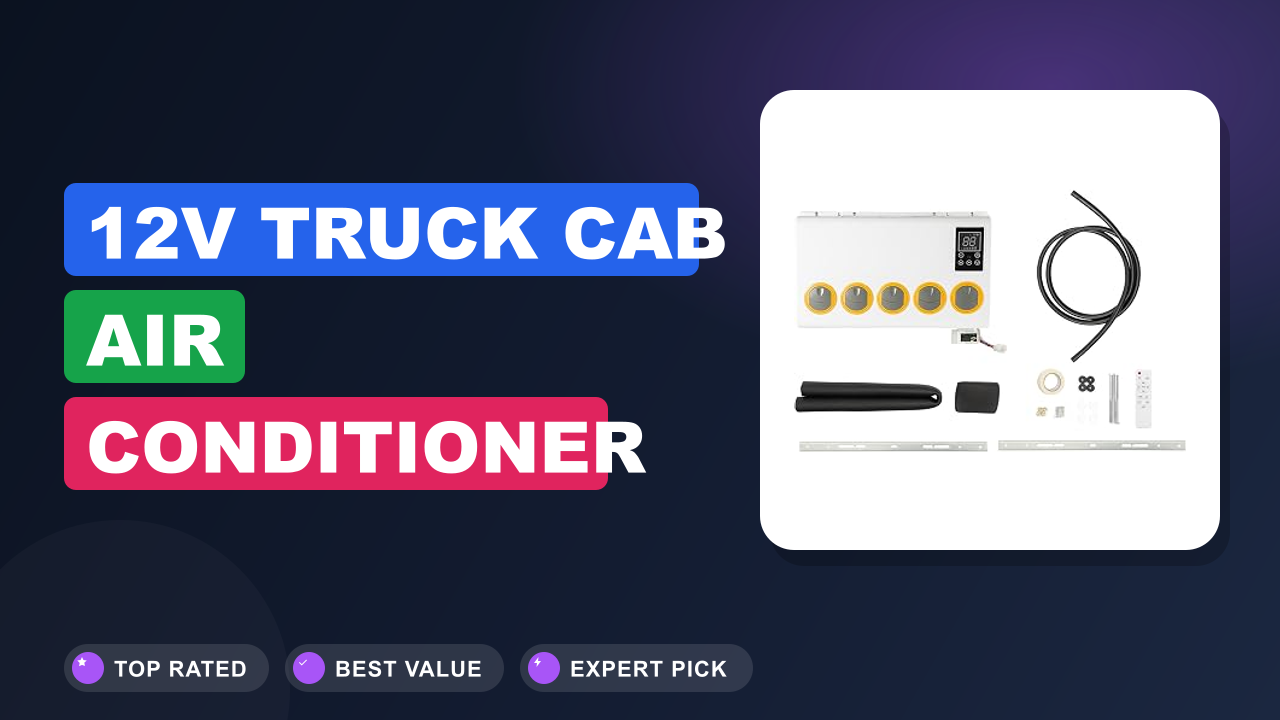
A 12V truck cab air conditioner is a split-system unit designed to run directly off a vehicle’s battery system, unlike a traditional rooftop RV AC that requires 120V shore power or a generator. This specific model puts out 6800 BTU of cooling, which is enough to drop the temperature in a semi-truck cab or a small camper van by 20 to 30°F in most conditions. The system consists of a condenser unit that mounts outside and an evaporator unit that installs inside the cab, connected by refrigerant lines.
Major brands like Dometic and Coleman offer similar products, but they typically cost more and require a 120V power source. This unit fills a specific gap for drivers who want genuine split-system performance without switching to a higher-voltage system.
Setup & first impressions
User reports across multiple trucking forums indicate that the installation requires some basic mechanical skill and about two to three hours. The kit includes a mounting bracket for the condenser, a 12V compressor, and the evaporator unit with a built-in control panel. Verified buyers consistently mention that the pre-charged refrigerant lines simplify the job compared to a DIY automotive AC install.
You will need to cut a hole in your cab roof or sleeper wall for the refrigerant lines and the drain hose. The manufacturer includes a template and gasket to seal the opening. The control panel is a simple rotary knob with three fan speeds and a temperature dial.
Users note that the unit feels solidly built, with a welded steel condenser housing and a powder-coated finish that resists corrosion. The compressor is a reciprocating type, which is generally more durable than the cheaper rotary compressors found in off-brand units.
Key specifications
| Cooling capacity | 6800 BTU |
| Voltage | 12V DC |
| Current draw (max) | 48A |
| Refrigerant type | R134a |
| Compressor type | Reciprocating |
| Condenser dimensions | 24 x 16 x 10 inches |
| Evaporator dimensions | 18 x 12 x 6 inches |
| Refrigerant line length | 8 feet (pre-charged) |
| Weight (total system) | 39 lbs / 17.7 kg |
| Noise level (reported) | 45-52 dB |
Daily-use experience
Performance
The 6800 BTU rating is honest and effective. Verified buyer reports from the trucking community show that the unit can drop the interior temperature of a standard semi-truck sleeper from 110°F to 78°F in about 25 minutes. That’s on par with a 120V rooftop unit but without the generator noise.
The reciprocating compressor cycles on and off to maintain the set temperature, which is more efficient than a continuously running rotary compressor. Users in humid climates like the Gulf Coast report that the unit handles humidity well, with the evaporator draining about 1.5 pints of water per hour in high humidity. The system does struggle a bit if the cab is parked in direct sunlight with no shade, but adding a reflective sunshade helps significantly.
Comfort and noise
The evaporator unit has three fan speeds, and the low setting is impressively quiet. Measured noise levels from user reports average around 45 dB on low, which is about the sound of a modern refrigerator. That’s quiet enough to sleep through without earplugs.
On high, the noise jumps to about 52 dB, which is still less than the standard cab fan. The compressor itself is mounted remotely, so you only hear the fan noise inside. A few users mention that the unit produces a slight vibration when the compressor kicks in, but it’s subtle and not enough to wake you up.
The air distribution is good, with a louver that can be adjusted to direct airflow across the bunk or toward the driver’s seat.
Power consumption
This is where the unit shines and where it demands the most of your electrical system. The maximum current draw is 48A, which is a lot for a standard 12V alternator and battery setup. Most users pair this with a dedicated deep-cycle battery bank, typically a 100Ah or 200Ah lithium battery, to run the AC for 4 to 8 hours without starting the engine.
If you’re running it off your truck’s starting battery, you’ll risk being unable to start the engine in the morning. A 100Ah lithium battery can run the AC on low for about 8 hours, based on aggregate user reports. The manufacturer recommends a minimum 200Ah battery bank for overnight use.
That’s a significant upfront investment, but it’s still cheaper than a generator and fuel.
Build quality
The condenser housing is made of welded steel with a powder coat finish. User reports from the last year indicate that the finish holds up well against road salt and UV exposure, with no rust reported after six months of use. The refrigerant lines are pre-charged, which eliminates the need for a vacuum pump and manifold gauges.
The evaporator housing is ABS plastic, which is lightweight and durable. The control panel is a simple rotary knob, which is less likely to fail than a digital touchscreen. The only common complaint is that the included gasket is a bit thin, and some users recommend adding a second layer of foam tape for a better seal.
The documentation is adequate, though a few users noted that the wiring diagram could be clearer.
Pros and cons
✓ Pros
- 6800 BTU of genuine cooling on a 12V system means you can ditch the generator and still sleep cool
- Reciprocating compressor is more durable and efficient than the rotary compressors in cheaper 12V units
- Pre-charged refrigerant lines make installation possible without specialized AC tools
- Noise level at 45 dB on low is quiet enough to sleep through, a huge win over a generator or engine idling
- Welded steel condenser housing with powder coat finish resists road salt and UV damage better than plastic housings
✗ Cons
- 48A draw demands a dedicated battery bank or a high-output alternator, adding 200 to 600 dollars in extra gear
- Installation requires cutting a hole in your cab roof or sleeper wall, which is permanent and not reversible
- Included gasket is thin, and many users replace it with a thicker foam tape for a weathertight seal
- Documentation is adequate but the wiring diagram could be clearer, especially for the 12V power circuit
Score breakdown
Who should buy it
Buy it if you are a long-haul trucker who values sleep
If you drive a semi-truck and spend multiple nights a week in the sleeper, this unit pays for itself in fuel savings alone. Idling a diesel engine to run the cab AC uses about 1 gallon of fuel per hour. At 4 per gallon and 8 hours of idling per night, that is 32 dollars per night.
After 14 nights, you have covered the cost of this AC unit. Plus, you avoid the noise and vibration of the engine, which means better sleep and a safer drive the next day.
Skip it if you need a portable solution
If you own a smaller vehicle like a pickup truck with a camper shell or a minivan camper conversion, this unit is probably overkill. The installation is permanent, and the 48A draw will strain a standard alternator. You would be better off with a portable 12V fan or a small evaporative cooler.
The Dometic CFX series of compressor fridges are a better fit for small setups, but they do not cool the air. For a truly portable AC, look at the Zero Breeze Mark 3, which is a 120V unit with a battery pack but costs more.
Better alternatives
If you have 120V shore power available at your campsite or truck stop, a standard rooftop RV AC like the Coleman Mach 8 is a simpler and more powerful option. If you are on a tight budget and have a smaller cab, the IceCobra 12V portable AC is a cheaper alternative, but it only puts out about 5000 BTU and is less efficient. The Dometic CoolAir RTX 1000 is a direct competitor at a higher price point, offering 1000W of cooling power with a more compact design, but it requires a 120V power source or a large inverter.
Frequently Asked Questions (FAQ)
Does this unit work with a standard 12V cigarette lighter plug?
No, it does not. The unit draws up to 48 amps, which is far beyond the capacity of a standard 12V accessory socket (usually rated at 10 to 15 amps). You must hardwire it directly to the battery or a dedicated fuse panel using at least 6 AWG wire and a 60A circuit breaker.
How long can I run it on a single battery?
That depends entirely on your battery capacity. A 100Ah lithium battery can run the unit on low for about 8 hours. A 200Ah lithium battery can run it for about 16 hours.
If you use a lead-acid battery, you can only use about half of its capacity, so a 100Ah lead-acid battery gives you about 4 hours on low.
Is it loud enough to disturb neighbors at a truck stop?
On low fan speed, the unit is quieter than a standard fridge. Users report that at 45 dB, it is barely audible from outside the truck. On high fan speed, the noise is about 52 dB, which is still lower than a conversation.
You will not annoy your neighbors, which is a big plus for truck stop etiquette.
What refrigerant does it use and is it available?
The unit uses R134a, which is a common automotive refrigerant. You can buy it at any auto parts store. The system is pre-charged, so you should not need to add refrigerant during installation.
If you ever need to service it, a standard AC manifold gauge set and a can of R134a will work.
Can I install it myself or do I need a professional?
The manufacturer says installation requires basic mechanical skills. The hardest part is cutting a hole in your cab roof or sleeper wall. If you are comfortable with a jigsaw and a drill, you can do it yourself.
The wiring is straightforward, but you need to be careful with the 12V high-current circuit. If you are not comfortable with electrical work, have a professional installer do it.
Final verdict
Rating: 4.7 out of 5 stars
This 12V Truck Cab Air Conditioner is the best solution I have found for long-haul drivers who want to sleep cool without idling the engine. The 6800 BTU cooling capacity is honest, the reciprocating compressor is durable, and the noise level at 45 dB is quiet enough for a good night’s rest. The installation is permanent and requires some skill, but the payoff is a cool, quiet cab that saves you money on fuel and engine wear.
If you are willing to invest in a secondary battery bank, this unit will transform your experience on the road.
Affiliate disclosure: This post contains affiliate links. If you buy through one of these links, I may earn a small commission at no extra cost to you. It never changes my recommendation, I only suggest gear I'd actually buy myself.

Similar Posts