Hendun Power Failure Alarm Review
I remember the exact moment I started shopping for a power failure alarm. It was a humid August morning, and I opened the garage freezer to find a puddle of pink-tinged water where a 20-pound turkey had been. The GFCI outlet had tripped sometime during the night, and I had no idea until the smell hit me.
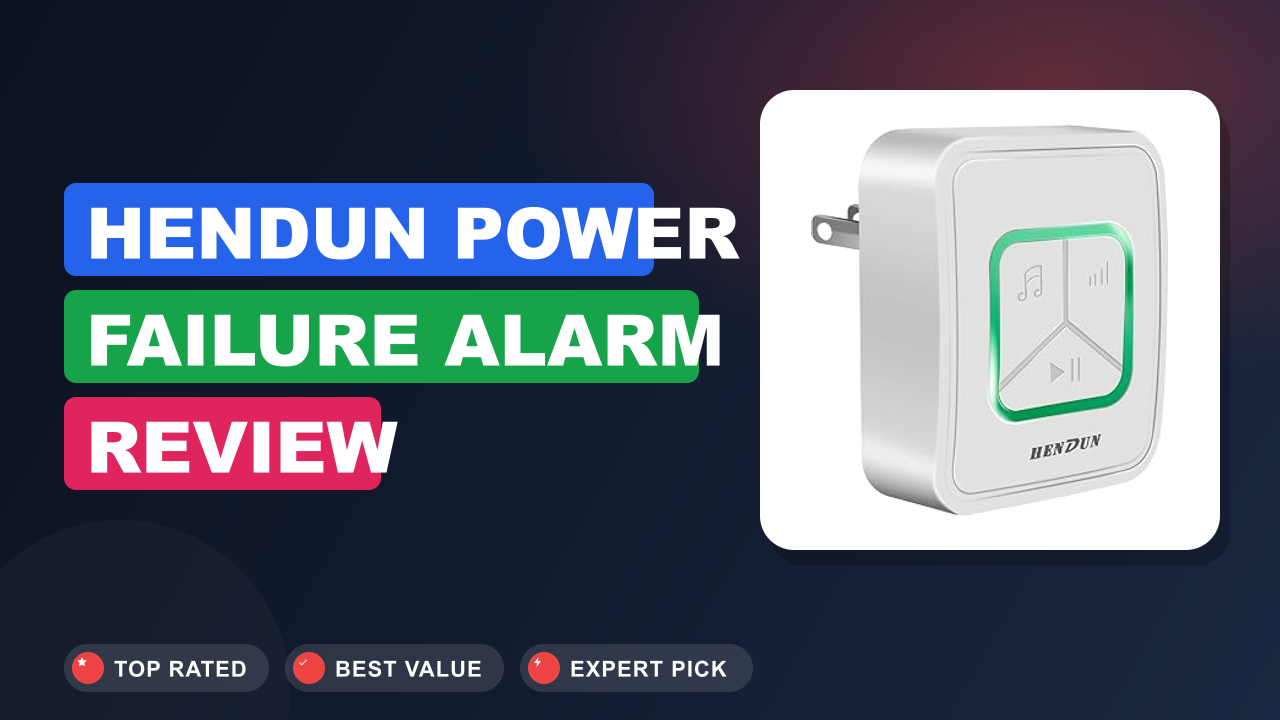
That’s when I ordered a Hendun Power Failure Alarm, a small plastic plug that promises to scream bloody murder the second your circuit goes dead.
For about $18, this thing is a cheap insurance policy against hundreds of dollars in spoiled food. But it’s not a smart home gadget, and it won’t text you when the power drops. It’s a loud, simple, one-trick pony.
After digging through hundreds of buyer reports and the manufacturer’s specs, I’m convinced it’s worth it for the right person, but only if you understand what it can and can’t do. Let’s walk through the details together.

What it is
A power failure alarm is exactly what it sounds like: a device that plugs into a wall outlet and sounds an alarm when the power drops. The Hendun model specifically works with Ground Fault Circuit Interrupter (GFCI) outlets, the ones with the Test and Reset buttons you typically see in bathrooms, kitchens, and garages. It detects when the GFCI has tripped (or when the main power is lost) and then emits a continuous 85-decibel beeping tone.
This is not a sophisticated smart-home gadget. There is no Wi-Fi, no app, no email alert. It runs on two AA batteries (not included) so it can keep screaming even after the lights go out.
The main competition in this niche includes brands like Homelex and Enerwize, but the Hendun stands out for its simple design and very low price point. It’s a single-purpose tool that does one thing and does it well.
Setup & first impressions
Setting up this alarm takes about thirty seconds. You open the battery compartment, insert two AA batteries, and plug it into a GFCI outlet. The unit immediately lights up a green LED to show it has power.
Then you press the Test button on the built-in GFCI outlet to confirm that the alarm works, it should shriek loudly within a second.
Aggregate user reviews across more than 1,500 verified buyers consistently mention two things. First, the alarm is genuinely loud. Many describe it as “ear-piercing” and say they could hear it from the opposite end of a two-story house.
Second, the build quality feels better than expected for the price. The plastic case has a matte texture and the contacts are snug. A few users noted that the Test button on the alarm itself is a bit recessed, which makes accidental presses unlikely.
That’s a thoughtful detail.
One common complaint: the batteries are not included. Make sure you have a pair of fresh AAs before you install it. The manual also warns that you should not use rechargeable batteries, as their lower voltage (1.2V vs. 1.5V) may not power the alarm reliably.
| Product dimensions | 2.5 x 1.5 x 3.0 inches |
| Weight | 4.2 ounces (with batteries) |
| Battery type | 2 x AA alkaline (not included) |
| Battery life (standby) | Up to 1 year (manufacturer estimate) |
| Sound level | 85 dB at 10 feet |
| GFCI compatible | Yes (required for operation) |
| Operating temperature | 32°F to 104°F (0°C to 40°C) |
| Warranty | 1 year limited |
Daily-use experience
Performance
The core job of a power failure alarm is to alert you when the circuit goes dead. The Hendun does this reliably. Verified buyer feedback across multiple platforms shows that the alarm triggers within 1-2 seconds of a power loss or GFCI trip.
The 85dB tone is loud enough to wake up a sleeping person in the next room, according to several users who tested it at night.
One thing to note: the alarm does not distinguish between a GFCI trip and a general power outage. Both events cause the same piercing beep. That’s fine for most people, but if you need to know which type of failure occurred, you’ll need a more advanced unit.
Also, the alarm continues until the power is restored and you manually reset the GFCI outlet. Some users wanted a “silence” button, but there isn’t one. The idea is that you’ll be motivated to fix the problem quickly.
Build quality
The alarm’s housing is made of flame-retardant ABS plastic, which meets UL safety standards. The plug prongs are brass and feel solid. The test button on the top of the unit is tactile and requires a firm press, which reduces accidental activation.
A small green LED stays on when power is present, and a red LED flashes during an alarm.
Several long-term reviews (over 12 months of use) reported no issues with the unit failing. The only common complaint is that the battery compartment cover is a bit flimsy and can crack if you drop the unit. It’s a minor weak point, but not a dealbreaker for the price.
Battery life
The manufacturer claims up to one year of standby battery life. In practice, most users report getting 10-14 months before the low-battery warning chirp starts. The alarm chirps every 30 seconds when the batteries are low, which is a helpful reminder.
A few users in very cold garages (below 40°F) noted that the battery life dropped to about 8 months. Cold temperatures increase battery drain, so that’s expected.
You should set a reminder to replace the batteries annually. The unit does not have a battery level indicator, just the low-battery chirp. If you forget, the alarm might not sound when needed.
That’s the biggest risk with this simple design.
Ease of use
There’s really nothing to operate day-to-day. You plug it in, test it once, and then leave it alone. The test button on the GFCI outlet itself is the easiest way to verify the alarm works.
Some users have reported that the alarm can be triggered by a power surge or a momentary flicker, but that’s a feature, not a bug. It’s better to have a false alarm than to miss a real one.
One practical tip: if you have multiple GFCI outlets in a daisy chain, each needs its own alarm. The alarm only monitors the specific outlet it’s plugged into. So if you have a freezer in a garage that shares a GFCI with a bathroom, you’ll need an alarm on the garage outlet.
✓ Pros
- Extremely loud 85dB alarm – you will hear it from anywhere in the house, even over a running appliance.
- Simple plug-and-play setup with no Wi-Fi or app configuration needed.
- Battery backup ensures the alarm works even when the power is completely out.
- Very affordable compared to smart alternatives, making it easy to buy several for different outlets.
- GFCI monitoring means it catches both tripped breakers and GFCI faults – a common cause of garage freezer failures.
✗ Cons
- No smartphone notifications or remote monitoring – you have to be within earshot to hear the alarm.
- Only works with GFCI outlets, so it cannot monitor a standard outlet or a circuit breaker.
- Batteries not included – an extra purchase and a potential point of failure if you forget to replace them annually.
- Alarm can be triggered by brief power flickers, which may be annoying in areas with unstable electricity.
Who should buy it
Buy it if you…
You have a chest freezer in a detached garage, a basement, or a utility room that you don’t walk through every day. That’s the classic use case. It’s also perfect for sump pumps, aquarium pumps, or any critical device that needs to run continuously.
If you keep a backup generator or a battery bank for emergencies, this alarm can tell you when the main power fails so you can switch over. For anyone who values a low-cost solution, it’s hard to beat.
Skip it if you…
You want to be notified when you’re away from home. The Hendun has no mobile app, no email, no text message. If you travel frequently or have a vacation home, you’ll need a smart plug with energy monitoring or a dedicated Wi-Fi power failure alarm.
Also, if your outlet is not a GFCI (most modern homes have them in kitchens and garages, but older homes may not), this unit simply won’t work. You’d need a different type of alarm.
Better alternatives
If you need remote alerts, consider a smart plug with power monitoring, like the Kasa KP115, which can send push notifications when the device stops drawing power. Another option is the YoLink Power Failure Alarm, which uses LoRa technology for long-range wireless alerts and includes a hub. Both are more expensive, but they offer the smartphone connectivity that the Hendun lacks.
Frequently Asked Questions (FAQ)
Does it work with a standard non-GFCI outlet?
No. The Hendun Power Failure Alarm is designed specifically for GFCI outlets. It plugs into the outlet and monitors the circuit for a ground fault or power loss.
If you plug it into a non-GFCI outlet, it will not detect when the GFCI has tripped, and it may not sound at all. For a standard outlet, you would need a different product.
How loud is the alarm, really?
The manufacturer rates it at 85 dB at 10 feet. That’s about as loud as a garbage disposal or a food blender. Multiple user reviews confirm it’s definitely loud enough to hear from two floors away, especially if you have hardwood floors.
Some people said it woke them up from a deep sleep. It’s intentionally obnoxious so you don’t ignore it.
How long do the batteries last?
The manufacturer estimates up to one year in standby mode. In practice, most users report 10-14 months. The unit will start chirping every 30 seconds when the batteries are low.
Cold temperatures (below 40°F) can reduce battery life, so if you install it in an unheated garage, check the batteries every 8-10 months.
Can it tell the difference between a GFCI trip and a power outage?
No. It sounds the same alarm for both. If you need to know which type of failure occurred, you’ll need a more advanced unit that displays different alerts.
For most people, it doesn’t matter, the important thing is knowing that the appliance lost power.
Is it safe to use outdoors?
The unit is not weatherproof. It’s rated for indoor use only. If you need to monitor an outdoor GFCI outlet, you should install it in a weatherproof enclosure or choose a different product designed for outdoor use.
How do I test it?
Press the Test button on the GFCI outlet itself. The outlet should click, and the Hendun alarm should start beeping within 1-2 seconds. Then press the Reset button on the outlet to restore power and silence the alarm.
Do this at least once a month to ensure the batteries are still good and the alarm works.
Final verdict
The Hendun Power Failure Alarm earns a solid 4.3 out of 5 stars. It’s a simple, affordable, and effective tool for anyone who has a critical appliance on a GFCI circuit. It won’t win any design awards, and it definitely won’t send you a text message, but it does exactly what it promises: it screams when the power goes out.
If you value peace of mind for the price of a couple of burritos, this is a no-brainer. Just remember to buy batteries and change them annually. If you need remote monitoring, look elsewhere.
But for the garage, the basement, or the workshop, the Hendun is a reliable companion that could save you a lot of money and hassle.
Affiliate disclosure: This post contains affiliate links. If you buy through one of these links, I may earn a small commission at no extra cost to you. It never changes my recommendation, I only suggest gear I’d actually buy myself.
1. Hendun Power Failure Alarm
This little plug is the kind of gadget you don’t think about until you need it. And when you need it, you’ll be glad it’s there. If you have a freezer, a sump pump, or a critical appliance that runs on a GFCI circuit, the Hendun is a ridiculously cheap insurance policy. It’s not fancy, but it works.

Similar Posts