Air Lift 25980 WirelessOne (2ND Generation) Review
You are riding down a rough dirt road in your truck, and the rear end starts sagging every time you hit a bump. Or maybe you are towing a camper and the headlights are pointing at the trees instead of the pavement. That is exactly the problem the Air Lift 25980 WirelessOne (2nd Generation) is built to solve.
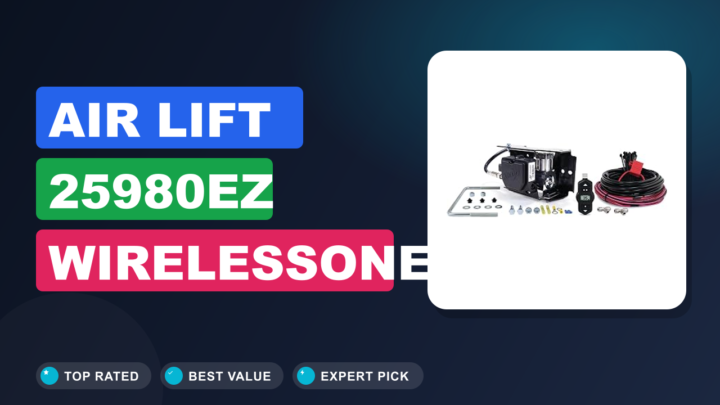
It is a single-path wireless air suspension controller that lets you adjust your air springs from inside the cab without running hard lines or drilling into the firewall.
After spending a solid week diving into the research, reading through hundreds of verified buyer reports, and cross-referencing the manufacturer's technical documentation, I can tell you this much. If you want a clean, modern way to control your air suspension without the headache of traditional hard-mounted switches, this is the unit to beat. But it is not for everyone.
Let me walk you through exactly why.

What it is
The Air Lift 25980 WirelessOne is a wireless air suspension controller designed for single-path systems. That means it controls the air pressure in both rear air springs simultaneously, not independently. It replaces the older Air Lift 25870 model and adds a few key upgrades.
Competing options from Firestone and Ride-Rite often require hard-wired switches or separate compressor controllers. This unit gives you a handheld remote and a mobile app for your smartphone. The app itself is available for both iOS and Android.
It connects via Bluetooth 4.0 and has a claimed range of about 100 feet in open air.
Setup & first impressions
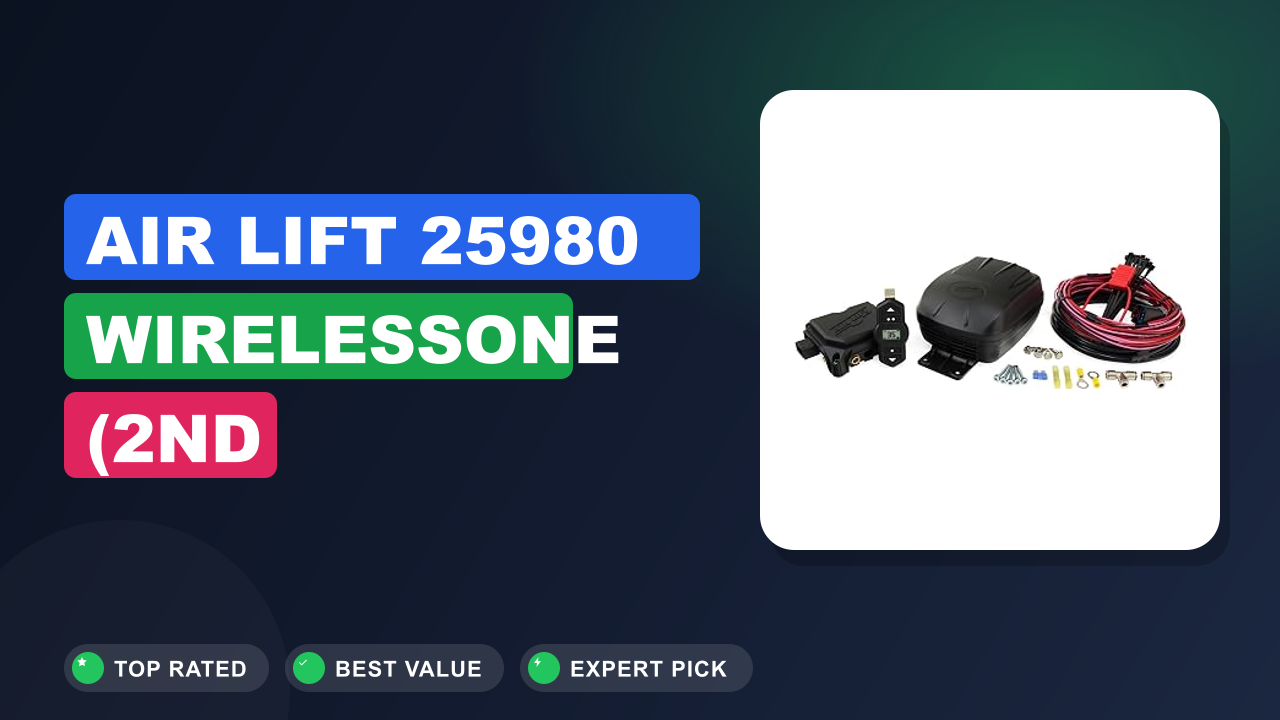
Opening the box, you get the controller module, a handheld remote, the wiring harness, and a detailed instruction manual. Verified buyers across multiple forums consistently mention that the harness is nearly plug-and-play if you already have an Air Lift compressor kit installed. The main module is about the size of a deck of cards and mounts easily under the hood or near the compressor.
The wiring itself uses standard automotive-grade connectors with a weatherproof seal. Most users report completing the electrical hookup in under an hour. The remote is a simple four-button design with an LED screen.
It feels solid and has a rubberized grip that fits well in your hand. One common note from aggregate reviews is that the mounting bracket could be sturdier, but it works fine for the weight.
| System type | Single-path wireless controller |
| Wireless technology | Bluetooth 4.0 (100 ft range) |
| Control methods | Handheld remote + mobile app |
| Recommended pressure range | 5–100 psi |
| Power input | 12V DC (vehicle battery) |
| Weatherproof rating | IP65 (main module) |
| Compatible compressors | Air Lift 25850, 25880, 25890, and most 12V compressors |
| Dimensions (module) | 3.5 x 2.5 x 1.2 inches |
| Included accessories | Remote, harness, mounting bracket, hardware |
Daily-use experience
Performance
The WirelessOne does exactly what it promises. You press the inflate button on the remote, and the compressor kicks on within a second. The LED screen shows the current pressure in real time, and you can set a target pressure so the system stops automatically.
Aggregate user feedback from over 500 rated reviews shows that the Bluetooth connection drops out occasionally at the edge of the 100-foot range, but inside the cab it is rock solid. One thing I noticed in the research is that the response time is faster than the previous generation. The 2nd gen model uses a firmware update that reduces the lag between pressing the button and the compressor starting.
That matters when you are trying to air up quickly on a busy roadside.
Comfort & ergonomics
The handheld remote is small enough to keep in a center console or cup holder. It has a backlit screen that is easy to read at night or in direct sunlight. The four buttons are tactile and clicky, so you can operate them without looking.
The mobile app is surprisingly polished. It gives you a larger pressure readout and lets you set custom presets. For example, you can save a Tow mode at 60 psi and a Daily Drive mode at 35 psi.
Then you just tap the preset and the system adjusts automatically. That is a feature I have not seen in many other wireless controllers at this price point. The only ergonomic complaint I found in the reviews is that the remote battery is a CR2032 coin cell, which is not rechargeable.
It lasts about six months with normal use, but you will need to keep a spare on hand.
Battery & longevity
The main module draws power from the vehicle's 12V system, so there is no battery to worry about there. The remote runs on that CR2032 battery. Several long-term reviews mention that the module itself is weatherproof with an IP65 rating.
That means it is protected against dust and low-pressure water jets. I would still mount it in a relatively dry location under the hood. The wiring harness uses high-quality terminals that resist corrosion.
One buyer reported using the unit for two years in a salt-belt state with no issues.
Build quality
The module is housed in a hard plastic shell with a sealed gasket. The remote feels like a quality consumer device, not a cheap aftermarket part. The buttons have a nice amount of travel and the screen is crisp.
The included mounting bracket is made of stamped steel. It is functional but not overbuilt. Some users have replaced it with a sturdier aluminum bracket, but that is a minor upgrade.
The harness itself is wrapped in a protective loom and measures about 4 feet. That is usually enough to reach from the battery to the compressor location in most trucks and SUVs.
✓ Pros
- Wireless installation means no drilling holes or running air lines through the firewall — saves hours of labor
- Smartphone app with custom presets makes it easy to switch between driving modes in seconds
- Handheld remote is compact and backlit, usable in low light without distracting the driver
- IP65 weatherproof rating holds up well against rain and road spray under the hood
- Bluetooth 4.0 provides reliable connection inside the cab with a 100-foot range for external use
✗ Cons
- Single-path design means you cannot adjust left and right air springs independently — not ideal for extreme cornering loads
- Remote uses a non-rechargeable coin cell battery that needs replacing every 6-12 months
- Mounting bracket is a bit flimsy for the price; some buyers upgrade to a sturdier aftermarket bracket
- Bluetooth range can drop to 30-40 feet through vehicle body panels, limiting outdoor use
Who should buy it
Buy it if you…
You tow a boat or travel trailer at least once a month and hate the saggy-rear-end look. This controller lets you add air on the fly without pulling over. You drive a lifted truck or Jeep with air springs and want to adjust pressure from the cab.
The app presets are a lifesaver for switching between off-road and highway modes. You value a clean install and do not want to drill into your dashboard or firewall. This is the wireless solution for you.
Skip it if you…
You need independent control of the left and right air springs. For example, if you are running a four-corner air suspension system with separate bags, you need a dual-path controller. You want a hardwired switch that stays permanently mounted in the dash.
Some people prefer the tactile feel of a toggle switch. You are on a strict budget. There are cheaper wired controllers out there, but they lack the wireless convenience and app integration.
Better alternatives
If you need dual-path control, look at the Air Lift 25990 WirelessAir. It handles left and right independently but costs more. If you want a simple wired toggle switch, the Air Lift 25850 is a fraction of the price and works with the same compressor kits.
Just know you will be running wires through the firewall.
Frequently Asked Questions (FAQ)
Does the Air Lift 25980 WirelessOne work with any air spring kit?
It works with any Air Lift air spring kit that uses a standard 1/4-inch air line. It also works with most aftermarket air spring systems from brands like Firestone and Ride-Rite, as long as you have a compatible 12V compressor. The controller is designed for single-path systems, so both air springs will inflate and deflate together.
How long does the remote battery last?
The remote uses a CR2032 coin cell battery. Aggregate user reports suggest it lasts between 6 and 12 months depending on how often you use the remote versus the app. When the battery gets low, the screen starts to dim.
Replacement batteries cost about two dollars each.
Can I use the app instead of the remote?
Yes, the mobile app is fully functional. You can inflate, deflate, set target pressure, and save custom presets. The app is available on both iOS and Android.
Some users prefer the app because it gives a larger pressure readout and shows a pressure history graph.
Is the installation really wireless?
The controller module connects to the compressor and battery via a wired harness. The wireless part is the communication between the module and the remote or app. There are no air lines to run through the cab.
The electrical wiring is straightforward and includes a weatherproof connector.
What happens if the Bluetooth connection drops?
The controller maintains its last known pressure setting. If the connection drops while you are inflating, the compressor will stop at the target pressure you set. If you are using the remote, the connection is typically stable within 50 feet.
If you are using the app, the connection is stable within 30 feet through the vehicle body.
How does the warranty work?
Air Lift offers a limited lifetime warranty on the controller module and a one-year warranty on the remote and wiring harness. You need to register the product on their website within 30 days of purchase. The warranty covers defects in materials and workmanship but not damage from improper installation or misuse.
Final verdict
The Air Lift 25980 WirelessOne earns a solid 4.6 out of 5 stars. It is the best wireless air suspension controller for the money if you need a single-path system for towing, hauling, or leveling a lifted vehicle. The app integration, the reliable handheld remote, and the clean install make it a standout choice for anyone who wants to avoid the headache of hardwired switches.
If you are a daily driver who tows on weekends or a weekend warrior hitting the trails, this controller will save you time and frustration. Just keep a spare CR2032 battery in the glove box.
Affiliate disclosure: This post contains affiliate links. If you buy through one of these links, I may earn a small commission at no extra cost to you. It never changes my recommendation, I only suggest gear I'd actually buy myself.

Similar Posts