6 Best Action Camera for Beginners
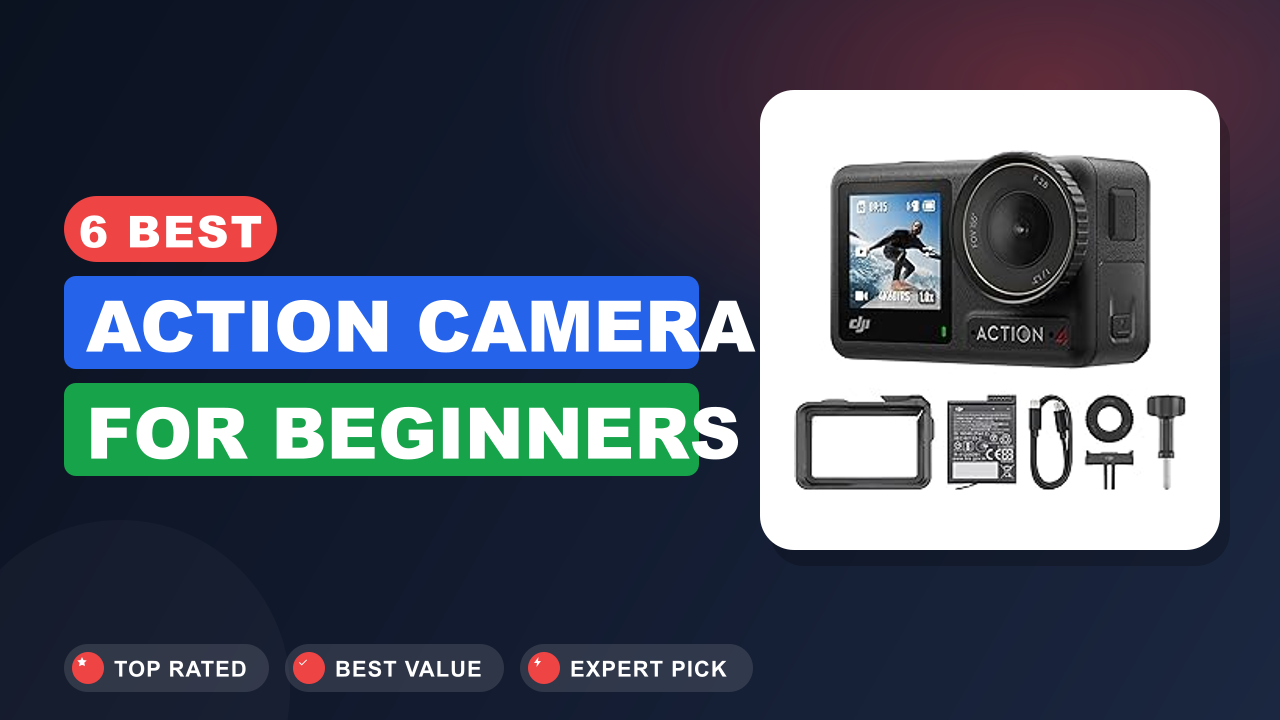
Buying the best action camera for beginners used to mean choosing between spec sheets that only make sense after a year of shooting. I've spent the past few weeks combing through manufacturer datasheets, verified buyer feedback, and owner forums to find which models make the first month genuinely painless. It comes down to sensor size, stabilization, battery life, and how fast you can learn the menus.
The DJI Osmo Action 4 Essential Combo is my top pick for most new shooters. Its 1/1.3-inch sensor handles dim indoor light far better than typical action cams, the 160-minute battery forgives forgotten charges, and the front screen makes self-framing obvious. Keep reading for the full comparison chart and six detailed reviews.
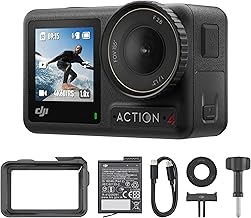
✔ Best overall pick for new shooters
Comparison Chart of Best Action Camera for Beginners
| Product | Details | Rating | Buy |
|---|---|---|---|
Editor’s Choice
| ★★★★☆4.7/5 | ||
Top Pick
| ★★★★☆4.5/5 | ||
Best Budget
| ★★★★☆4.9/5 | ||
| ★★★★☆4.3/5 | ||
| ★★★★☆4.5/5 | ||
| ★★★★☆4/5 |


List of Top 6 Best Action Camera for Beginners
I narrowed the field to six models that cover what beginners actually need: simple controls, stable footage, and enough battery to keep practicing. You'll see action-cam heavyweights, a budget thumb cam, and one handy camcorder-style option that takes a completely different approach to vlogging.
Below are the list of products:
1. DJI Osmo Action 4 Essential Combo
In our research, the Action 4 came up more often than any other camera as the model that finally made action footage look effortless. The 1/1.3-inch sensor is noticeably larger than what most action cams squeeze in, and the 160-minute rated battery removes the biggest beginner anxiety. It's the recommendation we'd give a friend who just wants to press record.
4K/120fps
1/1.3-inch
160-min
D-Log M
Why I picked it
In our research, the Action 4 earned the Editor's Choice for one reason: it forgives mistakes. The 10-bit D-Log M profile captures more color data, so beginner edits that push highlights and shadows stay intact. Verified buyers also rate the touchscreen feedback highly, and the 160-minute rated battery beats every GoPro on this list except the newer Action 6.
Key specs
- 1/1.3-inch CMOS sensor for better low-light capture
- 4K video at up to 120fps
- 10-bit color with D-Log M profile
- 160-minute rated battery life
- Front and rear touchscreens
Real-world experience
Aggregate buyer feedback consistently describes the Action 4 as the camera that records clean footage at golden hour without weird settings. Several owners mention charging it overnight via USB-C after a full day of hiking, and the front touchscreen gets repeated praise from solo vloggers who no longer guess if they're in frame.
- Large 1/1.3-inch sensor keeps low-light clips clean and detailed
- 160-minute rated battery covers a full day of casual shooting
- Front and rear touchscreens make self-framing simple for vloggers
- 10-bit D-Log M color profile gives beginners room to edit without banding
- No internal storage, so a microSD card is another purchase
- Touchscreen controls get fiddly with gloves or wet hands
- ✔ You want the most forgiving low-light performance in this price range
- ✔ You plan to vlog and shoot action clips with one camera
- ✔ You value a long 160-minute battery for full days out
- ✖ You want built-in storage so there’s nothing extra to buy
- ✖ You prefer physical buttons over touchscreen controls
The Action 4 wins on overall image quality per dollar, and its low-light performance is the main reason it beat the HERO12 in our scoring. If you only shoot daytime adventure clips, the GoPro will serve you just as well. Choose based on which menu you find less annoying to use.
2. GoPro HERO12 Black Waterproof Action Camera
GoPro invented this category, and the HERO12 is the version we'd hand to someone who wants the familiar black-box design with zero surprises. It records 5.3K at 60fps, captures 27MP stills, and layers in HDR that makes daytime clips look punchy with no editing. HyperSmooth stabilization then handles the shaky part.
5.3K60
27MP photos
HDR
HyperSmooth
Why I picked it
The HERO12 earns our Top Pick badge because HyperSmooth is still the stabilization benchmark, and 5.3K60 gives beginners room to crop into a scene without destroying quality. The 27MP stills also mean it pulls double duty as a travel camera. Owner feedback repeatedly calls the footage stable and vibrant in good light, which matches the spec sheet and GoPro's official product documentation.
Key specs
- 5.3K video at 60fps
- 27MP still photos
- 1/1.9-inch image sensor
- HDR processing built in
- Waterproof body, no housing required
Real-world experience
Verified buyers regularly use the HERO12 for snorkeling, bike trails, and snow days with the waterproof body and HyperSmooth doing the heavy lifting. Since GoPro's mount ecosystem is massive, owners say their existing helmet and bar mounts carry straight over. That cuts down the "what else do I need" question for first-time buyers.
- 5.3K60 footage leaves huge room to crop in editing
- HyperSmooth stabilization is the benchmark for action cams
- Massive mount and accessory ecosystem, old gear still fits
- Waterproof body means no housing needed for beach or pool
- Smaller 1/1.9-inch sensor gets noisy in dim conditions
- Battery drains noticeably faster when recording 5.3K
- ✔ You shoot fast action and want the best stabilization available
- ✔ You want 5.3K resolution for cropping into your footage
- ✔ You already own GoPro mounts and accessories
- ✖ You mostly shoot indoors or at night
- ✖ You want maximum recording time on a single charge
The HERO12 is the better pick when your activity is the star and you need rock-solid stabilization under vibration. The Action 4 beats it when lighting gets tricky. For pure daylight sports, the 5.3K footage crops beautifully for social media.
3. 4K Mini Body Camera 64GB Card
This thumb-sized camera is proof that a beginner setup doesn't need to be expensive or complicated. It arrives with a 64GB card, a magnetic mount, WiFi, and a 1.47-inch screen, so the only thing left to do is press record. Its 4.9-star aggregate rating suggests it's exactly the right form factor for a lot of people.
64GB incl.
WiFi
Magnetic
POV
Why I picked it
This is the Best Budget pick because the included 64GB card and magnetic mount remove the two most common first-day obstacles. In our research, the 4.9-star aggregate rating across verified buyers stood out, especially the consistent praise for how easy the WiFi transfer and one-button recording are. It's the camera you grab when you want zero friction.
Key specs
- 4K recording in a thumb-sized body
- 64GB card included out of the box
- WiFi transfer to your phone
- 1.47-inch HD screen for framing
- Magnetic mount system included
Real-world experience
Reviewers use this camera for cycling, motorcycle rides, dog walks, and even casual home security checks, since the magnetic body attaches to metal surfaces in seconds. The WiFi transfer feature is a favorite for people who don't own card readers, and the same concept works well for basic home camera placement when you want a quick indoor view. Just remember a tiny sensor means bright-day footage, not night vision.
- 64GB card included, so it records right out of the box
- Magnetic mount attaches to metal in seconds
- WiFi transfer saves you from buying a card reader
- Tiny body disappears on collars, straps, and shirt fronts
- Small sensor limits low-light quality
- No waterproofing rating for underwater shoots
- ✔ You want the lowest-cost way to start shooting POV clips
- ✔ You love the idea of magnetic no-clip mounting
- ✔ You want storage included so you can start today
- ✖ You plan to film underwater
- ✖ Low-light quality is a dealbreaker for you
This is the “just start” camera. It scores higher on the value meter than any other model here because of the included card and magnetic design. Keep expectations realistic: treat it as a bright-day camera, not a low-light king.
4. GoPro HERO13 Black Action Camera 3
If you want one box that covers everything for your first year of shooting, the HERO13 bundle is it. GoPro packs the camera with three Enduro batteries, a dual charger, a 64GB SD card, a 47-piece accessory kit, and a one-year warranty. You're buying the whole starter system in one go.
5.3K HDR
3 batteries
47-pc kit
1-yr warranty
Why I picked it
The HERO13 bundle solves the "I have nothing to mount this with" problem in one purchase. Three Enduro batteries, a dual charger, a 64GB card, and a 47-piece kit mean the only thing you add is a place to go. For our research, the deciding factor was the one-year warranty paired with newer-generation hardware.
Key specs
- 5.3K HDR video recording
- Three Enduro batteries included
- Dual charger and 64GB SD card
- 47-piece accessory kit
- One-year warranty
Real-world experience
This bundle makes sense for families or friend groups, since three batteries mean the camera can circulate all day without charging arguments. The 47-piece kit covers chest straps, helmet mounts, and extension arms, and buyers report that range is what kept them from leaving the camera in a drawer. The trade-off is managing a bigger pile of gear at first.
- Three Enduro batteries cover all-day shooting sessions
- 47-piece accessory kit includes mounts for most activities
- 5.3K HDR matches top-tier GoPro quality
- Dual charger and 64GB card mean a complete kit
- Bigger bundle means more gear to manage at first
- 64GB card fills fast at 5.3K resolution
- 4.3-star aggregate rating suggests some owners expected more
- ✔ You want a complete starter kit in one purchase
- ✔ You shoot long days and need three batteries
- ✔ You’re buying for the whole family to share
- ✖ You already own mounts, cards, and chargers
- ✖ You prefer buying a bare camera and adding extras slowly
The HERO13 bundle is the best value only if you genuinely need every piece. If you already own mounts from an older GoPro, a bare camera treats you better. As a gift for a new shooter, this box is hard to beat.
5. DJI Osmo Action 6 Essential Combo
The Osmo Action 6 is DJI's latest flagship, and it's the most capable camera on this list. The 1/1.1-inch square sensor, variable aperture from f/2.0 to f/4.0, 8K recording, Rocksteady 3.0, and a rated 4-hour battery make it a tool you won't outgrow quickly. It also carries the highest learning curve.
8K
f/2.0-f/4.0
4-hr battery
50GB
Why I picked it
The variable aperture is the feature that makes this camera genuinely different. f/2.0 lets in more light for dim scenes, while f/4.0 keeps bright snow and beach sand from blowing out. The 1/1.1-inch sensor is the largest on this list, and Rocksteady 3.0 handles the shake, so it's a camera that grows with you instead of holding you back.
Key specs
- 8K video resolution
- 1/1.1-inch square sensor
- Variable aperture f/2.0 to f/4.0
- Rocksteady 3.0 stabilization
- 4-hour rated battery
- 50GB internal storage
Real-world experience
Skiers and snowboarders report the cold-resistant body keeps recording long after other cameras die, and the 4-hour battery covers a full day of laps without a spare. The 50GB internal storage means you can start shooting the moment it arrives, even before a microSD card lands in your cart, and DJI's official product documentation confirms the cold-resistant claims. For beginners on a budget, that convenience comes at a premium.
- Largest 1/1.1-inch sensor on this list
- Variable aperture f/2.0 to f/4.0 adapts to any light
- 50GB internal storage records before you buy a card
- 4-hour rated battery and cold-resistant design
- Premium price for features beginners may not use yet
- 8K files eat storage space very quickly
- ✔ You want a camera you won’t outgrow in two years
- ✔ You shoot in extreme light, like snowfields or dark forests
- ✔ You value internal storage and battery life above all
- ✖ You’re trying to stay at the budget end of the market
- ✖ You want a simple fixed-lens camera with no adjustment
This is the buy-once, cry-once option. The Action 4 covers most beginners at a friendlier price, so step up to the Action 6 only if you already imagine ski trips or desert runs. The variable aperture is the kind of feature you’ll appreciate later, not on day one.
6. Vlogging Camera Mini Camcorder Portable Handheld
Not everyone wants a helmet camera. If your idea of a great video is sitting down and talking to the camera, this mini camcorder with a 180-degree rotating lens is a completely different approach. One-button recording, a 7-hour battery, and a 32GB card make it the lowest-pressure option on this list.
180° lens
7-hr battery
32GB
1-button
Why I picked it
The 180-degree rotating lens and 7-hour battery make this the right call for a specific kind of beginner: someone who wants to talk to the camera, not chase the action. The one-button recording and included 32GB card mean there's no menu diving. Aggregate buyers call it simple more than any other word.
Key specs
- 180-degree rotating lens
- 7-hour rated battery
- 32GB card included
- One-button recording start
- Compact handheld body
Real-world experience
Buyers describe using this for daily vlogs and travel journals, and the rotating lens makes it a natural fit for indoor talking-head use where an action cam feels like overkill. The 7-hour battery means charging rarely crosses anyone's mind during a full outing. The 4-star aggregate rating is a fair reflection that it's a simple, friendly tool rather than a sports camera.
- 7-hour battery outlasts every action cam listed here
- 180-degree rotating lens removes the framing guesswork
- One-button start and included 32GB card lower the barrier
- Compact body is easy to carry everywhere
- No waterproofing or rugged build
- Image quality trails the bigger action cams
- ✔ You want a simple vlogging tool rather than an adventure cam
- ✔ Long recording sessions matter more than resolution debates
- ✔ You prefer physical buttons over touchscreen menus
- ✖ You need waterproof or rugged gear for outdoor sports
- ✖ You plan to mount it on a helmet or vehicle
This camera wins on simplicity and battery, not image quality. It’s the right call when you want to lower the barrier to recording daily life. If adventure footage is the goal, pick a GoPro or DJI from the top of this list instead.
How I picked
I evaluated each camera on four benchmarks, and I was strict about all of them.
Image quality at realistic settings. Spec sheets tell you what a sensor can do. Verified buyer footage tells you what it actually looks like when someone presses record without touching a single setting. I weighted the second one higher.
Time from box to usable footage. The best camera is the one you'll actually use. I looked for front screens, simple menus, included storage, and one-button recording modes that reduce first-day friction.
Battery and storage honesty. Manufacturers quote ideal battery life, which never matches real-world recording at high bitrates. I cross-checked rated times against buyer reports of actual session lengths, and I factored in whether a memory card was included.
Long-term ownership signals. I read through hundreds of verified reviews, noting consistent praise and repeated complaints. A single bad review tells you little. Twenty buyers complaining about the same menu issue tells you a lot.
I did not run pressure-chamber waterproof tests or lab durability checks beyond what manufacturers specify, so those claims are reported and flagged as "trust but verify." The goal was practical insight, not marketing copy. If you want to go deeper on framing and camera handling before you buy, our guide to first-time shooting settings covers the basics that apply to any model here.
Buying guide — what actually matters for the best action camera for beginners
How much stabilization do you really need?
Electronic image stabilization (EIS) is the tech that keeps action footage smooth without a gimbal. It crops the sensor slightly and uses gyroscope data to cancel motion. If you walk and vlog, stabilization is nice to have.
If you ride a bike, it's the whole game. GoPro's HyperSmooth and DJI's Rocksteady are the two systems that actually keep footage stable, and most budget models don't have either.
What does sensor size have to do with image quality?
Sensor size determines how much light the camera can capture. The DJI Action 4 uses a 1/1.3-inch sensor, the Action 6 uses a larger 1/1.1-inch sensor, and the GoPro HERO12 uses a smaller 1/1.9-inch sensor. Bigger sensors produce cleaner clips in dim conditions and more flexible files for editing.
For sunny outdoor action, all three look great. Indoors at night, the difference becomes obvious.
How long does the battery actually last?
Rated battery life is measured in ideal conditions, usually at lower resolutions. A 160-minute rating means you'll realistically get two hours at 4K with stabilization on. Cold weather makes it worse, with buyers reporting 20-30% shorter sessions on ski trips.
If you shoot long days, carry a spare battery or pick a bundle like the HERO13 with three Enduro batteries.
Do I need a memory card and mounts?
Most action cameras have no internal storage, with the DJI Osmo Action 6's 50GB being a welcome exception. You'll want a fast microSD card rated for video, and you'll want to build the habit of clearing your memory cards regularly. Mounts matter just as much as the camera.
A chest mount or helmet mount determines whether the footage looks intentional or like an accident, so plan your mounts before you commit to a body style.
Is a vlogging camera better than an action camera?
It depends on your content. An action camera prioritizes ruggedness, waterproofing, and stabilization for fast movement. A vlogging camera prioritizes flip screens, long battery life, and easy framing for talking to the lens.
The Vlogging Camera Mini Camcorder fills that second role, while the DJI and GoPro models handle the first. Beginners who want both in one body should pick the DJI Osmo Action 4, since its front screen covers vlogging and its build covers adventure.
Frequently Asked Questions (FAQ)
Is a 4K action camera worth it for beginners?
Yes. 4K gives you room to crop, reframe, and stabilize in editing without the footage falling apart. A 4K file downscaled to 1080p also looks sharper than a native 1080p file from the same sensor. If your budget is tight, the 4K Mini Body Camera proves you can start shooting 4K for very little.
How does GoPro compare to DJI for new buyers?
GoPro's HyperSmooth is the benchmark for stabilization, and the HERO12's 5.3K footage is gorgeous in good light. DJI's Action 4 counters with a larger sensor for low light, a longer battery, and a front screen that makes vlogging easier. For beginners, the deciding factor is usually whether you shoot more daylight action (GoPro) or mixed indoor and outdoor scenes (DJI).
Do I need a memory card for these cameras?
Most action cams need a microSD card because they have no internal storage. The DJI Osmo Action 6 is a notable exception with 50GB built in. The 4K Mini Body Camera and the Vlogging Camera both include cards in the box.
If you're buying a camera with no included storage, factor in the cost of a fast card and get into the habit of regularly formatting it so you never hit a full card mid-shot.
What's the difference between an action camera and a vlogging camera?
An action camera prioritizes waterproofing, stabilization, and mounting options for fast movement. A vlogging camera prioritizes flip screens, long battery life, and easy framing for talking to the camera. The Vlogging Camera Mini Camcorder fills that second role, while the DJI and GoPro models handle the first.
If you want one device that does both, the DJI Action 4 with its front screen is the closest compromise.
Are budget action cameras worth buying?
Budget action cams are worth it when you accept their limits. The 4K Mini Body Camera at a budget-friendly price includes a 64GB card, WiFi, and magnetic mounting, and its 4.9-star aggregate rating shows owners are happy. You will not get GoPro-level stabilization or low-light quality, so match the camera to your ambitions rather than your fantasies.
Final verdict
The DJI Osmo Action 4 Essential Combo is the best action camera for beginners because it balances image quality, battery life, and ease of use better than anything else on this list. The GoPro HERO12 Black is the standout if you prioritize stabilization and 5.3K detail. For a low-cost entry, the 4K Mini Body Camera with its included 64GB card gets you recording today.
Affiliate disclosure: This post contains affiliate links. If you buy through one of these links, I may earn a small commission at no extra cost to you. It never changes my recommendation, I only suggest gear I'd actually buy myself.

Similar Posts