5 Best AI Cleaning Robots: Top Smart Picks For A Cleaner Home
The best AI cleaning robots use smart maps, strong suction, and simple controls to cut daily chores.
Dust gathers under the sofa, pet hair clings to rugs, and tall windows turn into a weekend task. I know how easy it is to delay cleaning when the job feels bigger than the time available. AI cleaning robots help by taking over repeat work, from floor care to glass cleaning. They are not magic, and each type has limits, but the right robot can keep your home fresher with less effort. In this guide, I review five useful options for different cleaning needs, homes, budgets, and surfaces.

Shark AV2501S AI Ultra Robot…
INCREDIBLE SUCTION: Powerful Shark suction picks up dirt and debris on all floor types—tackling even the toughest of messes in your home. NO SPOTS MISSED: With Matrix Clean Navigation, the…
Tosima X1 Window Cleaning Robot…
Effective Window Cleaning Robot with Dual Nozzles & Ultrasonic Water Atomization The X1 window robot delivers streak-free cleaning thanks to intelligent ultrasonic water atomization. Two separate spray nozzles release water…

Tosima W5 Window Cleaning Robot,…
Revolutionize your cleaning routine with our automatic robot window cleaner machine! Featuring bidirectional ultrasonic atomization water spray, it delivers side water spray for intuitive, efficient, and streak-free results—no manual effort…
Shark AV2501S AI Ultra Robot Vacuum

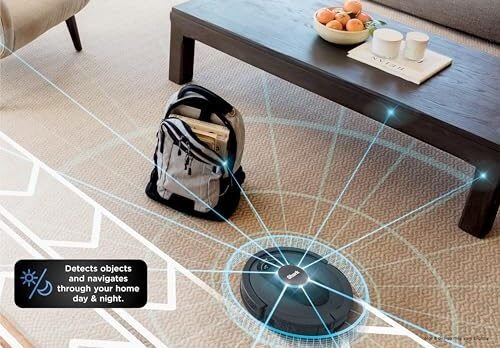
The Shark AV2501S AI Ultra is the strongest all-around choice in this group for homes that need regular floor cleaning. Its Matrix Clean system makes repeated passes in a pattern that aims to cover the floor from several angles. That approach helps the robot pick up fine dust and crumbs that a single straight pass may miss. Its dark gray body also looks neat beside most furniture.
This model uses home mapping to plan its work instead of moving at random. The self-empty base can hold up to 30 days of debris, although the real time depends on pets, floor size, and how often the robot runs. The bagless design may appeal to shoppers who do not want to keep buying replacement bags. Wi-Fi control adds useful scheduling and remote start options, so I could set a routine and let the robot work while I handled other tasks.
Pros:
- Matrix Clean helps improve floor coverage
- Home mapping supports more planned cleaning
- Self-empty base reduces daily maintenance
- Large debris capacity suits busy homes
- Useful for homes with pet hair
- Wi-Fi control supports schedules and remote commands
Cons:
- The base needs extra floor space
- Bagless emptying can release dust if handled too quickly
- Mapping works best after the first few runs
My Recommendation
I recommend the Shark AV2501S AI Ultra to families, pet owners, and anyone who wants a floor robot that needs little daily attention. It is a good fit for mixed hard floors and carpets where hair, crumbs, and dust return fast. The self-empty base is the main reason to choose it over a smaller robot. Among the Best AI Cleaning Robots in this guide, it offers the broadest floor-care package. Check current Amazon availability before buying, since prices and bundles can change.
| Best for | Why |
|---|---|
| Pet owners | It is designed to handle daily hair and debris pickup. |
| Busy families | The mapped cleaning and self-empty base reduce hands-on work. |
| Whole-home floor care | Matrix Clean and Wi-Fi scheduling support repeat cleaning. |
Tosima X1 Window Cleaning Robot

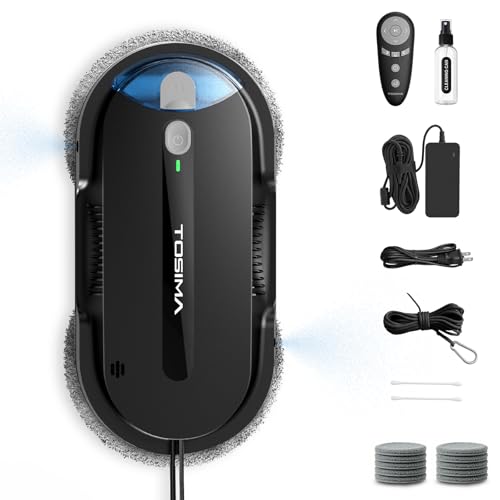
The Tosima X1 focuses on a job that many floor robots cannot touch: cleaning smooth glass. It uses dual-nozzle ultrasonic water atomization to spread a fine spray across the window. The 85 ml visible water tank lets me check the fluid level before starting. That small detail matters because it makes setup more predictable and reduces guesswork during a long cleaning session.
The X1 is made for both large and small windows, but the surface must be smooth and suitable for the robot’s grip. It does not remove the need for a power cord, safety line, and careful setup. I would first clear dust and loose grit from the glass, then fit a clean pad and test the robot on an easy window. Like other Best AI Cleaning Robots for glass, it works best as a maintenance tool rather than a cure for thick, dried-on dirt.
Pros:
- Dual nozzles help distribute cleaning fluid
- Ultrasonic spray can reduce heavy wet spots
- Visible 85 ml tank makes fluid checks easy
- Works on many large and small smooth windows
- Automates a tiring vertical cleaning task
- Useful for routine glass maintenance
Cons:
- It needs smooth glass and proper contact
- Users must follow safety steps on elevated windows
- A small tank may need refilling for many windows
My Recommendation
The Tosima X1 is best for people with many smooth windows, glass doors, or large panes that are hard to reach by hand. I like the visible tank because it makes the robot easier to prepare and monitor. It is also a sensible pick for routine cleaning between deeper hand washes. If window safety and surface checks become part of your setup, this model can make glass care less of a chore. Its value depends on how often you clean windows and how much reaching or ladder work it replaces.
| Best for | Why |
|---|---|
| Large smooth windows | The robot combines automated movement with dual-nozzle spray. |
| Glass doors | The visible tank supports simple setup and fluid checks. |
| Routine window care | It helps maintain clean glass between deeper manual washes. |
Tosima W5 Window Cleaning Robot

The Tosima W5 takes a more performance-focused approach to window cleaning. Its listed maximum suction reaches 6400Pa, and the robot uses adaptive suction to help maintain contact as it moves over smooth surfaces. It also includes automatic spray and intelligent navigation. In practical use, those features are meant to keep the robot moving in a steady path instead of forcing the user to guide every section by hand.
The W5 includes a triple safety system, edge detection, and remote control. These features can make the cleaning process easier to manage, but they do not replace a safety tether or active supervision. I would use the W5 on clean, smooth glass and avoid treating it like a general-purpose wall cleaner. For shoppers comparing the Best AI Cleaning Robots, this model stands out when suction and controlled movement matter more than floor cleaning.
Pros:
- High listed suction supports steady glass contact
- Adaptive suction helps during movement
- Automatic spray reduces manual work
- Edge detection helps guide window coverage
- Triple safety design adds useful protection features
- Remote control gives the user more control
Cons:
- It is limited to suitable smooth surfaces
- Users still need to supervise the robot
- Spray and pads may leave streaks if they become dirty
My Recommendation
I would choose the Tosima W5 for a homeowner who wants a strong grip and more control during window cleaning. It may suit tall interior panes, large glass doors, and smooth exterior windows when the user can set up the safety system correctly. The remote is helpful when I want to pause, redirect, or finish a spot without reaching up. It is one of the Best AI Cleaning Robots for focused window work, but buyers should measure their surfaces and read the safety instructions first. Check the current listing for included accessories and price.
| Best for | Why |
|---|---|
| Large glass panels | High listed suction and adaptive contact support steady movement. |
| Users who want control | The remote can help manage paths and cleaning modes. |
| Regular window upkeep | Automatic spray and navigation reduce repeated hand work. |
HIXZAP Window Cleaning Robot

The HIXZAP Window Cleaning Robot is built around a double-helix movement system and suction rated from 4800Pa to 6400Pa. It also uses dual ultrasonic spray and an 85 ml water tank. This combination aims to give the robot a steady grip while spreading moisture in a controlled way. The white body has a clean look, and the compact form should be easy to store when the windows are already bright.
Three cleaning modes let the user select a pace or path that fits the task. Edge detection and anti-drop functions add confidence, especially when the robot reaches a pane’s border. Still, glass robots work best when pads stay clean and the glass has no loose grit. I see the HIXZAP as a flexible option for shoppers who want more than one cleaning mode without moving up to a larger floor robot.
Pros:
- Double-helix movement supports planned coverage
- Dual ultrasonic spray helps control moisture
- Several cleaning modes suit different tasks
- Listed suction range supports firm glass contact
- Edge detection helps at window borders
- Anti-drop features add an extra layer of security
Cons:
- It only suits compatible smooth surfaces
- The 85 ml tank may not cover a large home in one fill
- Dirty pads can reduce streak-free results
My Recommendation
The HIXZAP is best for users who want cleaning modes and a balanced set of window features. It can work well for routine care on smooth panes, patio doors, and other flat glass surfaces. I like that the robot combines spray, edge detection, and anti-drop functions in one compact unit. Among the Best AI Cleaning Robots, it offers a practical middle ground for buyers who want control without buying a floor vacuum robot. Always confirm the surface rules and included safety equipment before use.
| Best for | Why |
|---|---|
| Homes with many glass surfaces | Multiple modes help adapt the robot to repeat cleaning jobs. |
| Window borders | Edge detection helps the robot manage the outer area. |
| Streak-conscious users | Dual spray and clean pads support more even results. |
Obito X3 Window Cleaning Robot

The Obito X3 is a compact window cleaner with dual spray nozzles, AI 5.0 path planning, and automatic edge detection. Its maximum suction is listed at 3200Pa, with a steady-climbing system designed to help it move across smooth glass. The lower suction rating does not automatically make it a poor choice. In a small or moderate home, careful setup and clean pads can matter just as much as a large number on the box.
The X3 is made for inside and outside window cleaning, but outdoor use requires extra care and a secure safety line. Its dual-nozzle spray can help apply water without soaking one small spot. I would choose this model for routine maintenance, light dust, fingerprints, and normal marks rather than old grime that needs firm hand scrubbing. It belongs on the shortlist of Best AI Cleaning Robots for buyers who want AI path planning in a smaller window-focused design.
Pros:
- AI 5.0 path planning supports organized movement
- Dual nozzles help spread cleaning fluid
- Automatic edge detection supports full pane coverage
- Steady-climbing system helps maintain movement
- Designed for indoor and outdoor smooth glass
- Compact design may be easy to store
Cons:
- Its 3200Pa maximum suction is lower than some rivals
- It needs smooth, compatible surfaces
- Heavy stains may still require hand cleaning
My Recommendation
I recommend the Obito X3 for apartment owners, small homes, and shoppers who want a simple window robot for regular upkeep. Its path planning and edge detection can make repeat cleaning feel more orderly. The dual spray system is useful for light marks and dust, while the steady-climbing design supports smooth movement. Of the Best AI Cleaning Robots reviewed here, it is the most appealing choice for buyers who want a focused glass cleaner without a floor-care system. Review the latest Amazon details for price, accessories, and safety requirements.
| Best for | Why |
|---|---|
| Small homes | The compact window-focused design suits lighter cleaning needs. |
| Routine glass care | AI path planning supports repeat cleaning with less guidance. |
| Indoor and outdoor panes | Its design supports both uses on suitable smooth surfaces. |
How I Choose the Best AI Cleaning Robots
Not every robot with an app deserves the AI label. I look for useful automation, clear navigation, surface awareness, and features that reduce real work. A robot should do more than move. It should cover an area in a repeatable way, avoid common trouble spots, and tell the user when it needs help.
For floor robots, I check mapping, suction claims, brush design, dust storage, charging behavior, and app controls. A self-empty dock can be more valuable than a flashy feature when the robot runs every day. I also look at floor type. A model that works well on hard floors may act differently on thick rugs or dark surfaces.
For window robots, safety comes first. Suction, edge detection, anti-drop systems, a backup power plan, and a safety tether all matter. I also check the tank size, spray method, pad care, and surface limits. A window robot cannot replace safe setup or a final hand polish when a pane has dried grime.
My advice is simple: buy for the mess you have, not for the most impressive specification. A pet owner may need a floor vacuum with a large dock. A homeowner with tall glass may gain more from a window robot. That is why this Best AI Cleaning Robots guide includes both types rather than ranking every model by one number.
What to Know Before Buying
Start with the cleaning surface. Floor vacuum robots and window robots solve different problems. A window cleaner cannot pick up crumbs from a rug, and a floor robot cannot climb a glass pane. Choosing the right category is the first step toward a good result.
Next, measure the space. Check the size of the robot, the width of narrow areas, and the room around a charging or self-empty base. For windows, check the minimum and maximum pane size listed by the maker. Look for frames, stickers, screens, textured glass, and uneven surfaces that may affect contact.
Then consider upkeep. Robot cleaners still need clean brushes, filters, pads, tanks, and sensors. Hair can wrap around a floor brush. A dirty window pad can drag grime across clean glass. I prefer a model that makes these parts easy to remove because simple care keeps performance steady.
Noise also deserves attention. A robot vacuum may be fine during work hours but annoying in a quiet home. A window robot may make a motor sound while it grips the glass. If a robot will run near a bedroom, office, or baby’s room, schedule it for a better time.
Finally, check support and parts. A low purchase price can lose its appeal if pads, filters, or brushes are hard to find. Read the current listing for warranty details, included items, and app support. Product bundles and specifications can change by seller, so I always verify them before checkout.
Floor Robots Versus Window Robots
A floor robot is usually the better first purchase for most homes. Floors collect dirt every day, and automatic vacuuming can save many small bursts of effort. Mapping makes the robot easier to schedule, while a large dust dock reduces the need to empty it after each run.
A window robot is more specialized. It helps most when windows are tall, wide, or hard to reach. It can reduce ladder use, but it still needs proper supervision. If your windows are small and easy to clean by hand, the cost may be harder to justify.
The Best AI Cleaning Robots are not all meant to replace a full deep clean. Think of them as steady helpers. They keep daily dust and light marks under control, much like a small broom that works while you are busy. You still need to clean corners, wash pads, empty tanks, and deal with stains that need direct pressure.
Safety and Care Tips
Before using any robot, read the manual for your exact model. Keep cords clear around a floor robot. Remove small objects, loose wires, and pet toys that could block the brush or cause a stop. Create a clear path before the first mapping run.
For window robots, attach the safety tether every time. Keep people and pets away from the work area. Do not use a damaged power cord, worn pad, or dirty grip surface. Test the robot on a safe indoor pane before trying an outside window.
Use only the cleaning fluid allowed by the manufacturer. Too much liquid can cause streaks or reduce grip. Too little may leave dirt behind. Clean or replace pads as directed, and store them dry so they do not develop an odor.
Check sensors and wheels often. Dust on a sensor can affect navigation. Hair in a brush can reduce pickup and raise motor strain. A few minutes of care each week can help your robot clean like a steady hand instead of a tired one.
FAQs Of Best AI Cleaning Robots
What are the Best AI Cleaning Robots for pet hair?
The Shark AV2501S AI Ultra is the best match in this guide for pet hair. It combines planned cleaning, Matrix Clean coverage, and a self-empty base. Run it often, and clean the brush regularly for better results.
Can window cleaning robots work on every type of glass?
No. Most window robots need smooth, flat, compatible surfaces. Textured glass, loose film, deep frames, wet panes, and uneven areas may reduce grip or cleaning quality. Check the product instructions before use.
Are AI cleaning robots safe to leave alone?
Floor robots can often run on a schedule after you clear hazards. Window robots need more care because they work above the ground. Use the tether, follow the power instructions, and supervise elevated cleaning.
Do window robots remove dried stains?
They may reduce light dirt and fingerprints, but dried paint, grease, and thick stains may need hand cleaning first. Clean pads also matter. A robot is best for repeat upkeep, not every deep-clean task.
How often should I maintain a robot cleaner?
Check it after each few runs. Empty dust, remove hair, wash or replace pads, and inspect filters and sensors. Heavy pet homes may need more frequent care than homes with little dust.
Final Verdict: Which Should You Buy?
The Shark AV2501S AI Ultra is the best overall pick for floors, pets, and busy homes. For windows, choose the Tosima W5 for strong suction or the Tosima X1 for visible tank control. Each Best AI Cleaning Robots option fits a different chore.
Buy based on your surface, room size, and care routine. The right robot can make daily cleaning feel lighter while still leaving room for careful hand work.

Similar Posts