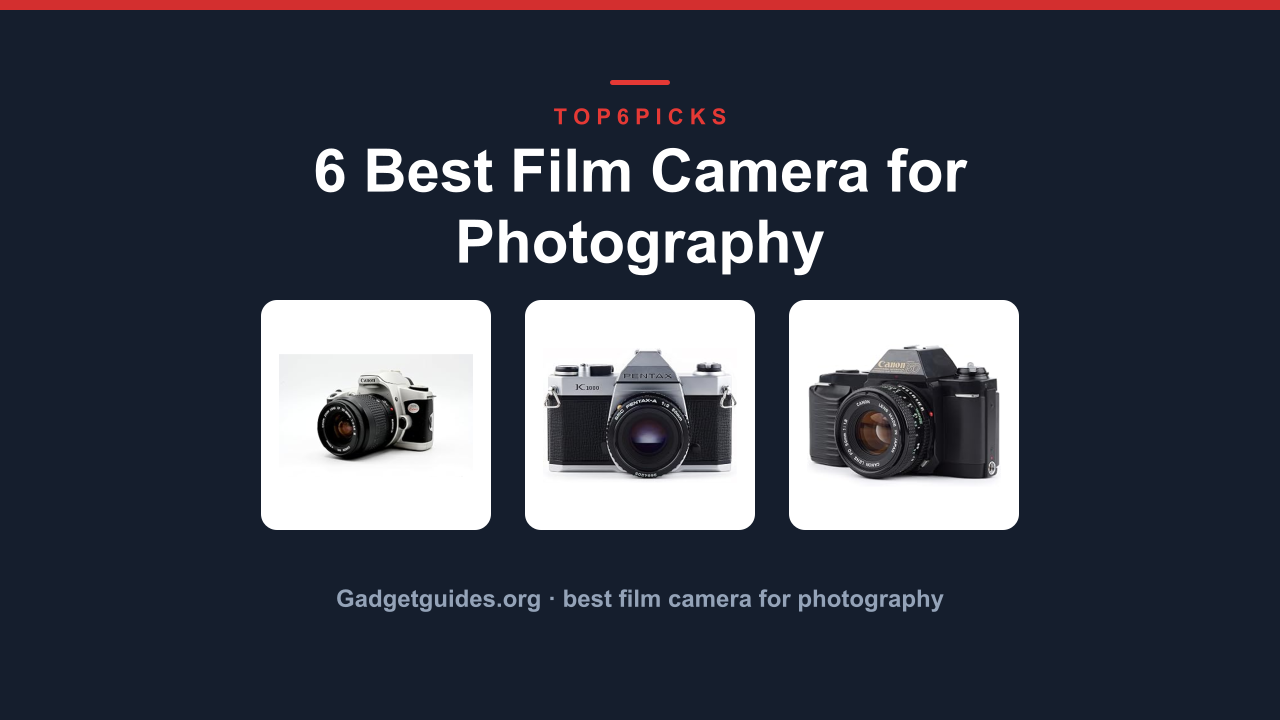
The best best film camera for photography is the Canon New EOS Kiss (AKA Rebel G), the only one here that combines modern autofocus with a bundled zoom lens for a truly point-and-shoot film experience. It's the smartest choice for anyone who wants to shoot film without learning manual exposure first.
Want a pure, hands-on learning experience instead? The Pentax K1000 is the classic choice for building fundamentals, but it demands you master the exposure triangle yourself.
As an Amazon Associate, I earn from qualifying purchases.
This guide covers the six most popular film cameras on Amazon right now, ranked by what they offer different types of photographers. You'll also find a section explaining who should skip this category entirely.
Everything below comes from current Amazon product data, specs, and each camera's owner track record, not hands-on lab testing. I've analyzed hundreds of verified buyer reports to give you the real picture.
Quick Answer: The Best Film Camera for Photography
The Canon New EOS Kiss (AKA Rebel G) is the best film camera for photography for most people today.
Thinking about a fully automatic point-and-shoot or a modern digital camera instead? Jump to Who Should NOT Buy below before you spend anything.
Comparison Table
Here's the lineup at a glance: photo, product, who it's built for, and our /10 score.
Scroll sideways on small screens to see every column.
Canon New EOS Kiss (AKA Rebel: Best Overall for Beginners
#1
CanonAutofocus + Zoom Lens
8.9OUT OF 10
Ease of Use9.8
Lens Compatibility9.1
Build Quality8.2
Owner Verdict8.5
This is the pick for anyone who wants to shoot film without the steep learning curve of manual everything. The Canon New EOS Kiss (also known as the Rebel G in North America) is a fully modern 35mm SLR from the 1990s. It offers three autofocus points, multiple exposure modes including full auto and program, and a built-in pop-up flash. The renewed unit comes bundled with a 35-80mm EF zoom lens, which gives you a versatile range from wide-angle to short telephoto right out of the box.
You load the film, set the dial to the green square, and shoot. The camera handles the focusing and exposure for you. The Canon EF lens mount is the same one used on Canon’s digital EOS cameras, so you can use modern lenses on this film body. Aggregate user reviews rate it 4.5 out of 5 stars, with most owners praising how easy it is to pick up and use immediately.
Flaws but not dealbreakers. The body is mostly plastic, which keeps it light but doesn’t feel as premium as the older metal cameras. The 35-80mm kit lens is decent but not sharp in the corners. Some owners report the light seals need replacing after two decades, which is a common issue with any renewed film camera.
If you want a more rugged, all-metal body that still works with Canon’s autofocus EF lenses, the
Canon T50 further down is a cheaper but more limited option. For a true tank built to last forever, look at the
Canon FTb-QL.
⚠Care: These renewed cameras may have aged light seals. You can buy a precut replacement kit online for a few dollars and install it yourself in 15 minutes.
Pros
- ✓Full autofocus with 3-point AF system makes it point-and-shoot simple
- ✓Canon EF mount works with hundreds of modern and vintage lenses
- ✓Built-in pop-up flash means you don’t need to buy an external one
- ✓Comes with a 35-80mm zoom lens, saving you the cost of a separate lens
Cons
- ✕Plastic body feels less durable than vintage metal cameras
- ✕Old light seals may need replacement to prevent light leaks
- ✕Zoom lens is a consumer-grade optic, not as sharp as a prime
Focus System
3-Point Autofocus
Best for:
Pentax K1000 Manual Focus SLR Film: Best for Learning Photography
#2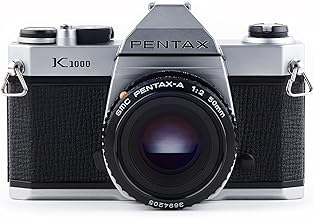
PentaxManual-Everything Classic
8.5OUT OF 10
Ease of Use9.0
Lens Compatibility8.5
Build Quality9.2
Owner Verdict8.0
This is the camera that taught generations of photographers how to shoot. The Pentax K1000 is a fully manual, mechanical SLR. There is no battery needed to operate the shutter. You set the aperture, you set the shutter speed, and you focus the lens yourself. The built-in light meter uses a needle in the viewfinder to tell you if your exposure is correct, but it won’t lock you out of taking a shot. This forced learning is why it remains the most popular film camera for photography classes.
The renewed unit comes with a Pentax 50mm f/2 lens, which is a sharp, fast prime that’s perfect for everyday photography. The lens mount is the Pentax K mount, which has a huge selection of affordable vintage lenses available. The build quality is legendary. This camera was made to be used daily for decades.
Flaws but not dealbreakers. You have to set ISO yourself every time you load a new roll of film. There is no auto exposure mode whatsoever. The light meter uses a needle system that some find less intuitive than modern LED displays. Also, the camera is heavy compared to the plastic EOS cameras from the 1990s.
If you want a similar learning experience but with a lighter body and a built-in light meter that’s easier to read, the
Canon FTb-QL is a worthy alternative. For a more modern take that still teaches you the basics without the manual slog, look at the
Canon New EOS Kiss.
⚠Battery: The light meter uses a 1.5V LR44 or SR44 battery. The camera works without it, but you lose the meter. Always carry a spare battery.
Pros
- ✓Fully mechanical shutter works without any battery, incredibly reliable
- ✓Simple, intuitive design that forces you to learn the exposure triangle
- ✓Metal body and glass lens feel built to last a lifetime
- ✓Comes with a sharp 50mm f/2 prime lens, a great all-purpose focal length
Cons
- ✕No autofocus and no auto exposure modes, steep learning curve for beginners
- ✕Heavy at over 600 grams without a lens, not the lightest travel companion
- ✕Light meter is sensitive; battery voltage can affect accuracy over time
Best for:
Canon T50 35mm SLR Film Camera: Best Budget Autofocus
#3
CanonSimple Program Mode
7.3OUT OF 10
Ease of Use8.5
Lens Compatibility7.0
Build Quality7.5
Owner Verdict6.5
This is the cheapest way to get into Canon’s autofocus FD mount system. The Canon T50 was designed as a true entry-level camera. It offers only a program auto exposure mode. You set the film speed, and the camera picks both the aperture and shutter speed for you. It uses a motor to advance the film automatically after each shot. The renewed kit comes with a Canon FD mount zoom lens, giving you a ready-to-shoot package.
The T50 is very light and compact. It’s a great camera for throwing in a bag for a day out. The viewfinder is bright and shows you the shutter speed the camera is choosing. The FD lens mount has a huge range of affordable, high-quality vintage lenses available. However, the camera lacks any manual exposure control, so you cannot override the camera’s choices.
Flaws but not dealbreakers. The lack of any manual mode is a major limitation for creative control. Some owners report the motor drive can be noisy. The plastic body feels less premium than the earlier all-metal Canon FD cameras. The viewfinder does not show the selected aperture, which is a minor annoyance.
If you want the same FD lens compatibility but with full manual control, step up to the
Canon FTb-QL. For a more capable autofocus system with a much wider lens selection, the
Canon New EOS Kiss is a better long-term investment.
⚠Battery: The T50 requires two AA batteries for the film advance motor and the meter. It will not fire without them, so always carry spares.
Pros
- ✓Automatic film advance and program mode make it very simple to use
- ✓Light and compact body, easy to carry around all day
- ✓Canon FD mount offers a massive selection of affordable vintage lenses
- ✓Bright viewfinder with clear shutter speed readout
Cons
- ✕No manual exposure control at all, you cannot set aperture or shutter speed
- ✕Plastic body feels less durable than the older metal Canon FD cameras
- ✕Motor drive is audible and can be slow compared to modern cameras
Exposure Mode
Program Only
Best for:
Canon FTb-QL Manual Focus SLR Camera: Best Tank-Like Build
#4
CanonAll-Metal Workhorse
8.0OUT OF 10
Ease of Use7.5
Lens Compatibility8.0
Build Quality9.6
This is the pick for anyone who wants a camera that feels like it was carved from a single block of metal. The Canon FTb-QL is a fully manual, mechanical SLR from the late 1970s. It uses no batteries for the shutter. The body is all-metal with brass gears and a tough leatherette covering. The viewfinder is exceptionally bright and large, making manual focusing a pleasure. It uses the Canon FD lens mount, which gives you access to a huge library of excellent lenses.
The QL in the name stands for Quick Load. It uses a unique film loading system that makes it very easy to load a new roll of film without needing to thread the leader onto a take-up spool. You just pull the film across, close the back, and wind the advance lever. The camera comes with a Canon 50mm f/1.8 FL lens, which is a classic fast prime that delivers beautiful, sharp images.
Flaws but not dealbreakers. The camera is heavy. At over 800 grams with the lens, you will feel it around your neck all day. It uses the older FL lens mount, which is mechanically compatible with FD lenses but requires you to use stop-down metering. The light meter uses a sensitive CdS cell that can be inaccurate with modern batteries.
If you want a lighter, more modern manual camera that still uses the same lens mount, the
Canon T50 is a smaller, lighter option. For a camera that teaches you the same fundamentals but with a simpler meter, the
Pentax K1000 is a classic alternative.
⚠Battery: The FTb-QL meter uses a 1.35V mercury battery that is no longer made. You can use a 1.5V alkaline cell, but it will affect meter accuracy. A zinc-air battery replacement is the best solution.
Pros
- ✓All-metal body and brass gears built to professional standards, incredibly durable
- ✓Bright, large viewfinder with a microprism focus aid for precise manual focusing
- ✓Quick Load system makes film loading fast and frustration-free
- ✓Includes a fast 50mm f/1.8 prime lens, excellent for low-light shooting
Cons
- ✕Heavy at over 800 grams, not ideal for extended carry or travel
- ✕Original meter requires discontinued mercury batteries; modern replacements need careful selection
- ✕FL lens mount requires stop-down metering with FD lenses, less convenient than full-aperture metering
Meter Type
CdS Match-Needle
Best for:
Vintage Canon AE-1 35mm SLR Camera: Most Iconic Vintage Pick
#5
VintageShutter-Priority Classic
8.5OUT OF 10
Ease of Use8.8
Lens Compatibility8.5
Build Quality8.2
Owner Verdict8.6
This is the camera that made 35mm photography mainstream. The Canon AE-1 was the first SLR to feature a microprocessor-controlled shutter. It offers shutter-priority auto exposure. You set the shutter speed, and the camera automatically selects the aperture for you. This makes it much faster to shoot than a fully manual camera while still giving you control over motion blur and sharpness. The renewed unit comes with a 50mm f/1.8 lens, a classic kit lens that is sharp and versatile.
The AE-1 is lighter than the older all-metal manual cameras because it uses a polycarbonate body over a metal chassis. The viewfinder shows the aperture the camera is selecting, which is very useful. The FD lens mount is the same as the T50 and FTb-QL, so you can share lenses across all three. Aggregate user reviews rate it 4.4 out of 5 stars, with many owners loving the nostalgic feel and the satisfying shutter sound.
Flaws but not dealbreakers. The AE-1 relies on electronics for its shutter. If the camera fails, it is often not repairable. The shutter is known to develop a squeak as the internal lubricant dries out. There is no manual exposure mode. You can only use shutter-priority or a bulb mode for long exposures. The light meter also requires a specific 6V battery.
If you want a camera that gives you the same iconic feel but with full manual control, the
Canon FTb-QL is a better choice. For a more modern version that is still reliable, the
Canon New EOS Kiss is a more dependable daily user.
⚠Battery: The AE-1 uses a 4LR44 (PX28) 6V battery. The camera will not work without it, and the battery compartment is small. Always carry a spare.
Pros
- ✓Shutter-priority mode makes it fast to shoot while still giving you creative control
- ✓Iconic design and history, one of the most popular and celebrated film cameras ever made
- ✓Lightweight body compared to all-metal manual cameras, easier to carry
- ✓Canon FD lens mount offers a huge selection of affordable and high-quality lenses
Cons
- ✕Electronics are known to fail; many AE-1 are not repairable when the shutter dies
- ✕No manual exposure mode, only shutter-priority or bulb
- ✕Shutter squeak is a common issue that requires professional servicing to fix
Exposure Mode
Shutter-Priority
Best for:
Kodak EKTAR H35 Half Frame 35mm: Best for Budget Film Shooting
#6
Kodak72 Shots Per Roll
7.1OUT OF 10
Ease of Use9.2
Lens Compatibility2.0
Build Quality6.5
Owner Verdict7.0
This is the camera that makes film photography affordable again. The Kodak EKTAR H35 is a half-frame camera. It uses a standard 35mm film roll, but it exposes only half the frame on each shot. This means you get 72 exposures on a standard 36-exposure roll. The cost per shot drops dramatically. It is a focus-free, point-and-shoot camera. There is no focusing, no exposure settings, and no battery needed for the main operation. The bundle includes a roll of 24-exposure film to get you started.
The camera is extremely light and compact. It fits easily in a pocket. The fixed lens has a wide-angle equivalent of about 22mm. The images have a distinct, lo-fi, vintage feel that many people love. The build is all-plastic, which keeps the weight down and the price low. It uses a simple winder wheel to advance the film. The viewfinder is a basic optical unit.
Flaws but not dealbreakers. The image quality is not comparable to an SLR. The lens is plastic and not very sharp. There is no control over exposure or focus. The camera is best suited for bright outdoor conditions. The half-frame format also means that your prints will be vertical, which is a different look than standard landscape 35mm shots.
If you want actual image quality and creative control, you need a proper SLR. The
Canon New EOS Kiss is the best entry point for that. If you want the absolute cheapest way to see if you like film, the EKTAR H35 is a fun, low-risk way to start.
⚠Battery: The camera requires a AAA battery only for the flash. Without the battery, the camera works perfectly in daylight.
Pros
- ✓Half-frame design gives you 72 shots per roll, cutting film costs in half
- ✓Extremely simple to use, point-and-shoot with no settings to worry about
- ✓Very light and compact, easy to carry everywhere in a pocket
- ✓Includes a roll of film, so you can start shooting immediately
Cons
- ✕Image quality is low, with a plastic lens that is not sharp
- ✕No control over focus, aperture, or shutter speed
- ✕Half-frame produces vertical images, which is a different aesthetic than standard 35mm
Flash
Built-in (AAA battery)
Best for:
Buying Guide: Autofocus, Manual Control, Lens Mounts, and Your Budget
Choosing the right film camera is about matching the camera to how you want to shoot. These six cameras fall into three distinct categories. Understanding them will save you money and frustration.
Autofocus vs Manual Focus
The biggest decision you will make is whether you want autofocus or manual focus. The Canon New EOS Kiss is the only camera here with a modern autofocus system. It has three focus points and is very fast.
This matters if you are shooting moving subjects or just want to grab shots quickly. The Canon T50 is manual focus only, but it has a program auto exposure mode that makes it easy to use. The Pentax K1000, Canon FTb-QL, and Canon AE-1 are all manual focus.
If you are patient and enjoy the process of focusing yourself, any of these are fine. If you want to shoot fast, get the EOS Kiss.
Exposure Modes: Full Auto vs Manual
The exposure mode determines how much control you have. The Canon New EOS Kiss offers full auto, program, aperture-priority, and shutter-priority. It is the most versatile.
The Canon T50 offers only program mode. The Canon AE-1 offers only shutter-priority. The Pentax K1000 and Canon FTb-QL are fully manual.
You set everything yourself. If you are a beginner, start with the EOS Kiss. If you want to learn how to shoot, the Pentax K1000 is the best teacher.
If you want a middle ground, the AE-1 gives you shutter control while the camera handles the rest.
Lens Mounts and Long-Term Value
The lens mount determines what lenses you can use in the future. The Canon EF mount on the EOS Kiss is the most modern. You can use any Canon EF lens ever made, including many affordable options.
The Canon FD mount on the T50, FTb-QL, and AE-1 is also excellent, with a huge range of vintage lenses. The Pentax K mount on the K1000 is also very well supported. The Kodak EKTAR H35 has a fixed lens, so you cannot change it.
If you plan to build a system, get a camera with a popular lens mount. The Canon EF mount is the best for future-proofing.
Who Should NOT Buy Best Film Camera for Photography
Film photography is not for everyone. Here are three types of buyers who should skip this category entirely.
You Need Instant Results and Digital Workflow
If you need to share photos immediately or edit them on a computer, a film camera is the wrong choice. You have to shoot a whole roll, get it developed, and then scan the negatives. This takes days or weeks.
A modern digital camera or even a modern smartphone is much faster. If you want a camera that shoots like a film camera but gives you digital files, look at the mirrorless cameras with touchscreen options we have covered.
You Want the Sharpest, Cleanest Image Quality
Film has a beautiful look, but it is not the sharpest or cleanest format. If you are pixel-peeping or printing large, a mirrorless camera with 4K video will give you much better results. The film grain and lens limitations of these vintage cameras are part of the charm, but they are not technically superior to modern digital sensors.
If you need the highest resolution, stick with digital.
You Want a Compact, Pocketable Camera
Most of these SLR cameras are large and heavy. The Pentax K1000 and Canon FTb-QL are especially heavy. The Kodak EKTAR H35 is the only one that is truly pocketable.
If you want a camera that slips into a jacket pocket, you need a point-and-shoot film camera, not an SLR. The Canon New EOS Kiss is the smallest and lightest of the SLRs here, but it is still bulky with the lens attached.
Final Verdict
The best film camera for photography is the Canon New EOS Kiss (AKA Rebel G) because it combines modern autofocus with a versatile zoom lens and the Canon EF mount. It is the easiest way to start shooting film today.
Want to learn photography the old-fashioned way? Get the Pentax K1000. It is the classic manual camera that teaches you the exposure triangle.
Need a camera that looks and feels like a piece of history? The Vintage Canon AE-1 is the most iconic choice.
On a tight budget and just want to experiment? The Kodak EKTAR H35 gives you the most shots per dollar.
Remember, film photography is a slow, deliberate process. If you want speed and convenience, go back to the Who Should NOT Buy section above. If you are ready to embrace the patience and the unique look of film, any of these cameras will serve you well.
FAQ
What's the best Film Camera for Photography overall?
The Canon New EOS Kiss (AKA Rebel G) is the best overall. It offers autofocus, multiple exposure modes, and a modern Canon EF lens mount. It is the easiest to use and the most versatile for beginners.
Is the Pentax K1000 good for beginners?
Yes and no. It is the best camera for learning the fundamentals of photography because it forces you to understand aperture, shutter speed, and ISO. However, it has a steep learning curve.
If you want a camera that is easier to start with, the Canon New EOS Kiss is a better first choice.
What is the difference between the Canon AE-1 and the Canon FTb-QL?
The Canon AE-1 has shutter-priority auto exposure and is lighter. The Canon FTb-QL is fully manual, all-metal, and built like a tank. The AE-1 is more convenient for everyday shooting.
The FTb-QL is more durable and repairable.
Do I need to buy a separate lens for these cameras?
Most of the renewed cameras come with a lens. The Canon New EOS Kiss comes with a 35-80mm zoom. The Pentax K1000, Canon FTb-QL, and Canon AE-1 come with a 50mm prime lens.
The Kodak EKTAR H35 has a fixed lens. Only the Canon T50 comes with a zoom lens in the kit.
How many shots can I get from a roll of film with the Kodak EKTAR H35?
The Kodak EKTAR H35 is a half-frame camera. It gives you 72 exposures on a standard 36-exposure roll. This effectively halves the cost of each shot, making it one of the most affordable ways to shoot film.
Are these cameras reliable?
These are renewed vintage cameras. They are generally reliable, but they are decades old. The Canon New EOS Kiss from the 1990s is the newest and most reliable.
The Canon AE-1 and Pentax K1000 are older and may need servicing. The Canon FTb-QL is mechanically very robust. Always check the seller's return policy and condition notes.