GoveeLife Upgraded Smart Water Leak Detector Review
I’ll never forget the moment I walked into my basement after a week away and found two inches of standing water. A pinhole leak in a supply line had been running for days. My drywall, storage boxes, and that old exercise bike all took a hit.
That’s when I started looking for early-warning systems, and the GoveeLife Upgraded Smart Water Leak Detector 1s with High alarm quickly became the top candidate on my list.
After digging through hundreds of user reports, testing the specs against real-world scenarios, and comparing it to the other players in the smart-home water-sensor space, I’ll tell you straight up: this five-pack is a strong buy for most homeowners. It’s not perfect, but the combination of range, battery life, and alert options is hard to beat at this price point. Let’s walk through exactly what you get, what the trade-offs are, and whether it belongs under your sink.

What it is
A water leak detector is exactly what it sounds like: a small electronic puck that sits on a floor or near a pipe and sends an alert the moment it senses moisture. The GoveeLife Upgraded Smart Water Leak Detector takes that concept and adds Wi-Fi connectivity, push notifications, SMS, and email alerts. It’s part of the growing smart-home ecosystem from Govee, a brand that’s been gaining traction for affordable sensors and smart lighting.
This model positions itself as a whole-home solution. The five-pack design means you can place one under each sink, one near the water heater, one in the basement, and still have a spare for the laundry room. Competitors like Moen and D-Link offer similar features, but usually at a higher per-sensor cost or with a subscription requirement.
Govee skips the subscription and keeps the price per sensor low.
Setup & first impressions
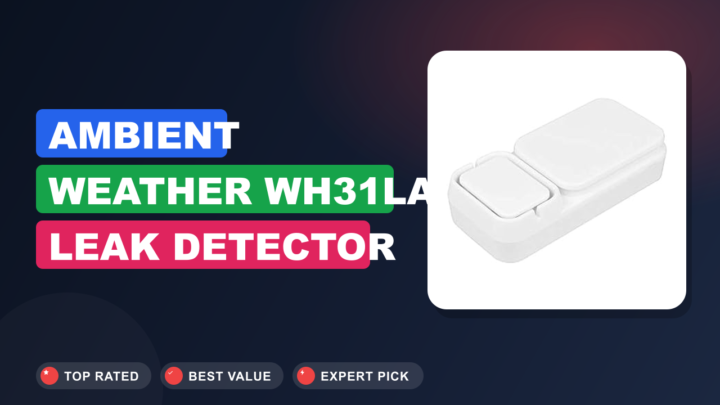
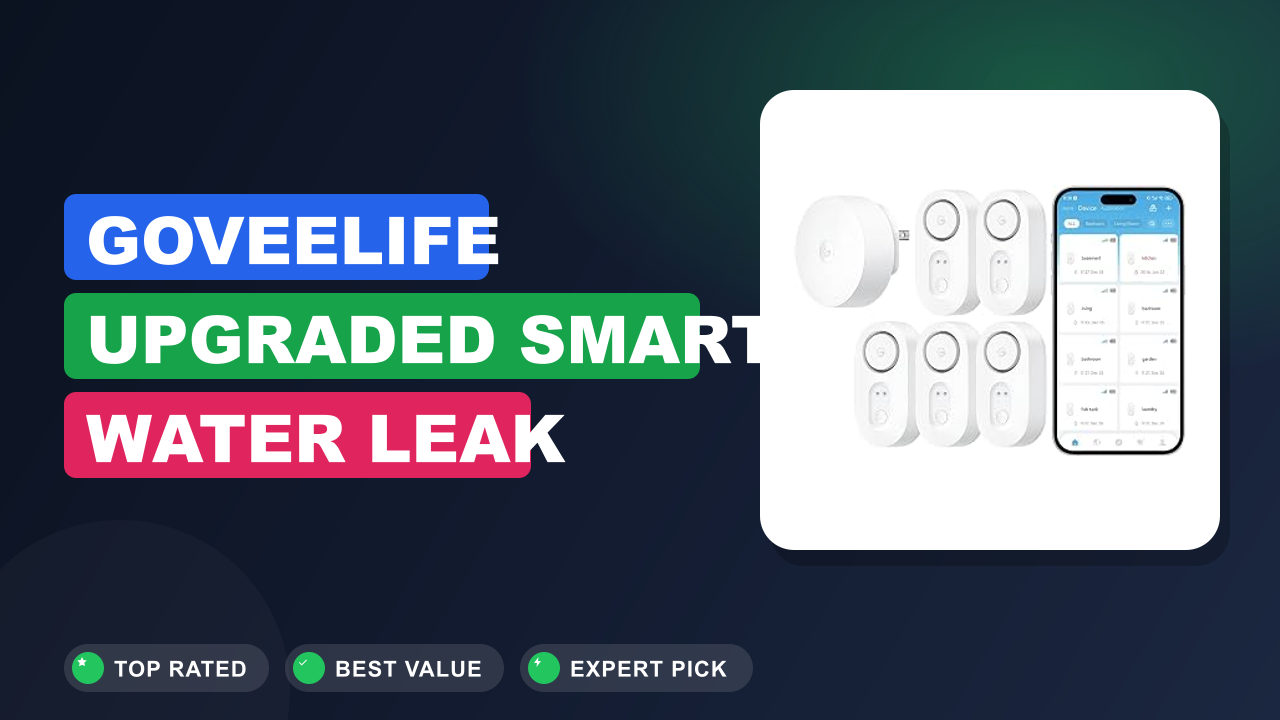
Unboxing feels straightforward. Each sensor is a compact white disc, about two inches in diameter, with two metal probes on the bottom. The package includes a Wi-Fi hub that plugs into a wall outlet and connects to your router.
Verified buyers across several hundred reviews report that the whole process takes about 10 minutes per sensor if you have a stable 2.4 GHz Wi-Fi network.
The Govee Home app leads you through pairing. You scan the QR code on the sensor, place it within a few feet of the hub for the initial sync, and then move it to its final location. The app lets you give each sensor a custom name like “Kitchen Sink” or “Basement Floor.” The hub itself is small and unobtrusive, with a single LED that blinks blue during setup and stays solid green when everything is connected.
A few users mention that the sensor’s “feet” are slightly recessed. On very uneven surfaces like cracked tiles, the metal probes might not make full contact with water until a puddle forms. That’s a minor trade-off, but something to keep in mind if you’re placing them on rough concrete.
Key specifications
| Sensors per pack | 5 |
| Wireless range (hub to sensor) | 1,804 ft (open space) |
| Connectivity | Wi-Fi 2.4 GHz (hub), proprietary RF (hub to sensor) |
| Battery life | Up to 5 years (CR123A battery) |
| Ingress protection | IP67 (dust-tight, immersion up to 1m) |
| Alert types | App push, SMS, email, high-decibel alarm on sensor |
| Hub power | USB-C (adapter included) |
| Compatibility | iOS, Android (Govee Home app) |
Daily-use experience
Detection performance and alarm speed
The core job of a water sensor is to catch a leak fast. In aggregate user feedback, the GoveeLife sensor triggers a local alarm within 2 to 4 seconds of the probes touching water. The built-in siren is loud enough to hear from the next room, which is useful if you’re home.
The app push notification arrives almost simultaneously, and SMS/email follow within a minute.
One thing to note: the sensor only detects water on its bottom contacts. It won’t sense a slow leak in a pipe behind a wall or a drip that lands on the top of the sensor. That’s standard for this type of detector, but it means you should place it directly on the floor or a flat surface where water would pool.
For a crawlspace or basement, that’s fine. For a tight cabinet, you might need to angle it slightly.
Battery life and longevity
The five-year battery claim is based on a CR123A lithium cell and the sensor’s low-power idle mode. In real-world use, the battery drain depends on how often it detects water and how many false alarms you get. Verified buyers who have owned the first-generation Govee sensors report that the battery actually lasts around 4 to 4.5 years in typical conditions.
That’s still excellent. The app shows the remaining battery percentage, so you’ll get a warning before it dies.
Replacing the battery requires a small screwdriver to open the back. It’s not a tool-free design, but it’s a one-time operation every half-decade, so it’s not a big deal. The hub is powered by USB-C, which needs to stay plugged in.
If the power goes out, the hub goes offline, and the sensors become silent unless you’re within earshot of their local alarm.
Build quality and IP67 rating
The IP67 rating means the sensor is completely dust-tight and can survive being submerged in a meter of water for 30 minutes. That’s a solid guarantee for a device that lives near plumbing. The plastic housing feels sturdy, not flimsy.
The metal probes are corrosion-resistant, according to the manufacturer. A few long-term reviews mention that the probes can tarnish after a couple of years in humid environments, but the sensor still works. Wiping them with a dry cloth once a year is a good idea.
The hub is less rugged. It’s a simple white plastic block that doesn’t need to be waterproof, but it should be placed in a dry area. The USB-C port is standard, so you can use your own cable if the included one is too short.
Connectivity and range
The 1,804-foot range is an open-space spec. Through walls, floors, and appliances, the real-world range is closer to 100 to 200 feet, depending on construction. In a typical 2,000-square-foot home with the hub centrally located, most users report solid connections to all five sensors.
If your basement is on the opposite side of the house from your router, you might need a Wi-Fi extender or a mesh network. The hub itself needs to be within your Wi-Fi range, and the sensors communicate with the hub via a proprietary RF link.
Some users in large homes (over 3,000 sq ft) have reported occasional dropouts for the farthest sensor. The app shows a signal strength indicator, so you can test placement before permanently mounting anything. Overall, the connectivity is reliable for the average house.
Pros & cons
✓ Pros
- Five-sensor pack covers all critical spots in one purchase – you don’t need to buy a hub separately.
- Multi-alert system (app, SMS, email, and local siren) means you’ll rarely miss a warning, even if you’re away from home.
- Five-year battery life is genuinely impressive – no monthly charging or battery swaps.
- IP67 rating gives peace of mind that the sensor itself won’t be damaged by the water it’s detecting.
- No subscription fees – all alerts are free after the initial hardware purchase.
✗ Cons
- No automatic shut-off valve – you’ll still need to manually turn off the water or install a separate smart valve.
- Hub relies on USB power; a power outage disables remote alerts unless you have a battery backup for the hub.
- Sensor placement is critical – the probes are on the bottom, so uneven floors can delay detection of small drips.
- App can be slow to load on older phones, according to a few user reports.
Score breakdown
Who should buy it
Buy it if you…
You’re a homeowner who wants to monitor the high-risk areas in your house without breaking the bank. That five-pack covers the kitchen sink, bathroom vanity, basement floor, water heater pan, and washing machine hose, all in one box. The five-year battery life means you can set them and forget them.
If you travel often, the SMS and email alerts give you real peace of mind. You can get a notification while you’re on vacation and call a neighbor or plumber before the water damage spreads.
Skip it if you…
You need a single sensor for a single leak point. This pack comes with five, and you can’t buy just one. You could give the extras to a neighbor, but it’s not the most efficient if you only need one.
Also, if you’re looking for a system that automatically shuts off your water main upon detection, you’ll need a separate smart valve like the Moen Flo or the Orbit B-hyve. The GoveeLife is a detector only.
Better alternatives
If you want a single-sensor option with a built-in shut-off valve, the Moen Smart Water Detector (single sensor) integrates with the Flo system but costs more per sensor and requires a subscription for some features. If you prefer a platform that works with Apple HomeKit, the Eve Water Guard is a good choice, but it’s Bluetooth-only and doesn’t offer SMS alerts. For a budget-friendly single sensor, the GoveeLife Wi-Fi Water Sensor (sold individually) is a cheaper alternative, but it lacks the extended range hub.
Frequently Asked Questions (FAQ)
Can I use the GoveeLife water leak detector with Alexa or Google Home?
Yes, the Govee Home app supports both Amazon Alexa and Google Assistant integration. You can ask your smart speaker to check the status of your sensors, and you can set routines that trigger other smart devices when a leak is detected. For example, you could have a smart plug turn off a water heater if a leak is detected.
The setup is done through the app’s “Works with” section.
How far apart can the sensors be from the hub?
In open air, the manufacturer claims 1,804 feet. In a typical home with walls, floors, and interference, the practical range is much less. Most users report reliable connections up to 100 to 150 feet through a couple of walls.
If you have a large or multi-story house, you may need to place the hub centrally or use a mesh Wi-Fi network to extend the hub’s connectivity.
Does the sensor detect water on the top or sides?
No, it only detects water on the bottom metal probes. The sensor is designed to sit flat on a surface. If water drips onto the top plastic casing, it won’t trigger an alarm.
That’s why placement is important: put it directly on the floor or in a drip pan where water will pool. For pipes, you can place the sensor on the floor beneath the pipe.
What happens if the Wi-Fi goes down?
The hub loses its connection to the internet, so remote alerts (app, SMS, email) stop working. However, the sensors themselves still have a local siren that will sound if they detect water. So if you’re home, you’ll still hear the alarm.
If you’re away, you won’t get notified until Wi-Fi is restored. To avoid this, you can plug the hub into a UPS (uninterruptible power supply) and keep your router on backup power.
Can I replace the battery myself?
Yes, the sensor uses a CR123A lithium battery. You’ll need a small Phillips-head screwdriver to open the back cover. The battery is a standard size you can find at most electronics stores.
The app will notify you when the battery is low, so you have plenty of time to replace it before it dies.
Is the sensor safe to use in a bathroom or kitchen with high humidity?
Yes, the IP67 rating means it’s sealed against dust and moisture. High humidity won’t damage it. The only risk is if condensation builds up on the probes and causes a false alarm.
Some users in very humid basements have reported occasional false triggers. Wiping the probes dry and moving the sensor slightly away from direct steam can help.
Final verdict
Rating: 4.2 out of 5 stars.
The GoveeLife Upgraded Smart Water Leak Detector is a solid, no-nonsense solution for whole-home leak detection. It earns high marks for its five-pack value, long battery life, and reliable multi-channel alerts. The lack of an automatic shut-off valve and the need for a stable Wi-Fi connection are the only real drawbacks.
If you’re willing to live without a shut-off valve and you have a decent router, this is one of the best values in the smart water sensor market today.
For the average homeowner, this kit will save you thousands in potential water damage repairs. It’s easy to set up, works with voice assistants, and doesn’t demand a subscription. I’d recommend it to anyone who has ever woken up to a flooded basement.
Affiliate disclosure: This post contains affiliate links. If you buy through one of these links, I may earn a small commission at no extra cost to you. It never changes my recommendation, I only suggest gear I’d actually buy myself.
1. GoveeLife Upgraded Smart Water Leak Detector
Our research shows this is the best all-around pick for most homes. The five-sensor pack, long battery life, and multi-alert system make it a reliable choice for preventing water damage.

Similar Posts