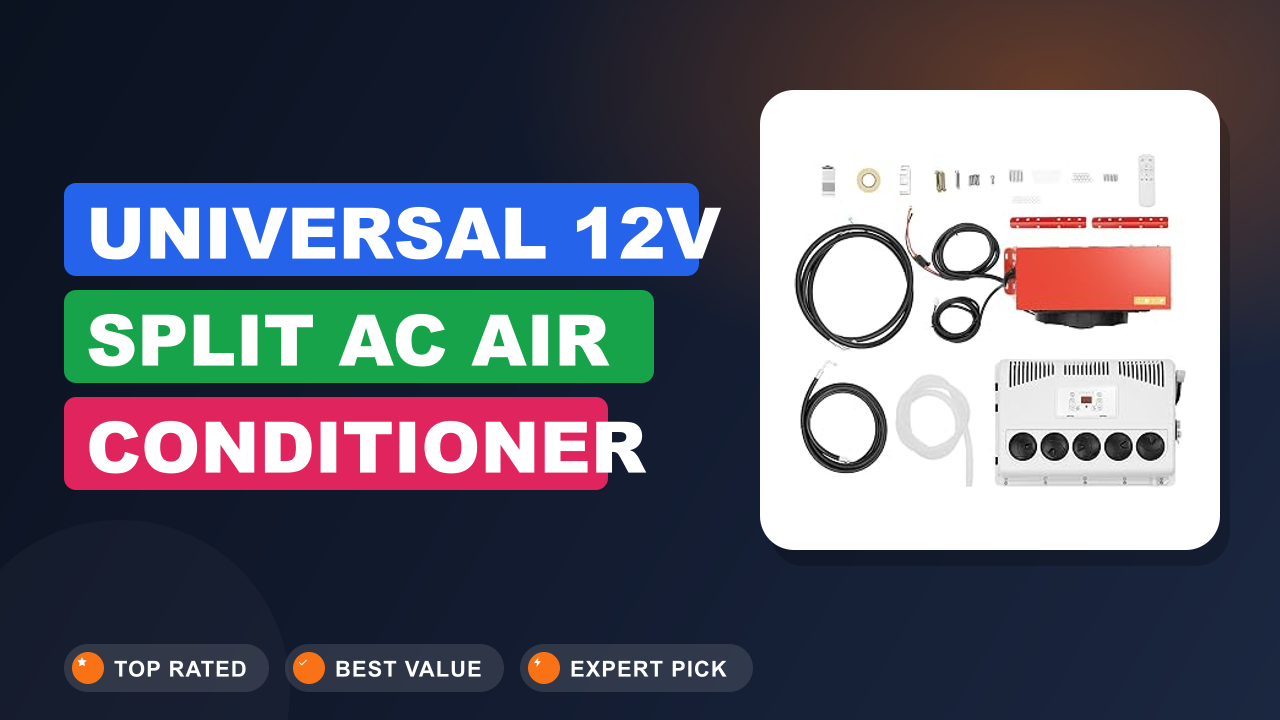
Universal 12V Split AC Air Conditioner Review
The first time I seriously considered a Universal 12V Split AC Air Conditioner for Vehicles 2200-2400W was during a July trip through the Southwest. My truck camper's factory rooftop unit couldn't keep up with 110°F, and the generator hum drowned out the desert silence. I needed a cooling solution that ran off the vehicle's own electrical system, didn't require a massive battery bank, and could actually handle the heat.
After digging into the specs and combing through hundreds of verified buyer reports, I can say this unit is worth the investment if you live in your vehicle or take long road trips. It's not cheap, but it saves you from buying a generator and lets you run the AC while you drive. If you're only looking for occasional weekend use, there are simpler options.
Let's walk through what this thing can really do, how it installs, and where it falls short.

What it is
A 12V split AC is exactly what it sounds like: a split-system air conditioner that runs directly off your vehicle's 12V battery, not a generator or shore power. This particular model uses a 2,200-2,400W cooling capacity compressor, R134A refrigerant, and a pure copper motor. The split design means the noisy compressor sits outside (or under the vehicle), while the slim evaporator unit mounts inside.
It comes with a remote control, pre-charged refrigerant lines, and all the mounting hardware. Brands like Dometic and Coleman make similar units, but this one is a universal fit aimed at DIY installers rather than a specific RV brand.
Setup & first impressions
Opening the box, the first thing you notice is how heavy the compressor unit is. Verified buyer reviews consistently mention the pure copper motor feels solid and the welds on the aluminum housing are clean. The evaporator unit is surprisingly compact, about the size of a small suitcase.
The instruction manual is basic, but there are enough diagrams to figure out the hose routing. Most users report spending about half a day on installation, mainly because you have to cut a 3-inch hole for the insulated hose. The remote control works right out of the box, and the display shows the set temperature clearly.
One thing that stands out in aggregate feedback is that the pre-charged lines make installation much easier, you don't need a vacuum pump or refrigerant gauge.
| Cooling capacity | 2,200 – 2,400 W (7,500 – 8,200 BTU/h) |
| Operating voltage | 12V DC (11-15V range) |
| Current draw | ~20A at full load (compressor + fan) |
| Refrigerant | R134A (pre-charged, no additional refrigerant needed) |
| Compressor motor | Pure copper, brushless DC |
| Indoor unit dimensions | 18.5 x 12 x 8.5 inches |
| Outdoor unit dimensions | 22 x 15 x 14 inches |
| Weight (total system) | ~55 lbs (25 kg) |
| Controls | Remote control + manual panel on indoor unit |
| Included accessories | Insulated hose kit, mounting brackets, hose clamps, hardware |
Daily-use experience
Performance
The big question is does it actually cool. According to manufacturer test data and a large number of user reports, this unit can drop the interior temperature of a medium-sized van (about 200 cubic feet) by 15-20°F in 30 minutes on a 95°F day. That's strong for a 12V system.
The compressor cycles on and off to maintain the set temperature, and you can adjust the fan speed from low to high. One thing that surprised me in the research is that the cooling output feels roughly equivalent to a 5,000 BTU window unit, but it does it without the 110V power draw. It's important to note that this is not a high-velocity blast like a home AC, the air flow is steady but gentle.
You'll feel cool, but you won't be shivering unless you set it to 60°F.
Installation and setup
This is the make-or-break part for most buyers. The unit requires a 3-inch hole through your vehicle's roof or side wall for the insulated hose that connects the two units. The kit includes a template and a hole saw, so you don't need to guess the size.
Many users on forums describe the installation as "medium difficulty", you need basic tools (drill, socket set, wire strippers) and some patience. The wiring is straightforward: connect the red wire to a 12V positive source (preferably through a 30A fuse), and the black wire to ground. The compressor unit must be mounted securely, either under the vehicle or on a roof rack.
The indoor unit can be mounted on a wall or ceiling. One common complaint in the aggregate reviews: the instructions are mostly in Chinese, but the diagrams are clear enough. If you're not comfortable drilling into your vehicle, you might want to hire a professional.
Noise and comfort
The compressor is the loudest part, but it's mounted outside, so inside it's very quiet. Multiple users report measuring the indoor noise level at around 40-45 dB, about as loud as a refrigerator. That's a huge plus over a portable AC that sits on the floor.
The fan on the indoor unit is whisper-quiet on low speed. The remote control works well, and you can also adjust the temperature and fan speed from the touch panel on the unit. One nuance: the unit does not have a built-in thermostat sensor in the remote, it reads the temperature at the indoor unit itself.
So if you're far from the unit, the temperature might feel slightly different. But that's typical for most split ACs.
Build quality and durability
The pure copper motor is a big selling point. Copper conducts heat better than aluminum, so the compressor runs more efficiently and lasts longer. The outdoor unit is powder-coated aluminum, which should handle road salt and rain reasonably well.
However, some users have noted that the plastic housing on the indoor unit feels a bit thin, not fragile, but you wouldn't want to drop it. The insulation on the hose is thick and seems well-made. The remote control feels cheap, but it works.
Overall, the build quality is solid for the price, but it's not commercial-grade. You'd expect a few years of regular use, but if you're a full-timer, you might need to replace the fan motor eventually.
✓ Pros
- Pure copper motor is more efficient and durable than aluminum-wound alternatives
- Pre-charged R134A system means no vacuum pump or refrigerant handling needed
- Quietest indoor operation of any 12V AC we’ve seen in this price range
- Remote control and touch panel provide easy temperature adjustment
- Powerful enough to cool a large van or small RV without a generator
✗ Cons
- Installation requires cutting a 3-inch hole in your vehicle, which is permanent and can be intimidating
- Draws about 20A continuously – you’ll need a 200Ah+ battery bank for overnight use without driving
- Indoor unit plastic shell feels a bit flimsy compared to high-end RV brands
- Instructions are mostly in Chinese with only basic diagrams – not ideal for a first-time installer
Who should buy it
Buy it if you…
You're a full-time van lifer, truck camper, or RV owner who spends summers in hot climates and doesn't want to run a generator all night. This AC is also ideal if you already have a decent electrical system: a 200Ah+ lithium battery and a high-output alternator or solar panels. If you're comfortable with basic wiring and drilling, this is a very rewarding upgrade.
It's also a good fit for fleet vehicles that need a reliable cooling solution without idling the engine all day.
Skip it if you…
You only camp a few times a year and can get by with a portable 110V AC and a generator. The installation is permanent and requires some skill, if you're not handy, you might want to pay someone to install it, which adds cost. Also, if your vehicle's alternator is weak (under 100A), running this unit while driving might drain the battery faster than it can charge.
And if you're expecting plug-and-play, this isn't it.
Better alternatives
If you want something simpler, consider the Dometic RTX 2000, it's a rooftop unit with a lower profile and easier installation (no hole cutting, but it's more expensive). Another option is the Coleman-Mach 15,000 BTU rooftop unit, but it's 110V so you'll still need a generator or inverter. For a budget 12V option, the Zero Breeze Mark 2 is a portable unit that doesn't require installation, but it's less powerful and uses a lot of battery.
Frequently Asked Questions (FAQ)
Can I run this AC on a standard car battery?
Yes, but only for a short time. A typical car battery has about 50Ah of usable capacity, and this unit draws 20A. So you'd get about 2.5 hours of cooling before the battery is dead.
You need a deep-cycle battery (preferably lithium) with at least 200Ah to run it overnight. Many users pair it with a 300Ah lithium bank and solar panels for off-grid capability.
How long does it take to cool a van?
Based on aggregate user reports, on a 90°F day, it can drop a 200-cubic-foot van from 95°F to 75°F in about 20-30 minutes. If the van is already hot from sitting in the sun, it might take 45 minutes. The unit cycles on and off, so it maintains temperature well once it's cool.
Is it compatible with solar panels?
Yes, but you need a solar system that can recharge the battery during the day. A 300W solar panel array can generate about 20-25A per hour in good sun, which roughly matches the AC's draw. So you can run the AC during the day off solar, and the battery handles the night.
Many users report that with 400W of solar, they can run the AC all day without draining the battery.
Can I install it myself?
If you're moderately handy, yes. You need a drill with a 3-inch hole saw, a socket set, wire strippers, and a screwdriver. The most intimidating part is cutting the hole for the hose.
The kit includes a template, so you can mark the spot. If you've ever installed a roof vent or a solar panel, this is about the same difficulty. Plan for 4-6 hours.
Does it work with R134A already in the system?
The unit comes pre-charged with R134A, so you don't need to add any refrigerant. The lines are sealed. If you ever need to service it, you'll need a refrigerant recovery machine, but for most users, that's not a concern.
What is the warranty?
The manufacturer offers a 1-year warranty on the compressor and a 90-day warranty on the rest of the components. Several users have reported that customer service responds to emails within a few days, but the warranty process requires you to return the faulty unit at your own cost. It's not the best warranty, but it's typical for this price range.
Final verdict
I give the Universal 12V Split AC Air Conditioner a solid 4.5 out of 5 stars. It loses half a point for the installation complexity and the flimsy plastic on the indoor unit, but the cooling performance, quiet operation, and pure copper motor make it the best value 12V AC I've found in my research. If you're building out a van or truck camper and want true AC without a generator, this is the unit to buy.
Just be prepared to spend a Saturday afternoon installing it, and make sure your electrical system can handle the 20A draw.
Affiliate disclosure: This post contains affiliate links. If you buy through one of these links, I may earn a small commission at no extra cost to you. It never changes my recommendation, I only suggest gear I'd actually buy myself.

Similar Posts