Best AI Health Monitoring Devices: Top Smart Picks
The best AI health monitoring devices turn everyday signals into timely alerts, useful trends, and greater peace of mind.
Picture an older parent living alone, a family member caring for a busy dog, or a driver who wants an early warning before a small car issue becomes expensive. A good monitoring device can act like a quiet safety net. It watches for changes, sends alerts, and helps you make faster choices. Still, “AI-powered” can mean different things from one product to the next. I looked at the listed features, likely use cases, setup needs, privacy points, and limits to help you choose the best AI health monitoring devices for real homes and daily life.

Mercury Alert AI Senior Fall…
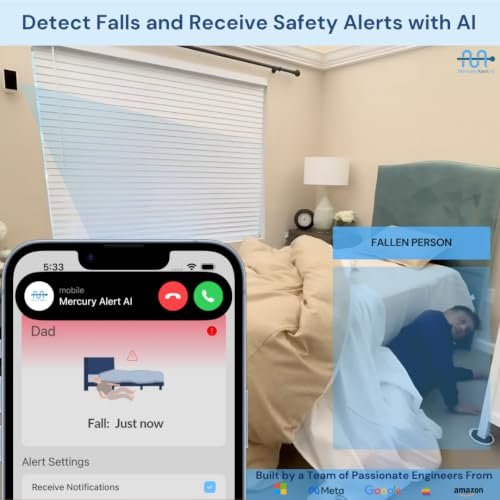
24/7 AI PASSIVE MONITORING: Detects falls, wandering, and nighttime movement without wearables, buttons, or check-ins. REAL-TIME CAREGIVER ALERTS: Sends emergency phone calls, push notifications, and texts through an encrypted mobile…

CarMD Connect All-in-One Vehicle Health…
Your AI vehicle expert – Ask CarMD combines live OBD-II data from your vehicle with insights from over 100 million verified repair records to deliver personalized AI guidance tailored to…

Audar E2 Senior Smartwatch with…
REMOTE HEALTH MONITORING – Audar E2 features built-in sensors to track heart rate, blood pressure, blood oxygen (SpO₂), and body temperature automatically at customizable intervals of 30 minutes, 1 hour,…
Mercury Alert AI Senior Fall Monitor

The Mercury Alert AI Senior Fall Monitor is designed for families who want passive safety support without asking an older adult to wear a watch or press a button. Its listed features include 24/7 monitoring, automatic alerts, health analytics, private operation, and live view access. That combination may suit a home where comfort and low effort matter most. It is especially appealing when a parent may forget to charge or wear a small personal emergency device.
In daily use, a passive monitor can feel less intrusive than a camera or wearable. The system may help caregivers notice a fall or an unusual change sooner, but buyers should confirm exactly how alerts work before purchase. AI alerts are not a replacement for emergency services, direct care, or a medical assessment. I would also check installation rules, supported rooms, subscription costs, data storage, and whether the device needs reliable Wi-Fi.
Pros:
- Passive monitoring may reduce the need for a wearable device
- Automatic alerts can help family members respond sooner
- Health analytics may reveal useful changes over time
- Live view access can support remote check-ins
- Privacy-focused design may feel more comfortable than a standard camera
- Useful for seniors who may forget to carry an emergency button
Cons:
- AI fall detection can produce missed or false alerts
- Internet, power, and app access may be required
- Families should verify subscription and emergency response fees
- It may not replace a certified medical alert system
CarMD Connect AI Vehicle Health Monitor

CarMD Connect is not a human health monitor, but it belongs in this guide because it monitors vehicle health and uses an AI auto mechanic concept. The listed package combines vehicle diagnostics, location sharing, and an AI-based explanation tool. For a family car, work truck, or older vehicle, that can make warning lights easier to understand. It may also help owners share a vehicle location with trusted contacts.
I like the idea of translating a confusing dashboard light into plain language. Many drivers see a warning symbol and either panic or ignore it, and both choices can cost money. A connected monitor may give helpful context before you visit a repair shop, but it cannot inspect every part of a vehicle or confirm a final repair. Treat its suggestions as a starting point, then use a qualified mechanic for safety-critical work.
Pros:
- Combines vehicle health data and location sharing
- AI-style explanations may help new drivers understand warning codes
- Can support preventive maintenance planning
- Useful for family cars, fleets, and shared vehicles
- May help reduce stress when a dashboard warning appears
- Can provide extra visibility when a vehicle is used by a teen or employee
Cons:
- It monitors a vehicle, not a person’s health
- Diagnostic advice should not replace a trained mechanic
- Compatibility with the vehicle and phone must be checked
- Connected features may depend on cellular service or a paid plan
Audar E2 Senior Smartwatch With Fall Detection

The Audar E2 Senior Smartwatch brings fall detection, an SOS function, and vital sign monitoring to the wrist. That makes it a more personal option than a room-based monitor. A senior can carry it around the house, outside, or on a short walk. The watch format may also help family members feel connected without making every check-in feel like a medical visit.
Wearables work best when the user keeps them charged and wears them correctly. Before relying on the vital sign tools, I would read the manual and compare the readings with a trusted medical device when needed. Consumer smartwatch sensors can support awareness, but they do not diagnose disease. I would also confirm whether SOS calls a family contact, a monitoring center, or emergency services, since that detail changes the safety value.
Pros:
- Fall detection travels with the wearer
- SOS access may offer quick help after a fall
- Vital sign tools can support simple daily tracking
- More flexible than a monitor fixed in one room
- May encourage seniors to stay active while feeling supported
- Can suit families who want a visible, familiar device
Cons:
- The wearer must charge and wear the watch consistently
- Fall detection may not identify every type of fall
- Vital sign readings are not a medical diagnosis
- Some functions may require a compatible phone or service plan
Audar E2 Senior Smartwatch With SOS
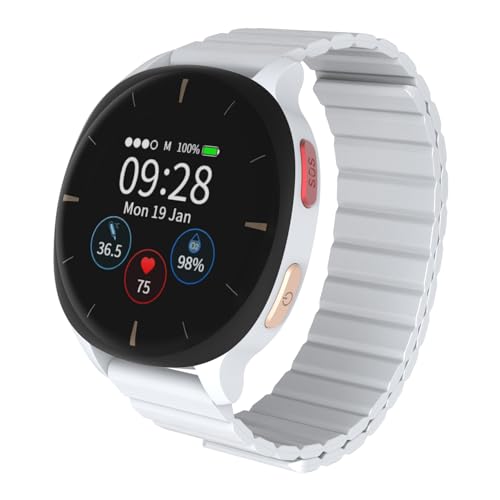
This second Audar E2 listing appears to offer the same core type of senior smartwatch, including fall detection, SOS support, and vital sign monitoring. I include it separately because Amazon listings can differ by color, bundle, seller, or included service. That difference matters when you compare the total cost. A watch with the right setup for the user is often more useful than a model with a longer feature list.
The strongest point here is mobility. A fixed sensor can watch one space, while a smartwatch can stay with a senior during daily tasks. It may be a good fit for someone who leaves the house, uses the yard, or spends time in several rooms. As with any of the best AI health monitoring devices, I would test the SOS process with the family before treating it as a safety plan.
Pros:
- Portable monitoring for indoor and outdoor activity
- Fall detection may provide an extra layer of protection
- SOS access is easy to understand in an urgent moment
- Vital sign features may support trend awareness
- Watch design can feel less clinical than a medical pendant
- Different listing options may help shoppers compare bundles
Cons:
- Battery life can limit protection if charging is missed
- Exact features may vary between Amazon listings
- Readings can change with movement, fit, and skin contact
- Users may need help with setup and phone pairing
DBDD AI Dog GPS Tracker and Health Monitor

The DBDD Dog GPS Tracker is made for medium and large dogs, especially pets that test gates and fences. Its listed features include real-time location tracking, an AI tracker collar, virtual fence tools, and health monitoring for iOS and Android. This is not a human health device, yet it solves a real monitoring need: knowing where a pet is and spotting changes in activity. For an escape-prone dog, location data can be worth far more than a basic tag.
Virtual fence alerts may help an owner react before a short escape turns into a long search. The collar may also add useful context about movement, rest, or routine changes, though pet activity data should not be treated as a veterinary diagnosis. I would check collar size, weight, water resistance, coverage, battery life, and subscription terms before ordering. A GPS collar also works best as a backup to a secure fence, a current ID tag, and a registered microchip.
Pros:
- Real-time location support for dogs that may run away
- Virtual fence alerts can warn owners about boundary breaks
- Health and activity data may reveal routine changes
- Works with both iOS and Android according to the listing
- Designed for medium and large dogs
- May provide more useful information than a standard ID tag
Cons:
- It monitors pets, not human health
- GPS and cellular features may need a recurring subscription
- Battery life depends on tracking frequency and signal strength
- It cannot replace a secure fence, ID tag, or microchip
My Recommendation
After comparing these products, I see three different kinds of monitoring. The Mercury Alert is the strongest choice for passive senior safety at home. The Audar E2 watches the person who wears it and fits seniors who move around often. The DBDD tracker is best for a dog, while CarMD Connect belongs in a vehicle-monitoring category rather than a human health category.
For families choosing the best AI health monitoring devices, the most important question is not which product has the most features. Ask what needs watching, where the monitoring must work, and who will act when an alert arrives. A passive home system may suit a person who dislikes wearables. A smartwatch may suit an active senior. A pet GPS collar may suit an escape artist.
| Best for | Why |
|---|---|
| Senior safety at home | Mercury Alert offers passive monitoring and remote alert features without requiring constant watch wear. |
| Mobile senior support | Audar E2 adds wearable fall detection, SOS access, and vital sign tools while the user moves. |
| Escape-prone dogs | DBDD combines GPS location, virtual fence alerts, and pet activity monitoring. |
I would select Mercury Alert for a caregiver who wants quiet, room-based oversight. It may reduce the worry that comes with waiting for a parent to call after a fall. Still, I would test the alert chain, add emergency contacts, and ask the user for consent before installation. Respect and trust matter as much as technology.
I would select either Audar E2 listing for a senior who can manage a wearable. The watch may support independence because help stays close during a walk or trip to the store. The buyer should compare the two Amazon listings for size, color, seller terms, warranty, app support, and any required cellular plan.
CarMD Connect deserves a clear but separate recommendation. It may help drivers understand vehicle warnings and share a car’s location, but it should not be confused with a heart rate monitor, fall monitor, or medical alert system. It is useful for people who want smart vehicle insight, not for people shopping only for personal health data.
The DBDD collar makes sense for a medium or large dog that slips through doors, digs under fences, or chases wildlife. I value the virtual fence idea because it may warn an owner before the dog gets far away. Yet the collar must fit well, stay charged, and have service in the area where the dog roams.
One point deserves special attention: AI does not make a device infallible. A model may identify patterns from motion, location, or sensor readings, but it can still miss an event. Loose fit, poor signal, low battery, unusual movement, walls, weather, and user error can affect results. I treat smart alerts as an extra set of eyes, not as a substitute for human judgment.
Privacy also deserves a place on the buying checklist. A device that collects location, health, video, or activity data should explain how it stores and shares that information. Look for clear account controls, access permissions, deletion options, and a plain privacy policy. The phrase “completely private” should still be checked against the product’s current documentation and app settings.
Setup is another practical test. The best AI health monitoring devices should be simple enough for the person or caregiver who will use them. Before the first real alert, connect the app, name the contacts, charge the device, test the network, and practice the SOS process. I would also create a backup plan for power loss, phone failure, or a weak cellular signal.
How I Evaluated the Best AI Health Monitoring Devices
I did not judge these products by the word “AI” alone. I focused on the task each device is meant to perform, the data it appears to collect, and the action it supports. A helpful monitor should turn information into a clear next step. A confusing alert or a hidden fee can reduce the value of even impressive hardware.
I also looked at who must use the device. Passive monitors place less work on a senior but may cover only a set area. Wearables travel with the user but need charging and correct placement. GPS collars can help find pets but depend on coverage and battery power. Vehicle monitors collect useful car data, yet they do not belong in the same health category as a fall detector.
For health-related products, I used a careful standard. A consumer device can support awareness and communication. It should not diagnose a stroke, confirm a heart condition, replace a blood pressure cuff, or decide whether a person needs emergency care. When a reading or alert seems serious, contact a medical professional or emergency service.
In 2026, buyers should also ask how often the product receives app and firmware updates. Connected devices change over time. An update may improve alerts, fix a security issue, or change a subscription feature. I recommend checking the current Amazon listing and manufacturer information before ordering because prices, bundles, coverage, and terms can change.
What to Consider Before Buying
Choose passive or wearable monitoring
Passive monitoring is best when the user may forget a device. It can watch a room without asking for daily action. Wearable monitoring is better when the person goes outside or moves through many areas. The trade-off is simple: passive systems need the right placement, while wearables need steady use.
Check the alert path
An alert has value only when it reaches someone who can act. Find out whether the device sends a phone notification, text, call, or monitoring-center alert. Check how many contacts you can add. Test the full path with the family, and do not assume that an SOS button automatically calls emergency services.
Review power and network needs
A dead battery creates a quiet gap in protection. Ask how often the device needs charging and what happens during a power cut. GPS products may need cellular coverage, while indoor monitors may need Wi-Fi. In rural areas, basements, large homes, and places with thick walls, signal tests matter.
Understand health data limits
Health analytics can show a trend, but a trend is not a diagnosis. Motion data may suggest a routine change. A watch sensor may estimate a vital sign. Neither result should guide medication changes without medical advice. If accuracy matters for care, compare the product with a clinically suitable device.
Consider privacy and consent
Monitoring another person requires care and respect. Explain what the device does, what it records, and who can view it. Give the user a way to ask questions or pause monitoring when appropriate. For pets, protect account access just as you would protect any location data.
Calculate the full cost
The purchase price is only one part of the budget. Add a possible subscription, cellular plan, replacement band, battery, installation, and accessory costs. A low-cost device may become expensive over time. A higher-priced device may be a better value if it has reliable support and no surprise fees.
Are AI Health Monitoring Devices Worth It?
They can be worth it when they solve a clear problem. A caregiver may gain faster notice of a fall. A senior may feel safer while staying active. A dog owner may find a missing pet sooner. A driver may understand a warning light before visiting a repair shop.
The value drops when buyers expect perfect prediction. AI systems learn from signals, and signals can be incomplete. The best AI health monitoring devices add awareness to a care plan. They do not replace a trusted person, a doctor, a veterinarian, a mechanic, or emergency support.
I also think peace of mind has practical value. Families often spend energy wondering whether a loved one is safe. A well-set device can reduce some of that mental load. It works like a porch light: it does not prevent every problem, but it can help you notice trouble sooner.
FAQs Of Best AI Health Monitoring Devices
What are AI health monitoring devices?
They are connected products that use sensors, software, or pattern analysis to track activity, safety events, location, or other signals. Some monitor people, while others monitor pets or vehicles. Always check the exact product purpose before buying.
Can an AI monitor replace a medical device?
No. Most consumer monitors support awareness rather than diagnosis. Use a clinically suitable device and professional advice when an accurate medical reading matters.
Are fall detection devices always accurate?
No. A fall detector can miss some events or send a false alert. Movement, body position, battery level, signal strength, and device placement can affect performance.
Is a smartwatch better than a passive senior monitor?
It depends on the user. A smartwatch travels with the person, but it needs charging and correct wear. A passive monitor needs less effort but may cover only a specific home area.
Do GPS health and safety devices need a subscription?
Some do. GPS and cellular services often involve a recurring fee. Check the current product page for service, coverage, trial, and cancellation details before ordering.
Final Verdict: Which Should You Buy?
For most senior home-care needs, I would choose the Mercury Alert AI Senior Fall Monitor for its passive approach and remote alert focus. Choose Audar E2 for mobile wearable support, or DBDD for an escape-prone dog. CarMD Connect is best treated as a smart vehicle monitor.
The best AI health monitoring devices add a helpful safety layer when matched to the right user. Confirm accuracy limits, privacy terms, network needs, and total cost before purchase.

Similar Posts