5 Best AI Voice-Controlled Devices: Top Smart Picks
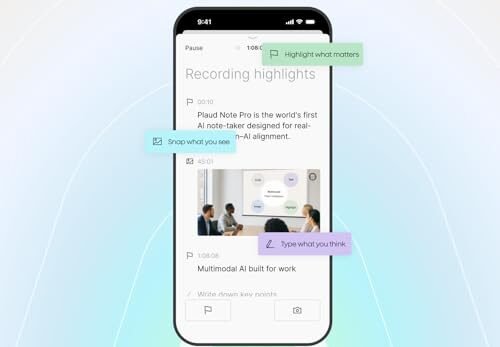
The best AI voice-controlled devices turn spoken words into clear notes, summaries, and useful actions with less effort.
Picture a busy meeting, class, or workday where ideas arrive faster than your fingers can type. You want to listen closely, yet you also need accurate notes. That is where modern AI voice-controlled devices help. They record speech, reduce noise, transcribe conversations, and create short summaries. I reviewed the main features that matter most, including sound quality, storage, portability, battery life, privacy, and ease of use. The five devices below suit different needs, from discreet wearable recording to long lectures and large archive storage.

Plaud NotePin S Wearable AI…
Plaud Intelligence: Capture conversations in 112 languages and generate accurate transcripts with the Plaud App and Web. Plaud Intelligence uses leading models like GPT-5.5, Claude Sonnet 4.6, and Gemini 3.1…

Comulytic Note Pro AI Voice…
| Comulytic AI Voice Recorder Notes Assistant | — Lifetime Free Starter Plan Comulytic Note Pro is a smart voice recorder, AI note taker, and AI recorder built for professionals,…

AI Voice Recorder, Note Taking…
AI-Powered Transcription & Summarization: AI Voice Recorder Powered by cutting-edge GPT-4.1 intelligence, this tool delivers real-time, highly accurate speech-to-text transcription across 135+ languages, with automatic speaker labeling. Instantly generate meeting…
Plaud NotePin S Wearable AI Voice Recorder

The Plaud NotePin S takes a different path from a standard handheld recorder. Its wearable design lets you keep it close while you work, walk, or attend a meeting. That can make recording feel less disruptive than placing a phone in the middle of a table. For people who often forget details, this compact form is one of the strongest reasons to consider it.
Its main appeal comes from the AI workflow that follows recording. Instead of leaving you with long audio files, the device is designed to help turn speech into text and shorter notes. I like this approach for interviews, quick ideas, client calls, and personal reminders. Still, users should review every transcript because names, accents, side talk, and technical terms can cause errors.
Pros:
- Wearable design keeps recording close at hand
- Small form fits active work routines
- AI transcription can reduce manual typing
- Summary tools help find key points faster
- Useful for meetings, interviews, and spoken reminders
- Black finish looks simple and professional
Cons:
- Small devices may be easier to misplace
- Transcription accuracy can vary with noise and accents
- Users must consider consent and local recording laws
My Recommendation
The Plaud NotePin S is best for professionals, students, journalists, and busy people who need a recorder that does not feel bulky. It is especially useful when your hands are full or when you want to capture thoughts before they disappear. Among the Best AI Voice-Controlled Devices, this model stands out for portability and a hands-free workflow. I would choose it for daily note capture rather than very long archive recording. Check the current Amazon listing for availability, included services, and account details before buying.
Comulytic Note Pro AI Voice Recorder

The Comulytic Note Pro is built around the idea of a digital meeting assistant. Its purpose is not only to capture sound but also to help organize what people say. That makes it a good match for work calls, planning sessions, interviews, and shared discussions. I see it as a practical bridge between a basic recorder and a full note-taking app.
The AI functions may save time after a meeting ends. Instead of replaying every minute, you can use a transcript or summary as a first draft for action items. The real value depends on the quality of the recording and the software experience, so a quiet room will usually produce better results. I also suggest checking how the app handles exports, storage, supported languages, and any subscription plan.
Pros:
- Designed with meetings and note taking in mind
- AI summaries can shorten review time
- Transcripts make spoken details easier to search
- Useful for work calls and group discussions
- More focused than a simple audio-only recorder
- Can help turn conversations into follow-up notes
Cons:
- AI features may depend on a companion app or service
- Online processing may raise privacy concerns
- Overlapping speakers can reduce transcript quality
My Recommendation
I recommend the Comulytic Note Pro to users who spend much of the day in meetings and want help after the conversation ends. It suits office teams, consultants, freelancers, and students who need a clean starting point for notes. Of the Best AI Voice-Controlled Devices, this one makes the most sense for structured discussion and task follow-up. Before ordering, confirm current app support and whether advanced AI tools require a paid plan. Its value is strongest when you use its summaries often.
AI Voice Recorder for Notes and Summaries

This AI voice recorder targets people who want a simple way to capture spoken information and turn it into usable notes. The design appears suited to everyday work, study, and personal planning. It can be more comfortable than typing during a lecture or trying to remember a fast conversation. I would view it as a flexible general-purpose choice for buyers who want one tool for several tasks.
The transcription and summary features are the main reasons to buy it. A transcript can preserve detail, while a summary can give you a quick view of the important points. That two-step process works well when you need both a record and a short review. As with any AI recorder, I would proofread important names, figures, deadlines, and medical or legal information before sharing the result.
Pros:
- Combines recording, transcription, and summaries
- Useful for classes, meetings, and interviews
- Can reduce the need for constant typing
- Flexible choice for home and work use
- Helps create a quick review of long speech
- Suitable for users new to AI note tools
Cons:
- AI output still needs human review
- Feature details may vary by app or service plan
- May not replace a high-end recorder for studio audio
My Recommendation
This model is best for students, remote workers, writers, and families who want a broad voice-note tool without a narrow use case. It can fit a lecture in the morning, a work call at noon, and a personal idea at night. In a crowded Best AI Voice-Controlled Devices list, its strength is balance rather than one standout feature. I suggest it for buyers who value transcription and summaries but do not need a wearable design. Review the listing for current storage, supported languages, and software terms.
Elasound 132G Voice Activated Recorder

The Elasound recorder takes a more traditional approach, with a strong focus on storage and long recording sessions. Its listed 132G capacity and voice-activated design may appeal to people who record lectures, work notes, interviews, or extended events. A large storage pool is useful when you do not want to move files after every session. The compact shape also makes it easier to carry than larger field recorders.
Its AI-intelligent triple noise reduction claim is aimed at clearer speech in less-than-perfect settings. Noise reduction can help, but it cannot fix every problem caused by distance, wind, loud machinery, or people speaking at the same time. Voice activation may also reduce silent sections and help save storage, though users should test its start and stop behavior before relying on it. I would select this model for recording endurance first and smart summaries second.
Pros:
- Large listed 132G storage capacity
- Voice activation can reduce empty recordings
- Designed for long work and lecture sessions
- Portable format is easy to carry
- Triple noise reduction may improve speech clarity
- Listed support for up to 100 hours of continuous recording
Cons:
- Large storage does not guarantee better microphone quality
- Voice activation may miss very soft speech
- Long recordings still require time to review and organize
My Recommendation
The Elasound is best for buyers who care about capacity and recording time. It fits students with long lectures, workers who document field notes, and users who want a backup recorder with plenty of room. It is one of the Best AI Voice-Controlled Devices for endurance, not necessarily for the smallest footprint or most polished AI workflow. I would choose it when storage is more important than wearable convenience. Confirm the exact battery, file format, and transfer details on Amazon before purchase.
AI Voice Recorder with Note Taking

This second AI voice recorder is aimed at the same growing need: capture speech now and organize it later. It may work well for people who want a dedicated device instead of using their phone for every note. A separate recorder can reduce phone distractions and leave your mobile battery available for calls. That simple change can make a busy day feel less scattered.
The combination of voice recording, transcription, and summarization gives it broad appeal. You can keep the full audio for reference, use the text to search for a detail, and read the summary when time is short. I consider that a useful three-layer workflow for work and study. Buyers should still check the user interface, data handling, export options, and language support before deciding between similar models.
Pros:
- Dedicated device keeps note taking separate from phone use
- Supports a record, transcript, and summary workflow
- Useful for meetings, study sessions, and daily ideas
- Can save time during post-meeting review
- Simple concept suits many types of users
- Portable design should fit a desk or travel bag
Cons:
- Exact AI limits may depend on current software support
- Speech errors remain possible in busy spaces
- Dedicated hardware adds another device to charge
My Recommendation
I would recommend this recorder to users who want a dedicated note device and a straightforward AI workflow. It is a good fit for freelancers, students, managers, and anyone who often says, “I will remember that,” then does not. The Best AI Voice-Controlled Devices should make life simpler, and this model aims to do that without demanding constant phone use. It offers good potential value for everyday notes, but verify the current app experience and service costs before buying.
How to Choose the Best AI Voice-Controlled Devices
Buying an AI recorder is not only about the word “AI” on the box. The best choice depends on how you speak, where you record, and what you need after the audio is saved. A student may want long battery life and large storage. A manager may care more about speaker separation, summaries, and fast exports.
I start with the microphone. A clear recording gives every later feature a better chance to work well. AI cannot create words that the microphone never captured. Look for a design that suits your space, whether that means a wearable unit for close speech or a recorder that sits on a meeting table.
Storage also matters. A small device can be a smart choice if you move files often. A model with large storage is better when you record long classes, interviews, or field sessions. Do not confuse storage with battery life. A recorder can hold many hours of audio yet still need frequent charging.
Battery life is easy to overlook until an important session begins. I suggest charging the device before every major meeting and carrying a cable or power bank when possible. If a listing gives a continuous recording figure, treat it as a test condition rather than a promise for every real-world situation. Screen use, wireless links, noise processing, and file transfers can change runtime.
Next, study the AI features. Transcription turns speech into text. Summarization shortens that text into key ideas. Some tools may also help identify tasks, topics, or speakers. These features can save time, but they need review. AI may misread a street name, confuse two speakers, or turn a quiet “fifteen” into “fifty.”
Privacy deserves equal attention. Voice recordings can contain private business data, personal stories, or sensitive health details. Ask where files go, whether processing happens on the device or in the cloud, how long data remains stored, and how you can delete it. The Federal Trade Commission has repeatedly emphasized clear data practices and honest privacy claims for connected products. I also recommend reading the product privacy policy instead of relying only on a short Amazon description.
Consent is another key point. Recording laws differ across states and situations. Some places require all parties to agree before a private conversation is recorded. A small device may be easy to use, but it does not remove your legal or ethical duty. Tell people when recording starts, especially in meetings, interviews, classrooms, and shared spaces.
Compatibility can shape the whole experience. Check whether the recorder works with your phone, computer, operating system, and preferred file type. A device may record well but feel frustrating if transferring files takes too many steps. Export options matter when you want to edit audio, store a backup, or move notes into another app.
I also look at the total cost. Some AI devices include a limited number of transcription minutes, then charge for extra use. Others may offer a subscription for advanced summaries or cloud storage. The low purchase price may not be the low long-term price. Add the hardware cost, service fees, storage needs, and replacement accessories before making a final choice.
AI Transcription Accuracy: What to Expect
AI transcription has improved, but no recorder is perfect. Results often depend on microphone distance, room echo, background noise, speech speed, and accent. One person speaking close to the device in a quiet room gives the software an easy task. A crowded table with several people creates a much harder one.
Names and specialist words are common trouble spots. Medical terms, product codes, street names, and foreign phrases may need correction. I treat an AI transcript as a strong draft, not a legal record. For important work, I listen to the original audio while checking the text.
Summaries can also miss the point if the transcript contains errors. A short summary may sound smooth while leaving out a small detail that matters. I use summaries to find the main story, then return to the transcript or audio for deadlines, prices, promises, and technical facts. That habit gives you speed without giving up judgment.
Voice-Controlled Devices for Work and Study
For work, these devices can reduce the pressure to write every sentence. I can focus on the speaker, ask better questions, and review the record later. A transcript also helps when a team member joins late or needs a clear recap. With permission, it can support meeting notes and action lists.
Students may find them useful during lectures and research interviews. Listening fully can improve learning because the student does not spend the entire class looking down. The recording can support later review, while the transcript makes a topic easier to search. Students should follow school rules and get permission when required.
Writers, podcasters, and journalists can use voice recorders to capture ideas in the moment. A spoken thought often arrives before a polished sentence. Recording it can preserve tone and detail. A summary can then help sort a large set of ideas into a workable outline.
Families may use voice notes for shopping lists, reminders, and personal stories. This use case does not need advanced meeting tools. A simple recorder with clear playback may be better than a complex device that asks for a monthly fee. The best AI voice-controlled devices are the ones that match your daily habits, not the ones with the longest feature list.
Privacy and Safe Recording Tips
Before recording, tell the people involved. A clear notice protects trust and helps avoid confusion. In a workplace, follow your employer’s policy. In a class or interview, ask the teacher, speaker, or participant before pressing the record button.
Use a strong account password if the device connects to an app. Turn on two-factor authentication when the service supports it. Keep the app and device firmware updated. Updates may fix security flaws, improve performance, or clarify how data moves between the recorder and the cloud.
Delete recordings you no longer need. Keep only the files that serve a clear purpose. If the audio contains private information, store it in a secure location and avoid sending it through an open public link. These steps are simple, but they can prevent a small recording from becoming a large privacy problem.
Best Features at a Glance
| Best for | Why |
|---|---|
| Hands-free daily notes | The Plaud NotePin S uses a wearable format that stays close during busy tasks. |
| Meetings and follow-up tasks | The Comulytic Note Pro focuses on transcripts, summaries, and discussion review. |
| Long recording sessions | The Elasound recorder lists large storage and extended continuous recording support. |
Common Mistakes to Avoid
The first mistake is buying for storage alone. A large memory figure sounds impressive, but it does not tell you how clear the audio will be or how easy the files are to move. Think about the full path from recording to final note.
The second mistake is ignoring the software. AI features often live in an app or online service. A device with strong hardware can still disappoint if the app feels slow or the export tools are limited. Check recent customer feedback for setup issues and support quality.
The third mistake is expecting perfect speaker labels. Many conversations include interruptions, soft voices, and people sitting at different distances. Even advanced software may need help. If accurate speaker separation is vital, test the product during a low-risk meeting before using it for a critical event.
The fourth mistake is failing to test the microphone position. Wearable recorders need a good placement near the speaker. Table recorders need a clear path to the people talking. Take a short sample in your usual space. That test can reveal more than a long feature list.
The last mistake is forgetting consent. Convenient recording is not the same as permitted recording. Make consent part of your routine. It protects people, your work, and your peace of mind.
FAQs Of Best AI Voice-Controlled Devices
What are AI voice-controlled devices used for?
They record spoken audio and use software to create transcripts, summaries, or organized notes. Common uses include meetings, lectures, interviews, reminders, and research. Some models also offer voice activation or noise reduction.
Are AI voice recorder transcripts always accurate?
No. Accuracy changes with noise, distance, accents, speech speed, and overlapping voices. Always check names, numbers, dates, tasks, and other important facts against the original audio.
Do AI voice-controlled devices need Wi-Fi?
Some basic recording functions may work without Wi-Fi. Transcription and summaries may require a phone connection, an app, or cloud processing. Check the specific product listing and privacy policy before buying.
How should I protect private recordings?
Tell people when you record, follow local law, and use a secure account. Update the device and app, limit cloud sharing, and delete files you no longer need. Avoid recording sensitive conversations unless you have clear permission and a safe storage plan.
Which device is best for long lectures?
The Elasound 132G Voice Activated Recorder is the strongest fit in this group for long sessions because its listing emphasizes large storage and extended recording. Students should still test microphone placement and battery life before an important lecture.
Final Verdict: Which Should You Buy?
The Plaud NotePin S is my top pick for most people because its wearable design, transcription, and summaries make daily note capture easy. Choose Elasound for long recordings, or Comulytic for meeting follow-up.
The Best AI Voice-Controlled Devices can save time, but clear audio, privacy, and human review still matter. Pick the model that fits your real routine, then check the latest Amazon price and features.

Similar Posts



















[…] "I don't want to buy a battery system." It's a bit like choosing a standalone voice assistant instead of building out an entire smart speaker […]