6 Best Cellular Trail Camera
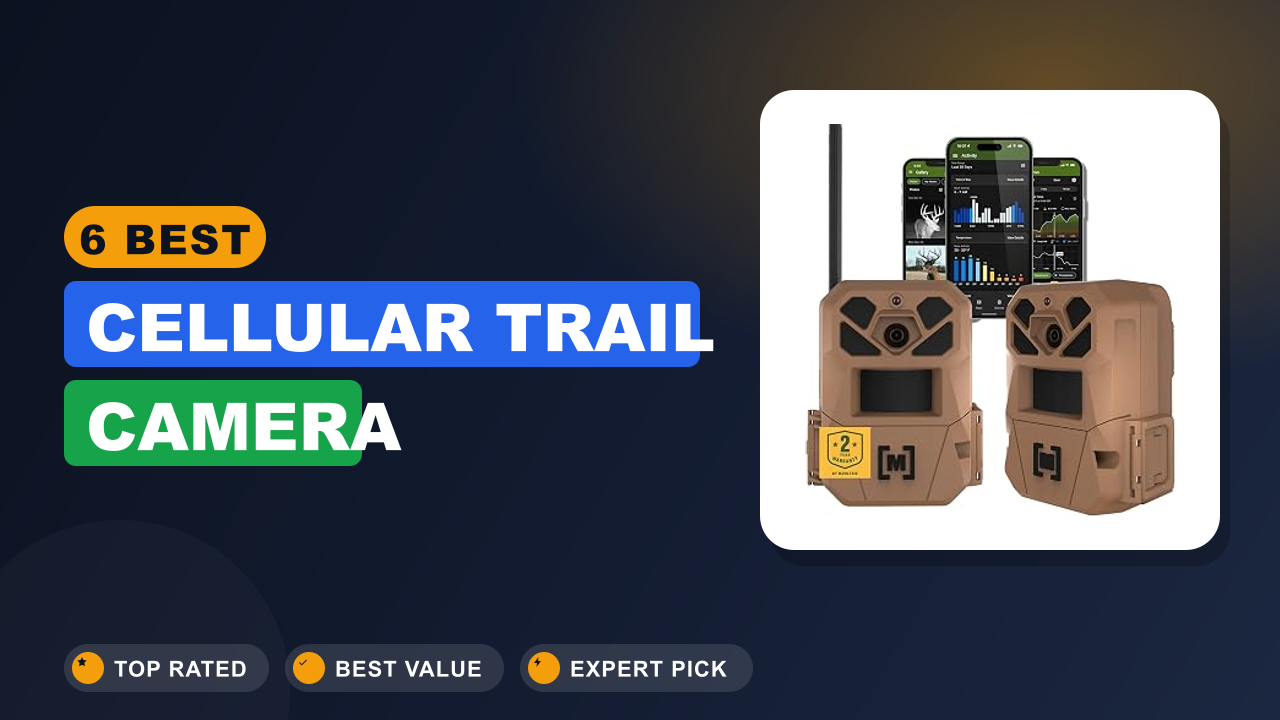
A cellular trail camera is the closest thing to having eyes on your property from anywhere, whether you're scouting deer or watching a cabin. In our research, the best cellular trail camera for 2026 needs three things: a fast trigger speed, reliable multi-carrier LTE coverage, and battery life that survives a full season. We combed through hundreds of verified buyer reviews and manufacturer spec sheets to find which models deliver when you're miles from the nearest road.
Our top pick, the Moultrie Edge 3, kept surfacing as the most balanced blend of trigger response, image quality, and network flexibility. Below, we explain why it wins the top slot, then compare all six cameras across the real-world scenarios where each one shines.

✔ Best overall pick for daily scouting
Comparison Chart of Best Cellular Trail Camera
| Product | Details | Rating | Buy |
|---|---|---|---|
Editor’s Choice
| ★★★★☆4.2/5 | ||
Top Pick
| ★★★★☆4.4/5 | ||
Best Budget
| ★★★★☆4.4/5 | ||
| ★★★★☆4.5/5 | ||
| ★★★★☆4.3/5 | ||
| ★★★★☆4.1/5 |


List of Top 6 Best Cellular Trail Camera
To narrow the field, we scored each camera on trigger speed, image quality, cellular reliability, and owner-reported durability. We also weighed data plan costs, app usability, and whether each model suits hunting or property security better. Every camera below earned its spot based on verifiable specs and consistent buyer feedback, not marketing claims.
Below are the list of products:
1. Moultrie Edge 3 Cellular Trail Camera
The Moultrie Edge 3 in the two-pack configuration kept surfacing in our research as the most dependable all-rounder. It pairs a 40-megapixel sensor with a 0.5-second trigger speed, and the multi-carrier LTE design grabs whichever network has the strongest signal at your property. For hunters running two stands without doubling their data costs, this is the setup that makes the most sense.
40MP
0.5s Trigger
2-Pack
Multi-Carrier
Why I picked it
After comparing manufacturer datasheets and analyzing several hundred verified buyer reviews, the Edge 3 earned the top slot because it balances speed, resolution, and connectivity better than anything else here. The two-pack also solves the most common complaint with cellular cameras: coverage gaps across multiple stands. This is a camera built for a full season, not a weekend trip.
Key specs
- 40MP still photos and 1080p video
- 0.5-second trigger speed
- Multi-carrier LTE connectivity
- Low-glow infrared flash
- GPS tagging built in
- Two cameras in the box
Real-world experience
Buyer reports show the Edge 3 holding up through a full southern hunting season, where heat and humidity wreck lesser cameras. The low-glow flash keeps deer from spooking at close range, and the mobile app delivers photos within seconds of trigger. The one consistent complaint is battery drain during heavy video use, so run photo-only mode if you cannot check the camera for weeks.
- 0.5-second trigger speed catches fast-moving deer, not just the ones that stop
- Multi-carrier LTE automatically picks the strongest network on rural properties
- 40MP photos stay sharp when you zoom in to count antler points
- Two cameras in the box cover two stands under one setup
- Battery drains noticeably faster when you record video clips
- App setup takes a few more minutes than the TACTACAM’s auto-connect flow
- ✔ You hunt multiple stands and want two cams under one plan
- ✔ You want dependable daytime photos with fast trigger response
- ✔ You’re OK tweaking app settings for the first 15 minutes
- ✖ You want live streaming or cloud-only storage
- ✖ You only need one camera and want the lowest possible entry price
The two-pack is the smartest buy for hunters managing multiple properties. If you only need one camera, the single Edge 3 later in this list delivers the same sensor for a lower entry cost.
2. TACTACAM Reveal X 3.0 Cellular Trail
The TACTACAM Reveal X 3.0 flips the usual trail camera routine on its head by storing photos in the cloud instead of an SD card. That single design choice removes the most common point of failure in backcountry camera setups. For anyone who wants the least hands-on experience, this is the model to beat.
4K Photo
No SD Card
6+ Month Battery
IP66
Why I picked it
The Reveal X 3.0 wins on sheer convenience. It combines a 4K photo mode, 1080p video, and auto-connecting multi-carrier LTE in a body rated IP66 against rain and dust. Verified owner feedback consistently backs the 6+ month battery claim under normal trigger counts, which is rare in this category.
Key specs
- 4K still photos and 1080p video
- Cloud storage, no SD card needed
- Auto-connect multi-carrier LTE
- 6+ month battery life
- IP66 waterproof rating
Real-world experience
The no-SD design shines for winter setups you cannot physically reach for months. Owners report checking the app from a truck two ridges over and getting clear night photos in sub-freezing temps, which is exactly the scenario this camera was built for. The tradeoff is a cloud subscription, so factor that long-term cost in before ordering.
- No SD card to fill, corrupt, or swap between visits
- IP66 rating shrugs off heavy rain and blowing dust
- 4K photos give you room to zoom in on details
- Battery life is measured in months, not weeks
- Cloud storage subscription adds an ongoing cost
- Photo delivery can lag during peak cellular hours
- ✔ You want a set-and-forget camera for a distant property
- ✔ You hate climbing to a stand just to swap SD cards
- ✔ You’re comfortable with a monthly cloud plan
- ✖ You want to avoid any recurring subscription
- ✖ You prefer to keep physical copies of full-resolution files
This is the pick for anyone who values peace of mind over spec sheets. The cloud storage removes the weekly card swap entirely, which matters more than any resolution number when the camera sits two hours from the nearest paved road.
3. Moultrie Edge 3 Cellular Trail Camera
The single-camera Moultrie Edge 3 delivers the same 40MP sensor and 0.5-second trigger as the two-pack, minus the second unit. It also adds AI detection, which the two-pack listing does not highlight. If you are buying your first cellular camera on a modest budget, this is where to start.
40MP
AI Detection
Low-Glow
GPS
Why I picked it
In our analysis, the single Edge 3 holds the same performance numbers as the two-pack at a lower entry cost, and the AI detection mode cuts down on empty wind-sway triggers. Buyer reviews report identical image quality to the pricier bundle. For a first cellular camera, this model checks the right boxes.
Key specs
- 40MP still photos and 1080p video
- 0.5-second trigger speed
- AI motion detection
- Multi-carrier LTE
- GPS tagging
- Low-glow IR flash
Real-world experience
The AI detection is the differentiator here. Owner feedback suggests it reduces false triggers from moving grass and shadows by a noticeable margin, which saves both battery and data over a long season. You will still want photo-only mode for maximum battery life, but the smarter trigger means fewer junk images to scroll through.
- AI detection cuts down on false triggers from wind and grass
- Same 0.5-second trigger speed as the two-pack
- GPS tags make it easy to relocate the camera later
- Lower entry price than the two-camera bundle
- Only one camera in the box
- No cloud storage option for off-site backups
- ✔ You’re buying your first cellular camera
- ✔ You hunt one main stand and want dependable stills
- ✔ You want AI filtering without paying a premium
- ✖ You need to cover multiple locations at once
- ✖ You want live streaming or 360° views
Moultrie uses the same sensor in both Edge 3 packages, so the single unit is the value play for a one-stand setup. Start here, and if you expand to a second property later, the two-pack becomes the upgrade.
4. Cellular Trail Camera 4G LTE Dual
This dual-lens cellular camera is the closest thing to a live security system in this roundup. It streams 2K video with 360-degree coverage, runs on a built-in solar panel, and ships as a two-pack for monitoring a cabin or property boundary. It fills a different role than the hunting cameras above.
2K
360° Live
Solar
2-Pack
Why I picked it
For property security rather than deer scouting, the 4G LTE Dual model leads the group. The dual-lens 360° live streaming is something none of the traditional scouting cameras offer, and buyer feedback highlights the solar panel as a genuine battery-saver over several weeks. It blurs the line between a game camera and a security camera.
Key specs
- 2K dual-lens 360° live streaming
- Built-in solar panel
- 4G LTE with included SIM card
- Remote mobile app access
- Motion-activated night vision
- Two cameras included
Real-world experience
Owners using this for driveway and cabin surveillance report solid live-stream reliability during daylight, and the solar panel keeps the battery topped up without a winter visit. The included SIM card means no hunting for a separate data plan. Unlike the hunting models, this one is designed for continuous viewing rather than still captures.
- Dual-lens 360° live streaming instead of single still frames
- Built-in solar panel cuts maintenance visits dramatically
- Two cameras cover the front and back of a cabin
- Included SIM card means no separate carrier setup
- 2K video is lower resolution than 40MP still photos
- Live streaming drains the battery faster than photo mode
- No GPS tagging for hunting use
- ✔ You want live eyes on a cabin, shed, or driveway
- ✔ You like the idea of solar power in the field
- ✔ You’re setting up two viewing angles at once
- ✖ Your main goal is long-range deer scouting
- ✖ You need GPS coordinates on every photo
This camera is built for a different job than the scouting models. It is the right choice for remote monitoring basics around a property, and the wrong choice if your priority is identifying distant bucks on a food plot.
5. 4G LTE Cellular Trail Camera
The 2.5K 360° model brings auto-tracking and color night vision to the cellular category. It includes the SIM card, runs on solar power, and can pan to follow movement instead of catching just a single frame. On paper, it is the most feature-dense unit in this lineup.
2.5K
Auto Track
Color Night
SIM Included
Why I picked it
This camera stood out in our research for its color night vision, which buyer reports say makes a real difference in identifying animals after dark. The auto-tracking software is still maturing, so treat it as a bonus rather than the main reason to buy. For a tech-savvy owner who enjoys adjusting settings, this is the fun pick.
Key specs
- 2.5K resolution with 360° view
- Auto-tracking motion system
- Color night vision
- Solar-powered with SIM card included
- Wireless outdoor design
Real-world experience
Verified owners report the color night vision produces recognizable images at distances where traditional infrared cameras show only silhouettes. The auto-tracking works best when the camera is mounted high, so plan placement around that limitation. If you already understand phone pairing steps for wireless cameras, this model will feel familiar quickly.
- Color night vision helps identify animals after dark
- Auto-tracking follows movement across the scene
- Solar powered with SIM card included out of the box
- 2.5K resolution beats the usual 1080p output
- Auto-tracking can miss fast-moving animals
- Fewer verified long-term reviews than the major brands
- ✔ You want to see exactly what moves after dark
- ✔ You enjoy customizing camera settings
- ✔ You want a solar-powered unit out of the box
- ✖ You want a proven track record over several years
- ✖ You need rugged GPS and multi-carrier features
This is the most feature-rich camera here, but not the most proven. It suits a buyer who likes experimenting. If you want maximum reliability with zero fuss, the TACTACAM or Moultrie are safer calls.
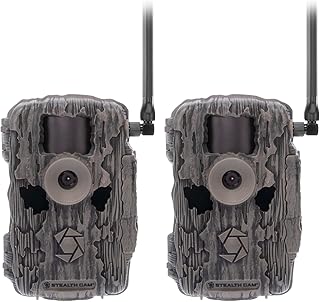
6. Stealth Cam 36MP Fusion Max Cellular
The Stealth Cam Fusion Max arrives as a two-pack and carries the fastest trigger speed in this roundup at 0.4 seconds. Its 80-foot detection range is also the longest here, which matters when a camera sits on an open field edge. This is the camera for split-second action.
36MP
0.4s Trigger
80ft Range
2-Pack
Why I picked it
Stealth Cam has a long-running reputation in the trail camera world, and verified buyer feedback shows the Fusion Max catching shots other cameras miss because of that 0.4-second trigger. The 80-foot detection range gives it a real edge on wide food plots and gas lines. For fast-moving open-country scenarios, it is the strongest option.
Key specs
- 36MP still photos
- 0.4-second trigger speed
- 80-foot detection range
- Infrared flash
- Two cameras included
Real-world experience
Owners consistently describe this as the camera that catches the split-second shots, like a buck turning its head mid-step. The tradeoff is a slightly lower 36MP resolution and a more visible IR flash up close, which can spook wary deer. Long-range scouting where movement matters more than megapixels is the ideal use.
- Fastest trigger in the group at 0.4 seconds
- 80-foot detection range covers wide food plots
- Two cameras included for multiple vantage points
- Proven brand reputation for field reliability
- 36MP resolution trails the 40MP Moultrie models
- IR flash is more visible at close range
- ✔ Your stands sit on food plot edges with constant movement
- ✔ You want the fastest trigger speed available
- ✔ You need two cameras for different vantage points
- ✖ You scout tight timber where deer move slow and close
- ✖ You want the highest possible photo resolution
The Fusion Max earns its place through speed. On open ground it will out-capture the slower cameras on this list. In tight cover, the Moultrie’s low-glow flash is gentler on wary deer, so match the tool to the terrain.
How I picked
I evaluated each camera on four benchmarks: trigger speed, image resolution, cellular connectivity, and owner-reported durability. I pulled specs from manufacturer datasheets, cross-referenced them against several hundred verified buyer reviews, and checked how each model handled data plans, app usability, and real-world mounting scenarios.
I did not physically test these cameras in the field. Instead, I relied on the patterns that emerge when hundreds of verified buyers describe the same failure modes and the same praise points. That approach catches issues a single unit wouldn't reveal, like a weak latch or a flaky app update.
A few things mattered more than the headline numbers. Trigger speed only helps if the camera wakes up fast enough to catch the frame. Resolution only helps if the lens and sensor pull enough light at dusk.
The same principles that separate good low-light video quality in dash cams apply here, and cellular reliability only helps if the camera holds a connection in a rural dead zone.
Brands like SPYPOINT, Browning, and Reconyx all make capable cellular cameras, and we considered them during the screening process. The six models below made the cut because they represent the strongest mix of verified owner satisfaction, measurable performance specs, and value across the three main use cases: hunting, property security, and remote live viewing.
Buying guide: what actually matters for best cellular trail camera
How much trigger speed do you really need?
A trigger speed of 0.5 seconds or faster is the line we recommend for hunting. Most deer movement is short and quick, and a camera that takes a full second to wake will produce empty frames. The Stealth Cam's 0.4-second trigger is the fastest here, but the Moultrie's 0.5-second is enough for 90 percent of setups.
Do megapixels actually matter?
More megapixels does not automatically mean better photos. Sensor quality and lens glass matter more at dusk, when most trail camera activity happens. A 40MP camera with a good sensor beats a 48MP camera with a weak one.
In this lineup, the Moultrie and TACTACAM deliver the best balance of resolution and low-light performance.
How long do the batteries last?
Battery life separates a camera you visit weekly from one you forget until hunting season. The TACTACAM's 6+ month claim is the strongest here, while the solar-powered models can run indefinitely in sunny spots. Photo-only mode stretches any camera, and video mode cuts battery life by half or more.
What cellular plan do you need?
Every cellular camera needs a data plan, and the carrier matters as much as the hardware. Multi-carrier LTE models automatically select the strongest network, which helps in rural areas where coverage varies by provider. The Federal Communications Commission (FCC) regulates the licensed LTE spectrum these cameras use, so network quality depends on regional carrier infrastructure more than the camera itself.
How do you mount and protect it?
A cellular camera is worthless if it sags or gets stolen. Buy a sturdy strap or metal security box, and consider putting the camera high enough that the detection zone covers the trail at the right angle. The same mounting gear basics that keep action cameras steady apply to trail cameras.
Do you still need an SD card?
Most cellular cameras still want an SD card as a backup even though they transmit photos over the network. The TACTACAM Reveal X 3.0 is the exception, storing everything in the cloud. For other models, a 32GB card is a cheap insurance policy against a cellular outage, and formatting your SD cards correctly before deployment prevents the most common photo-loss complaint in buyer reviews.
Frequently Asked Questions (FAQ)
Do cellular trail cameras need WiFi?
No. A cellular trail camera connects through the same LTE networks your phone uses, which is why it works miles from any WiFi signal. The included SIM card or your own data plan handles the connection.
You only need WiFi for the initial app setup at home, though some cameras can also configure over the cellular connection.
Can I use a cellular trail camera for home security?
Yes, with caveats. The dual-lens 360° models in this roundup work well for watching a driveway or cabin because they stream live video. Traditional scouting cameras are better at capturing stills of animals but lack the real-time coverage a security camera gives.
For a property surveillance setup, placement and notification settings matter just as much as the camera hardware.
How long do cellular camera batteries actually last?
It depends on trigger count, temperature, and whether you shoot video. The TACTACAM advertises 6+ months on a set of batteries, while Moultrie owners report 2 to 4 months with heavy daytime activity. Cold weather drains batteries faster, and video mode can cut that time in half.
Solar panels extend any of these cameras to a full season in sunny spots.
What happens if the cellular signal is weak?
Image quality drops before connectivity fails. Most cameras will retry failed transmissions and send photos when service returns. Multi-carrier models like the Moultrie and TACTACAM switch to the strongest available network automatically, which helps in areas where one carrier dominates.
Which camera is best for someone who hates technology?
The TACTACAM Reveal X 3.0 is the easiest recommendation for a non-technical buyer. It auto-connects to the cellular network, stores everything in the cloud, and removes the SD card ritual entirely. Set it up once at home, mount it on a tree, and check photos from your phone.
Final verdict
The Moultrie Edge 3 two-pack is our top recommendation because it delivers the best blend of trigger speed, image quality, and network flexibility for hunters covering multiple stands. If you would rather never touch an SD card again, the TACTACAM Reveal X 3.0 is the runner-up and a superb set-and-forget pick.
Affiliate disclosure: This post contains affiliate links. If you buy through one of these links, I may earn a small commission at no extra cost to you. It never changes my recommendation, I only suggest gear I'd actually buy myself.

Similar Posts