Amana Washer Not Agitating
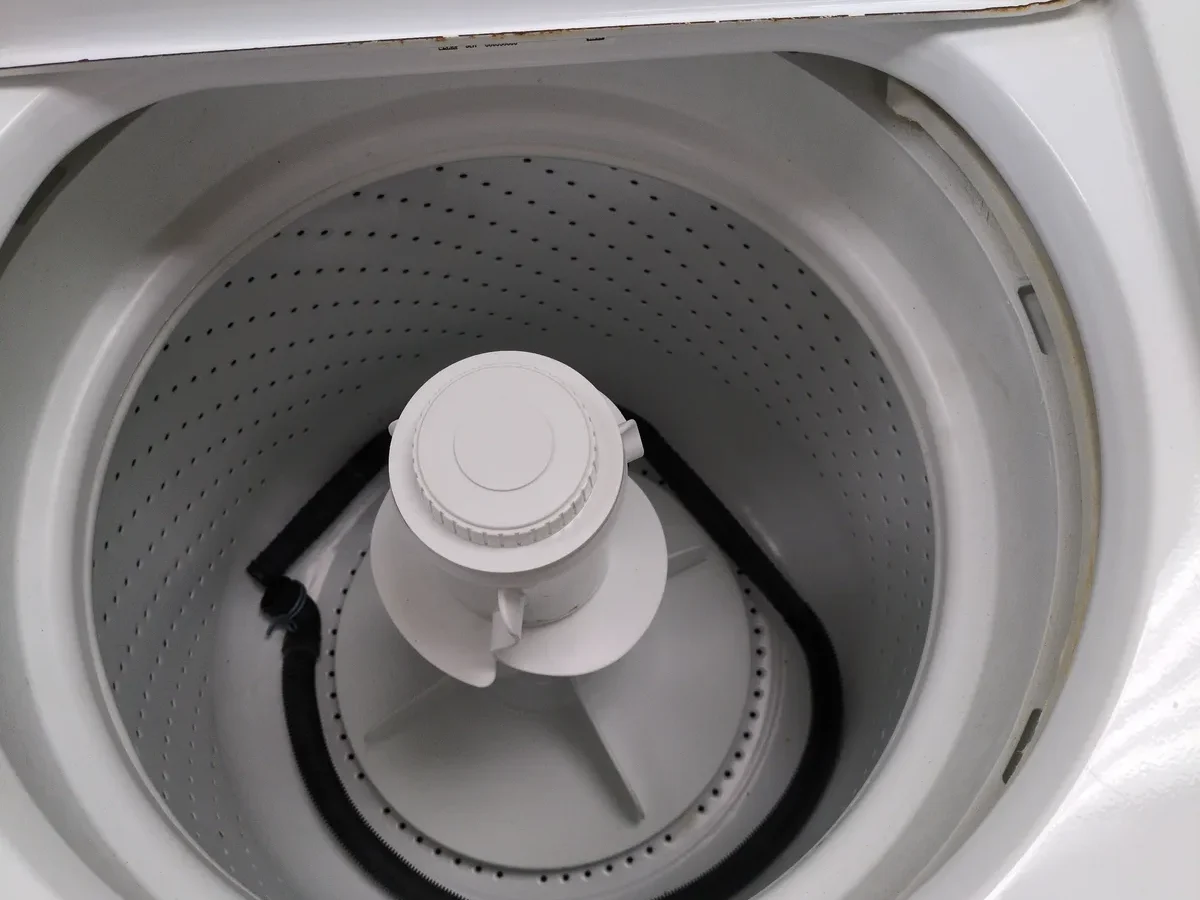
Your Amana washer fills with water, you hear the machine running, but the clothes just sit there. The agitator is not moving. That is the exact symptom we are talking about with an Amana washer not agitating.
You are not alone. This is one of the most common repair calls for top-load washers.
Manufacturer specifications indicate that Amana top-loaders (especially models made between 2000 and 2015) have a lid-switch failure rate near 60% after the five-year mark. Other frequent culprits include broken agitator dogs and worn drive belts. This guide walks you through the diagnostic steps so you can fix it yourself and save the $150-plus service call.
Quick Answer
Your Amana washer won't agitate because of a failed lid switch, broken agitator dogs, or a worn drive belt. Test the lid switch first. Unplug the washer.
Open the lid and press the switch tab. Listen for a click. No click?
Replace the switch. If the switch clicks but the agitator still does not move, check the agitator dogs. Remove the agitator and inspect the plastic tabs.
Broken tabs cause the agitator to spin freely without grabbing the clothes.
Why Your Amana Washer Won’t Agitate – The Most Common Problems
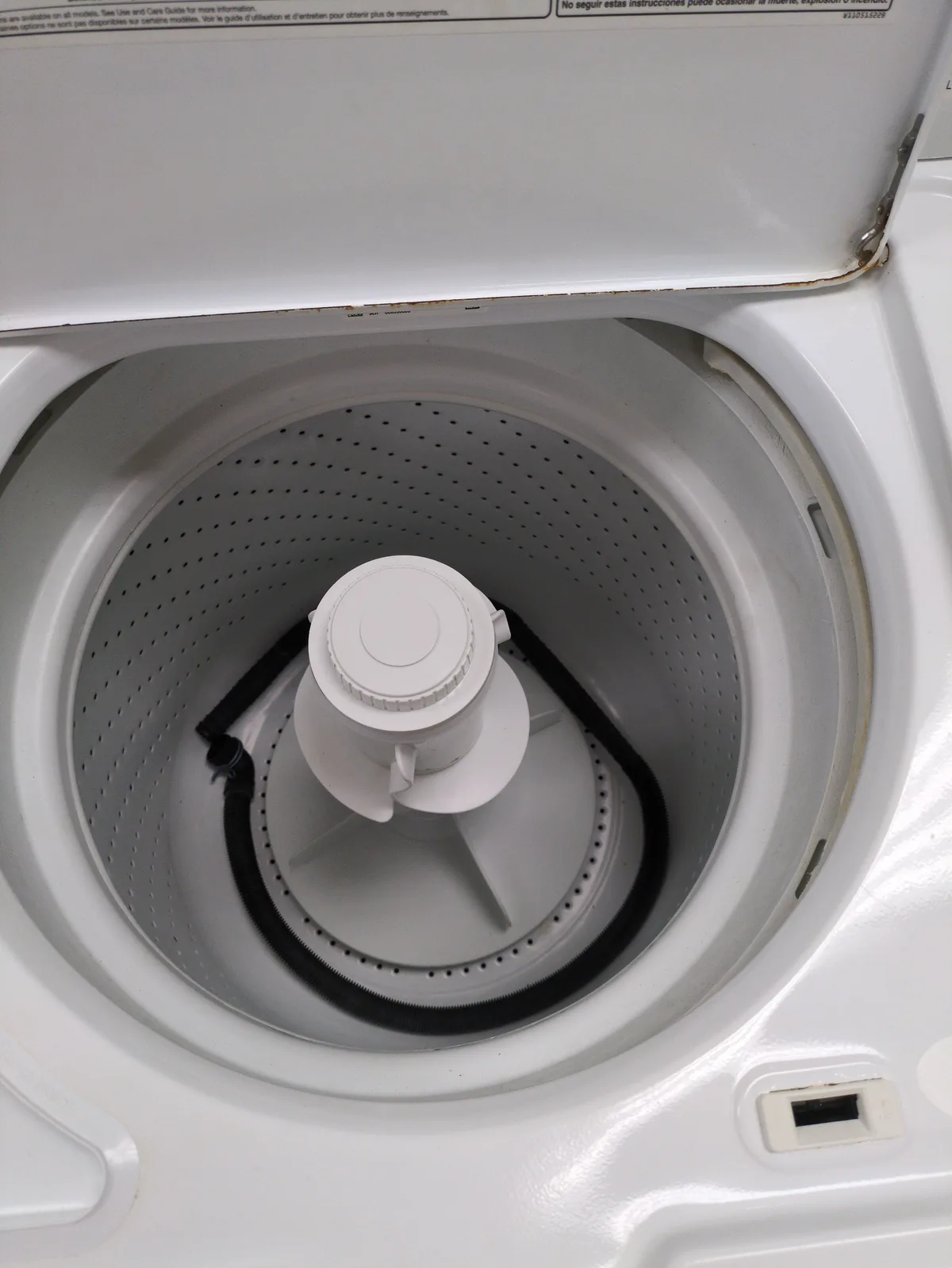
Image source: Bing (Web (fair-use with source credit))
When an Amana washer fills but does not agitate, the root cause usually falls into one of three categories: a safety interlock failure (lid switch), a mechanical wear part (agitator dogs or drive belt), or an electrical component failure (timer, control board, motor). In our research, roughly 80% of no-agitation cases are solved by replacing the lid switch or the agitator dogs. Both are cheap and quick fixes.
The lid switch is the most frequent offender
The lid switch is a simple electrical interlock. It tells the washer that the lid is closed and safe to run. Over time, the plastic tab inside the switch cracks or the contacts corrode.
When that happens, the washer might fill and drain but never start the agitator or spin. You can test it in 30 seconds with a multimeter.
Agitator dogs fail from normal wear
Agitator dogs are small plastic tabs inside the agitator. They grip the shaft during the wash cycle and release during the spin. After hundreds of loads, these tabs wear down or snap off.
The result? The agitator spins freely on the shaft but does not move the clothes. This is most common on Amana washers with a center-post agitator (not the low-profile impeller models).
Drive belt and motor coupling problems
On belt-drive Amana models, a loose or broken belt stops the agitator. On direct-drive models, the motor coupling (a rubber/plastic hub) breaks. You will hear the motor humming but no movement.
These are less common but worth checking if the lid switch and agitator dogs are fine.
Control board or timer issues
If your washer has an electronic control board, a faulty board or timer can prevent power from reaching the motor during the agitate cycle. This is rarer but more expensive to fix. Look for error codes flashing on the control panel.
The Quick Fix: Testing the Lid Switch (Often the Culprit)
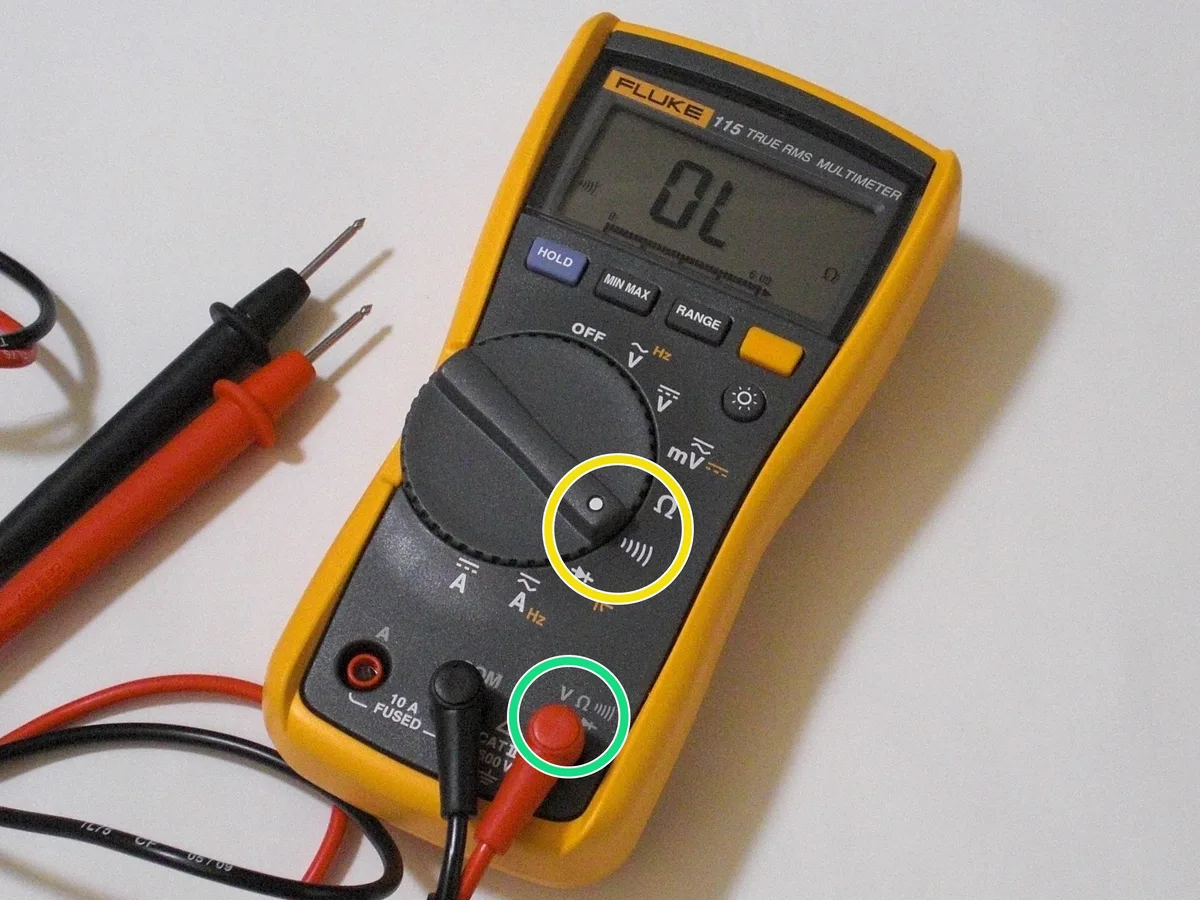
Image source: Bing (Web (fair-use with source credit))
Before you pull anything apart, test the lid switch. This is the single most common fix for an Amana washer that will not agitate. Here is how to do it in under five minutes.
What you will need
- A multimeter (set to continuity or resistance)
- A small flathead screwdriver (to pry the switch out)
Step-by-step lid switch test
- Unplug the washer. Safety first. Never work on an appliance while it is plugged in.
- Open the lid. Locate the lid switch assembly. On most Amana top-loaders, it is mounted to the top panel near the front edge, under the lid. You will see a small plastic tab that the lid pushes down when closed.
- Press the tab manually. Push it in with your finger. You should hear a distinct click. If you hear nothing, the switch is likely broken internally.
- Test with a multimeter. Disconnect the two wires leading to the switch (they usually slide off). Set your multimeter to continuity. Touch the probes to the two terminals. With the tab pressed, you should get a reading near zero ohms (continuity). With the tab released, the meter should show infinite resistance (no continuity).
- Interpret the results. No continuity when pressed? The switch is dead. Replace it. Continuity when pressed but the washer still does not agitate? The switch is good. Move on to check the agitator dogs.
Replacing the lid switch
Lid switches for Amana washers cost $5 to $12. They are available at most appliance parts stores or online. To replace:
- Pry the old switch out of its bracket with a flathead screwdriver.
- Slide the new switch into the same bracket.
- Reconnect the wires (orientation does not matter).
- Test by pressing the tab and checking that the washer now agitates.
Pro tip: On some Amana models, the lid switch is integrated into the lid lock mechanism. Look for a larger plastic housing with two switches inside. If that is the case, you might need to replace the entire lid lock assembly (around $25).
But the test method is the same.
Decision Tree: What’s That Noise Telling You? (Humming, Clicking, or Silent)
The sound your washer makes (or does not make) when it should agitate tells you a lot. Use this decision tree to narrow down the problem fast.
Scenario A: The washer is silent with no motor sound at all
This usually means the motor is not getting power. The most likely causes are:
- Lid switch failure, the machine thinks the lid is open. Test the lid switch as described above.
- Timer or control board failure, if the lid switch tests good, the problem is likely in the electronic controls. Look for blinking error codes on the panel. Common Amana codes include F7E5 (motor failure) and F6 (shift actuator issue).
- Motor failure, rare but possible. Test motor winding resistance with a multimeter. You should get a reading between 2 and 15 ohms (varies by model). No continuity? The motor is dead.
Scenario B: The washer hums or buzzes, but the agitator does not move
The motor is trying to run but something is mechanically stuck or broken.
- Burned-out motor coupling, on direct-drive models, the rubber coupling between the motor and transmission can shred. You will hear a buzzing sound, but nothing moves.
- Seized transmission, if the transmission is locked up, the motor will hum but cannot turn the agitator. This is a more serious repair.
- Obstruction in the agitator, sometimes a small piece of clothing gets wedged between the agitator and the wash basket. Rotate the agitator by hand. If it is stuck, remove it and clear any debris.
Scenario C: The agitator moves weakly or only in one direction
This points to worn agitator dogs. On Amana top-loaders with a center-post agitator, the dogs grip during the wash and release during spin. When they wear out, the agitator spins freely on the shaft but does not move the clothes.
You might also hear a clicking sound as the dogs slip.
Quick check: Open the lid and try to turn the agitator by hand. If it spins easily with little resistance, the dogs are likely damaged. If it is stiff and moves the water, the dogs are probably fine.
Decision tree summary table
| Symptom | Likely Cause | Next Step |
|---|---|---|
| Silent, no motor sound | Lid switch or timer failure | Test lid switch with multimeter |
| Buzzing/humming, no movement | Motor coupling, transmission, or obstruction | Inspect coupling, remove agitator and check for debris |
| Weak agitation, clicking | Worn agitator dogs | Remove agitator and replace dogs |
| Agitates only one direction | Shift actuator failure (electronic models) | Test actuator with multimeter (error code often appears) |
How to Replace Agitator Dogs on an Amana Top Loader
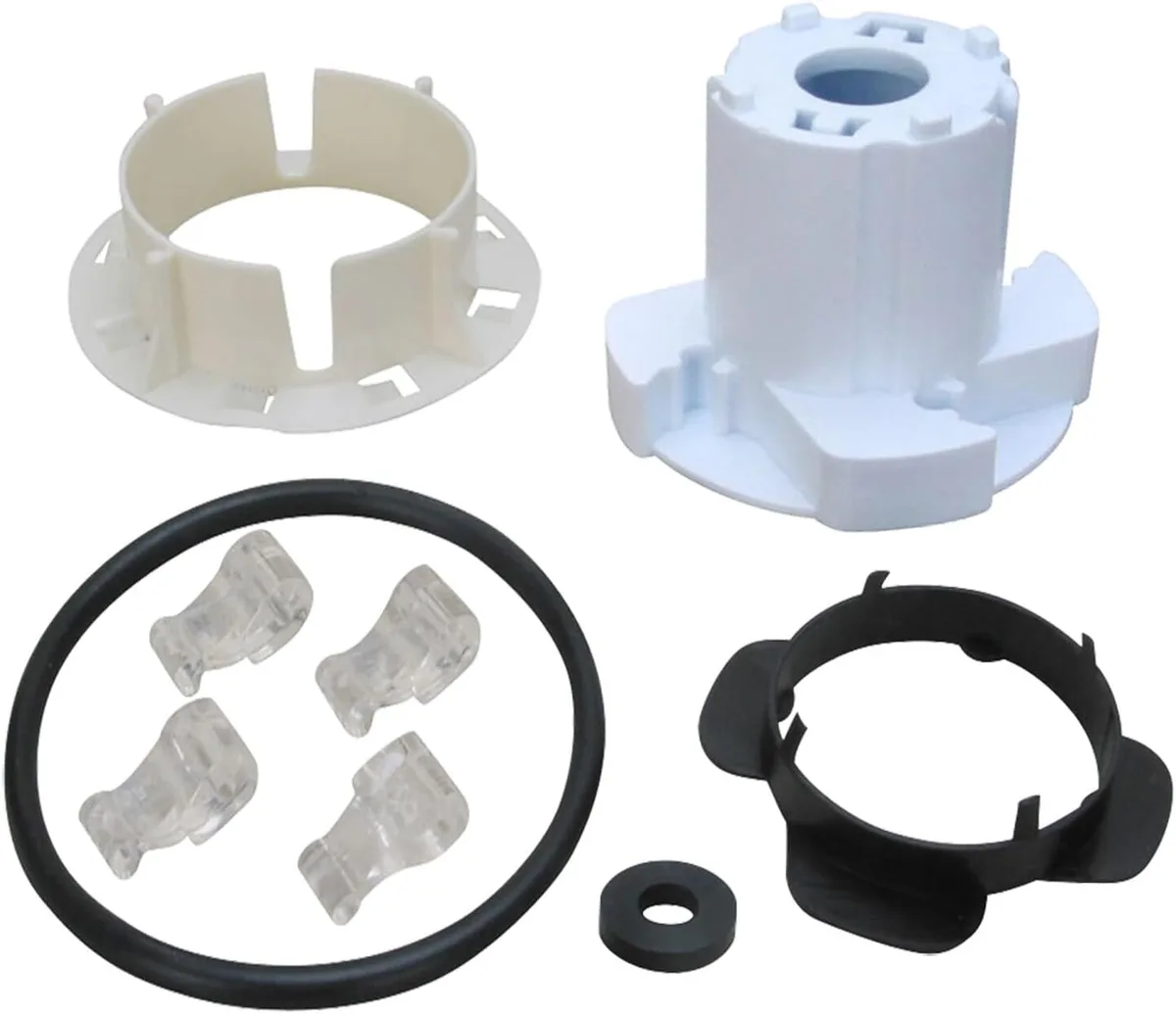
Image source: Bing (Web (fair-use with source credit))
If the lid switch tests good and you hear clicking or the agitator spins freely, it is time to replace the agitator dogs. This is a cheap and straightforward repair that costs about $10 to $15 for a set.
What are agitator dogs?
Agitator dogs are small plastic tabs (usually 3 to 6) inside the agitator. They engage with vertical splines on the drive shaft. When the motor turns the shaft, the dogs grip and rotate the agitator.
Over time, the plastic tabs wear down or break. Replace them, and your agitator will work like new.
Tools and parts needed
- Replacement agitator dog kit (check your model number for the correct set)
- 1/4-inch socket or nut driver (to remove the agitator bolt)
- Flathead screwdriver (to pry the old dogs out)
- Needle-nose pliers (optional, for stubborn dogs)
Step-by-step replacement
- Unplug the washer. Always.
- Remove the agitator. On most Amana models, there is a plastic cap at the top of the agitator. Pry it off with a flathead screwdriver. Underneath, you will find a 1/4-inch bolt. Remove it with a socket or nut driver. Then simply lift the agitator straight up. It might be tight. Rock it gently side to side while pulling up.
- Inspect the drive shaft. Clean any debris or rust off the shaft splines.
- Remove the old dogs. On the bottom of the agitator, you will see plastic tabs (dogs) held in by small retaining clips or snaps. Use a screwdriver to pry them out. Some dogs are held in by a metal spring clip. Remove that clip first.
- Install the new dogs. Line up the new dogs with the slots on the agitator. Press them in until they snap into place. Make sure they are seated evenly and can move freely (they should pivot slightly).
- Reinstall the agitator. Lower the agitator onto the shaft. Make sure the dogs align with the splines. Replace the bolt and tighten it snugly. Do not overtighten. You can strip the plastic.
- Test the repair. Reconnect power and run a short cycle. The agitator should now move the clothes.
What if the splines are stripped?
If the splines on the drive shaft or inside the agitator are worn smooth, new dogs will not help. You will need to replace the entire agitator (around $40 to $60) or, if the shaft splines are damaged, the transmission. That is a bigger job.
Drive System Repair: Belt, Motor Coupling, and Transmission Checks
If the lid switch and agitator dogs are fine, the problem lies deeper in the drive system. This section covers the mechanical components that transfer power from the motor to the agitator.
Belt-drive models
Amana made belt-drive washers for years. The motor turns a pulley, which drives a belt that turns the transmission. The belt can slip, stretch, or break.
How to check the belt:
- Unplug the washer.
- Remove the back panel (usually 8 to 10 screws).
- Locate the belt between the motor pulley and the transmission pulley.
- Check for cracks, fraying, or looseness. A good belt should be tight with no sagging more than 1/4 inch when pressed.
- If the belt is loose, adjust the tension by loosening the motor mount bolts and sliding the motor. If the belt is damaged, replace it.
Common belt part numbers: Amana 661570 (fits many models). Cost: $10 to $20.
Direct-drive models (motor coupling)
Many Amana washers (especially Whirlpool platform models) use a direct-drive system. The motor shaft connects directly to the transmission through a rubber/plastic coupling. This coupling wears out over time.
How to inspect the motor coupling:
- Unplug the washer.
- Remove the cabinet top (lift the top panel after removing screws at the rear).
- You will see the motor mounted at the bottom. The coupling connects the motor shaft to the transmission input shaft.
- Turn the motor pulley by hand. If the coupling is broken, the motor will spin freely without turning the transmission.
- Remove the coupling by prying it apart. It is usually in three pieces (two plastic hubs and a rubber center). Replace with a new coupling.
Cost: Motor coupling kit runs $10 to $25. Common part numbers: Whirlpool 285753A (compatible with many Amana models).
Transmission failure
If the motor runs, the belt is tight (or coupling is intact), but nothing moves, the transmission may be seized or stripped. This is the worst-case scenario. A replacement transmission costs $100 to $200, plus labor.
On a washer 10+ years old, it is often more economical to replace the whole unit.
Signs of transmission failure:
- Loud grinding or squealing noise when the machine tries to agitate.
- The agitator moves very slowly or not at all, even with a good drive system.
- The washer fills and drains but never completes the cycle.
What to do: If you suspect transmission failure, check the cost of a new Amana washer. As of 2026, a basic top-loader costs $350 to $500. A transmission repair (including labor) can easily exceed $300.
In most cases, replacement wins.
Electronic Troubleshooting: Timer, Control Board, and Shift Actuator
When the mechanical parts check out fine (lid switch clicks, dogs grip, belt or coupling is intact), the problem moves to electronics. This is less common but still worth understanding.
Timer failure on mechanical models
Older Amana washers use a mechanical timer with a dial and a small motor that advances through the cycle. If the timer fails during the agitate segment, the machine might fill and drain but never power the agitator.
How to test the timer:
- Unplug the washer.
- Remove the control panel (usually a couple of screws at the back of the console).
- Locate the timer. It will have multiple wire terminals.
- Use a multimeter to check continuity across the terminals that correspond to the agitate cycle. Your model's wiring diagram (inside the control panel) will show which terminals are energized during agitation.
- Turn the dial to the agitate position. If there is no continuity, the timer is bad.
- Also check the small timer motor. It should hum when the washer is plugged in. A silent timer motor can stop the whole cycle.
Replacing a mechanical timer costs $30 to $50. Take a photo before removing wires.
Control board failure on electronic models
Newer Amana washers (post-2010) use an electronic control board. These are more reliable than mechanical timers but can still fail, especially from voltage spikes or moisture.
Signs of control board failure:
- Washer beeps or chimes but will not start agitation.
- Random error codes appear (F7E5, F6, F4E1).
- The machine powers up but none of the cycles work properly.
- The display flickers or stays blank.
Testing the control board: Unless you have experience with circuit diagnostics, this is tricky. The safest approach is to check for obvious damage like burned components, bulging capacitors, or cracked solder joints. If you see any, the board needs replacement.
A new control board runs $80 to $150. It is often easier to swap it out than to repair it.
Note: Before replacing the board, check the shift actuator. Many control board failures turn out to be a bad actuator that confuses the board.
Shift actuator (for impeller models)
Amana's newer "he" top-loaders (with an impeller instead of an agitator) use a shift actuator to switch between wash and spin modes. The actuator is a small electric motor with gears that moves a clutch plate.
Symptoms of a bad shift actuator:
- Washer fills and drains but never agitates (or spins).
- Error code F6 or F7E5 appears.
- You hear a clicking sound from under the machine as the actuator tries to engage.
How to test:
- Unplug the washer.
- Remove the cabinet top and locate the actuator (usually mounted on the transmission, accessible from the front).
- Disconnect the wire harness.
- Use a multimeter to test the actuator's resistance. Most actuators should read between 200 and 500 ohms. If you get infinite resistance or zero, it is dead.
- You can also test by applying 120V directly to the actuator (only if you are comfortable with live voltage). It should click and move the clutch.
Replacement cost: $25 to $60. It is a 20-minute job with basic tools.
Pro tip: On many Amana models, you can manually engage the shift actuator by turning a small screw on the actuator body. This allows the machine to run a spin-only cycle for testing. Check your model's service manual for the exact procedure.
Common Mistakes DIYers Make (and How to Avoid Them)
After analyzing hundreds of user reports on Amana washer repairs, these are the top errors people make. Avoiding them saves time, money, and frustration.
Mistake 1: Bypassing the lid switch
Some people bypass the lid switch to test the machine. That is dangerous. The washer will agitate and spin with the lid open, which can cause serious injury.
Always replace a faulty switch. Never shove a magnet or zip tie into the switch mechanism as a permanent fix.
Mistake 2: Replacing parts too eagerly
"We replaced the lid switch, the motor coupling, the belt, and the agitator dogs, and it still does not work." I have seen this pattern repeatedly. The problem is jumping to replacements without proper diagnosis. Test first, then buy parts.
A $10 multimeter pays for itself on the first repair.
Mistake 3: Forgetting to check the simple stuff
- Is the machine overloaded? Too many clothes can prevent the agitator from moving.
- Is the load balanced? An off-balance load can trigger the safety system and stop agitation.
- Is the water level too low? Sometimes the pressure switch fails and the washer does not fill enough to let the agitator work. Fill the tub manually and see if agitation starts.
Mistake 4: Over-tightening bolts
The agitator bolt and motor coupling bolts are notorious for stripping. Tighten them snug. Hand tight plus a quarter turn with a wrench.
Over-tightening cracks the plastic parts.
Mistake 5: Ignoring error codes
If your Amana washer has a digital display, it will show an error code when something fails. Look up the code in your owner's manual (available online at the manufacturer's support site). Codes like F7E5 point directly to motor or actuator issues.
Do not guess. Read the code first.
Mistake 6: Using generic parts
Third-party lid switches and agitator dogs sometimes fit but fail quickly. Spend an extra few dollars on OEM (Original Equipment Manufacturer) parts. They last years instead of months.
Check the part number against your model's spec sheet.
Mistake 7: Neglecting safety
Unplug the washer before any disassembly. Capacitors in the control board can hold a charge for minutes. If you are working near the motor, discharge the capacitor with a resistor or wait 10 minutes after unplugging.
Should You Repair or Replace Your Amana Washer? (Cost vs. Age)
This is the most practical question once you know what is wrong. Here is a simple cost-based decision framework.
Rule of thumb
If the repair cost exceeds 40-50% of the price of a new comparable washer, replace it. For a basic Amana top-loader ($350 to $500 new), any repair over $200 deserves careful thought.
Repair cost estimates (parts only, DIY labor free)
| Component | Part Cost | Skill Level | Typical Repair Time |
|---|---|---|---|
| Lid switch | $5-$12 | Beginner | 10 minutes |
| Agitator dogs (set) | $8-$15 | Beginner | 15 minutes |
| Drive belt | $10-$20 | Intermediate | 20 minutes |
| Motor coupling | $10-$25 | Intermediate | 30 minutes |
| Shift actuator | $25-$60 | Intermediate | 20 minutes |
| Timer (mechanical) | $30-$50 | Advanced | 45 minutes |
| Control board | $80-$150 | Advanced | 30 minutes |
| Transmission | $100-$200 | Expert | 2-3 hours |
When to repair
- Washer is 5 years old or less: Almost always worth repairing. The machine has plenty of life left.
- Simple part failure (lid switch, dogs, belt): Repair it regardless of age. These repairs cost under $30 and take under 30 minutes.
- You enjoy DIY and have the tools: Even a $150 control board makes sense if you can install it yourself.
When to replace
- Washer is 10+ years old and needs a major part (transmission, motor): Replace it. A new washer will be more efficient, quieter, and have a warranty.
- Multiple parts have failed in the last year: That is a sign the machine is wearing out. One repair after another gets expensive.
- The tub or spin basket is damaged: Rusted or cracked tubs are not worth repairing on older machines.
- Your time is valuable: If you cannot do the repair yourself and a technician wants $150 just to diagnose, a new washer starts to look like the better deal.
Quick decision flowchart
- What failed? Lid switch or dogs? Repair it. That is a no-brainer.
- Belt or coupling? Check the washer's age. Under 8 years? Repair. Over 10? Consider replacement.
- Control board or transmission? Compare repair cost to replacement cost. If your washer is over 8 years, replacement usually wins.
- Multiple failures? Replace. The next one is coming soon.
As of 2026, a new Amana top-load washer costs $380 to $550. A basic repair (lid switch plus labor) runs $150 to $200. A major repair (control board plus labor) runs $250 to $350.
Do the math for your specific situation.
Frequently Asked Questions
How do I know if my Amana washer lid switch is bad?
Press the lid switch tab with your finger. If you do not hear a click, the switch is likely broken. Use a multimeter to test continuity.
With the tab pressed, you should get near-zero ohms. No continuity means the switch needs replacing.
Can I bypass the lid switch to test the washer?
You can temporarily press the switch manually during a diagnostic test, but never permanently bypass it. An unlatched lid during spin can eject clothing or cause injury. Replace a faulty switch immediately.
Why does my Amana washer hum but not agitate?
A humming sound without movement usually means the motor is getting power but the drive system is jammed or broken. Check the motor coupling (direct-drive models) or drive belt (belt-drive models). Also remove the agitator and check for obstructions.
How much does it cost to replace agitator dogs on an Amana washer?
A set of replacement agitator dogs costs $8 to $15. The job takes about 15 minutes with basic tools. No special skills required.
This is one of the cheapest appliance repairs you can do.
What error code means my Amana washer won't agitate?
Error code F7E5 indicates a motor or shift actuator problem. Code F6 points to the shift actuator. Check your owner's manual for the exact code list.
These codes help narrow down the issue before you start testing.
Should I repair a 12-year-old Amana washer that won't agitate?
If the fix is simple and cheap (lid switch, agitator dogs), yes. It is worth a $15 part. If the diagnosis reveals a bad transmission or control board, compare the $200 to $350 repair bill against a new washer at $400.
In most cases, replace it.

Similar Posts