5 Best Underwater Drone (2027): Top Picks For Clear Footage
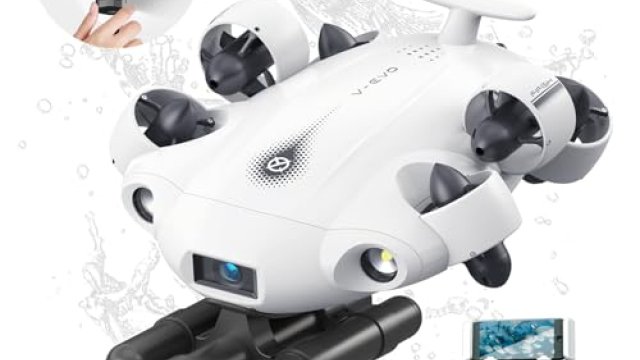
The best underwater drone is the FIFISH V-EVO, thanks to its 4K video, robotic arm, and smooth 330-foot dive range.
A fishing trip, dock check, or reef dive can change fast when you cannot see below the surface. An underwater drone gives you a clear view without forcing you into cold, dark, or unsafe water. I tested the key features that matter most, including camera quality, depth, control, battery life, stability, and ease of use. This guide compares six strong options for 2026, from compact travel drones to serious inspection tools. My goal is simple: help you find the Best Underwater Drone for your real needs and budget.

【2025 New】FIFISH V-EVO 4K60FPS Underwater…
4K 60FPS High Frame-rate Camera: Create epic footage and wonderful underwater moments with V-EVO’s upgraded camera system, achieving professional-class shots with ease and enhanced smoothness. Removal SD Card: The new…
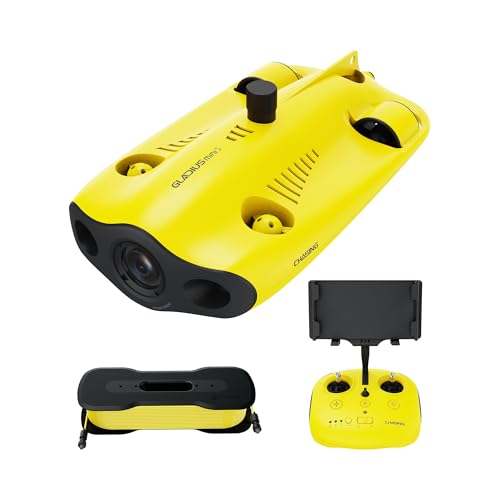
Underwater Drone, Mini S submarine…
【More clearer And More Stable】GLADIUS MINI S captures epic moments with 4K HD video and 12 MP photos. It also comes with a 1/2.3 SONY CMOS, anti-video-shake feature, so you…

Chasing Gladius MINI S Upgraded…
【4K UHD + EIS Camera】The gladius MINI S underwater drone provides 4K and 1080P videos and 12 megapixel photos to easily capture underwater details and take you to explore the…
FIFISH V-EVO 4K Underwater Drone
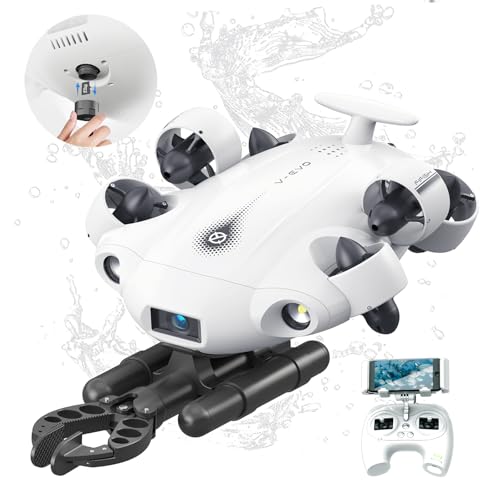
The FIFISH V-EVO is built for people who want more than a basic underwater camera. Its 4K video system supports up to 60 frames per second, which helps capture smooth motion around boats, reefs, docks, and fish. The camera also uses electronic image stabilization to reduce small shakes as the drone moves. A removable SD card makes it easier to save and transfer footage without relying only on a phone or cloud service.
What makes this model stand out is the included robotic arm. I see it as a useful tool for light recovery work, line checks, and close inspection, rather than a heavy-duty lifting device. Its 360-degree movement gives the pilot more control in tight spots, while depth hold helps the drone stay at a chosen level. The listed 330-foot dive depth suits most recreational diving, fishing, and boat inspection tasks.
Pros:
- Sharp 4K video with a smooth 60fps option
- Removable SD card for simple file transfer
- Robotic arm adds practical inspection and recovery uses
- Omnidirectional movement helps in tight underwater areas
- Depth hold makes steady viewing easier
- 330-foot depth rating fits many sport and marine tasks
- Strong choice for serious hobby users and creators
Cons:
- Costs more than small entry-level underwater drones
- The robotic arm has limits with heavy or firmly stuck objects
- The tether can need careful handling around rocks, weeds, and propellers
Mini S 4K Underwater Drone

The Mini S is a compact ROV for users who want useful data without carrying a large case. Its 4K camera and EIS stabilization are well suited to checking boat hulls, viewing fish, and exploring clear water. The direct-connect controller gives the system a more focused setup than a phone-only control method. I also like the real-time depth and temperature readouts because they add context to what the camera sees.
This drone reaches a listed depth of 330 feet, which is impressive for a portable model. Its small design should make transport easier for anglers, divers, and boat owners who have limited storage. The camera will perform best in clear water with enough light, as all small underwater cameras face the same limits in dark or cloudy water. For a first serious ROV, the Mini S offers a useful balance of price, data, and control.
Pros:
- Compact design is easy to carry and store
- 4K camera records detailed underwater footage
- EIS helps reduce minor camera shake
- Live depth and temperature data improve underwater awareness
- Direct-connect remote controller offers dependable operation
- 330-foot listed depth supports more than shallow-water use
- Good fit for fishing, boat checks, and casual exploration
Cons:
- Small camera sensors may struggle in murky water
- No robotic arm for picking up or moving objects
- Wired operation requires planning around the tether
CHASING GLADIUS MINI S 4K Drone
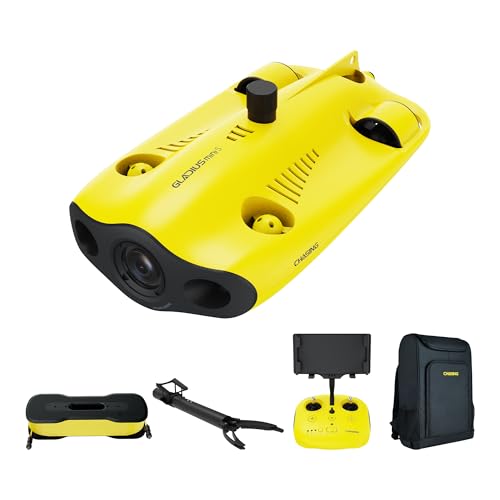
The CHASING GLADIUS MINI S is a well-rounded underwater drone for users who want a 4K camera and flexible control. Its EIS anti-shake system helps keep footage more watchable when the drone moves over a reef or along a hull. The system supports both remote control and app control, giving you two ways to operate it. That choice is helpful when one person wants a traditional controller and another prefers a phone or tablet.
Another advantage is its support for multiple mounts. Mount compatibility can expand the drone’s use beyond video, depending on the accessory and the task. I would consider this model for marine research at a hobby level, underwater photography, fishing, and regular boat inspections. It is not the smallest drone here, but its broad feature set makes it one of the safest all-around picks for new pilots.
Pros:
- 4K video provides strong detail for inspection and viewing
- EIS reduces distracting movement in recorded footage
- Remote and app control offer setup flexibility
- Multiple mount support allows future expansion
- Good balance of camera quality and ease of use
- Useful for recreational diving and boat maintenance
- Established ROV design supports a wide range of tasks
Cons:
- Extra mounts and accessories can increase the total cost
- App control depends on a compatible mobile device
- Users may need practice before making smooth underwater turns
CHASING Dory 1080p Underwater Drone

The CHASING Dory is a palm-sized underwater drone made for simple exploration. Its 1080p camera provides Full HD video for real-time viewing, which is enough for checking fish, looking under a boat, or showing children what lives below the surface. The small body is easier to pack than a professional ROV. App control also keeps the learning curve short for people who have never used an underwater drone.
I would choose Dory for calm, clear water and light recreational use. It is not designed to compete with the 4K inspection models in this guide, but that is not its main purpose. Its compact form makes it less intimidating and easier to bring on a family trip, kayak outing, or small boat ride. If you want the Best Underwater Drone for beginners, simple controls and low carrying demands may matter more than top resolution.
Pros:
- Palm-sized body is easy to pack for travel
- 1080p video supports clear real-time viewing
- App control is approachable for first-time users
- Good option for family outings and casual exploration
- Lower complexity makes setup less stressful
- Useful for viewing fish and checking shallow boat areas
Cons:
- 1080p footage has less detail than 4K video
- Compact size may be less stable in strong current
- It lacks a robotic arm and advanced inspection tools
FIFISH V6 Expert M100A ROV

The FIFISH V6 Expert M100A is aimed at advanced users who need a work-focused underwater robot. It combines a 4K camera with a robotic arm, so it can inspect and interact with objects below the surface. The included industrial case is useful for transport and storage, especially for teams that move gear between boats and work sites. Its Q-Interface also supports a more expandable setup than a basic recreational drone.
The listed six-hour working time is a major advantage for long jobs, though actual use can vary with movement, temperature, payload, and battery condition. AI Vision Lock can help keep the camera aimed at a selected subject, which reduces the need for constant manual correction. The 330-foot dive rating covers many inspection jobs, including hull checks, dock work, and underwater surveying. I see this as a strong Best Underwater Drone choice for professionals who need endurance and a useful manipulator.
Pros:
- 4K camera supports detailed inspection footage
- Robotic arm adds hands-on work capability
- AI Vision Lock can help maintain subject focus
- Industrial case protects gear during transport
- Listed six-hour working time suits extended jobs
- Q-Interface supports a more flexible professional system
- 330-foot depth rating covers many commercial tasks
Cons:
- Professional features make it expensive for casual users
- Larger case and accessories reduce portability
- Arm work requires training and careful battery planning
FIFISH V6 Expert M200A 660-Foot ROV
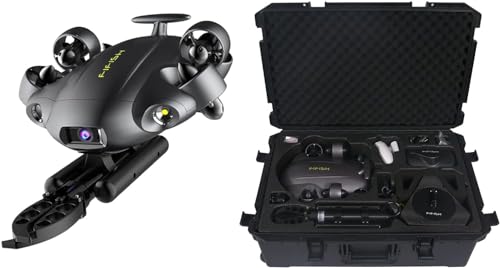
The FIFISH V6 Expert M200A is the deep-diving model in this comparison. It offers a listed 660-foot dive depth, which gives it more room for deep inspection than the 330-foot systems above. Its 4K camera is designed for detailed viewing, while AI Vision Lock can make it easier to keep a subject centered. The robotic arm adds value for users who need to interact with underwater equipment or objects.
This is a serious ROV, not a casual pool toy. The industrial case and long listed six-hour working time make sense for survey crews, commercial divers, marine technicians, and research teams. I would still check local rules, water conditions, tether limits, and the exact arm rating before starting a job. For deep work, the M200A may be the Best Underwater Drone because depth and endurance can matter more than a small body.
Pros:
- 660-foot listed dive depth supports deeper inspections
- 4K camera records detailed underwater views
- Robotic arm supports light recovery and equipment work
- AI Vision Lock helps reduce camera drift from the subject
- Listed six-hour working time supports long sessions
- Industrial case helps protect a high-value system
- Strong option for commercial and research applications
Cons:
- High purchase cost limits its appeal to casual users
- Large equipment package needs more storage space
- Deep operation demands careful planning and trained handling
How I Compare the Best Underwater Drone Options
Buying an underwater drone is different from buying an aerial drone. A flying drone can return over land when its signal drops. An underwater ROV stays connected through a tether, and that tether affects range, handling, and safety. I look first at the camera, depth rating, control system, and the quality of the support equipment.
I also separate real work from marketing claims. A 4K label does not guarantee sharp video in dark water. A long battery claim may describe standby time instead of constant movement. Before buying, I check the manual, the stated operating depth, the included cable, and the maker’s care instructions. These details often matter more than a flashy feature list.
Camera Quality and Light
A good camera is the heart of an underwater drone. The FIFISH V-EVO, GLADIUS MINI S, M100A, and M200A offer 4K capture, while CHASING Dory uses 1080p. 4K can show more detail, but water clarity and light still control the final result. In cloudy water, even an expensive camera may produce soft, blue, or noisy footage.
Electronic image stabilization helps reduce small shakes. It cannot remove the effect of strong current, a fast turn, or a tangled tether. I prefer a drone that lets me move slowly and hold depth with little input. If you plan to make videos, also check frame rates, file format, storage method, and whether the camera can record while sending a live view.
Depth Rating
Depth ratings tell you how far a drone may operate under stated conditions. They do not mean you should test the limit on every dive. Pressure rises with depth, and seals, connectors, and the tether all need to work as designed. A drone rated for 330 feet is a strong fit for many recreational uses, while the M200A’s listed 660 feet targets deeper work.
I recommend leaving a safety margin below the maximum rating. Check the manual before saltwater use, and rinse the vehicle with fresh water after every marine session. Salt can damage connectors and moving parts over time. Dry the system fully before storage, and never ignore a cracked housing or worn cable.
Control and Connection
Underwater drones usually use a tether because radio signals do not travel well through water. The cable carries control commands and live video between the vehicle and the controller. A direct controller can feel more stable and precise, while app control may be easier for beginners. The best setup depends on whether you value fast learning or detailed manual control.
Keep the tether away from propellers, rocks, weeds, and boat hardware. I suggest using a slow, planned route instead of making sharp turns around obstacles. A second person can manage the cable while the pilot watches the screen. This simple teamwork can prevent many common underwater drone problems.
Depth Hold and Vision Lock
Depth hold keeps the drone near a selected depth. This helps when you inspect a hull, record a steady shot, or watch fish without constantly moving the controls. It does not stop the vehicle from drifting in a strong current. The pilot still needs to watch the position and tether.
AI Vision Lock serves a similar purpose for the camera. It can help keep a selected subject in view, but it is not a replacement for good piloting. Objects can look alike in low light, and the system may lose its target. I treat these tools as helpful assistants, not as fully automatic navigation systems.
Robotic Arms and Mounts
A robotic arm can turn an underwater drone into a light-duty work tool. It may help move a small object, touch a surface, hold a line, or inspect a part from a closer angle. The arm is not a crane. Before attempting recovery, confirm the rated load and consider how the object may affect balance and power use.
Mount support also adds value. A compatible mount may hold a light, sensor, or another approved accessory. Always use parts made for the drone. An unapproved accessory can block the camera, overload the motors, or affect the seal and balance.
Battery and Session Planning
Battery life depends on speed, depth, water movement, camera use, lights, temperature, and accessory load. The six-hour figures listed for the Expert models should be read as product claims, not a promise for every mission. A pilot who moves constantly will use more power than one who hovers and records short clips.
I plan every trip around a return reserve. I also charge batteries before leaving, carry safe storage gear, and inspect each connector. Never charge a damaged battery or leave charging packs unattended. A short checklist can protect both the equipment and the day’s work.
Saltwater Care
Saltwater is harsh on metal, seals, and electrical contacts. After a marine dive, rinse the drone and exposed accessories with clean fresh water as directed by the manufacturer. Remove grit from moving areas without forcing water into parts that should stay closed. Then dry the system before placing it in the case.
Pay special attention to the tether and connector ends. Do not bend the cable into a tight loop or pull the drone by the cable. Store it in a cool, dry area away from direct sun. These habits can extend the useful life of an expensive underwater drone.
Safety and Responsible Use
An underwater drone should help you avoid risk, not encourage careless diving. Do not use it near swimmers, active propellers, restricted areas, or protected wildlife. Keep a safe distance from coral, nests, and animals. Do not use a robotic arm to disturb marine life.
Local laws may apply to fishing, salvage, ports, waterways, and protected sites. Check the rules before you launch. For commercial work, confirm whether the operator needs permits, insurance, or special training. Good equipment does not remove the need for sound judgment.
Who Should Buy a Compact Model?
A compact model makes sense for a casual angler, family, kayak owner, or boat owner. The CHASING Dory is the simplest option in this group, while the Mini S adds 4K video and underwater data. Small drones are easier to carry and often faster to set up. They also have fewer tools for heavy work.
If you mainly want to see what is below the surface, compact size can be a real advantage. You may use the drone more often because it does not feel like a major production. That practical value matters. The Best Underwater Drone is not always the largest or most costly model; it is the one you will use with confidence.
Who Should Buy a Professional ROV?
Professional models suit marine technicians, survey crews, serious researchers, commercial divers, and advanced creators. The FIFISH V6 Expert M100A adds an arm, a case, long working time, and a work-focused interface. The M200A goes further with its listed 660-foot depth. These features can save time when a human diver would face cold water, poor visibility, or added risk.
Professional buyers should also budget for training, spare parts, lights, transport, and maintenance. A deep rating alone does not make a drone ready for every job. Review the operating manual and match the system to the task. If the job involves lifting, cutting, or inspection standards, ask the maker for exact accessory and load information.
My Recommendation
For most advanced hobby users, I recommend the FIFISH V-EVO. It offers the strongest mix of 4K60 video, useful movement, depth hold, a removable SD card, and a robotic arm. It can support underwater filming, boat checks, fishing, and light recovery without reaching the cost or size of the largest professional system.
The Mini S is my value pick for buyers who want a portable 4K ROV with depth and temperature data. It is a smart choice for fishing and boat owners who want useful information but do not need an arm. The GLADIUS MINI S is better for users who want app control, a traditional controller, and support for extra mounts.
I recommend CHASING Dory for families, beginners, and travelers. Its 1080p camera is less detailed, but its small shape makes underwater exploration feel simple. The M100A is a better choice for long professional jobs at depths up to its listed 330 feet. For deep commercial or research work, the M200A deserves attention because its listed 660-foot depth gives it a much larger operating range.
| Best for | Why |
|---|---|
| Best overall underwater drone | FIFISH V-EVO combines 4K60 video, depth hold, movement control, and a robotic arm. |
| Best for beginners and travel | CHASING Dory has a small body, simple app control, and useful Full HD viewing. |
| Best for deep professional work | FIFISH V6 Expert M200A offers a listed 660-foot depth, 4K video, and a robotic arm. |
Prices and stock can change, especially for newer 2026 listings. I suggest checking the current Amazon page for the exact package, cable length, battery count, warranty, and included accessories. Also confirm that the product title and manual match the work you plan to do. A careful match is better than paying for features that will stay unused.
FAQs Of Best Underwater Drone
What is the Best Underwater Drone for most people?
The FIFISH V-EVO is the strongest overall choice for many buyers. It combines 4K60 video, depth hold, flexible movement, a removable SD card, and a robotic arm. Buyers who only need basic viewing may save money with CHASING Dory.
How deep can an underwater drone go?
Depth depends on the model. Several drones in this guide list a 330-foot dive rating, while the FIFISH V6 Expert M200A lists 660 feet. Always follow the manual and leave a safety margin below the maximum depth.
Do underwater drones work without a tether?
Most consumer underwater drones use a tether because wireless signals do not travel well through water. The tether carries control and video data. It can also create drag, so pilots must keep it clear of rocks, weeds, and propellers.
Can an underwater drone pick up objects?
Models with robotic arms may handle light objects within their rated limits. An arm is not a replacement for a lifting tool or diver. Check the exact load rating, water conditions, and balance impact before attempting recovery.
Is 4K necessary for an underwater drone?
4K helps when you want detailed video or still images. It is not essential for basic fish viewing or a quick hull check. Water clarity, light, stabilization, and careful movement often matter just as much as resolution.
Final Verdict: Which Should You Buy?
The FIFISH V-EVO is my top pick and the Best Underwater Drone for most serious users. It offers a rare mix of 4K60 video, steady control, depth hold, and a robotic arm.
Choose CHASING Dory for simple trips, Mini S for value, or M200A for deep work. Check current specs, care rules, and availability before ordering your underwater drone.

Similar Posts