Best AI Transcription Devices: Top Picks For Clear Notes
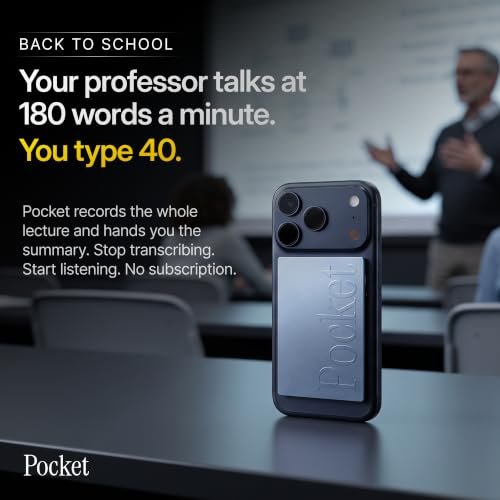
The best AI transcription devices turn spoken words into clear notes, summaries, and searchable records with little effort.
You may leave a meeting with a full memory but only three useful notes. A student may record a lecture and still face hours of typing. A reporter, doctor, creator, or busy parent can face the same problem. The best AI transcription devices help by capturing speech, converting it into text, and often shaping it into useful notes. I reviewed these compact recorders for ease of use, likely sound quality, AI features, storage, portability, and everyday value. They are not magic, and results still depend on clear audio, but the right device can feel like a second pair of hands.

Pocket AI Voice Recorder, Auto…
YOUR AI PERSONAL ASSISTANT FOR EVERYDAY PRODUCTIVITY: More than a voice recorder, Pocket works as your AI personal assistant to capture, transcribe, and summarize meetings, calls, and ideas instantly. Core…

Pocket AI Voice Recorder, Auto…
YOUR AI PERSONAL ASSISTANT FOR EVERYDAY PRODUCTIVITY: More than a voice recorder, Pocket works as your AI personal assistant to capture, transcribe, and summarize meetings, calls, and ideas instantly. Core…

Comulytic Note Pro AI Voice…
| Comulytic AI Voice Recorder Notes Assistant | — Lifetime Free Starter Plan Comulytic Note Pro is a smart voice recorder, AI note taker, and AI recorder built for professionals,…
Pocket AI Voice Recorder, Space Grey

The Pocket AI Voice Recorder in Space Grey is made for people who want a small way to capture talks, ideas, and meetings. Its main appeal is the mix of voice recording, automatic transcription, and AI note support in one pocket-sized product. The neutral gray finish looks simple and professional, so it fits well in a work bag or on a desk. For many buyers, that clean design matters because a recorder should stay ready without drawing much attention.
This model may suit users who prefer a focused tool instead of a phone app. A dedicated recorder can help reduce phone alerts and keep the recording task separate from calls and messages. AI transcription is most useful after the recording, when you need a quick text record or a short review of the main points. As with all transcription tools, clear speech and a quiet room will help the system produce better results.
Pros:
- Compact design is easy to carry every day
- Automatic transcription can reduce typing time
- AI note features help organize spoken ideas
- Space Grey finish looks subtle in work settings
- Useful for meetings, interviews, classes, and personal notes
- Dedicated hardware keeps recording separate from phone distractions
Cons:
- Transcription accuracy may drop with noise or overlapping voices
- Users should review names, numbers, and technical terms
- AI functions may depend on an app or online service
My Recommendation
I recommend this Space Grey model for office users, students, freelancers, and anyone who wants a discreet recorder for daily work. It is especially helpful when you often think, “I will remember that,” and then lose the detail later. The automatic text record gives you a starting point for tasks, quotes, and follow-up notes. It also offers a practical path into the world of the Best AI Transcription Devices without requiring a large desktop setup.
Choose it if you value a clean look and an easy carry size. It may not replace a high-end microphone for studio work, but it can be a strong everyday assistant for spoken notes. Before buying, check the current Amazon listing for app support, service terms, included accessories, and any limits on AI use. Those details can affect long-term value as much as the recorder itself.
Pocket AI Voice Recorder, Sierra Blue
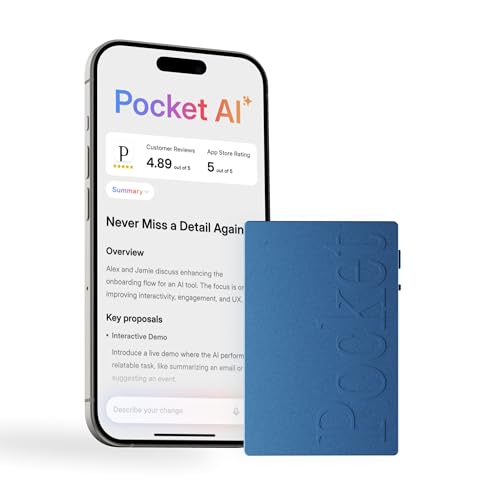
The Sierra Blue version brings the same pocket recorder idea in a brighter finish. It is a good match for users who want their device to stand out in a crowded bag or on a busy desk. The core use is simple: record speech, turn it into text, and use AI tools to make the content easier to scan. That flow can save time after a meeting when your memory is full but your notes are thin.
I see this model as a friendly option for students, creators, coaches, and home users. The color gives it a less formal feel, while the transcription function can still support serious work. It may help when you record quick voice ideas, interviews, class sessions, or reminders that would be slow to type. Good microphone placement still matters, so place the device near the main speaker when possible and avoid covering its microphone.
Pros:
- Bright Sierra Blue finish is easy to spot
- Small form makes it simple to carry and store
- AI transcription can turn long speech into readable text
- Voice notes may be easier than typing on a phone
- Useful for students, content makers, and busy families
- Can help create a searchable record of spoken ideas
Cons:
- Color choice may not suit formal business users
- AI text can need edits for accents and background sound
- Buyers should confirm storage, battery, and subscription details before purchase
My Recommendation
The Sierra Blue model is best for buyers who want a personal recorder with a more lively style. I would consider it for students who record study material, creators who save ideas on the move, and families who want a simple voice note tool. It belongs on a Best AI Transcription Devices shortlist because it combines a friendly design with a useful speech-to-text workflow. The device can help turn scattered thoughts into notes that you can review later.
This is a good pick when visibility and portability matter. The blue shell may make it easier to find than a dark gadget in a full backpack. Still, I would not buy any AI recorder based on color alone. Review the current listing for exact functions, compatible software, privacy terms, and any paid transcription plan before placing an order.
Comulytic Note Pro AI Voice Recorder

The Comulytic Note Pro is aimed at people who want a recorder built around meetings and note taking. Its product name places the focus on AI voice recording, meeting capture, and organized notes. That makes it worth a close look for managers, consultants, students, and remote workers who spend much of the day listening. Instead of trying to write every word, you can focus on the speaker and return to the transcript later.
A meeting recorder is only useful if it fits into your routine. I would keep this type of device near a laptop, notebook, or conference table so it is ready before a call starts. Afterward, an AI summary can help you find decisions, tasks, and key ideas faster than replaying a full recording. Always check the transcript against the original audio before relying on it for contracts, medical details, financial figures, or other high-risk information.
Pros:
- Meeting-focused design fits work and study routines
- AI note tools can make long discussions easier to review
- Recording preserves details that handwritten notes may miss
- Helpful for remote meetings, interviews, and group talks
- Can reduce the need to pause and type during a conversation
- May help users track ideas and follow-up tasks more clearly
Cons:
- Group conversations can challenge any automatic transcription system
- Users may need to label speakers or correct the final text
- Privacy and consent should be considered before recording others
My Recommendation
I recommend the Comulytic Note Pro for professionals who spend more time in meetings than in quiet solo work. It is also a sensible choice for researchers, interviewers, team leads, and students who need a record of complex discussions. Among the Best AI Transcription Devices, this model stands out by speaking directly to the meeting and note workflow. It can act like a quiet clerk who remembers the discussion while you take part in it.
Pick it when the value of saved time matters more than a simple color or basic recorder function. Before using it at work, review your company rules and local recording laws. In many places, people must know about or agree to a recording. The best value comes when you use the transcript as a helpful draft, not as an unquestioned legal or factual record.
Pocket AI Voice Recorder, Baby Pink
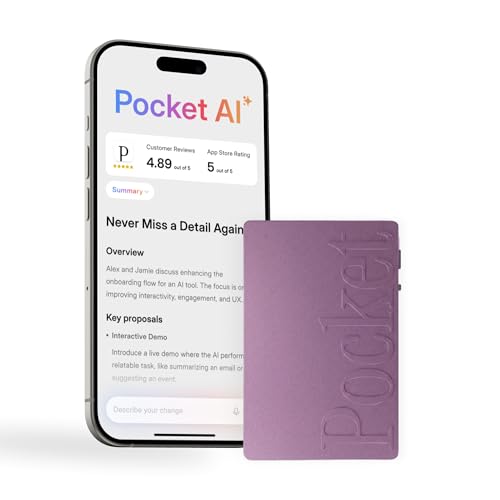
The Baby Pink Pocket AI Voice Recorder offers a compact voice tool with a softer, more personal look. It can record speech, support automatic transcription, and help shape spoken material into notes. This design may appeal to users who want technology that feels less cold and more personal. The small form also makes it useful for quick reminders, creative ideas, study notes, and casual interviews.
I would place this model on a desk, carry it in a small pouch, or keep it beside a planner. A voice recorder can be faster than unlocking a phone, opening an app, and finding the right note page. Once the audio becomes text, you can edit it into a list, draft, or short summary. Keep the device close to the speaker, since distance and room echo can affect the words that the AI hears.
Pros:
- Baby Pink finish gives the device a distinct personal style
- Pocket size supports quick notes away from a desk
- Automatic transcription can speed up writing tasks
- AI note support may help sort ideas into useful text
- Good fit for students, creators, parents, and casual users
- Easy concept for people who find complex apps frustrating
Cons:
- Light color may show marks more easily than a dark finish
- Speech recognition may need edits in busy rooms
- Buyers should verify the included cable, app, and service terms
My Recommendation
The Baby Pink model is best for users who want a small AI recorder that feels approachable. I can see it working well for students, writers, artists, parents, and anyone who captures ideas through speech. It earns a place among the Best AI Transcription Devices for buyers who want simple daily use without a serious-looking business design. The key benefit is not the color; it is the quick path from spoken thought to usable text.
Choose it if you want a recorder that is easy to identify and pleasant to carry. It may be less suitable for buyers who need a discreet black or gray device in formal settings. Check the live Amazon page for current availability, exact hardware details, and any limits tied to AI processing. Those terms can change, so I always review them before buying.
AI Voice Recorder With Transcription, 64GB

The AI Voice Recorder with Transcription and 64GB storage is the most storage-focused option in this group. A larger storage capacity can help users who record often and do not want to clear files after every session. It may fit long classes, interviews, work meetings, research talks, and personal archives. The built-in transcription focus also gives the recorder a clear purpose beyond ordinary audio capture.
Storage is useful, but it should not be the only buying factor. I would also check battery life, transfer methods, file formats, microphone performance, and the cost of any AI service. A large capacity means little if the battery ends halfway through a long event or if moving files feels hard. Still, for frequent users, 64GB can provide welcome breathing room and fewer file-management chores.
Pros:
- 64GB capacity can hold many recordings
- Transcription support helps turn audio into working notes
- Useful for frequent recording and long-term file storage
- Suitable for lectures, interviews, meetings, and research
- Less need to delete older files in a hurry
- Combines traditional recording with a modern AI workflow
Cons:
- More storage does not guarantee better microphone quality
- Large files may take longer to transfer or process
- Transcription accuracy still depends on sound, speech, and software
My Recommendation
I recommend this 64GB model for heavy users who record several times each week. It may be a strong fit for students with many lectures, journalists with frequent interviews, researchers with long sessions, and professionals who keep detailed records. Storage gives it a useful edge in a Best AI Transcription Devices comparison because frequent users need room as much as they need smart text tools. It is the option I would examine first when deleting files feels like a weekly task.
Choose it when capacity and recording volume come before color or a highly focused meeting design. I would still confirm the exact storage format and whether the stated capacity is partly used by the system. Also review the current listing for transcription limits, supported languages, privacy information, and warranty coverage. When the price is close to smaller models, the extra storage may offer the best long-term value.
How I Evaluate the Best AI Transcription Devices
An AI transcription device has two jobs. First, it must capture usable sound. Second, it must turn that sound into text that saves more time than it creates. I judge both parts because a clever app cannot fully repair poor audio. The best AI transcription devices make the whole process feel calm, quick, and clear from recording to final note.
I also look beyond the product box. A recorder may need a phone app, cloud account, or paid AI plan. The user may need an internet connection for processing. Privacy matters too, since recordings can include private talks, customer data, classroom content, or health details. A fair review must consider these practical facts instead of praising a feature in isolation.
Recording Quality and Microphone Placement
Transcription begins with sound. If a speaker sits near the recorder and speaks clearly, the software has a better chance to identify each word. A table with fans, music, traffic, or several people talking at once creates a harder test. I look for a device that is easy to place near the main voice and simple to start without a long setup.
Do not expect a pocket recorder to perform like a full studio microphone. Small devices trade some microphone size for comfort and portability. That trade is fair for meetings, notes, and classes, but it matters for professional audio work. If you need broadcast sound, buy a recorder designed for that job instead of relying on an AI label.
Transcription Accuracy
Accuracy can change from one room to the next. Clear speech, one speaker at a time, and low background noise create the best conditions. Accents, names, slang, weak signals, and technical words may produce errors. I treat an AI transcript as a fast draft that needs a human check, especially when one wrong word could cause harm.
Look for tools that let you replay the source audio while reading the text. That simple link can make corrections much faster. Speaker labels, time marks, search, and export options also matter. A transcript that cannot leave the app may be less useful than one that you can copy into your normal work system.
AI Summaries and Note Tools
Transcription gives you the words. AI notes can help show the shape of those words. A good summary may highlight topics, decisions, questions, and tasks. This feature is valuable after a long meeting because it can point you to the parts that need action.
Still, summaries can miss context. An AI may call a suggestion a decision or treat a question as a task. I always compare important summaries with the recording and full transcript. Use AI to speed up review, not to remove judgment.
Storage and File Control
Storage affects daily comfort. A person who records one short reminder each day may need little space. A person who records lectures or interviews may fill a device much faster. The 64GB recorder in this review may appeal to heavy users for that reason.
Check how the device stores and exports files. Ask whether it uses internal memory, a removable card, a phone app, or cloud storage. Also check if files remain available when a subscription ends. A clear file system protects your work and reduces future stress.
Battery and Charging
Battery life is easy to overlook until a recorder dies during the best part of a meeting. Before a long event, charge the device and test the start button. Carry a suitable cable or power bank if the session will last many hours.
AI processing can add another power need, especially when a phone or cloud service handles the work. The listing may show a claimed battery figure, but real use can vary with recording time, wireless links, screen use, and processing. Treat the advertised number as a guide rather than a promise.
Privacy and Consent
Recording another person is not always a simple matter. Laws differ by state and by situation. Workplace rules, school rules, customer agreements, and professional duties may add more limits.
Tell people when you plan to record, and ask for consent when required. Protect files with a strong account password and avoid sending sensitive audio to tools you do not trust. AI brings speed, but responsible use must come first.
Best Uses for AI Transcription Devices
Students can use these devices to capture lectures and create a rough study record. The transcript may help them search for a term or review a missed point. They should still follow school rules and avoid recording classmates without permission. A short summary can also help turn a long lecture into a study plan.
Professionals can record meetings and use AI notes to find tasks. This may reduce the pressure to write every sentence while also listening. A manager can focus on the people in the room instead of staring at a notebook. The final transcript should still receive a human review before it enters an official record.
Writers and creators can speak ideas while walking, driving only when hands-free and safe, or waiting for an appointment. Speech often flows faster than typing. A rough transcript can become a blog outline, video script, interview draft, or list of headlines. The device acts like a net that catches ideas before they disappear.
Interviewers and researchers may value a searchable record. They can return to a quote without replaying every minute of audio. Clear speaker notes and time marks make this task easier. They must protect the privacy of each person and explain how the recording will be used.
Quick Comparison: Best AI Transcription Devices
| Best for | Why |
|---|---|
| Daily office notes | The Space Grey Pocket model offers a quiet, professional look and a compact form. |
| Frequent recording | The 64GB AI recorder provides more room for users who save many audio files. |
| Meetings and team talks | The Comulytic Note Pro centers its purpose on meeting capture and AI notes. |
Tips for Better AI Transcription Results
Start by placing the device close to the main speaker. A recorder in the center of a large table may work, but distance can weaken voices. Keep it away from laptop fans, cups, keys, and other sources of noise. A clear recording gives the AI a cleaner path to the right words.
Ask people to speak one at a time in group meetings. This helps both the microphone and the speech system. If several people talk at once, the transcript may mix their words or leave gaps. A simple pause can save many minutes of correction later.
Say names and special terms with care. If a word is important, spell it aloud or repeat it. This can help with names, product codes, street names, and technical language. You can also add the correct spelling to the final note while the detail is fresh.
Use short labels when you begin a recording. You might say, “Monday team meeting,” followed by the date and topic. That small habit makes later searches much easier. It also helps when many recordings have similar lengths and voices.
Review the first few minutes after a new setup. Test the room, speaker distance, and app connection before a major interview or lecture. A one-minute check can prevent a lost hour. I consider this one of the most important habits for anyone using the Best AI Transcription Devices.
Back up important files. Keep the original audio as well as the edited transcript when the information matters. Cloud storage, a computer, or another secure drive can protect your work. Never assume that a device or app will keep every file forever.
What to Check Before You Buy
First, check the complete cost. Some devices include basic AI tools but place advanced summaries or long transcription minutes behind a plan. A low purchase price can become less attractive if monthly fees rise. Read the current terms before you compare two models.
Next, check supported languages and accents. A device made for one language may not meet the needs of a multilingual user. Also review whether translation is included or sold as a separate feature. Do not assume that “AI” means every language works equally well.
Look at export choices. Common options may include text, audio, or document files, but the exact choices can vary. If you use Word, Google Docs, a note app, or a project tool, make sure the workflow will be easy. A transcript should move with you instead of staying trapped in one service.
Check privacy terms in plain language. Find out where audio goes for processing, how long it stays there, and whether you can delete it. Business and health users should take this step with extra care. Convenience should never require careless handling of private speech.
Finally, compare the physical design with your habits. A recorder that stays in a drawer has no value. Pick a size, finish, control layout, and charging method that fit your real day. The Best AI Transcription Devices are the ones you will actually carry, start, and review.
AI Transcription Device vs. Phone App
A phone app can be a low-cost way to test transcription. Most people already own a phone, and many apps offer recording, text conversion, and summaries. This route may be enough for short reminders or occasional notes.
A dedicated device has a different strength. It reduces the chance of calls, alerts, or low storage interrupting a recording. It may also be faster to start when a conversation begins. Some users simply feel more focused when a small recorder handles the job.
The better choice depends on your routine. If you record once a month, an app may make more sense. If you record several times each week, dedicated hardware may repay its cost through speed and habit. Both choices still require good sound, safe data use, and a review of AI output.
Are AI Transcription Devices Worth It?
They can be worth it when spoken information has real value. A single saved meeting detail can prevent a missed task. A searchable interview can save an hour of replay. A student may gain more time for study by avoiding manual typing.
They are less useful for buyers who rarely record or who expect perfect text without review. AI can make mistakes, and some services may have limits or ongoing costs. The right question is not, “Can this device transcribe?” It is, “How much time and effort will it save in my normal week?”
For many busy users, the answer is enough to justify a compact recorder. The products in this review cover several needs, from personal voice notes to meeting work and larger storage. The best value comes from matching the tool to your speaking habits. That match matters more than a long list of impressive terms.
FAQs Of Best AI Transcription Devices
What is an AI transcription device?
An AI transcription device records speech and converts it into written text. Many models also create summaries, key points, or task lists. The exact features depend on the hardware, app, and service plan.
Are AI transcripts always accurate?
No. Accuracy can change with noise, distance, accents, fast speech, and people talking over one another. Review names, numbers, quotes, and important details against the original audio.
Do AI voice recorders need Wi-Fi?
Some recorders can capture audio without Wi-Fi but need an app or internet connection for transcription. Others may process some tasks on the device. Check the current product listing and software terms before buying.
How much storage should a voice recorder have?
Light users may need only a small amount of storage. Frequent users who save lectures, meetings, or interviews should consider more space, such as the 64GB model in this review. File export and backup options matter too.
Is it legal to record a meeting?
Laws vary by location and situation. Ask for consent when required and follow workplace, school, and professional rules. Do not record private conversations without understanding the rules that apply to you.
Final Verdict: Which Should You Buy?
The Comulytic Note Pro is my top pick for meetings, while the 64GB recorder suits heavy users. The Space Grey Pocket model is the best all-around choice for simple daily use.
The Best AI Transcription Devices can save time, but clear audio and careful review still matter. Check current features, privacy terms, and AI costs before you buy.

Similar Posts