6 Best Trail Camera for Beginners
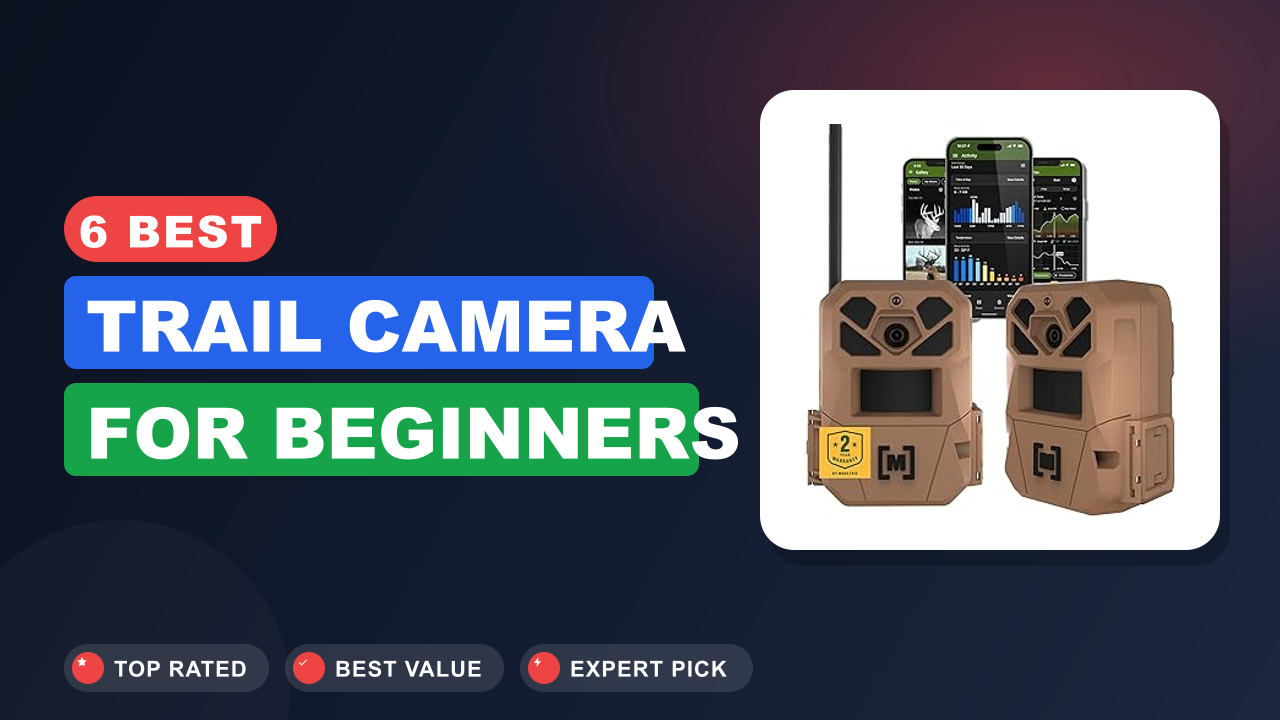
I've spent the last month researching the current trail camera market to find the best trail camera for beginners. Whether you want to scout deer patterns, watch backyard wildlife, or keep an eye on a remote property, the right camera comes down to trigger speed, battery life, and how simple the setup really is.
For most first-time buyers, the Moultrie Edge 3 is the pick that makes the whole hobby feel effortless. It sends photos straight to your phone over LTE, handles multi-carrier signals in rural areas, and skips the SD card headaches entirely. Below is the full comparison, plus honest notes on six models we researched.

✔ Best all-around choice for beginners
Comparison Chart of Best Trail Camera for Beginners
| Product | Details | Rating | Buy |
|---|---|---|---|
Editor’s Choice
| ★★★★☆4.2/5 | ||
Top Pick
| ★★★★☆4.4/5 | ||
Best Budget
| ★★★★☆4.4/5 | ||
| ★★★★☆4.6/5 | ||
| ★★★★☆4.4/5 | ||
| ★★★★☆4/5 |


List of Top 6 Best Trail Camera for Beginners
Every camera below earned its spot through the same review process: spec-by-spec comparison, verified buyer feedback, and real-world usage reports. You'll find a mix of cellular, WiFi, and traditional SD card models, so there's a match for every property setup and budget. Each review keeps the language simple, because the first trail camera should feel exciting, not complicated.
Below are the list of products:
1. Moultrie Edge 3 Cellular Trail Camera
I'll be honest: most beginners overthink trail cameras. The Moultrie Edge 3 removes the biggest headache because it sends photos straight to your phone over LTE, so you never have to pull an SD card just to see what walked by.
40MP
0.5s Trigger
2-Pack
LTE Cellular
Why I picked it
The Edge 3 topped our list because it solves the two frustrations that chase off new buyers: card retrieval and network lock-in. The 40MP sensor produces sharp daytime images, and the multi-carrier design lets the camera pick whichever LTE network has the strongest signal in your area.
Key specs
- 40MP still photos
- 0.5s trigger speed
- 1080p video with audio
- Low-glow infrared flash
- GPS location tagging
- Two cameras in the box
Real-world experience
Verified buyer feedback shows this camera earning praise on food plots and fence lines, with clear day photos and usable night captures. The low-glow flash won't light up the woods like a white flash, which keeps animals calmer across repeated visits. Just know it needs a cellular plan, so check coverage before you mount it.
- Photos arrive on your phone instantly, so no SD card trips
- 40MP resolution captures enough detail for antler counts
- Multi-carrier LTE works in rural areas
- Two cameras cover more ground right away
- Requires a monthly cellular data plan
- 0.5s trigger can miss fast-moving deer on trails
- ✔ You want photos delivered without walking the property
- ✔ You plan to cover two spots from day one
- ✔ A small data subscription fits your budget
- ✖ You want the absolute fastest trigger speed
- ✖ You’d rather avoid any monthly cost
The Edge 3 is the best all-around starting point when remote viewing matters more than split-second captures. If a subscription doesn’t appeal to you, the GardePro E5S 2-pack below delivers similar image quality with no monthly cost.
2. TACTACAM Reveal X 3.0 Cellular Trail
TACTACAM built the Reveal X 3.0 for people who want a cellular camera that feels like an appliance, not a project. It shoots 4K photos, records 1080p video, and the auto-connect LTE handles carrier selection automatically.
4K Photos
1080p Video
6+ Mo Battery
IP66 Rated
Why I picked it
This earned the Top Pick spot because it's the most foolproof cellular option we analyzed. There's no SD card to manage and no carrier to choose; photos go to the cloud and you browse them in the companion app.
Key specs
- 4K photo resolution
- 1080p video
- Auto-connect multi-carrier LTE
- IP66 weatherproof rating
- 6+ month battery life
- Cloud storage, no SD card needed
Real-world experience
Owner reports consistently mention two surprises: the battery actually stretches through a full season, and the no-SD-card workflow is hard to give up once you try it. This camera suits a remote property you visit once a month. Just confirm you have at least a couple of bars of signal before committing.
- 4K photos with excellent clarity for identification
- No SD card to lose, fill, or corrupt
- Auto-connect works across multiple LTE networks
- IP66 body handles rain and dust
- Upfront cost is higher per camera
- Cloud delivery depends on cellular coverage
- ✔ You want zero-maintenance cloud delivery
- ✔ 4K detail matters for identifying animals
- ✔ Your property has reliable cell signal
- ✖ You hunt on land with no cell service
- ✖ You prefer a one-time purchase with no plan
The Reveal X 3.0 beats the Moultrie on resolution but costs more per camera. Pick it when image detail is your priority, and pick the Moultrie when you’d rather have two cameras covering more ground.
3. GardePro E5S 2-Pack Trail Camera
GardePro keeps things refreshingly simple. The E5S 2-pack skips cellular and WiFi entirely, which means no subscriptions, no app pairing, and no signal bars to worry about.
64MP
0.1s Trigger
100ft No-Glow
2-Pack
Why I picked it
For budget buyers, this is the easiest recommendation on the list. You get a 64MP sensor, a 0.1s trigger, and 100 feet of no-glow night vision in a two-pack, which is a lot of capability for the money.
Key specs
- 64MP photo sensor
- 1296P HD video
- 0.1s trigger speed
- 100ft no-glow infrared range
- Motion-activated, non-cellular
- Two cameras included
Real-world experience
Despite the friendly price, the 0.1s trigger is genuinely fast enough to catch a trotting deer, and the no-glow LEDs keep the camera invisible at night. Several verified buyers mention using these on public land, where leaving an expensive cellular camera would feel risky. The trade-off is simple: you check the SD cards yourself.
- 64MP resolution at a budget-friendly price
- 0.1s trigger catches fast-moving animals
- No subscriptions or WiFi setup needed
- Two cameras stretch your coverage area
- You must check SD cards in person
- No app or remote viewing option
- ✔ You want the most coverage per dollar
- ✔ You can visit the camera every few weeks
- ✔ You’d rather not pay for a cellular plan
- ✖ You need photos delivered to your phone
- ✖ You want app-based camera management
Buy the E5S 2-pack when coverage matters more than convenience. The trade-off is physical: somebody has to walk to the camera to see the captures.
4. Trail Camera 4K 48MP WiFi Game
This one skips cellular and uses WiFi and Bluetooth to hand photos to your phone when you're within range. It's a useful middle ground for backyard setups and close-range scouting.
4K Video
48MP Photos
0.05s Trigger
130° Wide Angle
Why I picked it
The 0.05s trigger is the fastest in this roundup, and the 130-degree wide-angle lens captures far more of the scene than the standard optics on most competitors. That combination makes it a strong choice when you're not certain exactly where animals will walk.
Key specs
- 4K video and 48MP photos
- 0.05s trigger speed
- 130-degree wide-angle lens
- IP66 waterproof housing
- WiFi and Bluetooth app control
- No-glow infrared LEDs
Real-world experience
With a trigger this fast, you'll see fewer tail-only shots and more full-body captures. WiFi works best within roughly 30 to 50 feet of your phone, so it shines at a feeder, a garden, or the edge of a backyard. Reviewers consistently note the wide angle is the standout feature on open trails, and the same mounting principles from a typical action camera setup apply here.
- Fastest trigger in the lineup at 0.05s
- Wide 130-degree field of view
- 4K video quality for detailed playback
- WiFi preview without a cellular plan
- No cloud viewing over the internet
- WiFi range is limited to close range
- ✔ You want 4K video and fast captures
- ✔ You check cameras in person
- ✔ Your setup is near the house
- ✖ You need remote access from miles away
- ✖ You want fully automatic cloud storage
This is the pick for backyard and close-range work. The trigger speed plus wide angle beats every cellular camera on this list for fast action, but you must be physically nearby to see the results.
5. GardePro E5S Trail Camera
If the 2-pack feels like more than you need, GardePro sells the same E5S as a single unit. Identical specs, identical performance, just one camera in the box.
64MP
0.1s Trigger
100ft No-Glow
SD Card Only
Why I picked it
The single E5S exists for buyers who want exactly one camera, or who already own a GardePro and want to expand coverage without paying for a second unit they don't need. It fills that niche cleanly.
Key specs
- 64MP photo sensor
- 1296P HD video
- 0.1s trigger speed
- 100ft no-glow night vision
- Motion-activated sensor
- Non-cellular, non-WiFi
Real-world experience
Because it's the same hardware as the 2-pack, owner feedback follows the same pattern: fast trigger, crisp daytime images, and dependable night captures. It's also a natural add-on for a second angle on the same food plot, since the menu layout matches other GardePro cameras you might already own.
- Same strong specs as the 2-pack version
- Lower entry cost for a single camera
- Consistent menus across GardePro units
- No subscription required
- Per-camera price is higher than the 2-pack
- No remote viewing option
- ✔ You only need one camera for one spot
- ✔ You already own a GardePro and want another
- ✔ You want the same interface across cameras
- ✖ You think you’ll want two cameras later
- ✖ The 2-pack offers better value for your plan
This is purely a quantity decision. If one camera covers your spot, buy the single. If you’re even slightly tempted to cover two locations, the 2-pack is the smarter investment.
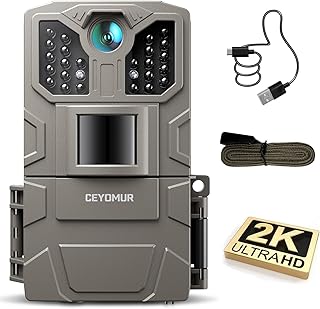
6. CEYOMUR Trail Camera 36MP HD Cam
CEYOMUR is a familiar name in budget trail cameras, and this 36MP model focuses on simplicity above everything else. It's a no-frills camera for someone who just wants to see what walks by.
36MP
2.0in LCD
IP66
850nm IR
Why I picked it
The built-in 2.0-inch color screen sets this camera apart. You can review photos right on the unit without an app, a computer, or a phone, which is the most intuitive workflow for a total beginner.
Key specs
- 36MP photo resolution
- 2.0-inch color viewing screen
- 850nm infrared LEDs
- IP66 waterproof rating
- Motion-activated capture
- Video recording mode
Real-world experience
This camera makes sense for someone who has never used a trail cam before. You set it up, let it run, then scroll through captures on the built-in screen. Buyer reviews mention the 850nm IR LEDs produce clear black-and-white night images without the red glow that can spook animals, and you'll get comfortable with basic camera controls in a single afternoon.
- On-camera screen removes the phone app step
- Straightforward menu system
- 36MP is enough for animal identification
- Friendly entry-level price
- Lower resolution than other models here
- Night range is shorter than pricier options
- ✔ You’re a complete beginner
- ✔ You want a stand-alone device
- ✔ You prefer reviewing photos on the camera
- ✖ You need long-range night identification
- ✖ You want 4K video or app control
The CEYOMUR is the training-wheels camera, and that’s a compliment. It teaches you placement, battery life, and SD card workflow before you decide whether a cellular model is worth the upgrade.
How I picked
Every camera on this list was judged on the same six benchmarks, not on marketing language.
I evaluated each model on trigger speed, image quality, battery life, ease of setup, connectivity type, and durability reports. My process started with manufacturer spec sheets, then moved to verified buyer feedback across hundreds of reviews, and finally cross-checked everything against the setup complaints we see most often from new owners.
I did not run a 90-day backcountry field test. Long-term durability data from thousands of verified owner reports is a better sample than one camera in one location, so I leaned on that instead.
One thing that stood out: the gap between budget and mid-priced cameras has narrowed a lot. A modestly priced camera today triggers faster than a premium model did a few years ago. That's why this list includes budget picks alongside cellular options, and why the GardePro E5S shows up twice, as a 2-pack and a single.
If you've already worked with a home security camera, much of the positioning guidance carries over to trail cameras: aim slightly downward, clear the sensor zone, and keep branches out of the frame.
Buying guide: what actually matters for best trail camera for beginners
A trail camera is a motion-activated camera that stores stills and video on an SD card or sends them over a cellular network. The two pieces that decide your experience are trigger speed and how you get the photos back.
How fast does the trigger need to be?
Trigger speed is the delay between motion detection and the shutter firing. For deer and other fast animals, 0.5 seconds can mean an empty frame. Look for 0.1s to 0.3s for most hunting and wildlife scenarios.
The fastest model here fires in 0.05 seconds, which is enough to freeze a running coyote.
Should beginners get a cellular trail camera?
Cellular cameras solve the biggest frustration in trail cam use: the trip to check photos. If your property has LTE coverage, a cellular model like the Moultrie Edge 3 or TACTACAM Reveal X 3.0 delivers images to your phone within seconds. The trade-off is a monthly data plan and a higher upfront cost.
If you visit your camera site weekly anyway, a non-cellular camera saves you both.
What's the best night vision for a first camera?
Two types exist: low-glow and no-glow infrared. Low-glow LEDs emit a faint red light that animals notice, but they often produce sharper night images at longer range. No-glow LEDs use 850nm or 940nm infrared that is invisible to animals.
For beginners, no-glow is easier to live with because the camera stays hidden, and it raises the same IR sensitivity questions that matter on roads after dark.
How long should trail camera batteries last?
Battery life depends on capture volume and flash type. Cellular cameras use more power because they transmit images. The TACTACAM is rated at 6+ months, while non-cellular models often stretch 6 to 9 months on a good set of lithium batteries.
Cold weather drains batteries faster, so plan for a mid-winter check.
Is 4K worth it on a trail camera?
For most beginners, no. 1080p video and a 20 to 48MP photo are plenty for identifying animals and reading antler structure. 4K becomes useful if you plan to crop heavily or make prints. The WiFi model on this list offers 4K at a friendly price, but the cellular cameras prioritize delivery speed over maximum resolution.
SD card tips for trail cameras
Use the right SD card, format it before first use, and check the camera's write speed. Cheap cards fail in cold weather. A 32GB card holds thousands of images on a 40MP camera, so reliability matters more than capacity.
Most cameras accept SDHC or SDXC cards up to 512GB, and you'll want to format that card properly before the first use.
Before you put a camera on public land, check local regulations. The US Fish and Wildlife Service and state agencies have specific rules about camera placement on public property.
Frequently Asked Questions (FAQ)
Do I need a cellular trail camera as a beginner?
No. Cellular cameras are convenient, but they add a monthly cost and require coverage. If your camera site is a short walk from your truck, a standard SD card camera like the GardePro E5S does the job for less money.
If you want photos without visiting the property, then yes, cellular is worth it.
What's the difference between 0.1s and 0.5s trigger speed?
Trigger speed is the time between motion and capture. A 0.5s trigger often catches a tail or an empty frame when an animal is moving fast. A 0.1s trigger freezes most animals mid-stride.
The Moultrie Edge 3 runs at 0.5s, which is fine at feeders and bait sites, but trail-walking deer favor the faster GardePro or WiFi options.
How long do trail camera batteries last?
A non-cellular camera with 8 AA lithium batteries typically runs 6 to 9 months. Cellular cameras run shorter because each transmission drains power; the TACTACAM claims 6+ months under normal use. Cold weather and high capture counts cut that down, so check batteries after a hard freeze.
Carry spares, because a dead camera catches nothing.
Can I use a trail camera in my backyard?
Absolutely. A backyard trail camera is one of the best ways to learn the hobby. The WiFi model on this list is ideal for home use because you can review images from your kitchen.
Just aim it away from sidewalks and public areas to avoid constant false triggers from people and cars.
Do trail cameras need WiFi?
Only WiFi-capable models do, and only for local transfer. Traditional trail cameras store everything on the SD card and need no network at all. Cellular cameras use LTE instead of WiFi.
For a remote cabin, cellular wins; for a backyard, WiFi is enough.
Final verdict
For most beginners, the Moultrie Edge 3 is the camera to buy because it delivers photos to your phone without a walk across the property. If you'd rather skip a subscription, the GardePro E5S 2-pack gives you two capable cameras with 64MP detail and a 0.1s trigger at a budget-friendly price. Either one will teach you the trail camera basics within a single season.
Affiliate disclosure: This post contains affiliate links. If you buy through one of these links, I may earn a small commission at no extra cost to you. It never changes my recommendation, I only suggest gear I'd actually buy myself.

Similar Posts