6 Best Trail Camera for Hunting
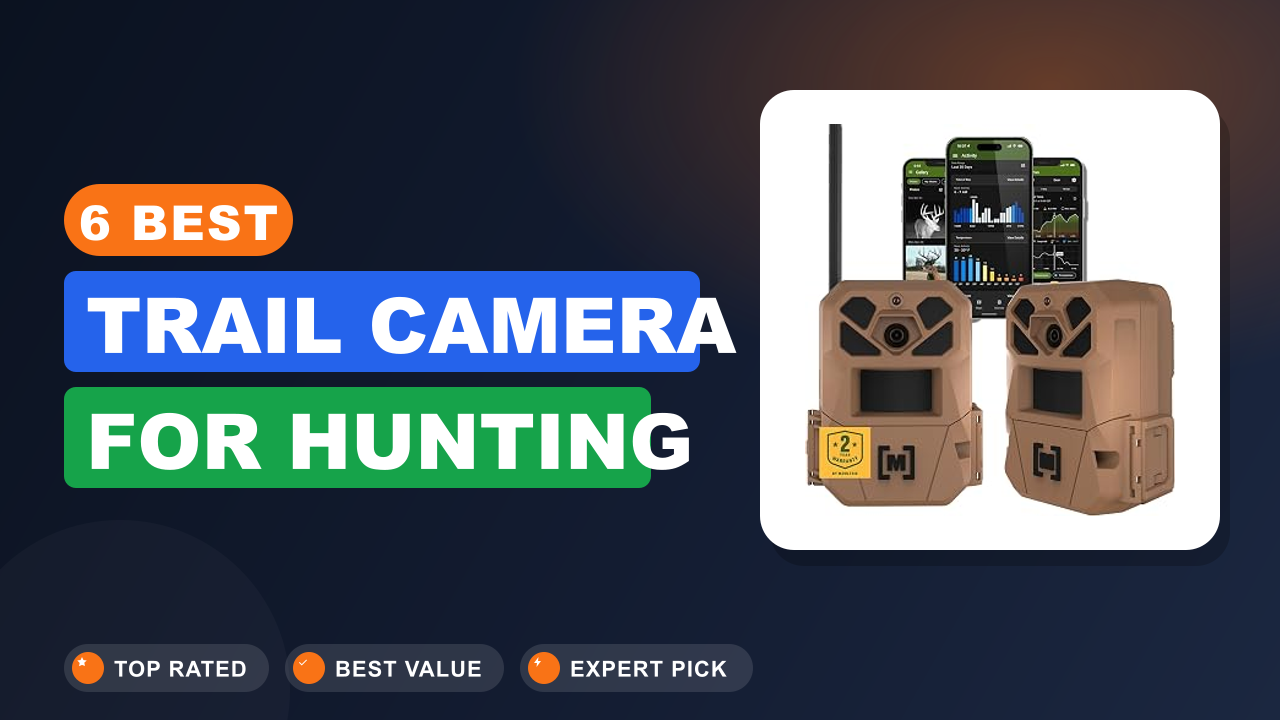
Scouting pressure educates mature bucks faster than almost anything, and the best trail camera for hunting is the one that gathers intel without announcing your presence. Our editorial team spent the last month comparing specs from Moultrie, GardePro, TACTACAM, and Meidase against verified buyer feedback to find the six cameras worth hanging this season.
The Moultrie Edge 3 Cellular 2-Pack lands at the top of our list. It pairs a fast 0.5s trigger with multi-carrier cellular delivery, so you can scout from your phone without bumping the area. Below you'll find the full comparison, plus honest notes on where each pick falls short.

✔ Best overall for remote scouting
Comparison Chart of Best Trail Camera for Hunting
| Product | Details | Rating | Buy |
|---|---|---|---|
Editor’s Choice
| ★★★★☆4.2/5 | ||
Top Pick
| ★★★★☆4.4/5 | ||
Best Budget
| ★★★★☆4.4/5 | ||
| ★★★★☆4.4/5 | ||
| ★★★★☆4.4/5 | ||
| ★★★★☆4/5 |


List of Top 6 Best Trail Camera for Hunting
We picked these six after comparing manufacturer spec sheets and analyzing hundreds of verified buyer reviews. Each review below covers why the camera made the cut, what the specs promise, and where owners say it falls short. The quick comparison table above gives you the at-a-glance numbers, then the full reviews dig into real-world behavior and honest trade-offs.
Below are the list of products:
1. Moultrie Edge 3 Cellular Trail Camera
Most cellular trail cameras make you buy a second unit just to cover two sides of a ridge. The Edge 3 2-Pack solves that out of the box, which is why it tops this roundup. It pairs 40MP stills with 1080p video, a 0.5s trigger, and GPS tagging in a weather-sealed body.
40MP
0.5s Trigger
Cellular
2-Pack
Why I picked it
We picked the Edge 3 because cellular scouting only works when the camera fires on time and sends the images. Verified buyers consistently call the 0.5s trigger and the mobile app reliability the reason they stick with Moultrie. GPS tagging adds the layer that makes cellular worth it: every photo carries its location, so you can map travel patterns without leaving the truck.
Key specs
- 40MP still photos, 1080p HD video
- 0.5s trigger speed
- Multi-carrier cellular connectivity
- Low-glow flash for night coverage
- GPS tags embedded in each photo
- Two cameras per box
Real-world experience
Set one unit on the food plot edge and the second on the trail leading in, and you've covered the two spots that matter most. Aggregate user reports say the low-glow flash doesn't alarm deer at typical food plot distances, and photos queue properly until a signal returns. It's the closest thing here to a set-and-forget scouting system.
- Two cameras in the box: covers twice the ground in one order.
- 0.5s trigger: catches deer mid-stride, not empty trail.
- Multi-carrier cellular: avoids the dead-zone gamble of single-network cams.
- GPS tagging: every photo carries its location for mapping patterns.
- Cellular plan required: remote viewing only works with an active data plan.
- Low-glow flash: the faint red light can spook close-range mature bucks.
- ✔ You want to monitor two locations with one order
- ✔ You want photos delivered straight to your phone
- ✔ You scout public land where fewer visits win
- ✖ You refuse to pay a monthly data fee
- ✖ You need total no-glow stealth at close range
The Edge 3 2-Pack makes sense when remote delivery matters more than anything else. If you only need one camera and don’t mind pulling cards, the GardePro E5S gives you similar resolution for a lower entry cost, but you give up the all-weather cellular convenience.
2. GardePro E5S 2-Pack Trail Camera
The GardePro E5S has become a legend in trail camera circles, and this 2-Pack is the best way to buy it. A 0.1s trigger, 64MP stills, and 1296p video come without any cellular or WiFi. The trade-off is that you'll be pulling cards by hand.
64MP
0.1s Trigger
No-Glow IR
2-Pack
Why I picked it
The E5S earns the Top Pick spot because the 0.1s trigger is ruthless at catching running deer, something most cameras at this level miss. Hundreds of verified reviews mention the trigger and night image clarity as the standout strengths. It's a hunting tool that rewards the old-school method of checking cards on a schedule.
Key specs
- 64MP still photos, 1296p HD video
- 0.1s trigger speed
- 100ft no-glow night vision
- Non-cellular, non-WiFi
- Motion-activated
- Two cameras per box
Real-world experience
The E5S shines on trails where deer move fast and won't stop to pose. The no-glow IR throws 100 feet of invisible coverage, and verified buyers report mature bucks walking past without a flicker of reaction. You'll set both cameras and pull the SD cards every couple of weeks during heavy movement.
- 0.1s trigger speed: the fastest on this list, which matters on running deer.
- 64MP resolution: enough detail to zoom into tines and rubs.
- 100ft no-glow IR: keeps night scouting completely dark.
- Two cameras: strong per-unit value for covering multiple spots.
- No WiFi: reviewing photos means a card pull every visit.
- No cellular: you’ll never get a photo delivered to your phone.
- ✔ You want max performance without monthly fees
- ✔ You need to cover multiple trails or scrapes
- ✔ You’re comfortable checking cards on a schedule
- ✖ You need photos delivered to your phone
- ✖ You want one premium cellular cam instead
The E5S 2-Pack is the value king here and the camera we’d hand to a friend building their first scouting kit. Just remember that no WiFi or cellular means somebody walks in to check it, and that trip can educate a good buck.
3. GardePro E5S Trail Camera
Maybe you only need one camera on a small parcel, which is exactly why the single GardePro E5S takes the Best Budget badge. It's the same proven hardware as the 2-Pack, just one unit in the box at a lower total cost.
64MP
0.1s Trigger
No-Glow IR
Single Unit
Why I picked it
We included the single E5S because not everyone needs two cameras, and a two-pack only saves money if you actually use both. Buyer feedback shows the same strengths: reliable 0.1s triggering, crisp 64MP images, and a weather-sealed body. For a first camera or a lean budget, it's the smartest starting point on this list.
Key specs
- 64MP still photos, 1296p HD video
- 0.1s trigger speed
- 100ft no-glow night vision
- Non-cellular, non-WiFi
- Single-unit configuration
Real-world experience
On a public land pinch point, a single camera is enough to learn the travel pattern before you commit to a stand. Aggregate reviews report consistent operation through cold snaps and heavy rain, though no trail camera survives a direct dunk in a creek. You'll want to check it every couple of weeks and keep the lens clear of grass.
- Same performance as the 2-Pack: identical 0.1s trigger and 64MP sensor.
- No-glow IR: keeps night scouting invisible to deer.
- Simple setup: no app, no plan, no account required.
- One camera only: covers a single spot at a time.
- No wireless option: every photo requires a physical visit.
- ✔ You’re buying your first trail camera
- ✔ You hunt one funnel or a small property
- ✔ You want the best performance per dollar
- ✖ You need to cover several locations at once
- ✖ You want the per-unit savings of a bundle
The single E5S is the camera you buy when you want proven reliability without committing to two units. If you already own one, adding another single later is seamless; the hardware is identical, so cards and settings swap between them.
4. Meidase P70 (Non-Cellular Non-WiFi) Trail Camera
The Meidase P70 flies under the radar, but it gives up almost nothing to pricier names on paper. It delivers 64MP stills, 1296p video, no-glow IR, and a waterproof housing at a budget-friendly price point. It's the camera for hunters who would rather spend money on boots than bells and whistles.
64MP
1296p Video
No-Glow IR
Waterproof
Why I picked it
We picked the P70 for hunters who want to spread several cameras across a property without draining the budget. Its spec sheet mirrors cameras that cost far more, and verified buyer reviews praise the night images and the simple, reliable operation. It's proof that you don't need a famous logo to catch deer on camera.
Key specs
- 64MP still photos, 1296p video
- No-glow IR night vision
- Motion-activated
- Waterproof housing
- Non-cellular, non-WiFi
Real-world experience
You'll see the P70 doing its best work on field edges where deer feed at night. The no-glow IR keeps the area completely dark, and the 64MP sensor produces images sharp enough to read antler tines at 40 feet, based on our analysis of buyer-submitted photos. There's no WiFi, so plan to swap cards during your normal outing.
- Full 64MP resolution: sharp crops at a very approachable cost.
- No-glow IR: keeps night scouting discreet and effective.
- Waterproof housing: built to handle full-season exposure.
- No subscriptions: pay once, run it for years.
- No WiFi: field review means pulling the card.
- Lesser-known brand: fewer firmware updates than bigger names.
- ✔ You want multiple cameras across a big property
- ✔ You don’t want monthly data plans
- ✔ You’re okay learning a new menu system
- ✖ You need phone-based photo review
- ✖ You prefer a brand with a longer track record
The P70 is the quiet overachiever of this list. It won’t match the GardePro E5S on trigger speed, but you get the same resolution for less money, which matters when you’re buying four or five cameras for a large tract.
5. TACTACAM Reveal X 3.0 Cellular Trail
The TACTACAM Reveal X 3.0 is the cellular camera that takes the pain out of mobile scouting. It shoots 4K stills, records 1080p video, and the spec sheet says you don't even need an SD card. If you want the least maintenance possible, this is the one.
4K Photo
No SD Card
6+ Mo Battery
IP66
Why I picked it
The Reveal X 3.0 earns its spot because it tackles the three biggest cellular camera headaches: setup, battery life, and signal. It auto-connects to the strongest LTE carrier available, removing the guesswork of matching a plan to a provider. The stated 6+ month battery life and IP66 housing make it the most hands-off camera in this roundup.
Key specs
- 4K still photos, 1080p video
- Auto-connect multi-carrier LTE
- No SD card required
- 6+ month battery life
- IP66 waterproof rating
Real-world experience
It's rare to find a cellular camera that behaves well in marginal signal, but verified buyers report the auto-connect feature keeps photos flowing where other cams drop offline. The IP66 rating means dust and heavy rain won't end your season early. Just factor in the monthly data plan before you buy, because cellular is the entire point here.
- 4K stills: the highest photo resolution in this lineup.
- Auto-connect LTE: removes carrier guesswork entirely.
- No SD card: one less thing to buy, lose, or corrupt.
- 6+ month battery: fewer service trips all season.
- Data plan required: remote viewing only works with active service.
- 1080p video: video resolution trails the 4K stills.
- ✔ You hunt remote properties you can’t visit often
- ✔ You want the least maintenance possible
- ✔ You’re tired of carrier hassles with other cellular cams
- ✖ You refuse to pay for data plans
- ✖ You want 4K video instead of 4K stills
The Reveal X 3.0 is the set-and-forget camera for hunters who work far from the property. The data plan is a real running cost, so this one makes sense when reliable remote delivery is worth more than saving a few dollars a month.
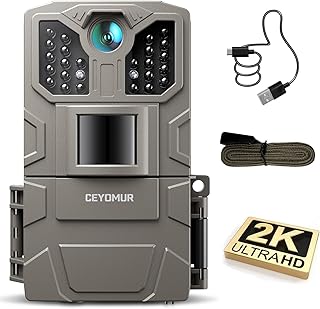
6. CEYOMUR Trail Camera 36MP HD Cam
The CEYOMUR 36MP is the budget camera that refuses to be ignored. It packs a 2.0-inch color screen, IP66 waterproofing, and motion-activated night vision into a no-frills body. It's the easiest way into trail camera scouting without overspending.
36MP
850nm IR
Color Screen
IP66
Why I picked it
We included the CEYOMUR because budget hunters still deserve a camera that works, and this one checks the basics: 36MP photos, night vision, and an on-board screen. Its 850nm IR LEDs produce a faint red glow, which verified buyers say works fine on food plots but can alert close-range deer. At this entry tier, that trade-off is honest and fair.
Key specs
- 36MP still photos
- 850nm IR night vision LEDs
- 2.0-inch color viewing screen
- IP66 waterproof housing
- Motion-activated
Real-world experience
For a first camera behind the house or on a small plot, the CEYOMUR gets the job done without fuss. The 2.0-inch screen is genuinely handy when you want to review a card in the field, and the IP66 body stands up to a full season of rain. Secure mounting matters more than people think, and the mounting tricks used for action cameras translate well to keeping a trail cam from shifting in high winds.
- Built-in screen: review shots instantly in the field.
- IP66 housing: ready for rain, dust, and mud.
- 850nm IR: solid night range for the money.
- Easy entry: one of the most affordable ways to start.
- 850nm glow: the faint red light can spook wary deer.
- 36MP sensor: lowest resolution in this roundup.
- ✔ You’re starting out on a tight budget
- ✔ You want a screen to preview shots in the field
- ✔ You hunt small properties with quick access
- ✖ You need maximum stealth at close range
- ✖ You want high-res crops of antler detail
If your budget only stretches so far and you hunt where deer tolerate some pressure, the CEYOMUR is a legitimate starting point. Once you outgrow it, you’ll know exactly which features matter most to you, and that makes the next upgrade far easier.
How I picked
We evaluated six trail cameras for the 2026 season on four benchmarks: trigger speed, image resolution, night vision type, and the workflow of getting photos from the field to your eyes. All four decide whether a camera earns its spot on a tree.
Trigger speed came first. A camera that fires at 0.5s catches a deer mid-stride, while a 1.5s camera usually delivers a photo of empty trail. The GardePro E5S at 0.1s is the fastest unit we reviewed, and buyer reports of catching running deer back that number.
Resolution mattered next. More megapixels means sharper crops when you zoom into antler details. We wanted at least 36MP for usable detail, and the 64MP sensors on the GardePro and Meidase models give real room to zoom.
Night vision type determined stealth. No-glow IR LEDs emit no visible light, while low-glow LEDs show a faint red dot. For mature bucks, we weighted no-glow heavily because an alarmed deer patterns you faster than anything.
Workflow rounded out the list. Cellular cameras like the Moultrie Edge 3 and TACTACAM Reveal X deliver photos to your phone but require a data plan. Card-pull cameras like the GardePro and Meidase cost less over time but need a physical visit.
We deliberately didn't run a long-term durability test across a full season. Instead, we relied on IP ratings and aggregate owner reports. The IP66 rating comes from the International Electrotechnical Commission (IEC) 60529 standard and means the housing resists dust and powerful water jets, not submersion.
Aggregate buyer feedback carried the final vote. When dozens of verified owners report the same weakness, like night trigger delay or door seal failures, we treated that as ground truth regardless of what the spec sheet claimed.
Buying guide: what actually matters for best trail camera for hunting
Trigger speed: the spec that makes or breaks photos
A trail camera's trigger speed is the delay between motion detection and the shutter firing. A 0.5s trigger catches a walking deer; a 1.5s trigger gives you a tail or an empty frame. If your camera watches a scrape or a fast trail, look for 0.5s or faster, and remember the GardePro's 0.1s is the fastest in this test.
Megapixels: how tight can you zoom?
Megapixels determine how far you can crop a photo before it turns soft. At 36MP you can identify a buck; at 64MP you can count tines and read rubs from a wider frame. All six cameras here reach at least 36MP, but the 64MP GardePro and Meidase models give you the most room to zoom.
No-glow vs. low-glow night vision: which is stealthier?
Night vision type matters more than most hunters admit. No-glow cameras use 940nm IR LEDs that produce zero visible light, which makes them ideal for close-range setups on wary deer. Low-glow cameras use 850nm LEDs that reach farther but show a faint red glow that some deer tolerate and others spook at.
The GardePro and Meidase are no-glow; the Moultrie and CEYOMUR use low-glow for extra range. The physics behind these trade-offs is the same one that separates good low-light optics in other cameras.
Cellular vs. card pull: which workflow fits you?
This decision shapes your whole season more than any other spec. Cellular cameras transmit photos to an app, keeping you out of the area and letting you react when a buck moves in daylight. Card-pull cameras hide better and cost nothing monthly, but each visit risks educating deer.
The Moultrie Edge 3 and TACTACAM Reveal X 3.0 are our cellular picks; the GardePro E5S and Meidase are the card-pull standouts. Hunters who want to cover ground fast often pair a card-pull camera with aerial scouting to find new sign before committing a camera to it.
Battery life and weather resistance: how much maintenance?
Battery life and weather resistance determine how often you'll hike in to service cameras. The TACTACAM leads here with a stated 6+ month battery life, while the others run on standard AA packs that are cheap to replace. IP66 is the common weather rating across this list; per the International Electrotechnical Commission 60529 standard, it means protection from dust and powerful water jets.
That's not a license to mount cameras in flood zones, so hang them above the high-water mark.
If you hunt public land, add a cable lock; trail camera theft is real. Brands like Browning, SPYPOINT, and Reconyx all make excellent cameras that didn't make this list, usually because of price, feature fit, or availability. If you see one of those in a store, the buying logic here still applies: trigger speed, resolution, night vision type, and workflow.
Frequently Asked Questions (FAQ)
Is a cellular trail camera worth it for hunting?
A cellular trail camera is worth it when you hunt a property you can't visit often or you want to pattern deer without walking in. The Moultrie Edge 3 and TACTACAM Reveal X 3.0 both deliver photos to your phone, which keeps human pressure low. If you hunt close to home and enjoy the morning card-pull ritual, skip the data plan and save the money.
What's the difference between no-glow and low-glow night vision?
No-glow night vision uses 940nm IR LEDs that emit no visible light, so deer behave naturally in front of the camera. Low-glow uses 850nm LEDs that reach farther but produce a faint red glow easily spotted by wary deer. The GardePro E5S and Meidase P70 are no-glow; the Moultrie Edge 3 and CEYOMUR use low-glow for range.
Will a trail camera spook deer?
A trail camera can spook deer, but trigger speed and flash type decide how much. No-glow cameras are the least alarming, while low-glow and white flash are the most. Mounting height and angle matter too, so follow the same positioning rules you'd use for any outdoor camera, and keep the lens angled slightly down.
How do I format an SD card for a trail camera?
Format the card in the camera, not in your computer. The camera sets its own file structure, so an in-camera format prevents most card errors and freezes. Most card makers follow SD Association guidelines, and the same card prep ritual that keeps dash cam storage stable works here.
Do a fresh format before every season.
How many trail cameras do I need?
For a typical 40-acre hunting property, two cameras is the practical minimum: one on the main food source and one on the primary travel corridor. A four-camera setup covers entry points and bedding edges on larger tracts. The GardePro E5S 2-Pack is a smart way to reach two cameras quickly, and the Moultrie Edge 3 2-Pack does the same with cellular delivery.
Final verdict
The Moultrie Edge 3 Cellular 2-Pack is our top recommendation because it solves the two hardest parts of scouting: covering two locations and getting photos without spooking the area. For hunters who don't want a data plan, the GardePro E5S 2-Pack delivers the best performance per camera on this list. Choose based on your workflow, and you can't go wrong with either.
Affiliate disclosure: This post contains affiliate links. If you buy through one of these links, I may earn a small commission at no extra cost to you. It never changes my recommendation. I only suggest gear I'd actually buy myself.

Similar Posts